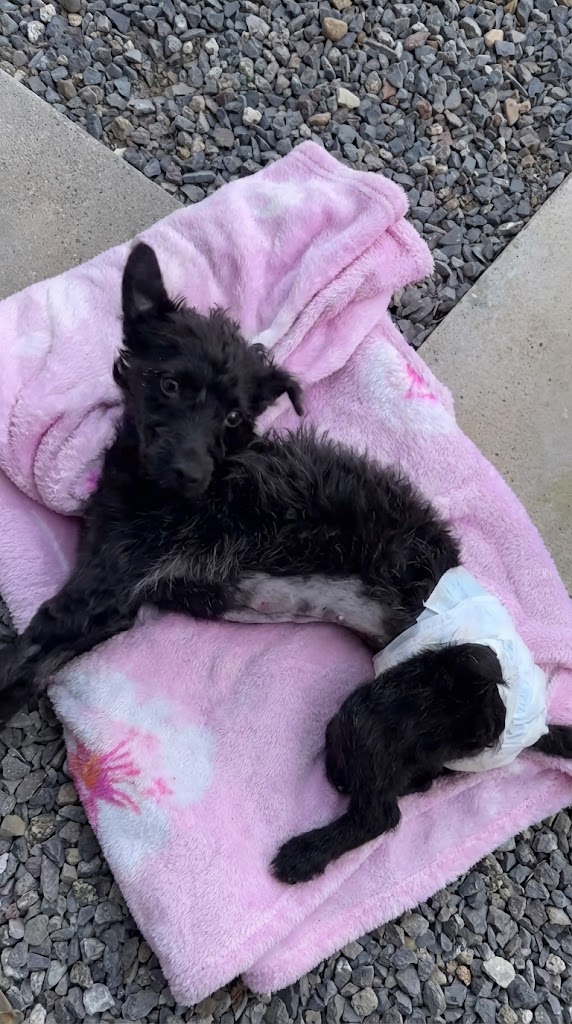
Aurora could see the people standing over her.
She could follow them with her eyes.
She could even lick gently when food was brought close.
But the rest of her tiny body would not move.
The young puppy had been found alone on the street, crying while the world continued around her. There were no obvious wounds to explain what had happened. No visible injury that immediately told rescuers why four little legs had suddenly become completely still.
For Aurora, even lifting her head was impossible.
Yet there was one detail her caregivers could not ignore.
When they touched her, she could still feel them.
Somewhere inside that motionless body, Aurora was still responding.
And the people caring for her decided that was reason enough to keep searching for an answer.
Her Eyes Moved, But Her Body Wouldn’t Follow
The first days brought more questions than answers.
Aurora remained almost completely paralyzed.
She could look toward familiar voices and respond in small ways with her face, but her neck, legs, and body offered little movement.
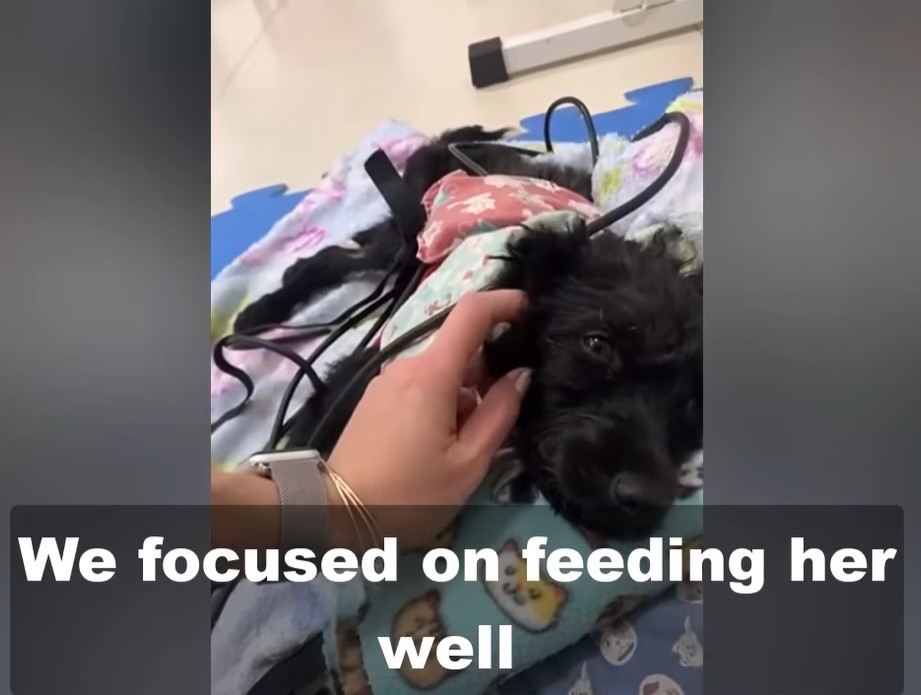
Rescuers fed her carefully.
They cleaned her when she could not reposition herself.
They changed her bedding.
They stayed close.
Everything an active puppy would normally do without thinking had to be done for Aurora.
Even rolling to another side required help.
What made the situation especially confusing was that she apparently still had sensation.
When caregivers touched her paws or body, Aurora appeared to notice.
Her eyes remained alert.
She ate treats.
She interacted in the few ways available to her.
Those small responses made it difficult for the team to see her as a puppy who had stopped engaging with life.
Her body was failing to cooperate.
Aurora herself seemed very much present.
So the search for an explanation continued.
VIDEO: Aurora Could Only Move Her Eyes—But Her Caregivers Refused to Stop Searching for an Answer
Every Examination Seemed to Bring Another Question
Specialists evaluated Aurora, but the cause of her paralysis was not immediately clear.
There was no obvious external trauma to explain such severe loss of movement.
The rescue team hoped that imaging and neurological examinations might reveal something treatable.
Instead, uncertainty continued.
Some professionals reportedly questioned what Aurora’s long-term quality of life might be if she never regained movement.
It was a painful possibility to consider.
Caring for a completely immobile dog requires constant attention, and prolonged paralysis can create additional health concerns if an animal cannot shift position, exercise, or perform normal daily functions independently.
But Aurora’s caregivers were also watching the puppy in front of them.
She still enjoyed food.
She reacted to familiar people.
She showed awareness of her surroundings.
When treats appeared, there was interest in her eyes.
Whatever decision eventually had to be made, the team did not want it based only on what Aurora could not do.
They wanted to understand why she could not do it.
That distinction kept them looking.
Then another specialist entered the story.
A Neurologist Offered a Different Possibility
A neurologist consulted from a distance reviewed Aurora’s condition and suggested another explanation.
According to the rescue account, he suspected the problem might not originate from a straightforward spinal injury.
Instead, the cause could involve a neurological problem associated with the brain.
That possibility changed the direction of Aurora’s treatment.
It also created a difficult decision.
If the specialist was correct, surgery might give Aurora a chance.
But it would be delicate.
There was no guarantee that removing or correcting the suspected problem would suddenly restore normal movement.
Even a successful procedure could be followed by a long period of rehabilitation.
Aurora might improve significantly.
She might improve only slightly.
Or her paralysis could remain.
Her caregivers could not know which outcome awaited them.
They only knew that Aurora continued eating, watching them, and responding to the world in the limited ways her body allowed.
The puppy had already lost control of almost everything around her.
The rescue team decided not to take away the chance that remained.
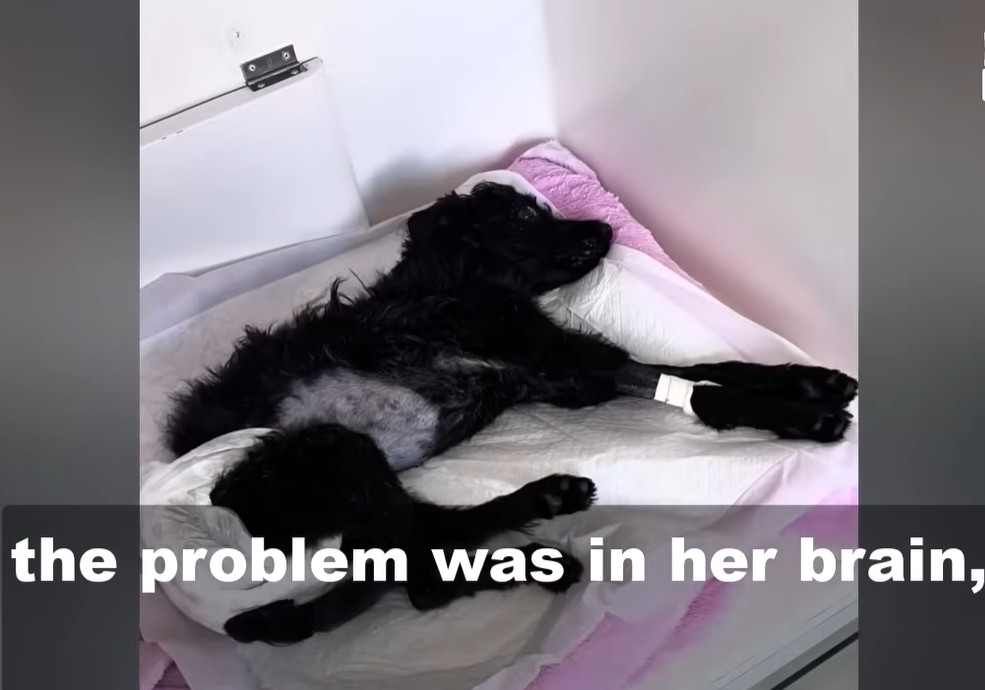
Surgery Was Only the Beginning
Aurora was prepared for the procedure.
Then came the part her caregivers could do nothing about.
Waiting.
The hours felt especially long because surgery was never the finish line.
Even if the procedure addressed the suspected neurological problem, no one could promise what Aurora would be able to do afterward.
Eventually, the surgeon returned with encouraging news.
Aurora had made it through.
According to her rescuers, the operation had successfully addressed the source doctors believed was causing her condition.
That was an enormous step.
But when Aurora woke, she did not suddenly jump onto four legs.
There was no dramatic moment where paralysis disappeared.
Her body still needed time.
The nerves and muscles that had remained inactive would need rehabilitation and careful observation.
Her caregivers returned to the same things they had been doing from the beginning.
Feeding her.
Keeping her clean.
Supporting her body.
Watching.
Waiting.
Only now, they were waiting for something different.
Movement.
Progress Began With Her Neck
Recovery did not arrive as one dramatic breakthrough.
It came in movements small enough that someone not watching closely might have missed them.
Aurora began regaining some control of her neck.
For the first time, she could slowly turn her head toward a familiar sound instead of relying only on her eyes.
That small movement changed the way she interacted with the people around her.
Someone could call her name.
Aurora could try to look toward them.
A treat could appear nearby.
She could move her head toward it.
For another dog, turning the neck would hardly be worth noticing.
For Aurora, it represented a function her body had not been able to perform before.
Then caregivers noticed something else.
Tiny movements appeared in her legs.
Not walking.
Not standing.
Just movement.
Faint signs that made everyone look twice to make sure they had really seen them.
They had.
Nothing about those early changes guaranteed how far her recovery would eventually go.
But after weeks of caring for a puppy whose body had remained almost entirely still, a twitch could feel enormous.
Rehabilitation Became a Collection of Tiny Victories
Aurora’s days began to revolve around rehabilitation.
Her caregivers gently worked with her body, helping maintain movement and encouraging whatever responses she could produce.
They paid close attention to nutrition.
They kept her comfortable.
They repositioned her when necessary.
And they allowed recovery to happen at Aurora’s pace rather than demanding a dramatic result.
Some days brought noticeable improvement.
Others seemed almost unchanged.
That did not mean nothing was happening.
Healing from a serious neurological condition can be difficult to measure from one day to the next, and Aurora’s progress was never presented as a straight line.
What mattered was that she continued participating in life around her.
She enjoyed food.
She reacted when her caregivers came close.
She rested more comfortably.
And according to those caring for her, one of the most important changes was that she no longer appeared to be experiencing the same pain that had concerned them before treatment.
For Aurora, comfort itself was progress.
So was turning her head.
So was a tiny movement in a paw.
Her recovery taught the people around her to notice things they might once have considered insignificant.
Because for this puppy, there was nothing insignificant about moving something she had once been unable to move at all.
Aurora Wasn’t Running—But That Was Never the Only Measure of Her Life
It is tempting to tell rescue stories through dramatic before-and-after images.
A dog cannot walk.
Then suddenly, the dog runs.
A frightened animal hides.
Then suddenly, the tail never stops wagging.
Aurora’s story was different.
At this stage of her journey, there was no need to pretend she had reached an ending that had not yet arrived.
She was not racing across a yard.
She had not suddenly regained every function.
Her future mobility remained uncertain.
But uncertainty did not erase the changes that had already happened.
Aurora was alive.
She was comfortable enough to enjoy food.
She recognized the people caring for her.
Her neck moved again.
Her legs had begun showing small responses.
And every day, she was surrounded by people willing to help with the things she could not yet do herself.
That was the life Aurora had in front of her.
Not perfect.
Not complete.
But still worth noticing.
Sometimes Hope Is Small Enough to Miss
When Aurora was found on the street, her entire world had been reduced to what her eyes could follow.
She could not stand.
She could not walk toward help.
She could not reposition herself when uncomfortable.
Someone had to notice her first.
Then people had to continue noticing.
They noticed that she could feel touch.
They noticed that she still enjoyed a treat.
They noticed that her eyes remained engaged.
Later, they noticed the first movement of her neck.
Then a tiny response in her legs.
Aurora’s story was built from those details.
There was no single moment when everything became easy.
Instead, her second chance grew through dozens of ordinary acts of care and movements measured in inches.
Her caregivers still did not know exactly how far recovery would take her.
Perhaps more movement would come.
Perhaps some limitations would remain.
But Aurora no longer lay alone on a street with no one asking what had happened.
She had people searching for answers.
People supporting her through rehabilitation.
People celebrating movements most of us would never think twice about.
That may be the most important part of her story.
Hope does not always arrive as a puppy suddenly standing on four legs.
Sometimes it is much quieter.
A head turning toward a familiar voice.
A paw moving just slightly.
A pair of bright eyes following someone into the room.
Aurora had not finished her journey.
But she was no longer facing it alone.
And for now, every tiny movement forward was enough reason to keep going.


