From the street, the backyard did not look unusual enough to make most people stop.
But inside it, a dog was disappearing.
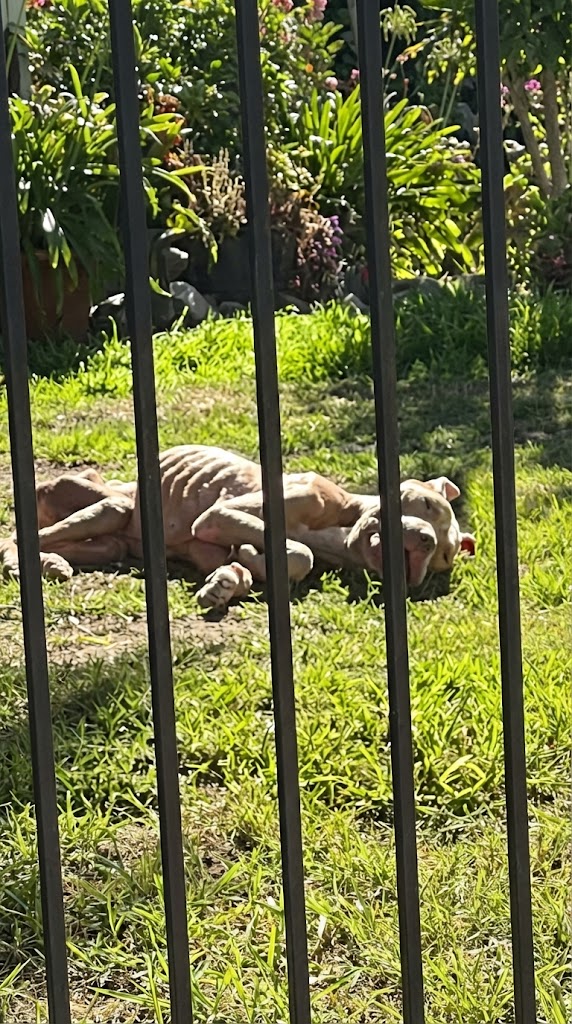
Gator, a Pit Bull living in Highland, California, had become so thin that nearly every bone showed beneath his skin. He spent much of his time lying against the dirt, tethered in the same small area while his strength continued to fade.
His owner reportedly described him as aggressive and insisted that he was being fed.
But when images of Gator began circulating online, rescuers saw something that could not be explained away.
This was not simply a thin dog.
Gator was in serious trouble.
And by the time help reached him, standing on his own had become difficult.
The Dog Everyone Had Been Warned About Could Barely Stand
Rescuers approached the property prepared for a dog they had been told might be dangerous.
What they found looked very different.
Gator did not charge.
He did not attempt to attack.
He was barely strong enough to move.
His body had become severely emaciated, and exhaustion seemed to outweigh almost everything else.
There were reportedly discussions with the owner about Gator’s condition, including claims that an unidentified illness might explain his appearance.
But whatever the cause, one thing was clear.
The dog needed veterinary care immediately.
The rescuers could not determine the full extent of his condition while he remained in the yard.
Gator was removed and transported for examination.
For the first time in a long while, the ground beneath him was changing.
So were the people surrounding him.
VIDEO: Gator Leaves the Backyard Where He Had Grown Too Weak to Stand
At the Clinic, a Number Confirmed How Serious It Was
Veterinarians assessed Gator’s body condition.
He reportedly received a score of 1 out of 9 on the Body Condition Scale.
That is the lowest end of the scale, reflecting extreme emaciation.
The number matched what his body already showed.
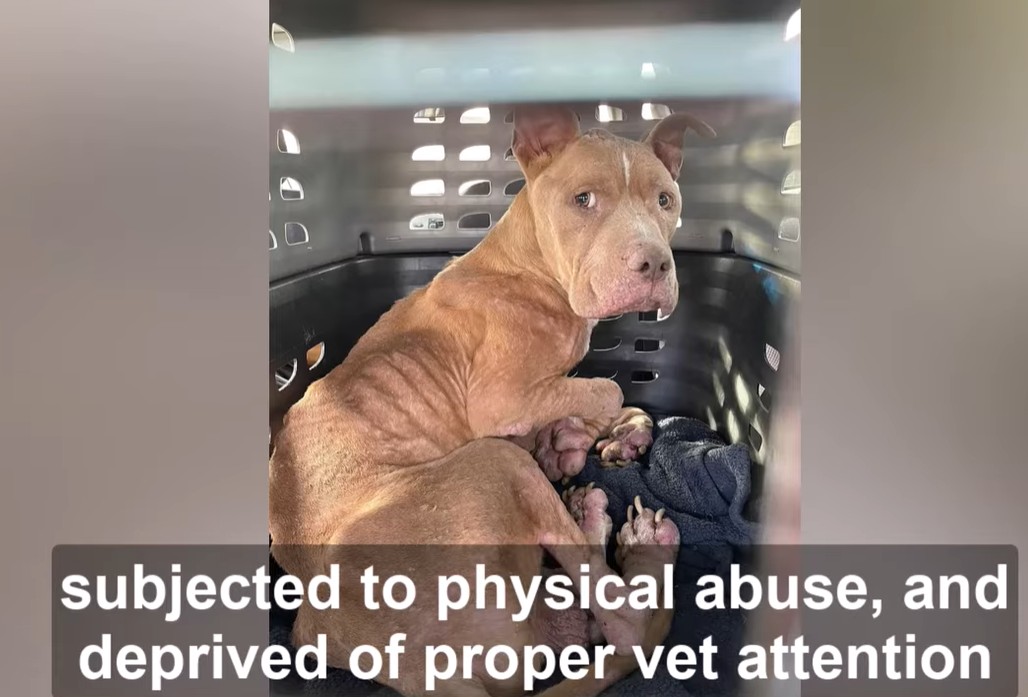
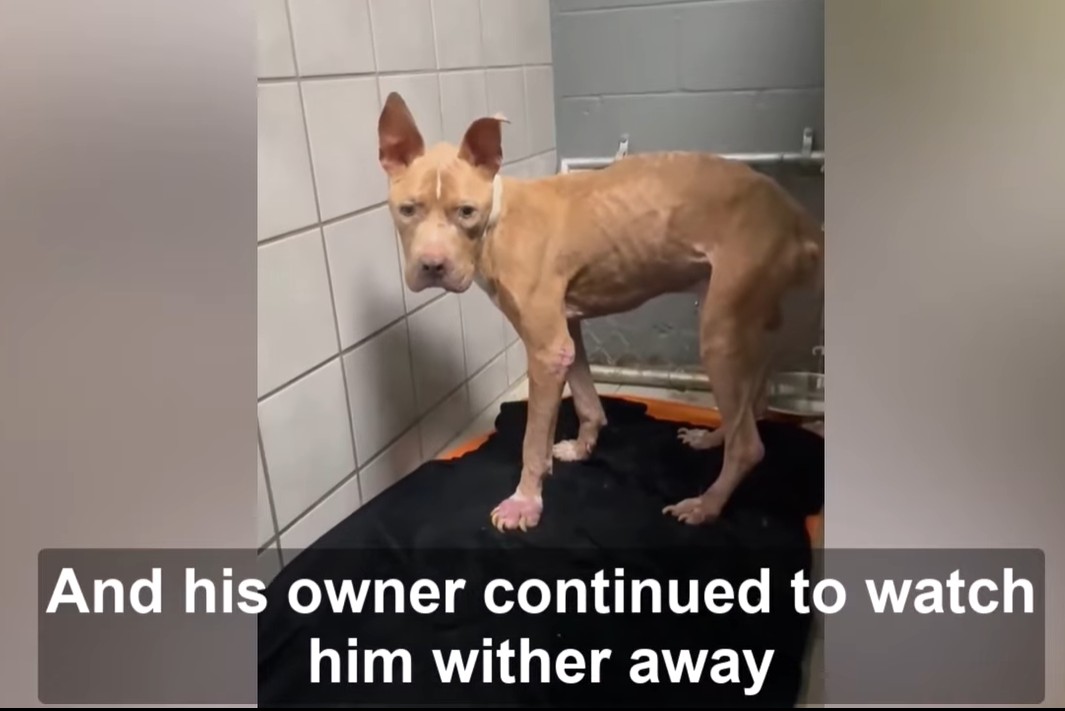
His ribs and hips were sharply visible.
There was very little muscle covering his frame.
Even basic movement required energy he did not have much of.
But starvation was not the only concern.
Gator’s paws were inflamed and painful.
His ears were badly infected.
His skin also required attention.
The medical team began addressing each problem while carefully rebuilding his nutrition.
For a severely underweight dog, recovery cannot simply mean offering unlimited food at once.
His weakened body needed time and controlled support.
So treatment began with the basics.
Careful meals.
Medication.
Clean bedding.
Treatment for his ears and paws.
And rest.
Gentle Hands Were Something Gator Had to Learn
One of the most striking parts of Gator’s first days in care was how he responded to ordinary attention.
During bathing and treatment, he trembled.
Hands moved carefully over the body that had become so fragile.
People spoke softly to him.
Blankets replaced the dirt where he had been lying.
And instead of reacting aggressively, Gator appeared uncertain.
The dog rescuers had been warned about did not match the description they had been given.
He allowed people to care for him.
As the days passed, he began leaning into touch.
He stayed near caregivers rather than trying to move away.
Those behaviors did not tell rescuers everything about Gator’s past.
They could only respond to the dog in front of them.
And the dog in front of them seemed increasingly interested in comfort and companionship.
His body still had a long way to go.
But trust was beginning to appear before his weight had fully returned.
Two Weeks Later, Recovery Became More Complicated
Gator gradually gained strength, but healing did not move in a straight line.
After roughly two weeks, his paws remained a major concern.
The inflammation had not responded as quickly as everyone hoped.
Further evaluation reportedly revealed a chronic skin condition that would require more specialized treatment.
That discovery helped explain why some of his physical problems persisted even after he began receiving regular food and basic medical care.
His recovery plan had to change.
The team continued treating the infections while addressing the underlying skin condition.
Nutrition remained important.
So did monitoring his weight and overall strength.
Some days showed obvious progress.
Other days were focused on problems that had not yet resolved.
That is often the less visible part of rescue.
Removing an animal from a dangerous situation can happen in a single day.
Repairing what came before may take weeks or months.
Gator’s caregivers stayed with that slower part too.
The Dog Labeled “Aggressive” Began Seeking Affection
As Gator became physically stronger, more of his personality appeared.
He did not become increasingly defensive as his energy returned.
Instead, rescuers saw a dog who enjoyed being near people.
He leaned against caregivers.
He accepted affection.
He seemed to relax when someone sat beside him.
The contrast with the original warning was difficult to ignore.
Labels can follow dogs into rescue long before anyone has had the chance to observe them in a different environment.
Fear, pain, confinement, illness, and unfamiliar handling can all affect behavior.
In Gator’s case, the people caring for him focused on what he showed them day after day.
A dog who wanted comfort.
A dog who could respond gently to care.
A dog whose body had suffered, but whose ability to connect with people remained.
Meanwhile, regular meals slowly changed his frame.
His face filled out.
His movements became easier.
His eyes appeared more alert.
The transformation was happening one ordinary day at a time.
Sixty Days Later, Gator Was Finally Ready for the Next Step
Around two months after his rescue, Gator reached another milestone.
After weeks of medical treatment, nutritional support, and continued monitoring, the team believed he was stable enough to move forward.
He was ready to leave intensive care.
Not because every challenge had disappeared.
His skin condition still required attention.
His emotional adjustment would continue.
But the dog who had once been too weak to stand in a backyard was now strong enough for the next part of his recovery.
A foster home was waiting.
That meant a different kind of life.
No tether holding him to the same patch of ground.
No sleeping outside in the dirt.
No uncertainty about whether treatment would come.
Instead, Gator would have a home environment where he could continue building strength and learning daily routines.
Meals.
Walks.
Rest.
Human companionship.
The ordinary things his body and behavior had been missing.
The Backyard Was No Longer His Entire World
There had been a time when Gator’s world seemed to extend only as far as his tether allowed.
That image is what first drew attention to him.
A skeletal dog.
A dirt yard.
A body that appeared to be running out of time.
But rescue changed the size of his world.
First came a vehicle carrying him away.
Then a veterinary clinic.
New people.
Medical treatment.
A clean place to sleep.
Eventually, a foster home.
Each change gave Gator something his previous circumstances had not.
Options.
He could move.
He could approach people.
He could rest somewhere comfortable.
He could receive help when his paws hurt.
Most importantly, his condition was no longer something happening quietly where few people were paying attention.
Someone was watching now.
Gator Did Not Need to Prove He Deserved Help
Gator’s story can easily become a debate about what people should have noticed sooner.
But for the dog himself, the most important moment came when someone finally acted.
He did not need to behave perfectly.
He did not need to overcome his fear immediately.
He did not need to become healthy overnight.
He simply needed people willing to care for the condition he was actually in.
At first, that meant helping a dog who could barely stand.
Then it meant treating infections and rebuilding weight.
Later, it meant investigating why his paws were not healing as expected.
Eventually, it meant giving him a foster home where recovery could continue outside the clinic.
Sixty days cannot erase everything that happened before rescue.
But they can change what happens next.
Gator is no longer lying in the same backyard while his body becomes thinner.
He has food.
Medical care.
A safe place to rest.
And people learning who he is without relying on the label that once followed him.
For the first time in a long while, Gator is not simply surviving where someone left him.
He is moving forward.
And this time, there are people moving with him.


