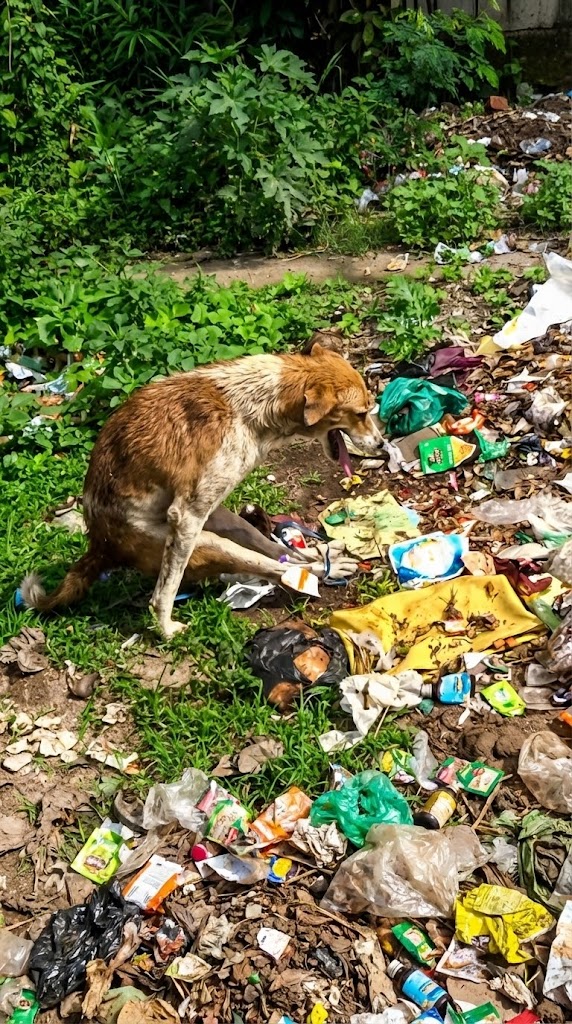
When rescuers first met Comfy, his body was almost completely still.
His spine had been injured, and his hind legs were unresponsive. He could not stand. He could not walk away from danger. Even changing position required help.
Then they noticed something they could not explain.
His back legs had been loosely tied together.
No one knew who had done it or why.
Perhaps someone had believed it would somehow help him. Perhaps there was another explanation that would never be known.
What mattered now was the dog in front of them.
Comfy needed intensive rehabilitation if he was ever going to stand again.
But before anyone could help his body move, they would have to solve another problem.
He was terrified of being touched.
At First, His Silence Looked Like Calm
During Comfy’s earliest days in care, he seemed unusually quiet.
He ate.
He rested.
He did not resist when people approached.
There was little barking and almost no attempt to defend himself.
Because of that seemingly relaxed behavior, the team began calling him Comfy.
But as his condition stabilized and medication began easing some of his physical discomfort, his behavior changed.
The quiet dog became watchful.
Then defensive.
When hands moved toward him, Comfy barked.
He growled.
Sometimes he snapped when people came too close.
The caregivers could not know exactly which past experiences had shaped those reactions.
They only knew what they were seeing now.
Touch frightened him.
And that created a serious obstacle.
To recover physically, Comfy needed people to handle his body every day.
But each attempt to do that made him panic.
VIDEO: Comfy Arrived Unable to Use His Back Legs—Then Caregivers Realized He Was Afraid of Every Touch
The Therapy He Needed Was the One Thing He Couldn’t Accept
Comfy had significant weakness in his hindquarters.
His muscles had lost strength, and his body needed regular rehabilitation to have any chance of improving.
That meant assisted movement.
Gentle stretching.
Support while changing positions.
Eventually, exercises intended to help his legs begin working again.
None of it could happen effectively while Comfy reacted strongly to every hand reaching toward him.
Trying to force the process would only make his fear worse.
So the team changed the plan.
Before teaching Comfy to stand, they would teach him that people could be nearby without demanding anything.
Caregivers sat close to his enclosure.
They spoke quietly.
Food was offered without reaching suddenly toward him.
If Comfy became tense, they stopped.
If he growled, they listened to the warning rather than punishing it.
The goal was not to make him tolerate touch as quickly as possible.
It was to give him enough predictable experiences that being near people no longer felt like something he needed to defend himself from.
For a while, progress looked like almost nothing.
But almost nothing was exactly where they had to begin.
A Tiny Tail Movement Changed the Mood
Then one day, someone noticed Comfy’s tail.
It moved.
Only slightly.
There was no dramatic celebration from the dog himself.
No sudden rush toward the caregivers.
Just a brief movement that had not been there before.
To the people watching him every day, it mattered.
Comfy was beginning to respond differently.
Over time, the constant defensive reactions became less intense.
He still watched people carefully.
He still needed space.
But barking did not always come first.
Growling became less frequent.
Curiosity began appearing beside the fear.
Eventually, Comfy allowed a person to remain closer.
Then he leaned slightly toward someone rather than pulling away.
Those were the moments that made physical rehabilitation possible.
Not because his fear had disappeared.
Because he was starting to understand that he could communicate discomfort and the people around him would respond.
Trust was growing through repetition.
And once Comfy could accept gentle contact, the team could finally begin asking more from his body.
His Legs Had to Learn Everything Slowly
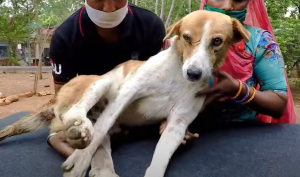
Physical therapy began carefully.
After such a long period without normal use, Comfy’s hind legs did not simply start working because someone placed them beneath him.
His muscles were weak.
Balance was difficult.
Supporting his own weight took enormous effort.
Caregivers assisted him through exercises while watching his reactions closely.
Some sessions went better than others.
There were days when Comfy participated for longer.
There were days when he seemed tired or unwilling to continue.
The team adjusted accordingly.
Progress was measured in very small changes.
Holding a position a little longer.
Putting slightly more weight through the hind legs.
Making a movement that had not been possible weeks earlier.
The process required exactly the same thing his emotional recovery had required.
Patience.
No single exercise changed everything.
But repeated often enough, those exercises began giving Comfy’s body an opportunity to respond.
Standing Came Long Before Walking
One of the biggest milestones was simply getting upright.
For a dog who had arrived unable to use his hind legs, standing required coordination that had once been automatic.
His caregivers supported him.
Comfy tried to balance.
At first, the position lasted only briefly.
Then he became stronger.
His hindquarters began contributing more.
The amount of assistance he needed gradually decreased.
Standing became something he could practice rather than something entirely impossible.
From there came the next challenge.
Moving forward.
The early attempts were awkward.
His legs did not always land where he seemed to expect them to.
Balance could disappear quickly.
But Comfy kept participating.
A body that had spent months unable to walk was slowly learning how to perform familiar movements again.
And this time, human hands were no longer only something he feared.
They had become part of the support helping him stay upright.
Nearly Six Months Later, One Step Became More
Around six months after Comfy entered care, his rehabilitation reached the moment everyone had been working toward.
He stepped forward.
It was not smooth.
It was not fast.
And it certainly did not look like the movement of a dog who had never been injured.
But it was a step he made using his own recovering body.
Then came another.
As strength and coordination continued improving, Comfy was able to move farther.
Walking became steadier.
His confidence increased alongside his physical ability.
Eventually, something that once seemed very distant became part of his routine.
Comfy could run.
The caregivers who had known him as an immobile dog began jokingly calling him the “Joyful Jogger.”
The nickname fit a dog whose movement had become almost the opposite of what they had first seen.
But the transformation was not only in his legs.
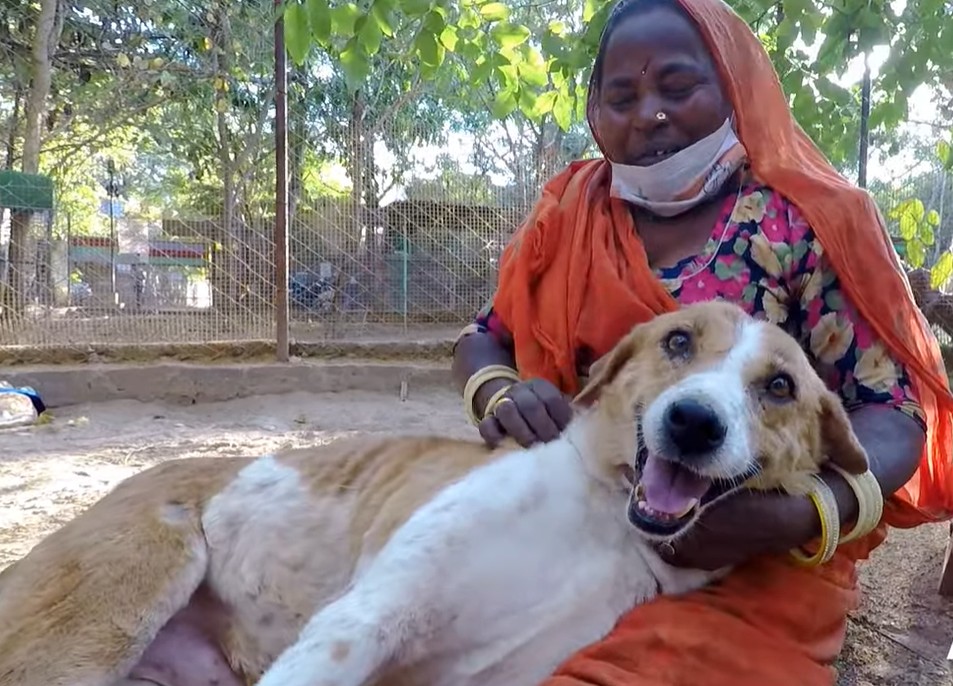
Comfy was also allowing closeness that once would have frightened him.
The same dog who had snapped when hands approached could now rely on people while exploring a world he had once been unable to move through.
His Greatest Progress Wasn’t Measured in Steps
It would be easy to make Comfy’s story entirely about walking again.
Paralyzed dog.
Months of rehabilitation.
First step.
Then running.
Those milestones were extraordinary.
But they were only possible because something else happened first.
Comfy learned that contact did not always have to be frightening.
His caregivers did not erase that fear in one dramatic moment.
They worked around it.
They respected it.
They gave him repeated experiences in which people came close without forcing him to surrender control.
Only after that foundation existed could therapy become consistent.
The physical and emotional parts of his recovery were connected.
The hands Comfy once tried to avoid eventually became the same hands supporting his body while he practiced standing.
Then walking.
Then needing less support at all.
Comfy Finally Learned What Those Hands Were There to Do
No one could change how Comfy arrived.
His back legs had been tied.
His spine was injured.
His muscles were weak.
And his reaction to human contact suggested that handling had become deeply uncomfortable for him.
The rescuers could not confidently explain every part of his past.
So they focused on what they could change.
What happened next.
A person sitting quietly rather than reaching.
Food offered without pressure.
A warning growl respected.
One small tail movement noticed.
One cautious lean toward someone.
Then therapy.
Standing.
A first uncertain step.
And eventually, running.
Comfy’s journey took nearly six months because there was no shortcut through either part of his recovery.
His body needed time.
So did his trust.
Today, the most remarkable image may not be Comfy running.
It may be remembering the dog who once could not move away from a hand he feared—and comparing him with the dog who eventually learned to accept that same kind of hand as support.
Comfy did more than regain movement.
He discovered that being touched did not always have to mean something frightening.
Sometimes, it could mean someone was simply helping him stand.


