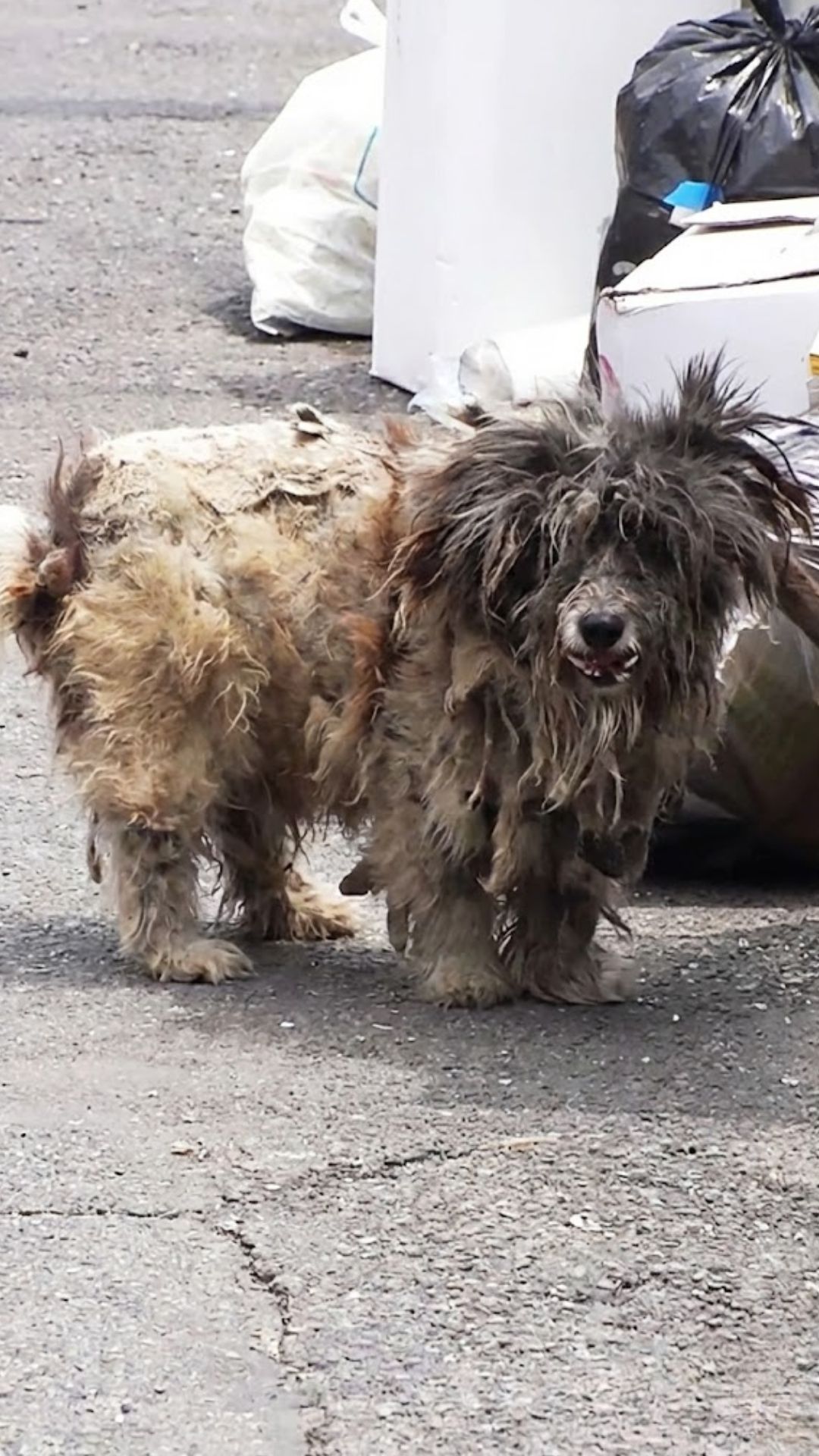
At first, people were not even sure what they were looking at.
Something moved slowly across the pavement beneath the summer heat.
From a distance, it resembled a bundle of dirty fabric being pushed along by the wind.
Then it moved again.
There was a dog underneath.
His coat had become so severely matted that most of his body was hidden beneath thick, tangled layers of fur. His face was difficult to see. His legs disappeared beneath the mats. Even walking seemed awkward.
He moved slowly.
Then returned to the same place he always did.
An abandoned building.
People in the neighborhood had seen him there for years.
They did not know every detail of his history.
But they knew one thing.
No matter where he wandered during the day, he kept coming back.
And according to those familiar with him, he had been doing it for nearly three years.
The Empty Building Was the Closest Thing He Had to Home
The building had been vacant for a long time.
Its doors remained closed.
The people who had once lived there were gone.
Yet the dog continued returning.
There is no way to know exactly what he remembered or why that particular place mattered so much to him.
What could be observed was simple.
He stayed close to it.
He rested there.
He returned after wandering.
And despite the lack of anyone waiting inside, he seemed reluctant to leave the area for long.
Then someone noticed another clue.
Hidden beneath the badly tangled coat was an old collar.
Faded.
Worn.
Easy to miss beneath all the fur.
It suggested that at some point, this dog had probably lived differently.
Someone had put that collar around his neck.
Someone may once have known his routines.
Somewhere along the way, that life ended.
The collar remained.
So did he.
Video: He Returned to the Same Empty House for Nearly Three Years — Until Rescuers Finally Reached Him
One Neighbor Began Showing Up Every Day
Most people kept their distance.
The dog was frightened of human contact.
If someone approached too quickly, he tried to move away.
His coat made running difficult, but fear still pushed him to create whatever distance he could.
One woman living nearby chose another approach.
She did not chase him.
She did not try to grab him.
She brought food.
Then she stepped back.
The first time, perhaps he waited until she was far enough away.
The next day, she returned.
Food again.
Water.
Then space.
The pattern continued.
She did not require him to come close in exchange for being fed.
She simply made sure something was available.
Day after day, the dog began learning one predictable fact about her.
She came back.
That mattered because nearly everything else in his life appeared uncertain.
The building was empty.
His coat continued worsening.
His body seemed to grow weaker.
But there was now one person whose footsteps regularly meant food rather than danger.
His Condition Was Getting Harder to Ignore
As time passed, the woman noticed changes.
The dog was moving more slowly.
The heavy coat appeared increasingly restrictive.
Standing seemed to take more effort than before.
At times, his small body trembled.
Whatever ability he had developed to survive around the abandoned property was no longer enough.
Food alone could not address everything happening beneath the fur.
The woman needed help.
A rescue team was contacted.
When they arrived, they immediately understood that catching him would require planning.
He was frightened.
He knew the spaces around the building.
And even in his weakened condition, he tried to retreat whenever unfamiliar people came too close.
Rushing could make him panic.
So the team began carefully limiting the places where he could disappear.
The goal was not to frighten him into submission.
It was to prevent him from reaching somewhere dangerous or impossible to access.
The rescuers moved slowly.
One opening was blocked.
Then another.
The dog kept trying to maintain distance.
Eventually, he reached a smaller enclosed area.
There was nowhere else he needed to run.
He stopped.
The rescuers finally came close enough to secure him safely.
For the first time in years, the dog was leaving the abandoned building without having to return to it later.
Under the Matted Coat Was a Much Smaller Dog
Once he was safe, attention turned toward the fur.
The mats were severe.
They had formed across large areas of his body, creating heavy sections that pulled against the skin and obscured his true size.
Removing them was not cosmetic.
It was necessary before anyone could properly understand his physical condition.
The grooming had to be done carefully.
The skin underneath could be sensitive.
Injuries or irritation might be hidden inside the coat.
So the team worked gradually.
A section came away.
Then another.
The shape of his body began appearing.
He was far thinner than the coat had made him look.
His frame was fragile.
Years of outdoor living appeared to have taken a significant toll.
The dog who had resembled a pile of rags outside the building was now visible.
Small.
Exhausted.
And in need of much more than a haircut.
The Medical Examination Changed What Everyone Hoped For
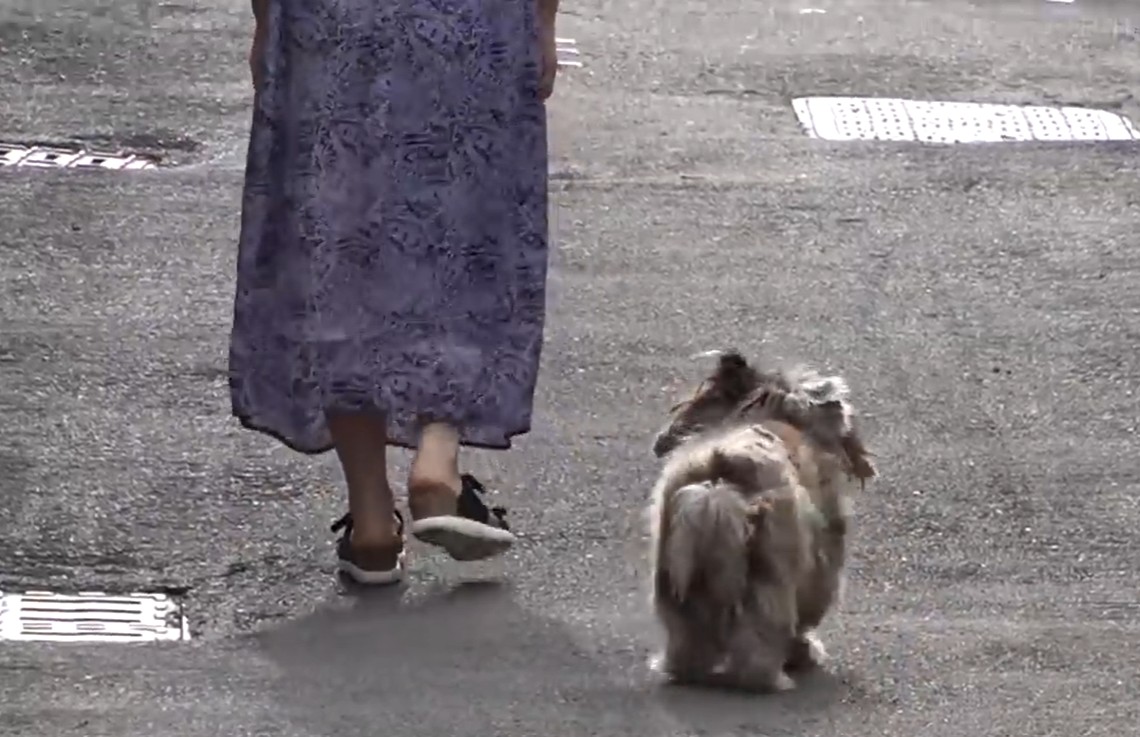
After grooming, veterinarians could examine him more thoroughly.
The rescue account makes clear that his condition was serious.
His body had been through a long period of hardship.
By this point, the goal was no longer simply to restore him to perfect health.
Some of what had happened could not necessarily be undone.
That is an important part of rescue stories that is sometimes left out.
Not every animal reaches help early enough for every problem to be reversed.
Not every transformation ends with running across a yard.
Sometimes medicine can improve comfort without promising a complete recovery.
For this dog, the focus became quality of life.
Food he did not need to search for.
A clean place to rest.
Medical attention.
Warmth.
Relief from the heavy coat.
People nearby who could notice when he was uncomfortable.
These things may have seemed modest compared with a dramatic recovery.
To a dog who had spent years outside an empty building, they represented an enormous change.
The Woman Who Fed Him Did Not Ask How Much Time Was Left
The woman from the neighborhood had already spent a long time helping from a distance.
She knew his habits.
She had watched him return to the same building.
She had left food day after day while allowing him to decide how close he was willing to come.
Now the situation was different.
The dog no longer needed only meals.
He needed somewhere to live.
His medical condition meant that the future might not look like the long, carefree life people naturally hope for after a rescue.
That did not change her decision.
She stepped forward.
There was no requirement that he become young again.
No expectation that all of his health problems disappear.
She simply wanted him to have whatever time remained somewhere safe.
The dog who had spent years returning to an empty building finally had another place to go.
This time, someone would actually be waiting there.
Learning a New Home Was Different From Returning to the Old One
A permanent indoor space brought unfamiliar things.
Soft bedding.
Regular meals.
Walls that belonged to people who were still present.
Human voices that did not disappear forever when the door closed.
For a dog who had spent so much time outdoors, adjustment could not be assumed to happen immediately.
So once again, patience mattered.
He was allowed to rest.
He did not need to constantly interact.
His new caregiver already understood that forcing closeness had never been the way to reach him.
That had been true beside the abandoned building.
It remained true inside the home.
Meals arrived.
Water remained available.
A warm place to sleep did not vanish overnight.
The same woman who had once placed food down and stepped away was now part of his everyday environment.
Gradually, familiarity took the place of uncertainty.
The dog no longer had to decide whether to return to the empty building.
There was somewhere else he belonged now.
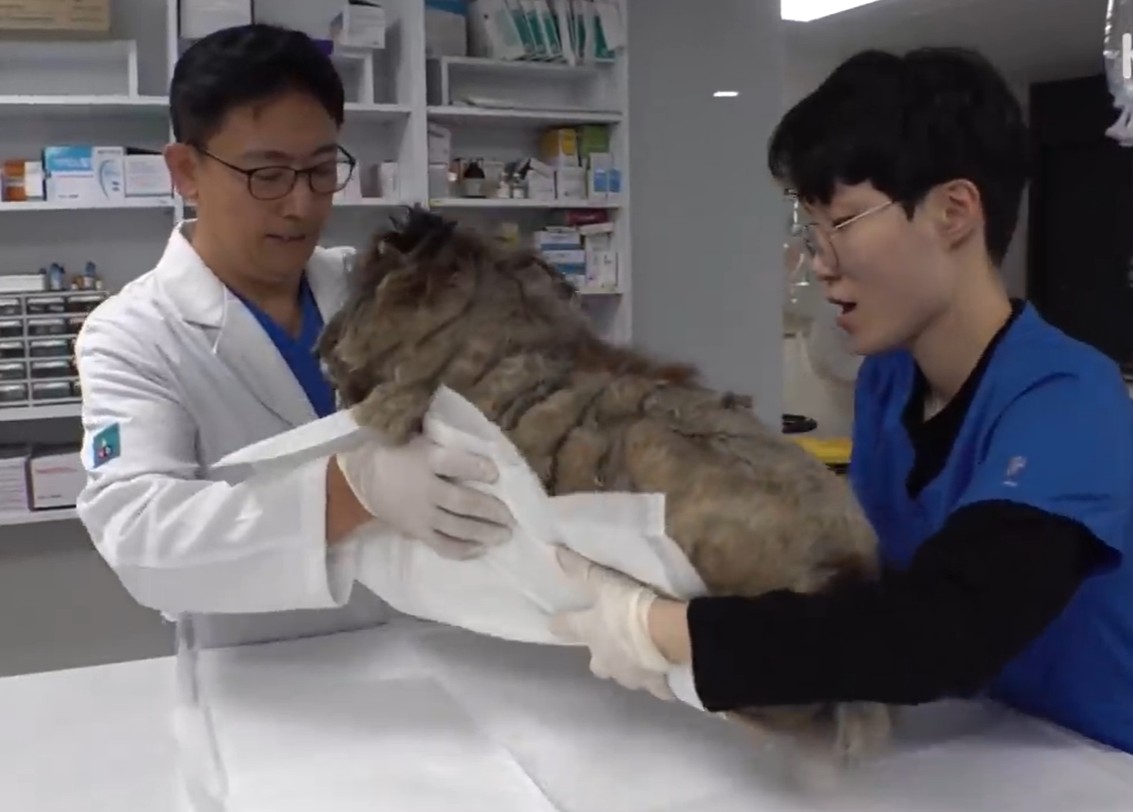
The Biggest Change Was That He No Longer Had to Wait
For years, the abandoned structure had remained at the center of his routine.
He could wander.
Eat when food was available.
Avoid people.
But eventually, he returned.
Again.
And again.
It is tempting to imagine that he was consciously waiting for the people who had once lived there.
We cannot know that.
Animals cannot explain why one location becomes important.
What we can say is that the dog repeatedly chose that place even after it was empty.
And eventually, another person gave him an alternative.
A home that was not abandoned.
A person who did not disappear.
Food that arrived regularly.
Care that became part of every day rather than an occasional event.
Perhaps the most important difference was not physical.
He no longer had to structure his life around an empty place.
His Rescue Was Not About Making Him Perfect
Some rescue stories are easy to celebrate visually.
A weak dog becomes strong.
A hairless dog grows a full coat.
An injured dog runs again.
This story was different.
There was still a transformation.
The mats were removed.
He was cleaned.
He received veterinary care.
He moved somewhere protected.
But the most meaningful outcome was quieter.
Comfort.
For an older, medically fragile animal, comfort is not a lesser ending.
It can be everything.
A soft place instead of pavement.
Shade instead of summer heat.
Warmth instead of cold nights.
Someone checking on him.
Someone noticing whether he eats.
Someone there when his body needs help.
The woman who had spent so long feeding him from a distance was now able to provide those things directly.
She could not return the years he had spent outside.
She could change the days ahead.
So she did.
The Old Collar Stayed as a Reminder of a Life No One Fully Knew
That faded collar beneath the mats remains one of the most striking details in his story.
It revealed very little.
But it suggested so much.
The dog had not always been completely disconnected from people.
At some point, someone had placed something around his neck.
Then years passed.
The collar aged.
The coat grew around it.
The building emptied.
And the dog remained.
No one involved in the rescue could reconstruct every missing chapter.
Nor did they need to.
Rescue does not require knowing everything that happened before.
Sometimes the only question that matters is:
What does this animal need now?
For him, the answer had changed over the years.
At first, food helped.
Eventually, food was no longer enough.
He needed medical care.
Grooming.
Shelter.
And someone willing to take responsibility for a dog whose future might be limited.
That person was already there.
She had been showing up for him long before he allowed her to come close.
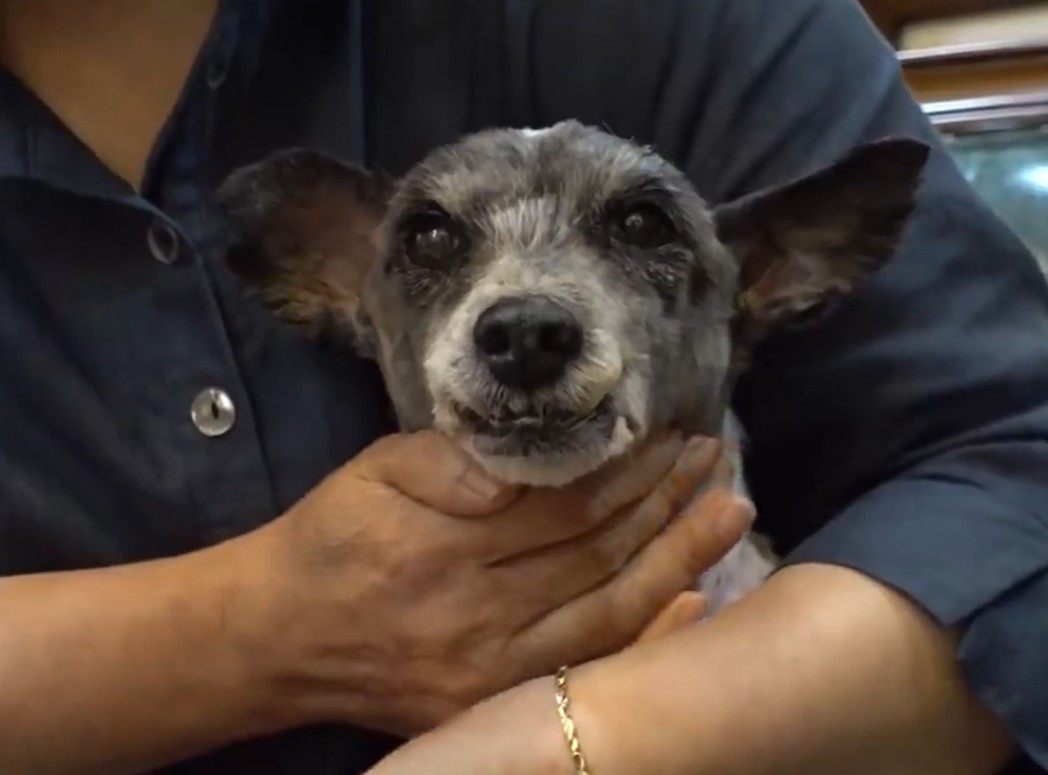
He Finally Had Somewhere to Rest Without Returning to the Street
The dog once slept near an abandoned structure because it was the place he knew.
Now he could lie down somewhere warm.
The difference may sound simple.
It was not.
Outside, rest still required awareness.
Weather changed.
People passed.
Food was uncertain.
The dog had to be ready to move if something frightened him.
At home, rest could simply be rest.
He could close his eyes.
Wake up.
And find the same surroundings still there.
The same person nearby.
The same bowl.
The same bed.
Those repetitions can turn an unfamiliar place into something an animal recognizes.
Not all at once.
Gradually.
Exactly the way this woman had first earned his trust.
She had never rushed him beside the old building.
Now she did not rush him here either.
Sometimes Rescue Means Giving Peace Instead of a Miracle
By the time help reached him, the dog had already lived through years that could not be rewritten.
There was no dramatic treatment capable of returning every lost opportunity.
But rescue was still meaningful.
Perhaps especially so.
Because an animal does not need years of perfect health ahead for kindness today to matter.
One comfortable evening matters.
One full meal matters.
One night indoors matters.
Then another.
The woman who chose him understood that.
She did not wait for proof that he could become the picture-perfect adoption story.
She took him as he was.
A dog with a difficult history.
An aging body.
Health concerns.
And whatever time remained.
There is something powerful in that kind of choice.
Not saving only the animals most likely to become easy success stories.
Caring for the one who may simply need a peaceful ending to a difficult chapter.
For Nearly Three Years, He Kept Returning to an Empty Place
That is the image his story begins with.
A dog hidden beneath layers of matted fur.
Moving through the heat.
Returning to an abandoned building.
Keeping his distance from people.
Then one woman began leaving food.
She returned the next day.
And the next.
Eventually, she realized feeding him was no longer enough.
A rescue team came.
The heavy coat was removed.
Veterinarians examined him.
And when the future became uncertain, the same woman made another decision.
He would come home with her.
The building did not become less empty.
The past did not change.
The dog simply no longer needed to go back.
That may be the most meaningful part of his rescue.
For years, he had one place he continued returning to even though nobody was there.
Now he had somewhere different.
A place with warmth.
A bed.
Care.
And a person whose presence had already been proven through hundreds of small returns.
The dog who spent years waiting outside an empty building finally stopped waiting.
Not because the people from his past came back.
Because someone new kept showing up—
until he understood he no longer had to be alone.


