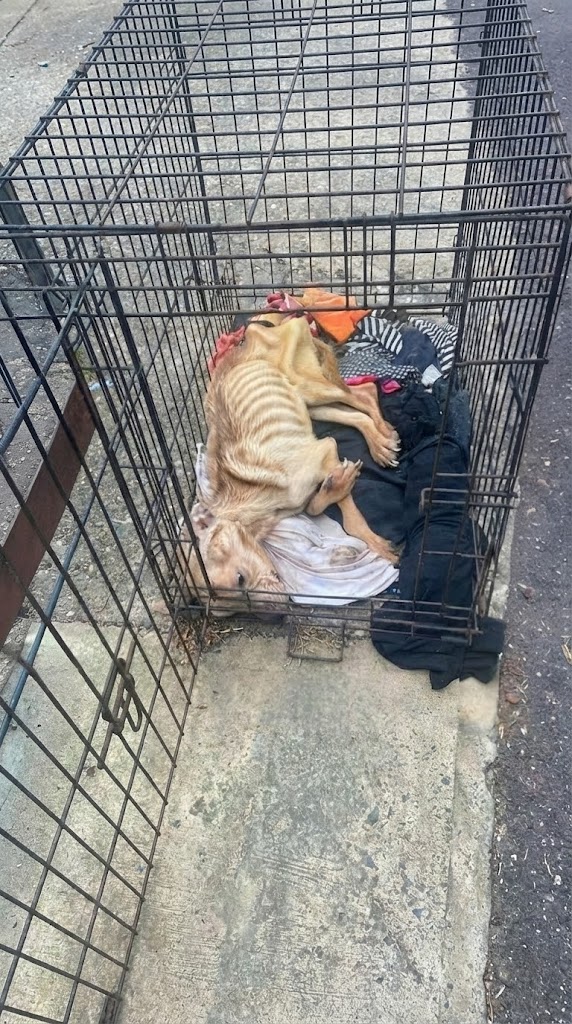
The property looked almost completely abandoned.
An eviction had emptied the house, leaving behind broken furniture, scattered debris, and the silence that follows when everyone has gone.
Rescuers were preparing to leave when someone noticed something near the fence.
A small metal crate.
Inside was a tiny dog.
She was so still that, for a moment, no one knew whether she would respond at all.
Her body was painfully thin.
Much of her coat had disappeared.
And her breathing was so shallow it was difficult to see.
Later, they would learn her name was Lexi.
At that moment, she needed only one thing.
Immediate help.
Lexi Weighed Only Eight Pounds
Once the crate was opened, the scale of Lexi’s condition became clearer.
She weighed just eight pounds.
Her muscles had wasted away.
Her body was severely depleted from starvation, dehydration, and prolonged confinement.
The small crate offered almost no room for normal movement.
There was nowhere comfortable to stretch.
No warm bed.
No way for Lexi to leave on her own.
She barely reacted when rescuers approached.
There was no energetic barking.
No attempt to escape.
She simply remained still while gentle hands reached toward her.
That lack of response made the situation even more urgent.
Lexi was wrapped carefully in blankets and lifted from the crate.
Video: Rescuers Found an Eight-Pound Dog Barely Moving Inside a Crate — Then Lexi Lifted Her Head
Her Body Temperature Had Fallen Dangerously Low
At the veterinary clinic, the team began working immediately.
Lexi’s body temperature was dangerously low.
Her heart was struggling to maintain a steady rhythm.
She was severely dehydrated and physically exhausted.
Intravenous fluids were started.
Heating pads surrounded her small body.
An albumin transfusion was also given to support her weakened condition.
There was no guarantee that she would respond.
For the first few days, Lexi remained extremely fragile.
Some mornings, she opened her eyes and reacted to voices.
At other times, she barely moved.
Volunteers stayed close.
One person gently massaged her stiff legs to help maintain movement.
Others sat beside her and spoke quietly.
The medical work was focused on keeping her stable.
Everything else could wait.
Then One Morning, Lexi Lifted Her Head
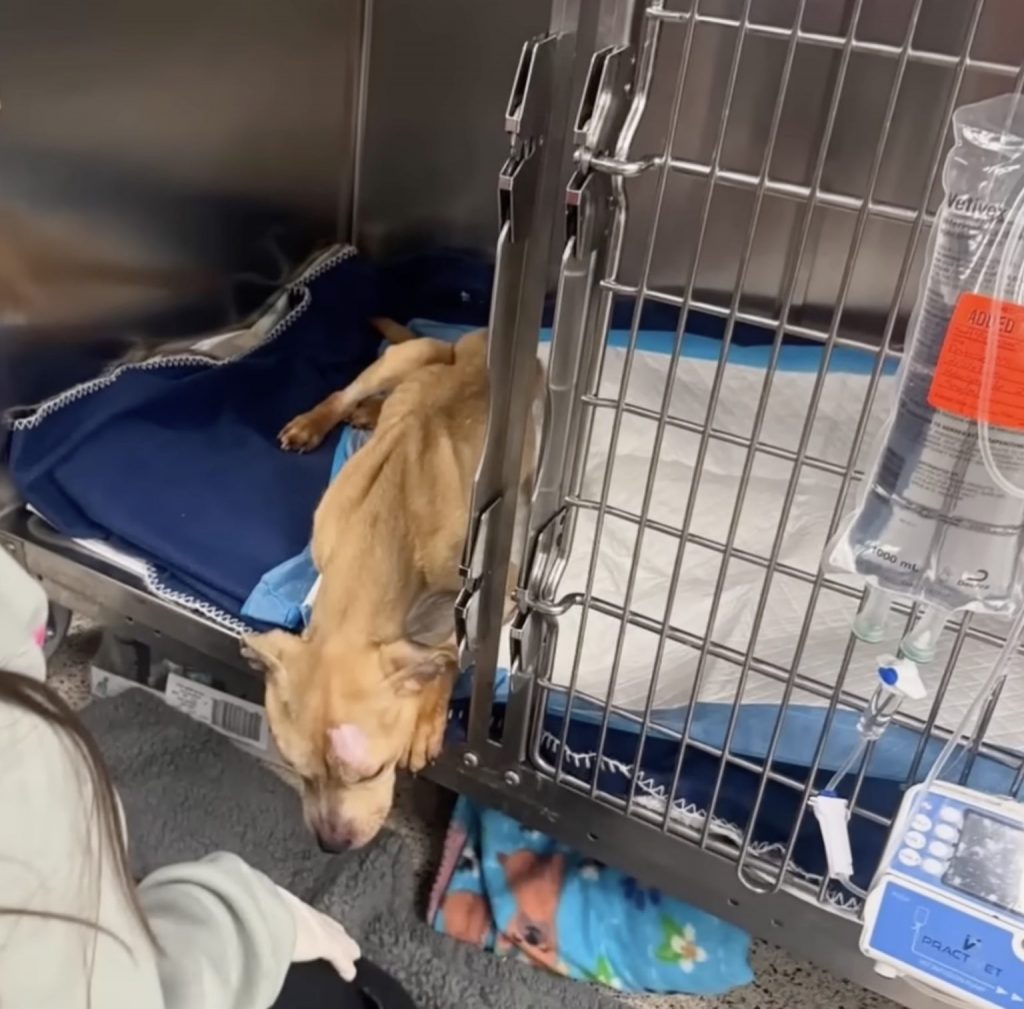
The first important change was small.
Lexi lifted her head.
Her neck trembled.
She could hold the position only briefly before lowering it again.
But it was the clearest sign yet that her body was beginning to recover.
More changes followed.
Lexi managed to sit upright.
She accepted tiny bites of food.
With support, she began placing weight on her legs.
At first, standing required gentle hands on either side of her body.
Her legs shook beneath her.
Then came another moment the caregivers had been waiting for.
Her tail moved.
Only once at first.
But from a dog who had barely reacted inside the crate, even that small movement mattered.
Strength Returned One Ordinary Day at a Time
As days became weeks, Lexi’s condition gradually improved.
Her appetite became more consistent.
Weight returned.
Her coat began thickening.
Her eyes appeared more alert.
And with greater physical strength came more interest in the world around her.
At first, unfamiliar toys startled her.
Then curiosity began winning.
She sniffed them.
Touched them with her nose.
Eventually, she pawed at them and reacted to the sounds they made.
Caregivers also noticed changes in the way Lexi responded to people.
She watched familiar staff enter the room.
She leaned into gentle touch.
She began greeting people with more visible interest.
Recovery was no longer only about keeping her alive.
Lexi finally had enough energy to explore.
The Dog Who Could Barely Stand Started Acting Like a Dog Again
The transformation continued gradually.
Lexi moved more comfortably.
Her body filled out.
Her coat became healthier.
She began approaching familiar caregivers instead of remaining still and waiting for them to come to her.
Ordinary experiences became part of her days.
Walking around a room.
Resting on soft bedding.
Investigating toys.
Receiving affection.
These moments may have looked simple, but they represented an enormous change from the dog found confined inside the metal crate.
Lexi no longer needed every ounce of energy just to remain conscious and warm.
She could use that energy for curiosity.
For movement.
For companionship.
And eventually, for the next part of her life.
A Family Gave Lexi a New Name

When an adoptive family eventually came to meet her, they saw a much stronger dog than the one rescuers had carried from the abandoned property.
They chose to bring her home.
And with that new beginning came a new name.
Molly Brown.
The name was inspired by the woman famously known as “the unsinkable Molly Brown.”
For a tiny dog who had survived such severe neglect, it seemed fitting.
The ride home was another unfamiliar experience.
Molly trembled at first.
Her new family kept her close and spoke gently.
Along the way, she was introduced to another very ordinary pleasure—a pup cup.
By the time they arrived home, she was beginning to settle into the arms holding her.
The transition was only beginning.
But for the first time, Molly was entering a house where she had been deliberately welcomed.
The Crate Against the Fence Is No Longer Her World
Updates from Molly’s new family showed a dog living a completely different life.
She slept on soft blankets.
She rested in patches of sunlight.
She explored her home.
Her movements became confident.
The tiny dog who once weighed eight pounds and barely reacted to voices was now participating fully in the routines around her.
Her rescue did not happen in a single dramatic moment.
It happened in layers.
Someone noticed a crate.
Someone opened it.
Veterinarians restored warmth and hydration.
An albumin transfusion supported a body that had almost nothing left.
Then came food.
The first lifted head.
The first supported stand.
The first tail movement.
Weeks of rebuilding strength.
And finally, a family.
Once, Lexi’s entire world had been the inside of a metal crate beside an empty house.
Today, Molly Brown has something far larger.
A home where someone notices when she enters the room—and expects her to stay.


