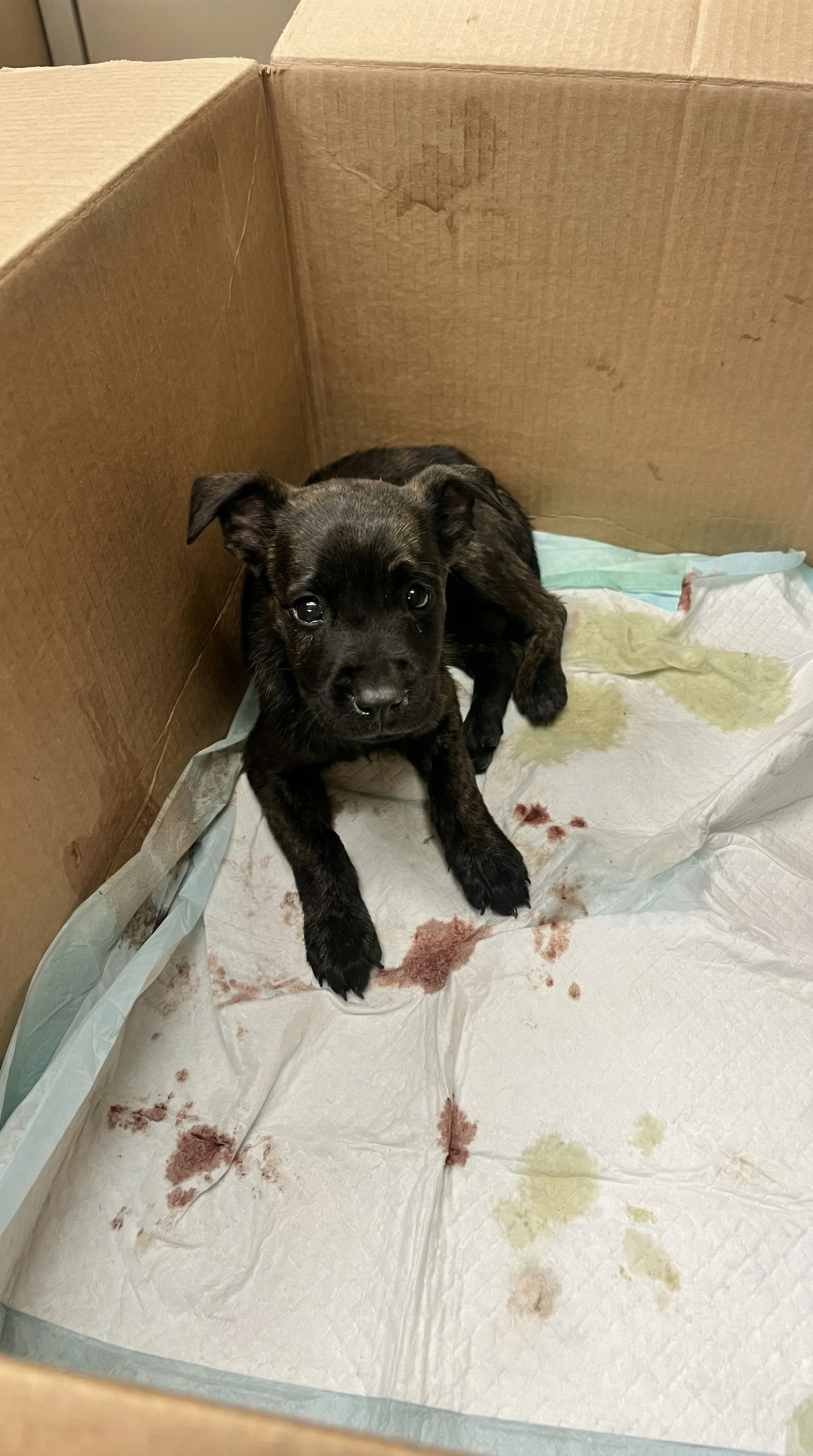
There was nothing unusual about the cardboard box sitting outside the small rural Missouri shelter.
No note that could explain what had happened.
No person waiting nearby.
Just a box left quietly at the door.
Then the staff looked inside.
A tiny puppy was lying there.
She weighed only five pounds and appeared dangerously weak. She had little interest in food, barely enough energy to respond, and was passing blood—signs that immediately raised serious concern.
The shelter team knew she needed more than they could provide on their own.
Whatever had brought her to that doorstep, one thing was clear.
If she was going to have a chance, someone had to move quickly.
She Was Too Sick for the Small Shelter to Treat Alone
The puppy’s condition pointed toward one of the illnesses rescue workers fear most in young dogs.
Parvovirus.
Parvo can become especially dangerous for puppies because severe gastrointestinal illness can quickly lead to dehydration and profound weakness.
And this puppy was already in poor condition when she arrived.
The rural shelter did not have an advanced isolation unit or the level of around-the-clock medical support she appeared to need.
Keeping her there and hoping for improvement was not enough.
So the staff began looking beyond their own doors.
They contacted Stray Rescue of St. Louis, an organization with experience caring for seriously ill rescue animals.
The situation was urgent.
A five-pound puppy was declining.
There was little time for lengthy discussions.
When the call reached Stray Rescue, the answer was simple.
They would take her.
The little puppy also received a name.
Rockin’ Robin.
It was a cheerful name for an animal whose first hours in rescue were anything but easy.
Video: Left in a Cardboard Box at the Door, 5-Pound Robin Was Running Out of Time
By the Time Robin Arrived, Her Body Needed Immediate Support
Robin was not simply tired from a difficult day.
She was critically ill.
Her tiny body had already lost significant strength, and dehydration had become a major concern.
There was no time to wait and see whether she might improve on her own.
She was taken directly to a 24-hour emergency veterinary hospital.
From there, the focus became stabilization.
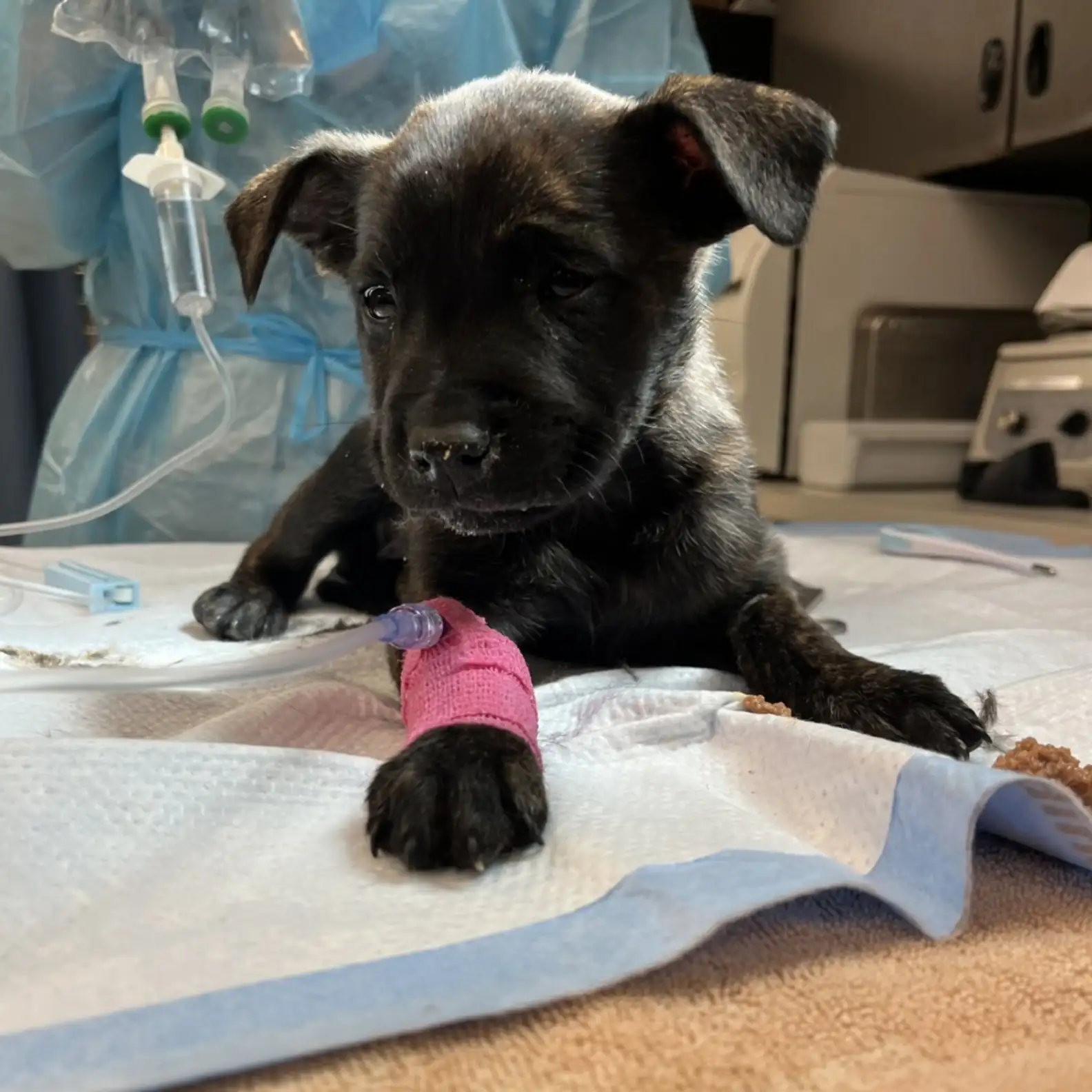
Fluids were administered to help address dehydration.
Electrolytes were carefully managed.
According to the rescue account, Robin also received plasma as part of the intensive supportive treatment being used to help her through the illness.
But another problem remained.
She was too weak to eat adequately on her own.
Nutrition mattered because even while her body was fighting illness, it still needed energy to keep going.
A feeding tube was placed so the medical team could provide support without relying on Robin to eat enough by herself.
For such a small puppy, almost every part of treatment had to be handled with extraordinary care.
Even Routine Treatment Was Difficult for a Puppy This Small
Repeated blood draws and injections can be stressful for any critically ill animal.
For Robin, who weighed only around five pounds, the medical team wanted to reduce the number of repeated needle sticks wherever possible.
A central line was therefore placed through the jugular area, according to the rescue account.
This allowed the veterinary team to provide necessary treatment and access while minimizing some of the repeated handling her fragile body would otherwise require.
It was an intensive level of support for such a tiny patient.
Fluids.
Nutrition.
Monitoring.
Plasma.
Constant attention to how her body was responding.
There was no single treatment that could instantly turn everything around.
With parvo, supportive care often becomes a matter of helping the body through the most dangerous period while watching for complications.
That meant the next several hours mattered enormously.
Robin had reached professional care.
But she was not safe yet.
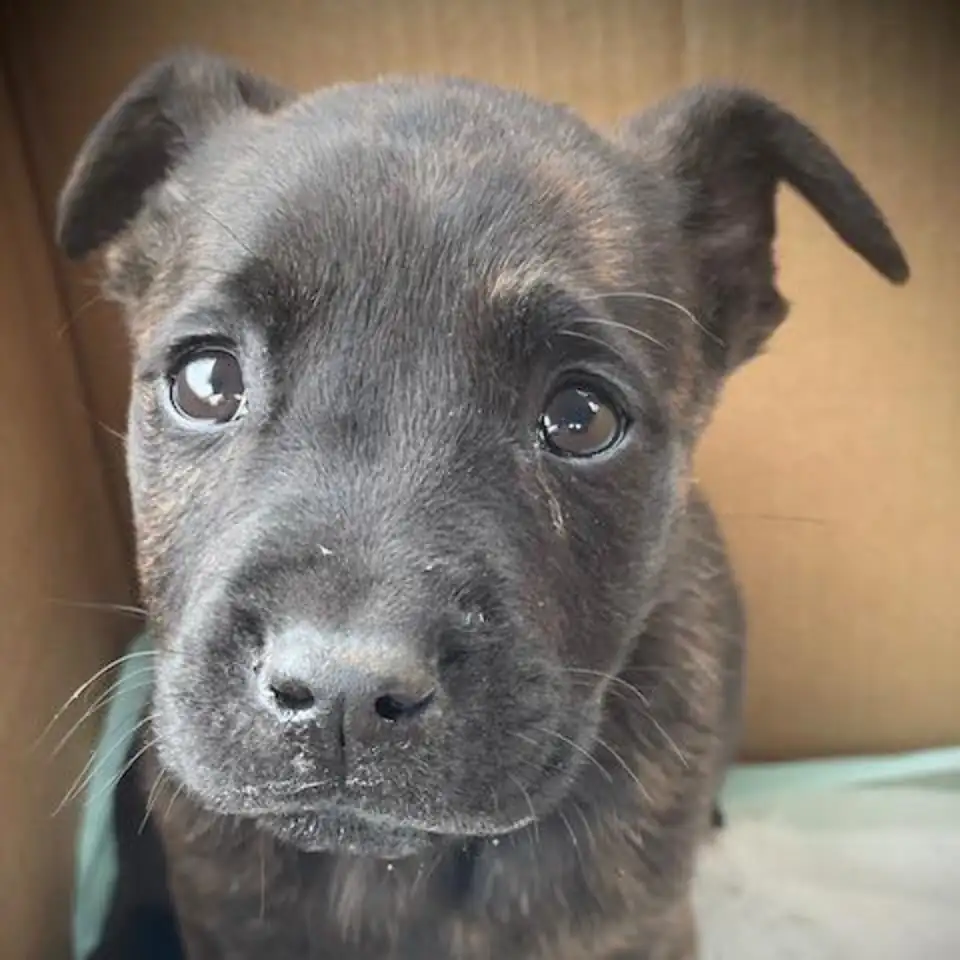
That First Night Became a Test of Whether Her Body Could Keep Fighting
There are moments in rescue when progress cannot be measured in big changes.
Sometimes the only question is whether an animal is still there the next morning.
For Robin, that first night was one of those moments.
The emergency team continued monitoring her.
Her hydration had to be supported.
Her nutrition had to be maintained.
Her weakened body needed time.
No one could know exactly how she would respond.
The staff could only continue doing what the little puppy could not do for herself.
Keep fluids going.
Provide food safely.
Watch her condition.
Respond when something changed.
Then morning came.
Robin was still alive.
She was not suddenly healthy.
She was not ready to run or play.
She was not completely beyond danger.
But she had made it through the night.
For everyone who had watched her arrive so weak that even eating was difficult, that was enough reason to keep going.
Once Stable Enough, Robin Continued Her Recovery in a Parvo Ward
After the emergency phase, Robin was transferred back to Stray Rescue of St. Louis to continue receiving specialized care.
There, she could recover in an area designed for dogs dealing with parvovirus.
Isolation is especially important with an illness like parvo because the virus can spread easily between susceptible dogs.
For Robin, the specialized ward offered something she badly needed.
A controlled environment.
Consistent monitoring.
Regular supportive care.
Warmth.
And people familiar with the slow, uncertain nature of this kind of recovery.
The rescue organization had seen parvo cases before.
They knew that not every puppy follows the same path.
Some begin improving quickly.
Others require longer periods of intensive support.
And unfortunately, some arrive too sick for treatment to overcome what their bodies have already endured.
That uncertainty made every positive sign from Robin meaningful.
She had entered rescue barely able to eat.
Now she had survived the emergency hospital.
The next goal was simply to continue moving in the right direction.
Her Fight Was Being Carried by More Than One Person
Robin’s story began with someone leaving a cardboard box.
But everything that followed involved an expanding circle of people.
The rural shelter workers who opened that box.
The person who made the call for help.
The rescue organization that agreed to take her.
The emergency veterinary staff who treated her through the night.
The caregivers in the parvo ward continuing her recovery.
And supporters who helped make that care possible.
According to Stray Rescue, donations covered the medical expenses associated with Robin’s treatment.
For a rescue organization, cases requiring hospitalization and around-the-clock care can quickly become expensive.
Robin did not know anything about those logistics.
She did not know who had donated.
She did not understand why strangers were watching her so carefully.
All she knew was that after being left inside a box, people kept showing up.
Someone transported her.
Someone connected the fluids.
Someone prepared her nutrition.
Someone checked on her through the night.
She had entered the shelter alone.
She was no longer facing the illness that way.
Five Pounds Did Not Leave Much Room for Her Body to Lose More
Robin’s size made the situation especially striking.
Five pounds is not much.
There was little body mass available to absorb days of poor intake and severe illness.
That is why the image of her lying weak inside that cardboard box carried so much urgency.
She was not simply a puppy who needed somewhere to live.
She needed intervention immediately.
And although the rescue account offered hope, it did not pretend the danger had disappeared overnight.
Robin still needed time.
The caregivers still had to watch her closely.
Her body still had recovery ahead.
But the circumstances around her had changed completely.
Instead of lying inside a discarded box, she was resting in a warm medical environment.
Instead of being unable to eat without help and having no one nearby, she was surrounded by people prepared to support her until she could do more on her own.
That difference mattered.
The Box at the Door Was Not Where Her Story Ended
Someone had once made the decision to leave Robin at a shelter entrance.
Why it happened was not explained.
Perhaps the person knew she was sick and did not know where else to go.
Perhaps there were circumstances no one at the rescue would ever learn.
What mattered after that moment was what the people who found her chose to do.
They could see immediately that their small shelter was not equipped for the level of care Robin required.
Instead of allowing that limitation to become the end of the story, they reached outward.
Another rescue answered.
A veterinary team stepped in.
Strangers contributed to her treatment.
And a five-pound puppy who had arrived limp and desperately ill made it through the night.
Robin’s journey was still unfolding at the time of the rescue updates.
She had more healing ahead.
But she was no longer a nameless puppy inside a cardboard box.
She was Rockin’ Robin.
A tiny patient with an entire group of people watching for the next meal, the next stronger moment, the next sign that her body was beginning to win.
Sometimes rescue starts with a dramatic save.
Robin’s began much more quietly.
A box.
A doorway.
A puppy inside.
And one decision after another to make sure that being abandoned there would not become the final thing that happened to her.


