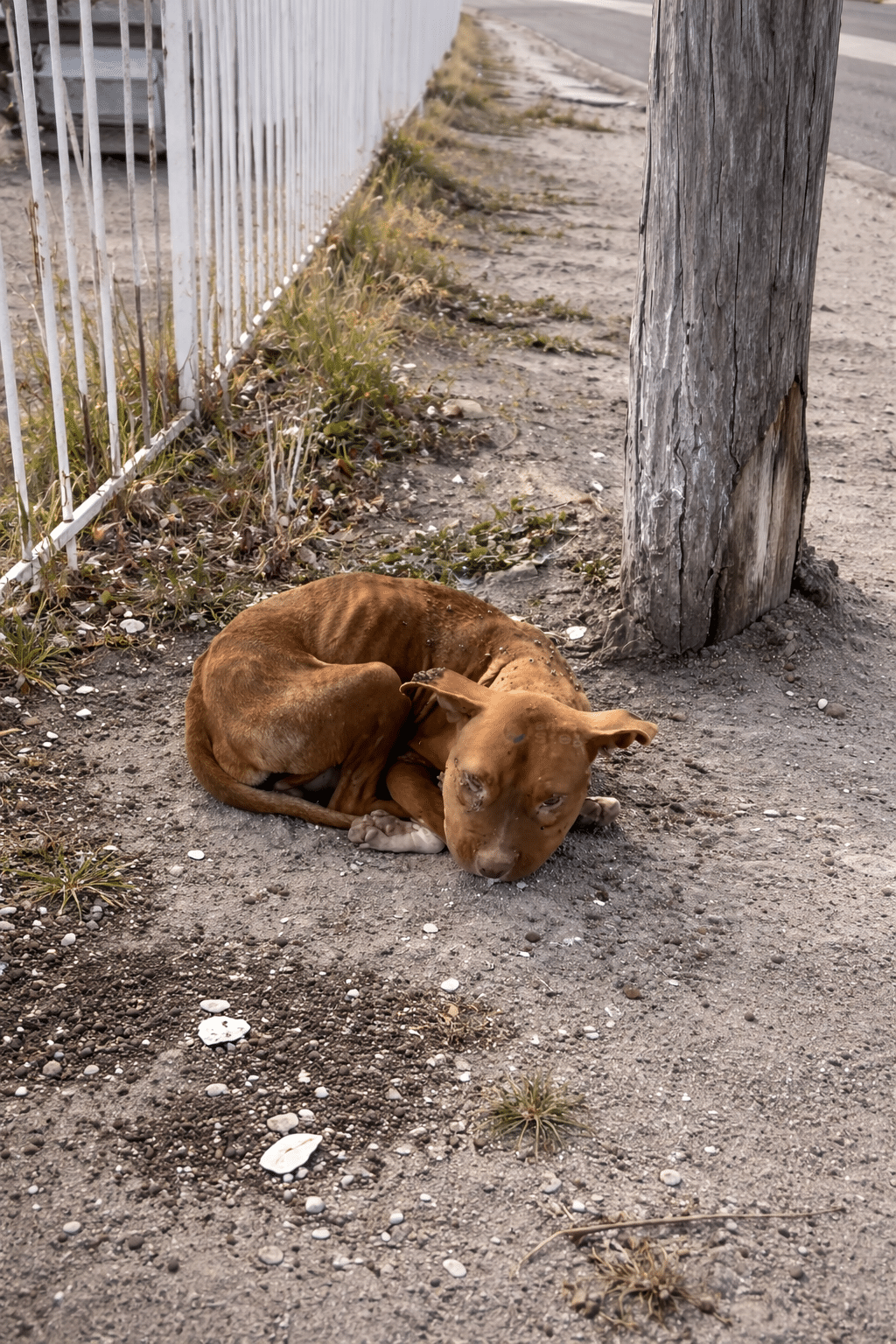
When Cocoa was found, standing was no longer something her body could manage.
She lay weak and exhausted, her frame so thin that each rib was visible beneath her skin. Even lifting her head appeared to require effort.
But hunger was only part of what had worn her down.
Across her body, rescuers discovered large numbers of ticks attached to her skin.
For a dog already struggling with severe weakness, the infestation added another burden she simply did not have the strength to escape on her own.
Cocoa could not remove them.
She could not walk herself somewhere safer.
She could only remain where she was.
Still breathing.
Still responsive.
Still holding on long enough for someone to notice.
She Had So Little Strength Left That Someone Had to Carry Her
The person who found Cocoa did not wait for her condition to improve.
There was no reason to believe it would.
Her body was painfully thin, her movements limited, and the number of parasites attached to her made immediate care necessary.
So Cocoa was lifted carefully.
For perhaps the first time in a long while, she did not have to support her own weight.
Someone else carried it for her.
She was taken to a veterinary clinic, where the team could finally examine her more closely and begin addressing the most urgent problems.
The original account does not provide a complete diagnosis or detailed laboratory results.
What it clearly shows is a dog who had become extremely weak while carrying a significant tick infestation.
Before any larger recovery could begin, Cocoa needed something much simpler.
Relief.
Video: Too Weak to Stand, Cocoa Was Covered in Ticks — Then Help Finally Arrived
Removing the Ticks Became One of the First Steps Toward Comfort
At the clinic, caregivers began working carefully on Cocoa’s skin.
The ticks had attached themselves across her body, and removing them required patience.
There was no reason to rush a dog already so exhausted.
The team cleaned her and worked through the infestation while keeping her as comfortable as possible.
For Cocoa, this was not simply grooming.
It meant removing something that had been irritating her skin and adding to the strain on an already fragile body.
Little by little, the burden decreased.
The difference was visible in the way she rested afterward.
Her body appeared less tense.
She could lie still without the same constant irritation.
Nothing about that first treatment meant Cocoa was suddenly healthy.
She remained extremely weak.
She still needed nourishment.
She still needed time.
But one source of discomfort was finally being taken away instead of being left for her to endure.
Her Recovery Began With Food, Rest, and Very Small Changes
The days that followed were not dramatic.
Cocoa did not suddenly jump to her feet.
Her body had been depleted too severely for that kind of transformation.
So the people caring for her focused on the basics.
Food.
Water.
Rest.
Monitoring.
A safe place where she did not have to spend energy protecting herself.
At first, improvement could be measured in very small ways.
She showed more interest in food.
She stayed alert for longer periods.
Her movements became slightly stronger.
Those details might look ordinary in another dog.
For Cocoa, they mattered because each one suggested her body was beginning to respond to care.
There was still a long distance between the dog lying helpless on the first day and the healthy animal everyone hoped she might become.
But recovery had started.
And for the first time, Cocoa did not have to create that recovery alone.
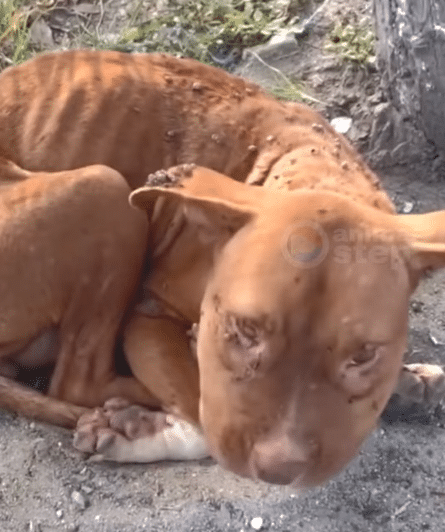
As Her Body Became Stronger, She Started Paying Attention to People
Physical improvement was only one part of the change.
At first, Cocoa had so little energy that survival seemed to consume almost everything she had.
As her strength returned, she began interacting more with the people around her.
She watched them.
Responded when they approached.
Accepted gentle contact.
Moved more often.
The transformation was gradual, but meaningful.
A dog cannot reveal much personality while her body is overwhelmed by exhaustion.
Once Cocoa no longer had to spend every moment simply enduring discomfort, another side of her began appearing.
She became more engaged.
More curious.
More comfortable in the presence of caregivers.
There was no need to imagine exactly what she thought about the people helping her.
Her behavior was enough.
She was no longer lying completely withdrawn.
She was beginning to participate in the world around her again.
The Dog Who Could Not Stand Slowly Found Her Strength
Weeks of consistent care began to show in Cocoa’s body.
Her frame filled out.
Her movements became steadier.
The weakness that had once kept her on the ground gradually eased.
Standing became possible.
Then walking became easier.
The transformation did not come from one treatment alone.
It was built through repetition.
Another meal.
Another peaceful night.
Another day without parasites covering her body.
Another opportunity for weakened muscles to become stronger.
Her coat also began improving as her overall condition changed.
The dog who had looked so fragile on the day of rescue slowly became increasingly difficult to recognize in later images.
But the most important difference was not simply that she looked better.
Cocoa could finally do more.
She could move.
Explore.
Respond.
And eventually, play.
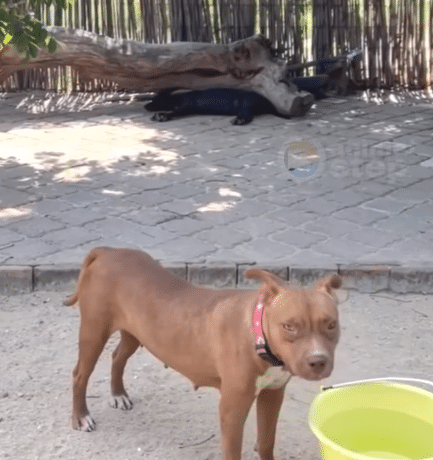
Once Survival Was No Longer Her Only Job, Cocoa Began Acting Like a Dog Again
There is a point in many recoveries when something subtle changes.
An animal stops behaving only like a patient.
Cocoa reached that point gradually.
As her body gained strength, she became more active.
She moved through her surroundings with greater confidence.
She showed interest in the people caring for her.
And the energy that once seemed completely absent returned.
She could run.
She could play.
She could choose where she wanted to go instead of remaining wherever her weakness had left her.
Those behaviors revealed something that had been impossible to see at the beginning.
Cocoa had not lost her ability to enjoy life.
She had simply been too sick and exhausted to show it.
Care gave that part of her a chance to return.
Her Transformation Was Built From Things That Looked Ordinary
Looking at Cocoa later, it would be easy to describe her recovery as remarkable.
The contrast certainly was.
A dog too weak to stand became stronger, healthier, and active.
But the process itself was made from very ordinary things.
Someone stopped.
Someone carried her.
Someone removed the ticks one by one.
Someone prepared food.
Someone checked on her again the next day.
And then again.
That consistency matters because rescue does not end when an animal is removed from danger.
For Cocoa, being found was only the first chapter.
Healing required people to continue after the urgency of the first day passed.
When improvement was slow.
When she still looked fragile.
When the final result was not yet visible.
They kept going.
Cocoa did too.
The Dog Found on the Ground Eventually Had a Life She Could Move Through Freely
Today, Cocoa looks very different from the dog rescuers first carried to safety.
Her body is stronger.
Her coat has recovered.
She can move without the same visible weakness.
She can play and interact with the world around her instead of remaining trapped by exhaustion.
There is no need to pretend that her past disappeared.
The first images remain part of her story.
A thin dog.
Unable to stand.
Ticks covering her body.
Almost no strength left to give.
But those images no longer describe her entire life.
They describe the moment before someone intervened.
Everything afterward came from one decision being followed by many others.
Notice her.
Carry her.
Treat her.
Feed her.
Stay.
Cocoa had already done the only thing she could do before help arrived.
She held on.
Once someone found her, she finally did not have to do the rest alone.


