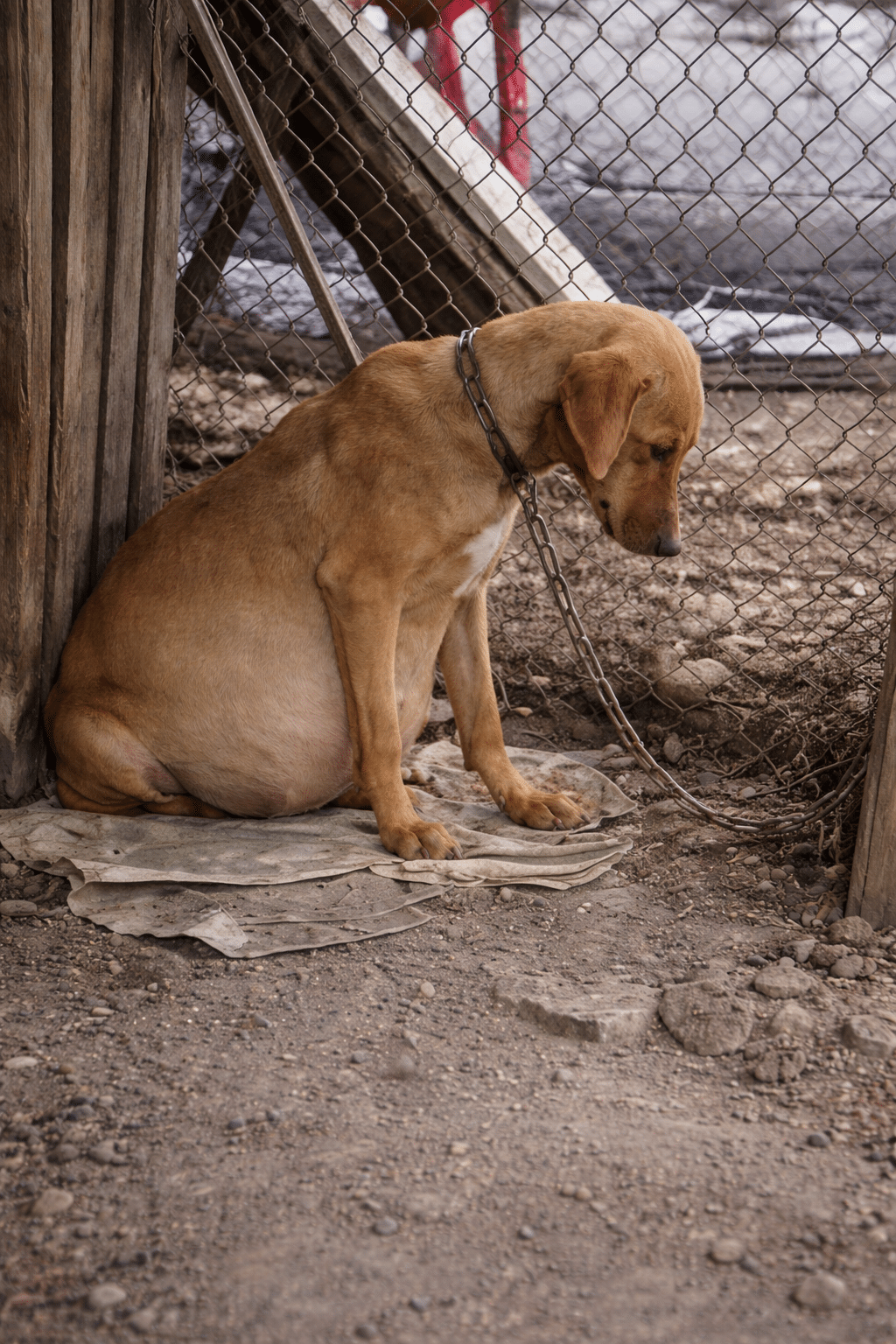
Ramon was only two years old, but his body already carried the exhaustion of a much longer life.
For months, the young stray had wandered through the neighborhoods of La Invasion and Emiliano Zapata, searching for scraps and whatever shelter he could find.
Then his abdomen began to swell.
It grew so large that even lying down became difficult.
Walking required visible effort. His frame became thinner while his belly continued expanding, leaving him caught between hunger, illness, and a body that could no longer compensate.
By the time rescuers reached him, Ramon needed more than food or a safe place for the night.
He needed medical care immediately.
And although no one yet knew how much time remained, one thing was about to change.
Ramon would no longer face it alone.
His Swollen Abdomen Made Even Rest Difficult
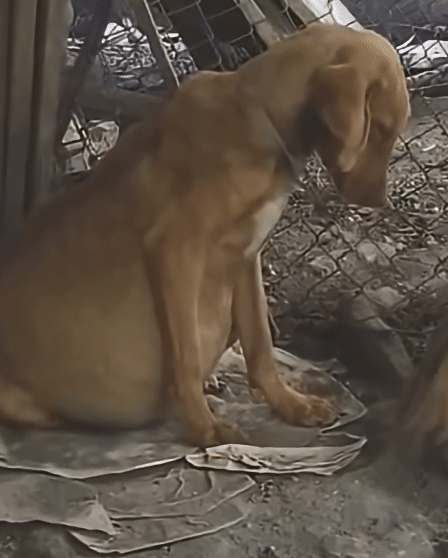
When rescuers first saw Ramon, his condition was impossible to overlook.
His abdomen was severely distended.
The rest of his body appeared thin and depleted, creating a painful contrast between his weakened frame and the enormous pressure around his belly.
He could still move, but every step looked difficult.
Even resting presented a problem.
With so much fluid accumulated inside his abdomen, finding a comfortable position was challenging. A dog who should have been able to simply curl up and sleep instead had to keep adjusting his body around the swelling.
There was no way to know exactly how many people had seen Ramon during the months he spent wandering.
What rescuers could see was what mattered now.
He was sick.
He was exhausted.
And waiting any longer could only make things worse.
They brought him to veterinary care as quickly as possible.
Video: Ramon — The Stray Dog Who Finally Received Care When His Body Could No Longer Cope
The Diagnosis Explained Why His Body Had Changed So Much
At Vet Nova, veterinarians began examining Ramon and looking for the cause of the extreme swelling.
The condition was identified as ascites—an accumulation of fluid inside the abdomen.
According to Ramon’s case, the underlying illness was Ehrlichiosis, a tick-borne disease that had severely affected his health.
The diagnosis helped explain what rescuers had been seeing.
Ramon was not simply a thin stray with an unusually large stomach.
His body was dealing with a serious medical problem.
The fluid had accumulated to the point that it interfered with ordinary movement and rest.
For months, Ramon had continued living outside while the illness progressed.
There had been no regular veterinary monitoring.
No treatment plan.
No one responsible for noticing the early warning signs and intervening.
Now the medical team had to work with the condition they found in front of them.
And the first priority was helping Ramon become more comfortable.
Veterinarians Began Relieving the Pressure
The team carefully drained fluid from Ramon’s abdomen.
It was an important step.
The swelling had placed tremendous pressure on his body, and reducing that fluid offered him something he had struggled to find for some time.
Relief.
After treatment, Ramon was finally able to settle into a more comfortable position.
He could lie down.
He could rest without having to constantly accommodate the same enormous abdominal swelling.
Those may sound like ordinary things.
For Ramon, they were meaningful changes.
For the first time since rescuers had met him, his body was no longer carrying quite the same burden.
Care did not stop with the procedure.
He needed observation, nourishment, and continued support while veterinarians addressed his weakened condition.
No one could promise what would happen next.
But Ramon now had people beside him who were paying attention to every change.
A Bowl of Food Became One of His Quiet Milestones
After receiving care, Ramon began showing interest in food again.
That small moment mattered.
His body had been depleted by illness, and eating gave caregivers an encouraging sign that he was still engaging with what was around him.
Meals were now offered regularly.
Water was available.
He had somewhere clean and safe to rest.
And instead of wandering from place to place trying to meet his own basic needs, Ramon could remain still while others cared for him.
His behavior also began to soften around the people nearby.
He accepted their presence.
He allowed himself to rest close to them.
The rescuers could not know exactly what Ramon understood about the sudden change in his circumstances.
They could only observe that he was no longer facing the streets, illness, and exhaustion by himself.
For perhaps the first time in months, he could simply stop moving.
Someone else was taking responsibility for what happened next.
The Improvement Could Not Undo Months of Illness
There was reason to hope when Ramon rested more comfortably and began eating.
But his condition remained serious.
Removing abdominal fluid could reduce pressure.
It could not instantly reverse everything his body had endured.
Ramon had been living with illness for a long time before treatment began.
He was already extremely weak when rescuers found him.
The veterinary team continued doing what they could, and the people around him remained hopeful.
But recovery did not continue in the way everyone wanted.
Only days after his rescue, Ramon’s condition declined.
His body had reached a point from which it could not recover.
The same people who had brought him away from the streets stayed close.
They had entered Ramon’s life very late.
But they were not going to leave him at the end.
Ramon Did Not Spend His Final Moments Alone
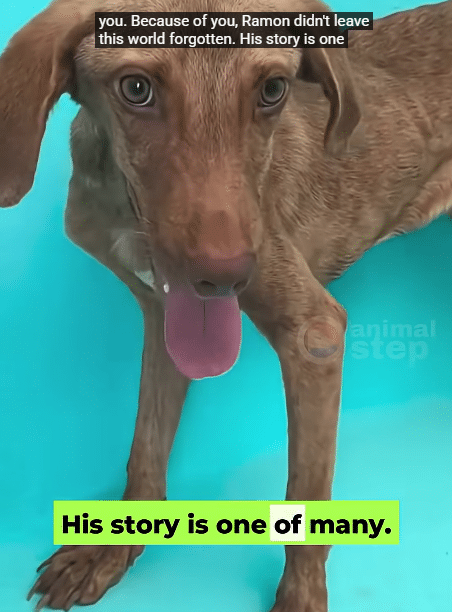
Ramon passed away only a few days after being rescued.
There was no long recovery.
No adoption photograph months later.
No transformation into a healthy dog running through a new backyard.
His story ended differently.
But it did not end where it began.
Ramon was no longer wandering through the neighborhood looking for scraps.
He was no longer trying to rest with a painfully swollen abdomen and no medical help.
He was surrounded by people who had chosen to care for him.
According to his rescue story, Ramon was held as his final moments arrived.
For the people who had fought to save him, losing him so soon was devastating.
They had hoped the treatment would become the beginning of a much longer life.
Instead, they were given only a few days with him.
Yet those days still changed something important.
Ramon was seen.
He was treated.
He was fed.
And when his body could no longer continue, someone remained beside him.
Sometimes Rescue Means Giving Comfort When Time Is Short
Animal rescue stories are often told through dramatic transformations.
A frightened dog becomes playful.
An injured dog walks again.
A stray finds a permanent home.
Those endings are worth celebrating.
But they are not the only measure of whether helping mattered.
Sometimes an animal arrives after an illness has already progressed too far.
Veterinary teams can provide treatment without being able to guarantee recovery.
Rescuers can offer everything available and still lose the animal they hoped to save.
Ramon’s story belongs to that more difficult side of rescue.
The people caring for him could not give him back the months he had spent untreated.
They could not promise him years ahead.
What they could give him was care during the time that remained.
A place to rest.
Relief from some of the pressure in his abdomen.
Food when he wanted it.
Gentle human contact.
And company at the end.
Those things did not create the ending everyone wanted.
They still mattered.
His Story Is Also a Reminder to Notice Earlier
Ramon’s condition had become impossible to miss by the time he was rescued.
His severely swollen abdomen and thin body were visible signs that something was wrong.
But serious illness does not always begin with dramatic symptoms.
Street animals often have no one consistently watching for small changes.
There may be no person who notices a declining appetite.
No scheduled checkup.
No one comparing how an animal looks this week with how they looked a month earlier.
By the time help arrives, rescuers sometimes have to begin much later in the story than they would choose.
That is part of what makes Ramon’s journey difficult to forget.
He was only two years old.
There should have been more time.
More ordinary mornings.
More meals.
More places to explore.
Instead, his rescuers were left wishing they had found him sooner.
They could not change that.
But his story can still encourage people to look more carefully when an animal appears unwell and seek qualified help rather than assuming the problem will resolve on its own.
Ramon’s Second Chance Lasted Days — But It Was Still a Chance
There is no need to turn Ramon’s ending into something it was not.
He did not recover.
His illness had already taken too much from his body.
And the people who rescued him had far less time with him than they hoped.
But rescue still changed his final chapter.
Before, Ramon had been a sick young dog surviving outdoors with no reliable medical care.
After someone intervened, he became a patient with a name.
People monitored him.
Veterinarians treated him.
Caregivers brought food and stayed nearby.
Hands that had once been absent were finally there when he needed them most.
Ramon did not receive the long second life everyone wanted to give him.
He received something smaller, but deeply meaningful.
He did not have to spend his final days invisible.
He did not have to face the end as an unnamed stray somewhere along the streets he had wandered for months.
His rescuers could not change how much time remained.
They could change what that time contained.
And they did.
Ramon’s life ended only days after he was found.
But before it did, he finally knew what it was like to have people stay.


