When family members started clearing out a relative’s attic in Defiance, Ohio, they expected the usual assortment of dusty furniture and forgotten keepsakes. What they found was something no estate cleanout prepares you for.
Moving a dollhouse that had sat undisturbed for generations, they noticed a small cardboard box tucked underneath it. The box looked unremarkable — the kind of thing you’d pass over without a second glance.
They opened it anyway.
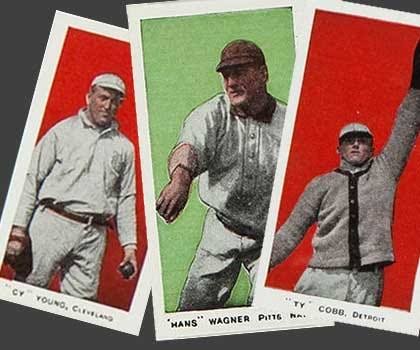
Inside were roughly 700 baseball cards from the early 1900s, nearly untouched for close to a century. The first 37 of those cards sold at auction for a combined $566,132.
The Box Hidden Beneath a Dollhouse
The attic in Defiance, Ohio, had belonged to a family that simply never got around to clearing it out — which turned out to be the best thing that could have happened. The dollhouse had been a fixture up there for decades, and the cardboard box beneath it was so ordinary in appearance that it blended into the surroundings entirely.
When relatives moved the dollhouse during what was described as a routine estate process, the box came into view. Opening it, they found tightly packed rows of small cardboard cards featuring baseball players in early-twentieth-century uniforms, their images crisp and their colors vivid despite the passage of roughly 100 years.
The family contacted experts. What followed was a careful authentication process that confirmed the cards belonged to the E98 set — a candy-issue series from around 1909 to 1911 that is among the most prized early baseball card collections in the hobby. Familiar names were in the mix: Hall of Famers whose cards, in any condition, are significant finds. In near-pristine condition, they were extraordinary.
Why the Cards Survived in Exceptional Condition
Condition is the single most important variable in sports card valuation, and it’s also the hardest to control across a century. Most cards from the E98 era were handled by children, tucked into pockets, rubber-banded together, or simply lost. The survival rate for high-grade examples is low, which is why professional graders assign top scores so rarely to cards of this age.
The Defiance attic provided something that almost no card collection of this era enjoyed: stable, undisturbed storage with essentially no human contact for generations. The box was not opened and riffled through. The cards were not sorted, traded, or damaged. They sat in the dark, under a dollhouse, and waited.
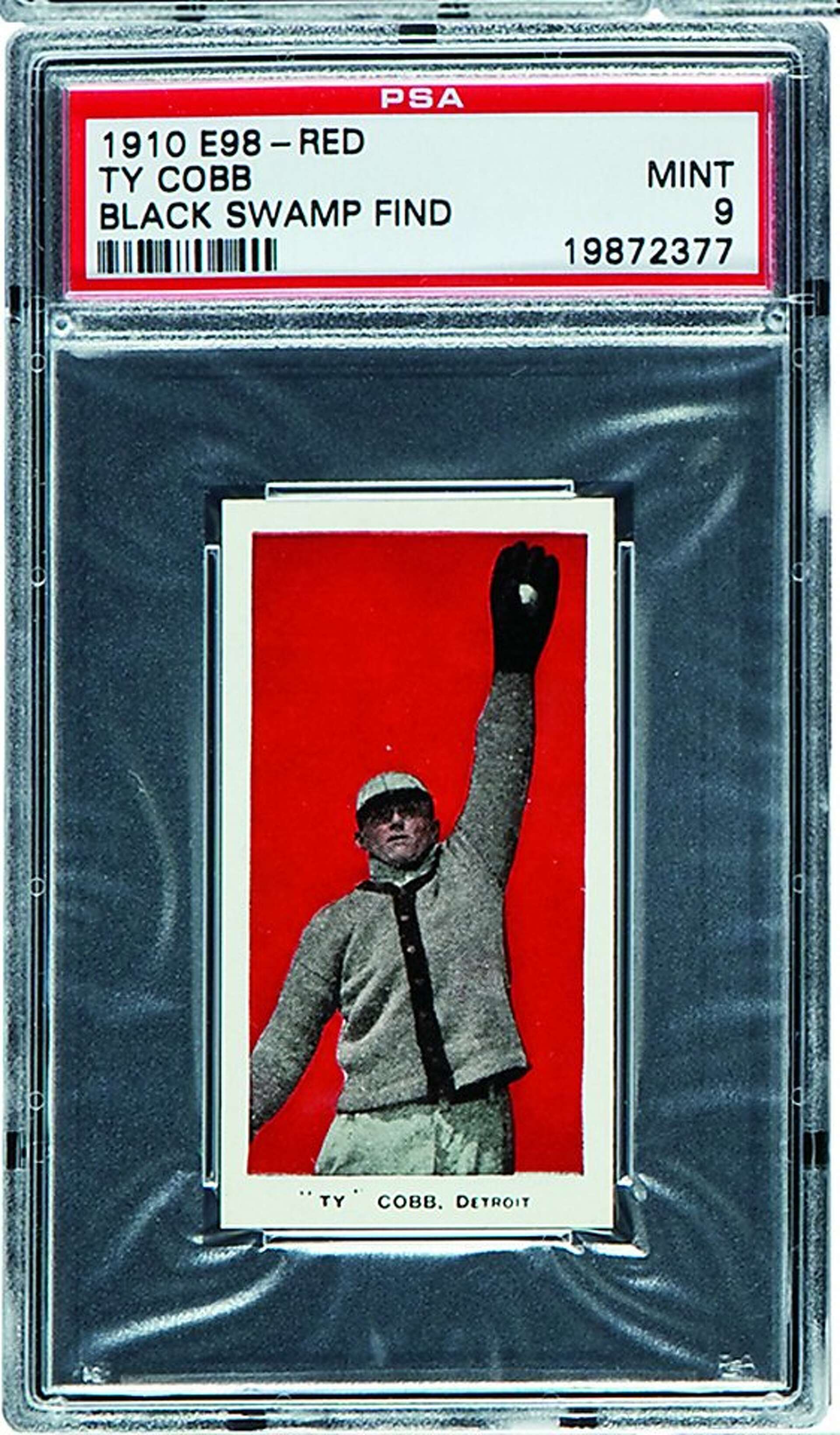
When professional graders examined the collection, many cards came back with grades that placed them among the finest known examples of their type. Sharp corners, bright colors, and minimal wear — characteristics that had simply been preserved by neglect — pushed individual card values into ranges that would have been unimaginable when the cards were first packed into that box.
The Rare Candy Issue Collectors Recognized
The E98 designation comes from the American Card Catalog classification system, which organizes early trading cards by type and era. The E98 set — formally known as the “Set of 30” — was issued around 1909 to 1911 as a candy promotion, distributed by confectionery companies rather than tobacco manufacturers. That distinction matters to collectors because candy-issue cards were handled differently and survived in different patterns than the more commonly found tobacco cards of the same period.
The set is compact by design — 30 subjects — but the Defiance find held approximately 700 cards, meaning multiple copies of individual players were present. For collectors, that kind of depth in a single find from a single source is nearly unheard of. It suggested the cards had come to the attic all at once, likely purchased or received as a group, and had never been distributed or separated.
Hall of Famers in the E98 set include players whose names remain recognizable to baseball fans more than a century later. Finding multiple copies of those cards in high grade, from a single undisturbed source, drew immediate attention from the sports memorabilia world.
YOUTUBE EMBED — PRIMARY SEARCH QUERY: “Ohio attic baseball cards under dollhouse AP”
How the Family Handled the Discovery
When the value of the collection became clear, the family faced a question that most people never have to answer: what do you do when a routine attic cleanout turns into a significant financial windfall?
According to reporting on the discovery, the collection was shared among approximately 20 cousins — all descendants of the family whose attic had preserved the cards for so long. Rather than concentrating the proceeds in a single branch of the family, relatives agreed to divide ownership of the collection and, ultimately, the auction proceeds across that wider group.
The decision to involve so many family members added a layer of complexity to the process. Determining how to divide the cards, which ones to sell first, and how to handle authentication and auction logistics required coordination among people who likely had no prior experience with high-end sports memorabilia sales. Auction specialists who handled the collection worked with the family through that process.
The choice to spread the find across 20 relatives also meant that the story behind the cards — a family attic, a dollhouse, a box that nobody had opened in generations — remained intact. Nobody was cutting other people out. The discovery belonged to the whole family, and so did the outcome.
What the First Auction Brought
The family did not sell the entire collection at once. Instead, they released a portion — 37 cards — into the auction market first, a strategy that allowed them to gauge demand and establish prices for the most significant individual cards before committing the rest of the collection.
Those 37 cards sold for a combined total of $566,132. The result confirmed what authentication had suggested: this was not an ordinary find. The prices reflected both the rarity of high-grade E98 examples and the documented provenance of the collection — cards with a known, uninterrupted history from a single source carry additional credibility in the market.
Individual card prices within that first auction varied based on the player, the grade assigned by professional graders, and the specific copy’s condition relative to other known examples. Cards featuring Hall of Famers in top condition drew the strongest results.
YOUTUBE EMBED — SECONDARY SEARCH QUERY: “E98 baseball card find authentication auction”
With hundreds of cards remaining from the original find, the family still held a substantial collection after that first sale. Whether additional cards would come to market — and when — remained a decision for the cousins to make together, guided by the auction results that had already established what the collection was worth.
A Time Capsule That Changed a Family’s Attic Story
The Defiance attic find is the kind of discovery that collectors spend careers hoping to encounter. A near-complete cache of early-twentieth-century cards, preserved by circumstance rather than deliberate archiving, surfacing during an ordinary family cleanout — it fits the pattern of the hobby’s most celebrated finds while being almost impossible to plan for.
What made it remarkable was not just the cards themselves, though the E98 set is genuinely prized. It was the condition they survived in, the documented provenance from a single undisturbed source, and the sheer number of copies present in a collection that had never been picked through, traded, or dispersed.
The first 37 cards brought $566,132 at auction. Twenty cousins shared in that result. And the dollhouse that had unknowingly sheltered the collection for a century became, in its own small way, part of the story — the ordinary object that happened to be sitting on top of something extraordinary.

