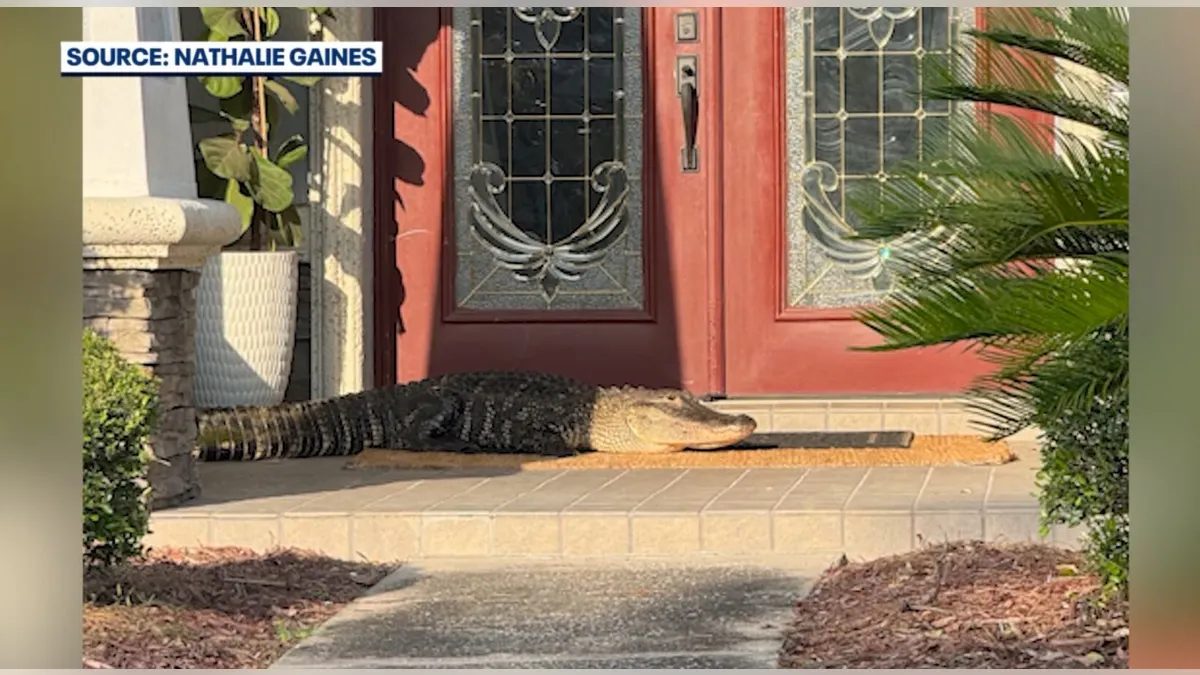
It started like any other notification. A homeowner in Florida glanced at their phone and saw a motion alert from the front door — the kind that usually signals a package delivery or a neighbor passing by. What the camera had actually captured was something considerably less ordinary.
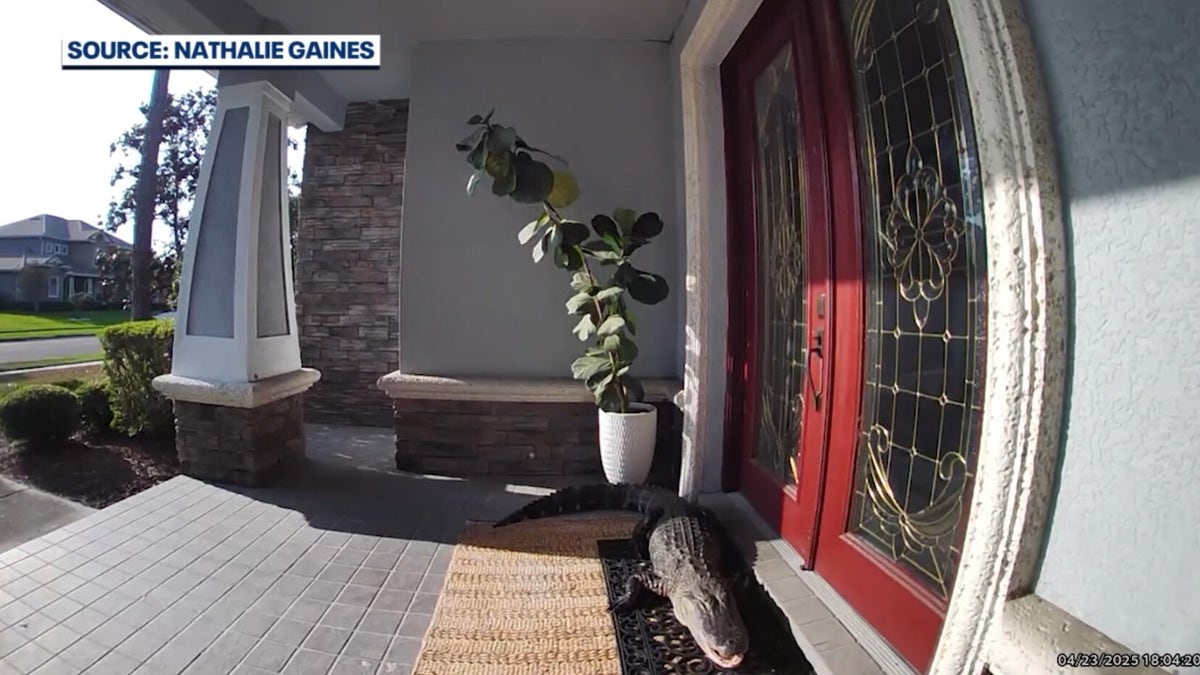
The footage showed a large alligator on the front porch, its body raised upright against the door, making contact with it before eventually turning and moving away. No entry. No injury. Just a very large reptile paying an unexpected visit.
The clip spread quickly online, partly because the animal’s posture and the sound of its contact with the door looked — and in some versions sounded — remarkably like a person knocking.
The answer to what triggered the alert: a large alligator had lifted itself against the front door, made physical contact with it and briefly remained on the porch before leaving on its own.
What the Doorbell Camera Captured
Doorbell cameras like Ring and Nest are designed to detect motion within a defined zone near the entrance. When the alligator moved onto the porch and rose against the door, the motion sensor triggered exactly as it would for any visitor.
The footage showed the animal in an upright stance — front legs or body pressing against the door surface — which is an unusual but documented behavior for large alligators when they investigate vertical surfaces, steps or barriers. The contact produced an audible sound, which the microphone on the doorbell unit recorded alongside the video.
The clip circulated widely because the combination of the camera angle, the knocking sound and the animal’s posture created a moment that looked, at first glance, like something deliberately human. Wildlife experts were quick to clarify that the behavior was investigative, not intentional mimicry.
Why the Movement Looked Like Knocking
Alligators are capable of significant vertical reach when they prop themselves against a surface. A large adult — estimates for the animal in this footage placed it at roughly six feet or more in length — has enough mass and limb strength to make firm contact with a door, wall or elevated surface.
The “knocking” appearance came from a combination of factors: the angle of the camera looking slightly downward at the porch, the alligator’s raised posture and the fact that its body or claws struck the door more than once as it shifted its weight. From the camera’s perspective, that sequence read as a knock-pause-knock pattern.
Florida wildlife officials have noted that alligators sometimes approach structures near water, particularly during warmer months and the spring mating season when males move more widely in search of mates or territory. A front porch close to a pond, lake or retention basin is within the range of normal alligator movement in many parts of the state.
What Happened Before and After the Viral Moment
The short clip that spread across social media captured only the peak moment — the animal upright against the door. The fuller sequence, visible in longer versions of the footage and in local news coverage, showed the alligator approaching the porch from ground level, rising against the door and then, after a brief period, descending and moving away from the entrance.
The homeowner was inside the residence at the time and received the motion alert on their device. They did not open the door. The alligator did not attempt to enter and showed no sustained aggression toward the structure. It left the porch without assistance.
Local reporting confirmed that the incident occurred in a residential area of Florida consistent with neighborhoods built adjacent to water features — a common layout across much of the state, particularly in communities around the greater Orlando metro region and along the Gulf and Atlantic coasts.
YOUTUBE EMBED — PRIMARY SEARCH QUERY: “Florida alligator knocks front door doorbell camera footage”
How the Homeowner Responded
After the alligator left the porch on its own, the homeowner did not pursue the animal. Florida Fish and Wildlife Conservation Commission (FWC) guidance consistently advises residents not to approach, feed or attempt to capture alligators themselves. If an animal is considered a nuisance — defined by FWC as one that is at least four feet long and poses a threat to people, pets or property — residents are encouraged to call the FWC Nuisance Alligator Hotline.
Whether wildlife officers were formally contacted following this specific incident was not confirmed in available reporting. The animal’s departure without incident meant there was no immediate emergency response required at the scene.
The homeowner shared or permitted the sharing of the doorbell footage, which is how the clip reached local news stations and eventually a national audience. The footage itself was not altered; the unusual appearance was simply the result of what the camera recorded from its fixed porch angle.
What Wildlife Guidance Says About Similar Encounters
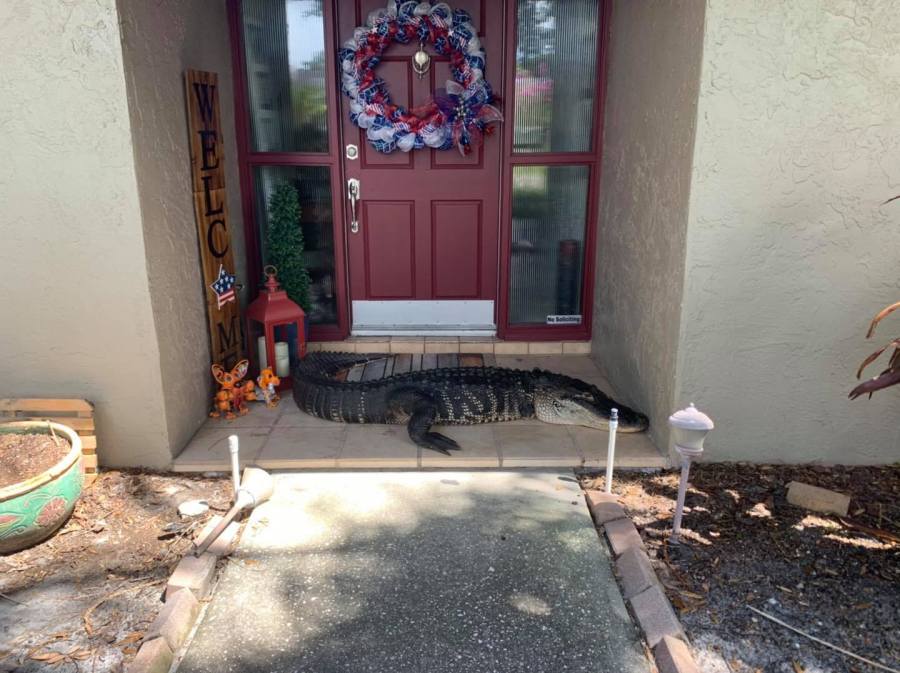
Florida is home to an estimated 1.3 million alligators, according to the Florida Fish and Wildlife Conservation Commission, and the animals share habitat with humans across virtually every county in the state. Encounters near homes, particularly those adjacent to lakes, ponds, drainage canals and golf course water features, are not rare.
FWC guidance for residents who encounter an alligator near their home is consistent: keep a safe distance, never feed the animal, keep pets and children away from the water’s edge and call the nuisance hotline if the animal is large and in a location where it poses ongoing risk. Alligators that are fed by humans lose their natural wariness and are more likely to approach structures and people.
The agency also notes that most alligators, when not fed or cornered, will move away from human activity on their own — which is exactly what the animal in the doorbell footage did.
YOUTUBE EMBED — SECONDARY SEARCH QUERY: “Florida wildlife alligator at front door safety advice”
The Animal Left, and That Was the End of It
The alligator descended from the porch, moved away from the front entrance and did not return in any documented follow-up. No injuries were reported. The door was undamaged. The homeowner was safe inside throughout the entire visit.
What the doorbell camera preserved was a genuine and verifiable wildlife encounter — a large Florida alligator investigating a front porch, making incidental contact with the door and then leaving. The moment looked more deliberate than it was, because cameras and angles flatten context. The behavior itself was consistent with how alligators interact with unfamiliar vertical surfaces in their environment.
If you live in Florida near any body of water, the FWC recommends treating any alligator sighting near your home the same way: observe from a safe distance, do not engage and contact the nuisance hotline at 866-FWC-GATOR if the animal is large or returning regularly. The camera caught something unusual. The outcome was, fortunately, routine.

