Most robbery investigations begin with almost nothing — a blurry camera frame, a vague description, a direction of travel. Detectives work backward from thin evidence, hoping something surfaces. In this case, something did. Actually, two things did.
A man robbed a victim near a schoolyard, made off with a wallet, and fled. In his haste, he dropped two bags at the scene. Police picked them up, looked inside, and found everything they needed to identify him — before the day was over.
The bags contained his birth certificate and a letter addressed to him from his own mother.
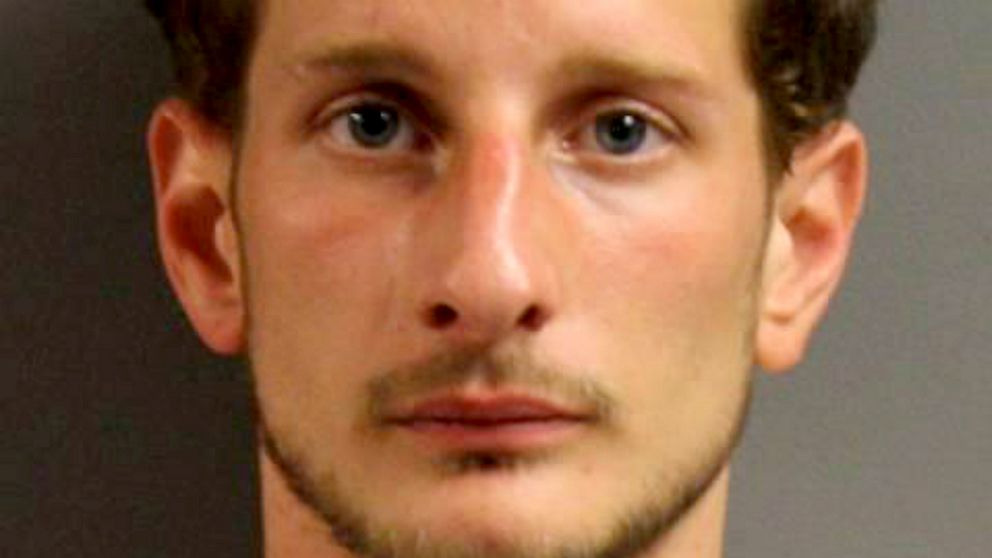
The suspect, identified as Zachary Tentoni, had handed investigators a ready-made case file without realizing it. What followed was one of the more straightforward suspect identifications in recent local crime reporting — not because of surveillance technology or forensic analysis, but because of a piece of paper that listed his full legal name.
The Robbery and the Bags Left Behind
According to police and local news coverage, the incident unfolded when Tentoni approached a victim and stole his wallet. The robbery took place near a schoolyard, and during the encounter — or in the immediate aftermath — Tentoni dropped two bags he had been carrying.
He left the scene with the stolen wallet. The bags stayed behind.
Officers responding to the scene recovered both bags and began examining their contents. In most cases, discarded items near a crime scene might yield a partial lead at best — a receipt, a transit card, something that requires follow-up to trace. What police found here required almost no follow-up at all.
Inside the bags were personal documents. Not just any personal documents — the kind that, in combination, leave virtually no ambiguity about whose property they were.
The Birth Certificate at the Top of the Pile
The first and most decisive item was a birth certificate bearing Tentoni’s full legal name. A birth certificate is among the most authoritative identity documents a person carries. It lists the individual’s name exactly as it appears in government records, along with date of birth and place of birth — details that cross-reference directly with law enforcement databases.
Alongside it was a letter from his mother, addressed to him by name. The letter served as a second, independent confirmation of his identity — different document type, same individual.
Together, the two items accomplished what investigators normally spend hours or days trying to establish: a confirmed name attached to a confirmed suspect. Police did not need to rely on eyewitness memory alone, canvass neighborhoods for surveillance footage, or run partial matches through a database. The answer was sitting in the bags Tentoni had left at the scene.
According to ABC News coverage of the incident, police were able to move quickly from the recovered documents to identifying Tentoni as the suspect responsible for the robbery.
Why the False Name Did Not Help
When Tentoni was located and questioned, he reportedly gave police a false name — an attempt to create distance between himself and the incident. It was a common deflection tactic, and under other circumstances it might have complicated the early stages of an investigation.
It did not complicate anything here.
The birth certificate already on record with police told them exactly who they were dealing with. A false name, offered verbally, carries no weight when a government-issued identity document recovered from the scene contradicts it. Officers were not working from a description that needed to be matched — they were working from a name that had already been confirmed by the physical evidence Tentoni himself had left behind.
The false name effectively became irrelevant the moment officers opened those bags.
YOUTUBE EMBED — PRIMARY SEARCH QUERY: “Zachary Tentoni birth certificate robbery ABC News”
How the Victim Confirmed the Suspect
Document identification alone is strong, but investigators still followed standard procedure to strengthen the case. The victim — the person whose wallet had been taken — was asked to assist in confirming the suspect.
According to reports, the victim was able to identify Tentoni, providing a direct eyewitness link between the suspect and the robbery itself. This step matters in building a prosecutable case: physical documents establish who a person is, but victim identification ties that person to the specific criminal act.
With both elements in place — documentary identification from the recovered bags and victim confirmation — investigators had a case built on multiple, independent layers of evidence. The birth certificate and the letter from his mother were not merely embarrassing details. They were the foundation of the evidentiary record.
The Court Appearance That Followed
Tentoni was arrested and faced a court appearance connected to the robbery charges. Local news coverage documented the case proceeding through the legal system following his identification and arrest.
The circumstances of his apprehension attracted attention not just because of the outcome, but because of how completely the dropped bags had done the investigative work. Law enforcement agencies regularly deal with cases where a suspect is never conclusively identified despite significant effort. Here, the suspect had essentially self-identified at the scene by failing to hold onto two bags.
The robbery, ironically, may have taken a wallet — but the bags left behind cost Tentoni far more than anything he took.
An Accidental Identification, Start to Finish
Cases that resolve this cleanly are rare. Most suspect identifications involve multiple investigative steps, contested evidence, delayed timelines and incomplete records. The Tentoni case moved from reported crime to identified suspect in an unusually short window, and it did so almost entirely because of documents the suspect chose to carry with him and then failed to take when he fled.
A birth certificate and a letter from his mother — two items that, individually, most people would consider deeply personal — became the precise instruments of his identification. The birth certificate confirmed his legal name. The letter confirmed it again. The false name he offered investigators confirmed nothing except that he understood, on some level, that being identified was a problem.
By the time Tentoni gave police a name that was not his, police already knew what his name was. The schoolyard had told them everything they needed.

