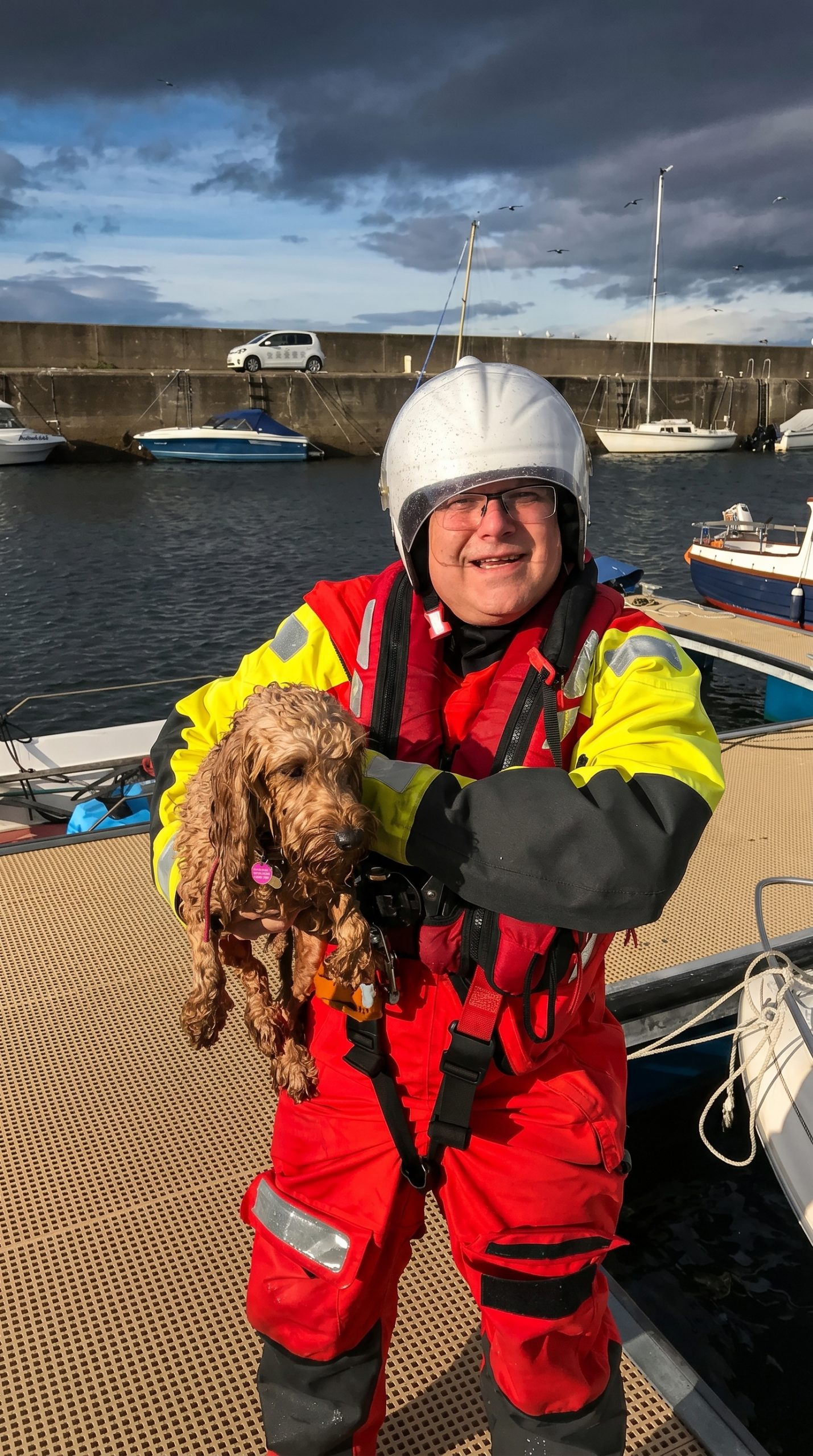
The small dog was almost impossible to see.
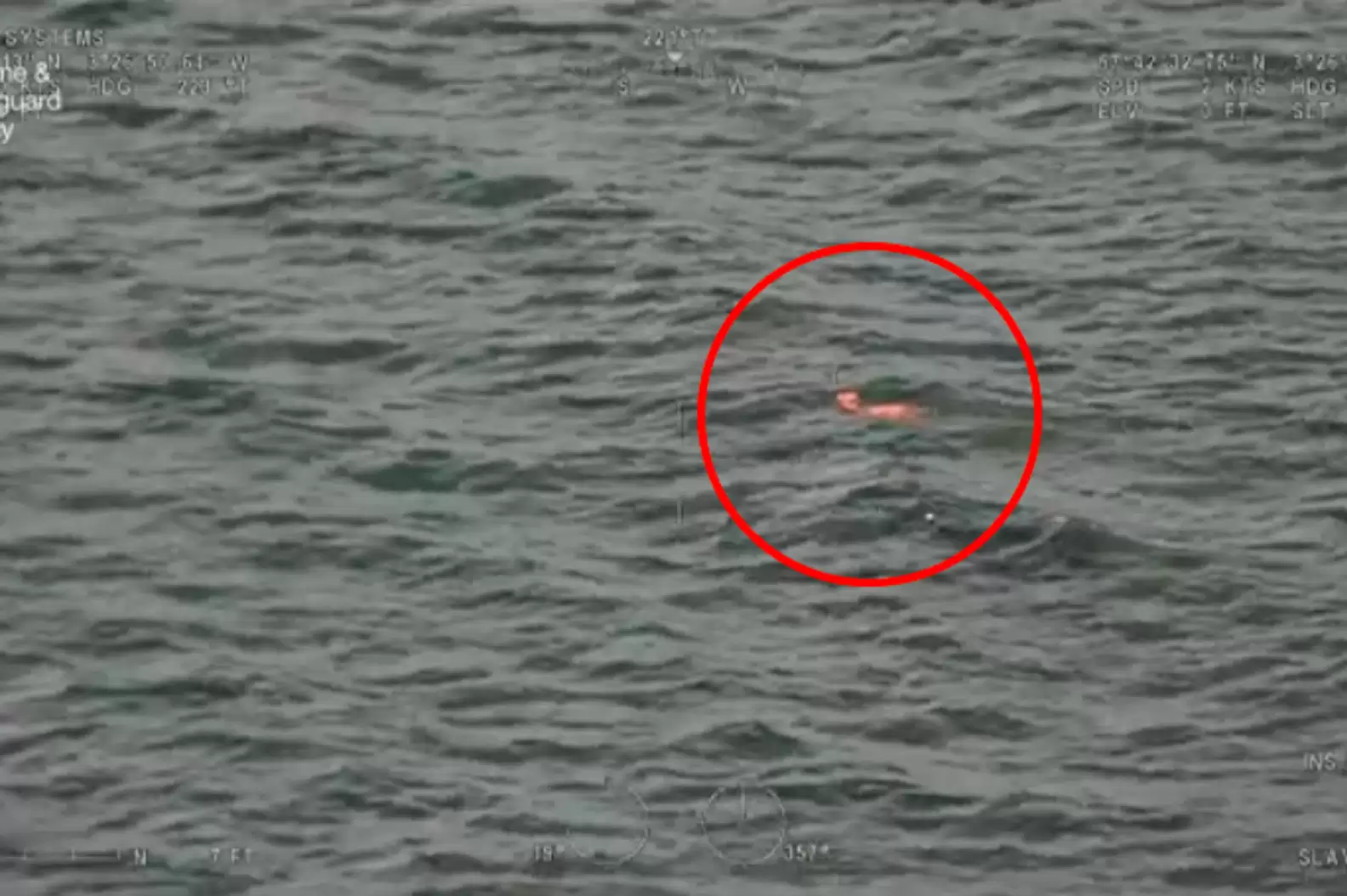
Only his head appeared between the gray waves as rough water carried him farther from the rocky shoreline of Cummingston in Moray, Scotland.
His wet coat weighed against his body, and each swell briefly hid him from view.
By the time rescuers located him, the cockapoo had reportedly been fighting to remain above water for around 40 minutes.
Then a Coastguard helicopter saw a small dark shape moving in the sea.
A Morning Walk Turned Into an Emergency
The weather along the Moray coast was already difficult.
Strong wind moved across the shoreline, while waves struck the rocks below. The cold water and changing current made the area dangerous even for an experienced swimmer.
During a walk near Cummingston, the cockapoo became separated from his owner and entered the sea.
The exact moment he was swept away was not clearly described, but his owner soon realized that he was no longer safely on land.
She searched the shoreline and looked toward the water.
There was no clear path for the dog to return.
A small animal can disappear from sight quickly between rough waves, particularly when the color of its wet coat blends into the dark surface of the sea.
The owner contacted emergency services rather than entering the water herself.
That decision allowed trained rescue teams to begin coordinating a search without placing another person in danger.
Video: Coastguard Helicopter Searches the Rough Sea for a Cockapoo Swept Away From Shore
Finding One Small Dog in a Vast Gray Sea
The UK Coastguard recognized that the search would be extremely difficult.
A cockapoo’s head and back create only a tiny visible target when surrounded by open water. Wind, spray, and moving waves can hide an animal repeatedly, even when rescuers know the general area where it disappeared.
Lifeboat crews were alerted along the Moray coast.
Teams began searching from the water while personnel onshore continued watching the area.
Time mattered.
The sea was cold, and the dog’s soaked fur offered little protection once it became saturated. Every movement required energy, and the waves repeatedly forced him to adjust just to keep his nose above the surface.
The rescue teams could not know how long he would be able to continue.
They also could not simply move in a straight line toward his last known location. Currents may carry a small animal away from the place where it first entered the water.
The search area expanded.
From sea level, however, the dog remained extremely difficult to identify.
Then help arrived from above.
A Training Flight Became Part of the Rescue
A Coastguard helicopter was already flying in the area as part of a training exercise.
The aircraft was redirected to assist with the search.
From above, the crew had a wider view of the water than rescuers in the lifeboats below. They began scanning the surface for any movement or shape that did not match the surrounding waves.
For a time, there was no clear sighting.
Then the crew noticed something approximately 50 meters from shore.
A small dark figure appeared between the swells.
It vanished briefly as another wave passed.
Then it appeared again.
The helicopter crew had found the dog.
The cockapoo was still moving, but after around 40 minutes in the sea, he was likely using the last of his available strength to remain afloat.
The helicopter hovered above the area and guided a lifeboat toward his location.
That coordination was crucial.
Without the view from the sky, the rescue vessel might have passed close to the dog without seeing him between the waves.
Now the crew knew exactly where to look.
Rescuers Reached Down Between the Waves
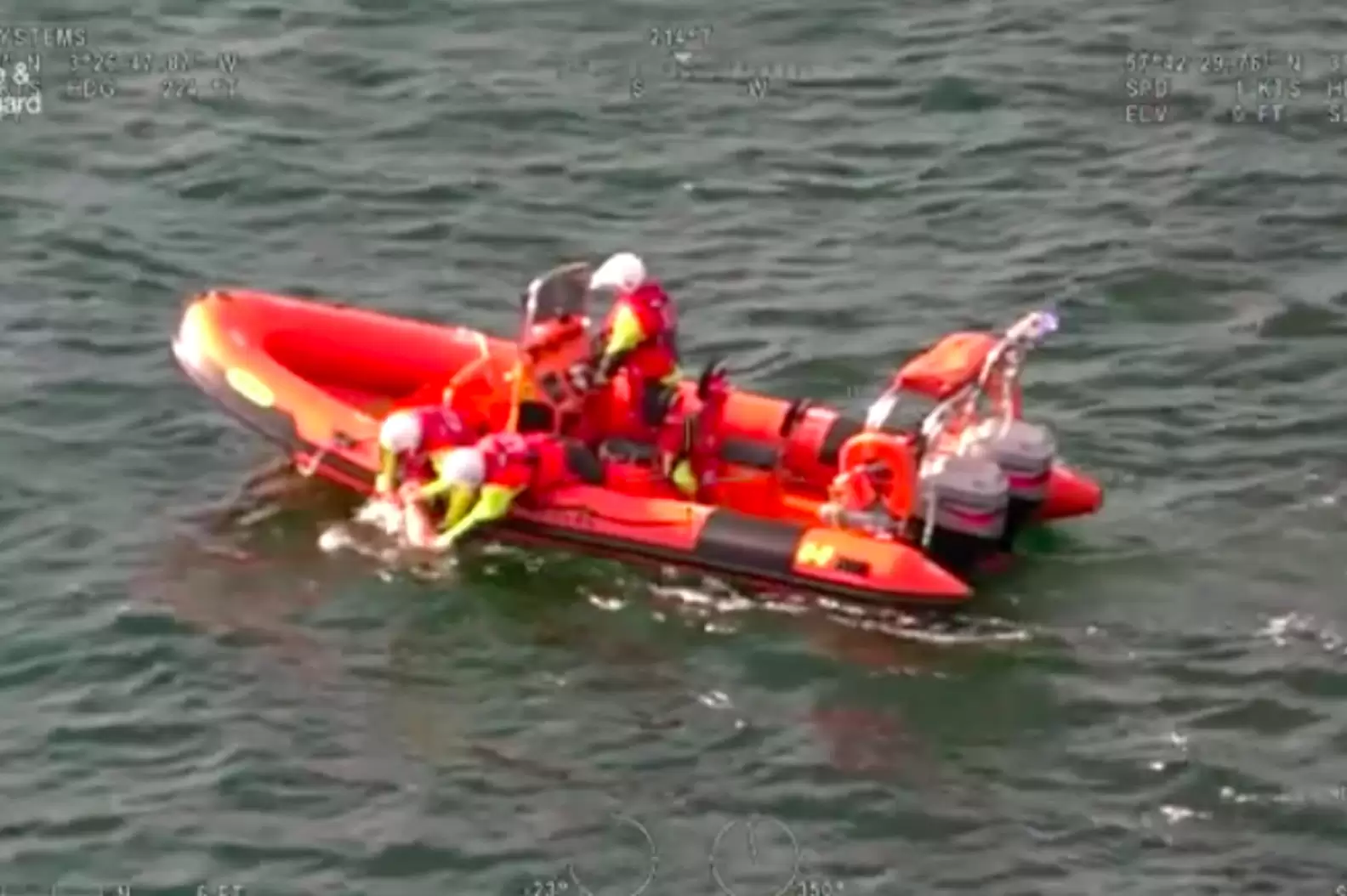
The lifeboat moved carefully toward the position indicated by the helicopter.
Reaching the cockapoo still required precise handling.
The boat had to approach closely enough for a crew member to lift him without striking or pushing him beneath the water. Rough conditions made it difficult to keep both the vessel and the dog in the same position.
The cockapoo continued rising and falling with the waves.
As the lifeboat came alongside him, a rescuer reached down and secured his body.
He was lifted from the sea and brought aboard.
The dog was completely soaked.
His movements were weak, and his body trembled from cold and exhaustion. After spending so long using his legs to stay above water, he had little energy left.
Crew members immediately wrapped him in thermal blankets.
They began first aid and focused on restoring his body temperature gradually while monitoring his breathing and responsiveness.
He no longer had to fight the waves.
For the first time in approximately 40 minutes, there was a solid surface beneath him.
Video: Lifeboat Crew Pulls the Exhausted Cockapoo From the Cold Water
Warmth Replaced the Cold North Sea
The journey back to shore became the next stage of the rescue.
The crew kept the dog wrapped and protected from the wind while the lifeboat moved away from the open water.
He remained tired and cold, but he was alive and responsive enough to receive care.
Once ashore, the cockapoo was taken for veterinary examination.
Even when an animal appears to recover after being removed from cold water, complications may develop later. Water inhalation, low body temperature, exhaustion, and shock can all require continued observation.
Veterinary staff checked him for injuries and signs of respiratory trouble.
Despite the length of time he had spent in the sea, reports indicated that he had escaped serious harm and was expected to recover.
The outcome was remarkable, but it did not come from luck alone.
His owner called for professional help quickly.
The Coastguard coordinated teams in the air, on the water, and along the shore.
The helicopter crew identified a target that was nearly invisible from sea level.
The lifeboat crew then reached him through difficult conditions and began warming him immediately.
Each action gave the next one a chance to succeed.
The Safest Rescue Was the One His Owner Did Not Attempt
Watching a pet struggle in water can create an overwhelming urge to follow.
But entering rough or cold seas without training and equipment can turn one emergency into two.
Currents strong enough to carry a dog away from shore can also overpower a person. Wet clothing becomes heavy, cold water rapidly reduces strength, and waves near rocks can make returning to land extremely difficult.
In this case, the owner contacted emergency services rather than attempting to swim after the cockapoo.
That choice allowed rescuers to focus on locating one missing animal instead of searching for both a dog and a person.
Anyone who sees an animal in difficulty near the coast should provide responders with as much useful information as possible:
Where the animal entered the water.
The direction it appeared to be moving.
Its size and coat color.
The last location where it was clearly visible.
Whether it was wearing a harness, collar, or flotation device.
Owners should continue watching from a safe position if responders advise them to do so, but they should avoid entering dangerous water themselves.
Professional teams have boats, aircraft, protective clothing, communication systems, and training designed for conditions that can become deadly within minutes.
A Small Shape That Could Have Been Missed
From the shore, the cockapoo was only a distant movement among countless waves.
From the lifeboat, he was a small dark shape that repeatedly disappeared from sight.
The helicopter changed the search by giving rescuers the view they needed.
Approximately 50 meters from land, the crew spotted him still trying to remain above water.
That sighting connected every part of the rescue.
The aircraft guided the lifeboat.
The lifeboat carried the crew close enough to reach him.
Thermal blankets replaced the cold water.
Veterinary care followed the emergency treatment.
And eventually, the cockapoo was returned to the people who had feared he might never reach shore again.
His survival should not be described as proof that a small dog can safely endure rough seas.
It shows the opposite.
He survived because help was requested quickly and several trained teams worked together before his strength disappeared completely.
For around 40 minutes, the little dog had only his own movement keeping him above the water.
Then a crew in the sky noticed something between the waves.
A lifeboat changed direction.
Hands reached down.
And the tiny life that had almost vanished into the gray sea was lifted back into safety.


