
In an entertainment industry filled with carefully managed images and constantly changing trends, Anna Kendrick has built a career by appearing refreshingly different.
She can deliver rapid-fire comedy, perform demanding musical numbers, carry emotional dramas, and bring animated characters to life. Yet despite working across so many genres, Kendrick has maintained the approachable personality that first helped audiences connect with her.
Her journey did not begin with a blockbuster movie or a carefully planned Hollywood launch. It started on the stage, where discipline, timing, and technical skill mattered far more than celebrity status.
From a young Broadway performer to an Academy Award nominee and the face of a successful musical franchise, Kendrick’s career reveals how talent, adaptability, and a strong sense of identity can create lasting success.
A Young Performer From Maine With Broadway Ambitions
Anna Kendrick was born and raised in Portland, Maine, far from the traditional centers of the American entertainment industry.
Her father worked as a history teacher, while her mother was an accountant. It was a relatively ordinary upbringing for someone who would eventually become recognized around the world.
Kendrick developed an interest in performing at an early age. Rather than treating acting as a shortcut to fame, she became fascinated with the process itself—the rehearsals, the music, the timing, and the challenge of becoming someone else onstage.
Her family supported that ambition, even when it required traveling long distances for auditions.
That commitment led to an extraordinary opportunity when Kendrick was still a child. At the age of 12, she appeared on Broadway as Dinah Lord in the musical High Society.
The role demanded more than youthful charm. Kendrick needed the confidence to perform alongside experienced professionals while handling the pressure of a major theatrical production.
Her work earned her a Tony Award nomination, making her one of the youngest performers ever nominated for the honor.
It was an impressive achievement, but more importantly, it gave Kendrick a strong professional foundation. Broadway taught her how to prepare, perform consistently, respond to direction, and command attention without relying on camera tricks or editing.
Those skills would remain visible throughout her film career.
VIDEO: Anna Kendrick’s Early Broadway Performances and Rise to Stardom
Finding Her Place on the Big Screen
Kendrick made her film debut in the 2003 musical comedy-drama Camp, playing Fritzi Wagner, an ambitious young performer attending a summer theater program.
The role allowed her to use both her theatrical experience and her ability to portray characters whose confidence sometimes hides deeper insecurities.
Although Camp was not a massive commercial release, it helped introduce Kendrick to filmmakers and audiences beyond Broadway. It also demonstrated that her energetic stage presence could translate effectively to the screen.
Her major breakthrough with mainstream audiences came several years later when she joined The Twilight Saga.
Kendrick played Jessica Stanley, one of Bella Swan’s human classmates. Jessica was talkative, curious, occasionally self-centered, and completely unaware of most of the supernatural danger surrounding her.
It was a supporting role, but Kendrick made the character memorable.
While vampires, werewolves, and complicated romances dominated the franchise, Jessica represented the recognizable world of school gossip, awkward friendships, and teenage social pressure. Kendrick’s quick delivery and expressive reactions brought humor to scenes that might otherwise have felt overly serious.
The enormous popularity of Twilight introduced her to a worldwide audience. However, it was another film released during that period that completely changed how Hollywood viewed her.

The Performance That Earned Her an Oscar Nomination
In 2009, Kendrick appeared opposite George Clooney in Jason Reitman’s Up in the Air.
She played Natalie Keener, an ambitious young employee who develops a system for firing workers through video calls rather than conducting the conversations in person. Natalie initially appears confident in the efficiency of her idea, but her outlook begins to change as she experiences the emotional reality of the job.
The character required Kendrick to balance intelligence, ambition, insecurity, and vulnerability.
Natalie could challenge Clooney’s experienced and charismatic character in one scene, then reveal how unprepared she was for disappointment in the next. Kendrick handled those shifts without making the character feel inconsistent.
Her performance received widespread recognition and earned her an Academy Award nomination for Best Supporting Actress.
The nomination represented an important turning point. Kendrick was no longer viewed only as the funny friend from a popular teen franchise. She had proven that she could hold her own beside established stars while contributing significantly to the emotional center of a critically acclaimed film.
After Up in the Air, she gained access to a much wider range of projects. Comedy, drama, romance, musicals, independent productions, and major studio films all became realistic possibilities.
Rather than choosing one category and remaining there, Kendrick began building a career around versatility.

How Pitch Perfect Turned Her Into a Musical Star
Kendrick’s theatrical and cinematic talents came together perfectly in the 2012 comedy Pitch Perfect.
She played Beca Mitchell, an independent and somewhat guarded college student who dreams of producing music. After reluctantly joining the Barden Bellas, an all-female a cappella group, Beca helps the team update its traditional style and become more competitive.
The character matched many of Kendrick’s natural strengths.
Beca was sarcastic without being cruel, confident without having everything figured out, and talented without behaving like a conventional musical-theater heroine. Kendrick gave the character enough emotional warmth to make her personal growth believable.
The movie became an unexpected hit.
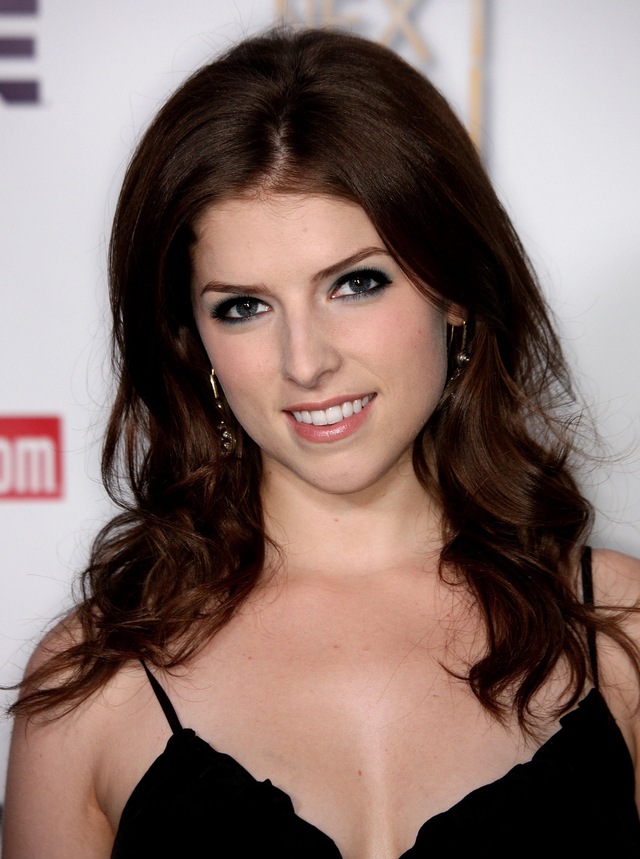
Its combination of comedy, friendship, competition, and recognizable pop songs attracted viewers far beyond the usual musical audience. Kendrick’s performance helped turn Beca into one of the most recognizable characters of her career.
One scene became especially influential.
During Beca’s audition, she performs “When I’m Gone” using a plastic cup to create the rhythm. The sequence was simple, but Kendrick’s controlled vocal performance and cup routine made it instantly memorable.
A longer version of the song, commonly known as “Cups,” became a major commercial success and introduced Kendrick to listeners who may not have known about her Broadway background.
The popularity of Pitch Perfect led to two sequels, transforming the original movie into a successful franchise. Across the trilogy, Kendrick remained the emotional center of the ensemble while sharing the screen with a large cast of comedic performers.
The franchise demonstrated that she could lead a major studio series without losing the understated humor that had made her appealing in smaller roles.
Moving Between Musicals, Thrillers and Animation
Following the success of Pitch Perfect, Kendrick could easily have remained focused on musical comedies. Instead, she continued moving between dramatically different types of projects.
In Disney’s adaptation of Stephen Sondheim’s Into the Woods, she played Cinderella. This was not the passive fairy-tale princess familiar to many audiences. Kendrick’s Cinderella questioned her wishes, struggled with uncertainty, and gradually realized that achieving a dream did not guarantee happiness.
The role allowed Kendrick to return to demanding musical material while exploring a more conflicted character.
She later appeared in The Accountant alongside Ben Affleck, playing Dana Cummings, an accountant who discovers irregularities within her company’s financial records. The darker action-thriller setting was far removed from the colorful world of Pitch Perfect, but Kendrick brought intelligence and nervous humor to the role.
She also took on more intimate and emotionally challenging projects, including films examining complicated relationships, personal uncertainty, and the difference between public appearances and private struggles.
At the same time, Kendrick found success with younger audiences as the voice of Princess Poppy in the Trolls franchise.
Poppy’s endless optimism and musical energy could easily have become overwhelming, but Kendrick gave the character a sense of sincerity. Her voice performances helped the animated movies appeal to both children and parents, while the franchise’s soundtrack created another connection between her acting and music careers.
Few performers can move convincingly from a Sondheim musical to an action thriller and then to a brightly colored animated adventure. Kendrick’s ability to do so has become one of the defining features of her career.

Adapting to the Streaming Era
As streaming services began reshaping film and television, Kendrick continued experimenting with different formats.
In the romantic anthology series Love Life, she played Darby Carter, a woman whose relationships are followed across several stages of adulthood. Rather than presenting romance as a simple search for one perfect partner, the series explored how each relationship can shape a person’s identity and expectations.
The role gave Kendrick room to portray gradual emotional development over multiple episodes. Darby made mistakes, misunderstood herself, and repeatedly discovered that personal growth did not follow a predictable timeline.
Kendrick’s familiar combination of humor and vulnerability made her well suited to the character.
She later entered science-fiction territory with Stowaway, playing medical researcher Zoe Levenson. Set aboard a spacecraft traveling to Mars, the film centers on a crisis caused by limited resources and an unexpected additional passenger.
The story asked Kendrick to work within a restrained, tense environment where every decision carried potentially devastating consequences. Her performance relied less on comedy and more on quiet determination, compassion, and moral conflict.
These projects reinforced an important pattern in her career: Kendrick rarely depends on one particular genre.
When the entertainment landscape changes, she does not simply follow the most popular trend. She looks for roles that allow her to explore a different emotional or creative challenge.
VIDEO: From Twilight and Pitch Perfect to Anna Kendrick’s Most Dramatic Roles
Why Audiences Find Anna Kendrick So Relatable
Kendrick’s acting and musical abilities explain much of her professional success, but they do not fully explain the connection she has developed with audiences.
Part of that appeal comes from her public personality.
Rather than presenting herself as distant or impossibly polished, Kendrick has often embraced awkwardness, anxiety, sarcasm, and self-deprecating humor. Her interviews frequently feel more like conversations than promotional performances.
That relatability also appears in many of her characters.
She often plays intelligent women who are capable but uncertain, ambitious but imperfect. They may use humor to protect themselves, struggle to communicate what they need, or discover that professional confidence does not automatically create emotional clarity.
These characters feel recognizable because they are rarely presented as flawless.
Kendrick’s screen presence suggests that confidence and insecurity can exist at the same time. Someone can be talented and still feel uncertain. A person can succeed publicly while privately questioning what comes next.
That tension has helped her connect with viewers across very different projects.
It also separates her from the traditional image of the inaccessible Hollywood star. Kendrick’s appeal is not based on convincing people that her life is perfect. It comes from acknowledging how strange, uncomfortable, and unpredictable life can be.

A Career Built on Adaptability Rather Than Image
Anna Kendrick’s journey from Portland, Maine, to Broadway and Hollywood is not the story of an overnight discovery.
It is the story of a performer who developed her skills early and continued finding new ways to use them.
Her Broadway background gave her discipline and vocal control. Independent films helped her understand the intimacy of screen acting. Twilight provided international visibility. Up in the Air established her dramatic credibility, while Pitch Perfect transformed her into a musical and pop-culture star.

Later projects allowed her to explore fantasy, animation, thrillers, romance, science fiction, and television.
Through all those transitions, Kendrick has maintained a recognizable presence. She is quick-witted but emotionally open, technically accomplished but rarely showy, and famous without appearing completely separated from the experiences of ordinary people.
Her career demonstrates that versatility does not require abandoning one’s identity.
Kendrick did not succeed by transforming herself into whatever Hollywood expected at a particular moment. She built her career by combining genuine ability with careful choices, moving into new territory while preserving the humor and honesty audiences already appreciated.
That may be the real Anna Kendrick method: master the craft, remain willing to change, and never become so polished that people can no longer recognize the person underneath.