
Hollywood has never lacked polished stars, but Anna Kendrick has built her career by appearing refreshingly unpolished in all the right ways. Her quick wit, expressive performances, and willingness to laugh at herself have allowed audiences to see something familiar in her—even as she moves through a world defined by red carpets, major franchises, and awards ceremonies.
Yet Kendrick’s approachable personality can sometimes obscure just how accomplished she is. Long before millions knew her from Twilight or Pitch Perfect, she had already earned recognition on Broadway. She later became an Academy Award nominee, a recording artist with a charting hit, the voice of a beloved animated character, and a filmmaker capable of taking control behind the camera.
Her success was not created by one breakout moment. It came from years of preparation, careful choices, and an unusual ability to move between comedy, drama, music, animation, and independent cinema without losing the qualities that made her distinctive.
A Childhood in Maine and an Early Journey to Broadway
Anna Kendrick grew up in Portland, Maine, far from the traditional center of the entertainment industry. Her mother worked as an accountant, while her father was a history teacher. It was an ordinary environment in many respects, but Kendrick’s interest in performing appeared early.

Anna Kendrick’s path to stardom began in Portland, Maine.
Rather than treating acting as a childhood hobby, she approached it with remarkable commitment. She performed in local theater and regularly traveled to New York for auditions. Those trips demanded patience from both Kendrick and her family, but they eventually led to an extraordinary opportunity.
At only 12 years old, Kendrick was cast as Dinah Lord in the 1998 Broadway musical High Society. Her performance earned her a Tony Award nomination, placing her among the youngest nominees in the award’s history.
That achievement revealed more than natural talent. Performing professionally on Broadway requires discipline, consistency, vocal control, and the ability to respond under pressure. Kendrick acquired those skills before most performers her age had even decided what they wanted to do with their lives.
Her theater background would later become one of her greatest advantages. It gave her the confidence to handle demanding musical roles while also sharpening the timing and emotional precision that would define her work on screen.
Small Films, Memorable Performances, and the Twilight Spotlight
Kendrick made her film debut in the independent musical comedy Camp in 2003. Playing the ambitious Fritzi Wagner, she demonstrated an early ability to make a supporting character impossible to ignore. The movie did not turn her into an overnight celebrity, but it introduced her to filmmakers and audiences who recognized her unusual combination of theatrical confidence and dry humor.
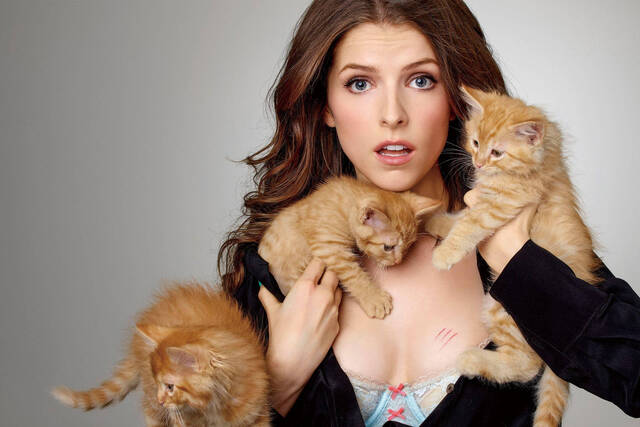
Her performance in Camp offered an early glimpse of the screen presence that would later define her career.
Her first experience with worldwide franchise fame arrived when she was cast as Jessica Stanley in The Twilight Saga. Jessica was one of Bella Swan’s human classmates—a talkative, occasionally self-involved teenager living on the edge of a supernatural story.

Kendrick brought humor and recognizable teenage awkwardness to the fantasy world of Twilight.
Although the part was relatively small, Kendrick made Jessica memorable through timing, facial expressions, and a conversational delivery that felt spontaneous. Surrounded by vampires, werewolves, and life-or-death romance, Jessica sounded like someone viewers might actually have known in high school.
The franchise exposed Kendrick to an enormous international audience, but it did not determine the direction of her career. While appearing in the Twilight films, she continued pursuing projects that gave her more complex material. That decision soon led to the performance that transformed Hollywood’s perception of her.
Up in the Air and the Role That Changed Everything
In 2009, Kendrick appeared opposite George Clooney and Vera Farmiga in Jason Reitman’s acclaimed drama Up in the Air. She played Natalie Keener, an ambitious young employee who believes that modern technology can make the emotionally difficult business of firing people more efficient.

Up in the Air gave Kendrick an opportunity to combine sharp comedy with emotional vulnerability.
Natalie initially appears confident, organized, and certain that her ideas are correct. As she begins traveling with Clooney’s experienced corporate downsizer, however, that confidence is gradually tested. Kendrick allows the character’s carefully maintained professionalism to crack without turning her into a caricature.
Her performance works because Natalie is simultaneously impressive and inexperienced. She can defend a corporate strategy in one scene and become emotionally overwhelmed in another. Kendrick handles those transitions with enough restraint to make every side of the character believable.
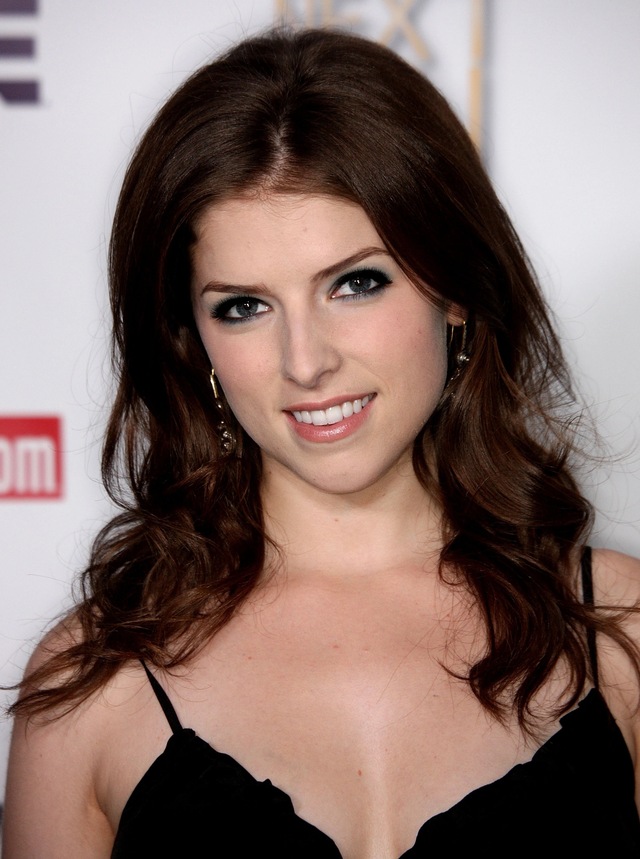
The role earned Kendrick an Academy Award nomination for Best Supporting Actress.
The nomination confirmed that she was much more than a funny supporting player in a popular teenage franchise. At 24, she had held her own beside established stars while helping carry the movie’s emotional center. Hollywood now saw her as an actress capable of handling sophisticated dramatic material.
Pitch Perfect and the Song No One Could Escape
Three years later, Kendrick stepped into the role that would make her a defining face of 2010s popular culture. In Pitch Perfect, she played Beca Mitchell, an independent college freshman who dreams of becoming a music producer and reluctantly joins an all-female a cappella group.
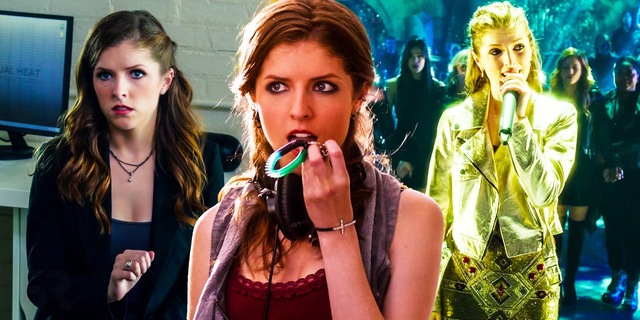
As Beca Mitchell, Kendrick blended musical ability with the guarded attitude of a reluctant outsider.
Beca was a natural fit for Kendrick. She was talented but uncertain, sarcastic but not cruel, and determined to present herself as detached even when she desperately wanted to belong. Kendrick’s understated delivery balanced the movie’s larger comedic personalities and gave its emotional story a believable center.
The film became a surprise success, eventually growing into a three-movie franchise. Its influence extended well beyond theaters as viewers recreated musical arrangements, audition scenes, and a cappella performances online.
The most unexpected phenomenon was “Cups,” Beca’s audition song performed with a plastic cup as percussion. Kendrick had learned the cup routine before production and incorporated it into her audition for the film. The simple sequence became one of the movie’s signature moments.
A longer version of “Cups” was subsequently released as a single and became a major chart success. For Kendrick, it represented a rare collision of her abilities: a childhood in musical theater, a talent for screen acting, and a performance that felt casual enough for viewers to reproduce at home.
Refusing to Stay in One Genre
After Pitch Perfect, Kendrick could easily have remained inside the musical-comedy world. Instead, she used its success to explore a remarkably varied collection of projects.
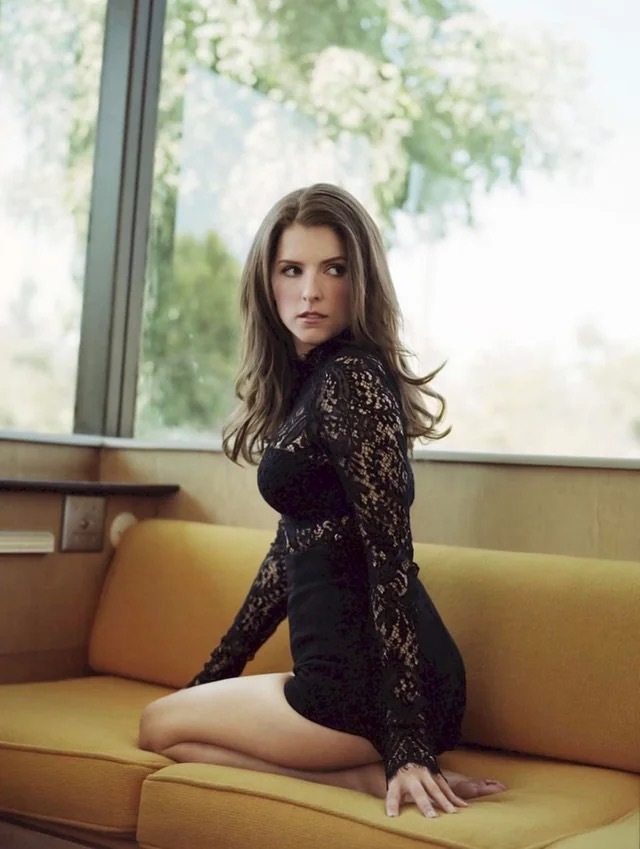
Her willingness to change genres has helped Kendrick build an unusually durable career.
In the film adaptation of Stephen Sondheim’s Into the Woods, she played Cinderella, bringing her trained singing voice to music far more technically demanding than the pop arrangements of Pitch Perfect. Rather than portraying the character as a conventional fairy-tale princess, Kendrick emphasized her uncertainty about what she truly wanted after the fantasy began to fall apart.
She displayed a different kind of vulnerability in the musical drama The Last Five Years, while films such as The Accountant placed her inside darker, more suspenseful stories. In A Simple Favor, she used her seemingly innocent screen persona to effective comic and dramatic advantage opposite Blake Lively.
Kendrick also reached a younger audience by voicing the relentlessly optimistic Princess Poppy in the Trolls franchise.

As Princess Poppy, Kendrick introduced her voice and comic energy to a new generation.
These projects may appear unrelated, but they share an important quality: each one gives Kendrick a different problem to solve as a performer. Her choices have prevented audiences from associating her with only one character, genre, or period of her career.
Adapting to a Changing Entertainment Landscape
As streaming services reshaped television and film, Kendrick moved comfortably into the new environment. In 2020, she starred in and executive-produced the romantic anthology series Love Life. Its first season followed Darby Carter through a series of relationships, examining how each experience influenced the person she eventually became.
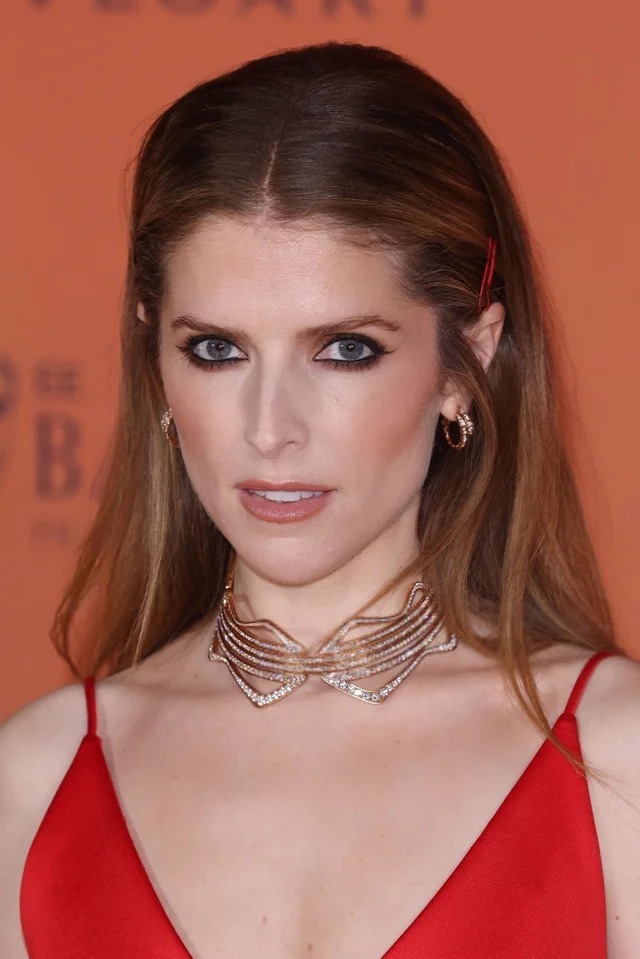
Streaming projects gave Kendrick more room to explore characters over longer emotional journeys.
Darby was not written as an idealized romantic heroine. She made poor decisions, misunderstood people, and sometimes remained in relationships after their weaknesses had become clear. Kendrick’s performance made those imperfections feel recognizable rather than frustrating.
She later took on a very different challenge in the science-fiction thriller Stowaway. Set aboard a spacecraft traveling to Mars, the film replaced romantic confusion with a grave moral crisis. Its restrained, claustrophobic setting required Kendrick to communicate fear and responsibility without relying on the fast-paced humor for which she was widely known.
These roles demonstrated that her appeal was not tied to a particular format. Whether working onstage, in a studio comedy, in an independent drama, or in a streaming series, she remained most effective when revealing the uncomfortable emotions beneath a character’s composed exterior.
The Honest Personality Behind the Performances
Part of Kendrick’s appeal comes from the contrast between her achievements and the way she speaks about them. Her public personality is quick, observant, and often self-deprecating. Rather than presenting fame as effortless, she has frequently joked about awkward encounters, anxiety, professional uncertainty, and the strange rituals surrounding celebrity life.
That voice also shaped her memoir, Scrappy Little Nobody. The title captured the image she had developed: a highly successful performer who still sounded like someone standing slightly outside Hollywood and commenting on its absurdities.
Her relatability is not simply a publicity strategy. It reflects the qualities visible throughout her performances. Kendrick excels at portraying people who are intelligent but unsure of themselves, ambitious but emotionally unprepared, or funny because they are attempting to hide how uncomfortable they feel.
From Leading Roles to a New Position Behind the Camera
Kendrick’s evolution eventually carried her beyond acting. With Woman of the Hour, she made her feature directorial debut while also taking on the central role. The true-crime drama marked a significant shift, allowing her to shape not only one performance but the tone and perspective of an entire film.
Directing was a logical extension of the control and curiosity that had guided her earlier choices. After decades of learning how stories are constructed from inside a scene, she stepped back to consider how every performance, camera angle, silence, and transition contributed to the larger effect.
The move also challenged the idea that her career depended primarily on being charming or relatable. Behind the familiar wit was a serious storyteller willing to engage with unsettling material and assume greater creative responsibility.
Why the Kendrick Method Continues to Work
Anna Kendrick’s career cannot be explained by a single role. Broadway gave her discipline. Independent film taught her how to make an impression with limited screen time. Twilight brought global visibility, while Up in the Air established her dramatic credibility. Pitch Perfect turned her into a musical and pop-culture star, and her later work proved that she was willing to keep evolving.
The connecting thread is precision. Kendrick knows how to deliver a line without making it feel rehearsed, how to make a capable character appear vulnerable, and how to use humor without weakening an emotional moment. Audiences may describe her as relatable, but that sense of ease is supported by years of technical experience.
Her journey also offers a useful lesson about longevity in Hollywood. A performer does not have to abandon the qualities that first attracted audiences in order to grow. Kendrick has expanded her career while preserving the wit, intelligence, and emotional honesty that made her recognizable.
She did not become enduring by fitting Hollywood’s traditional image of a star. She succeeded by showing that awkwardness could be charismatic, versatility could be an identity, and authenticity could be every bit as powerful as glamour.