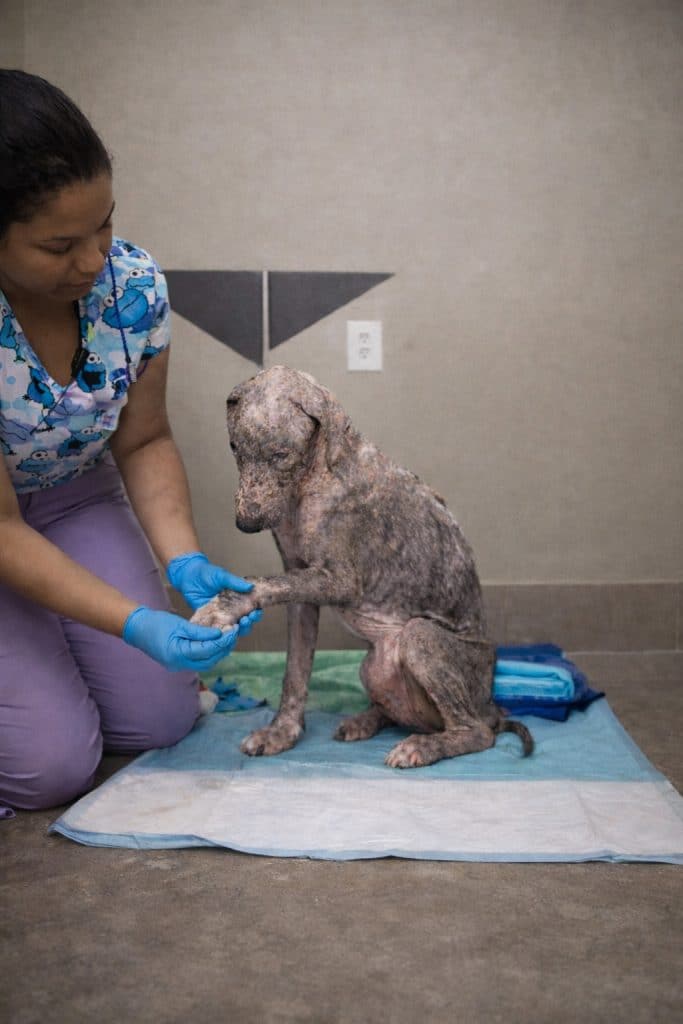
At eight months old, Thomas should have been chasing toys.
He should have been stumbling through puppyhood, investigating every new smell and discovering that almost anything could become a game.
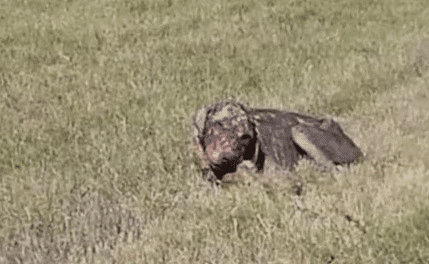
Instead, he was wandering the streets of Houston with a body that looked far older than he was.
His coat had thinned into uneven patches.
His skin was red and irritated.
Every scratch seemed to bring more discomfort, and the energy that should have belonged to a young dog had almost disappeared.
Thomas moved carefully.
Slowly.
Sometimes he curled himself inward, conserving what little strength he had.
Houston is large enough for a small dog to disappear inside it.
Cars pass.
People hurry by.
Another stray can become part of the background.
But eventually, someone looked at Thomas closely enough to understand that he was not simply dirty or hungry.
He was a puppy in trouble.
And if someone did not intervene, whatever was wearing his body down would continue.
That moment of attention became the beginning of five months that would completely change the dog he was able to become.
He Was Only Eight Months Old, but His Body Was Already Exhausted
Thomas’s condition was difficult to reconcile with his age.
Young dogs usually carry energy almost recklessly.
Thomas did not.
His skin appeared painfully inflamed.
Large areas of his coat were missing or damaged.
The constant irritation made normal rest difficult.
Even when he stopped moving, comfort did not necessarily follow.
His rescuers could see that hunger and exhaustion had compounded the problem.
Street life gives a dog very little opportunity to recover from illness.
There is no clean bed waiting after a difficult day.
No one notices whether scratching has become worse.
No meal is guaranteed.
And if a skin problem spreads, the animal must keep searching for food and shelter anyway.
By the time help reached Thomas, he seemed depleted.
The rescue team did not expect one bath or one meal to fix what had likely developed over time.
He needed consistent treatment.
Nutrition.
A quiet environment.
And people willing to continue helping even when progress was too slow to notice from one day to the next.
VIDEO: Thomas Was Only Eight Months Old — But His Skin and Body Looked Completely Worn Down
The First Part of Recovery Looked Almost Boring
There was no dramatic procedure that changed Thomas overnight.
His treatment began with ordinary things.
Skin care.
Soothing baths.
Appropriate medical treatment.
Regular meals.
Rest.
Then the same things again.
For caregivers, this kind of rescue requires patience because the early stages can look almost unchanged.
Thomas still had missing fur.
His skin was still irritated.
He was still weak.
A person seeing him on day three might have wondered whether anything was working at all.
The people caring for him watched for smaller signals.
Did he finish more of his meal?
Did he rest without scratching for a little longer?
Was his posture less tense?
Did he lift his head when someone entered?
These were the signs that mattered.
One day, Thomas held his head a little higher.
On another, he finished everything placed in front of him.
Later, his expression began to soften.
The improvements were not dramatic enough to create a perfect before-and-after photograph yet.
But his body was beginning to receive something it had been missing.
Consistency.
The First Tail Wag Showed There Was Still a Puppy Underneath
As the discomfort began easing, Thomas changed in another way.
His tail moved.
At first, only slightly.
It was the kind of movement someone could easily miss if they were not paying attention.
Then it happened again.
With more confidence.
Thomas also began responding differently when people approached.
Instead of remaining withdrawn, he became interested in familiar voices.
Gentle touch no longer seemed like something he simply endured.
He began leaning toward it.
That change mattered because Thomas’s recovery was never just about fur returning.
A dog living with constant discomfort can become quieter simply because so much energy is being spent coping with the body.
As his skin improved and his strength returned, Thomas finally had room for curiosity again.
He watched caregivers.
He followed movement around him.
He began seeking interaction.
The puppy who had looked almost too tired to participate in the world was starting to engage with it.
Not because someone forced him to be happy.
Because he was finally comfortable enough to notice what was around him.
Weeks of Treatment Slowly Rebuilt What Street Life Had Taken
Thomas continued receiving care over the following weeks.
The baths remained part of the routine.
So did treatment for his skin.
Good nutrition became one of the foundations of his recovery.
His body needed resources to repair damaged skin, produce new coat, and regain the strength expected from a young dog.
That takes time.
Gradually, patches that had been bare began showing new hair.
The irritated appearance of his skin started fading.
His weight and general condition improved.
And with every physical change came another behavioral one.
Thomas spent less time withdrawn.
He moved more confidently.
He began showing interest in play.
He wanted attention.
He started doing the kinds of things rescuers had hoped to see from the beginning.
These changes did not mean every difficult day was over.
Recovery is rarely perfectly linear.
There were tiring days.
Days when progress looked slower.
Days when the routine mattered more than motivation.
But the caregivers stayed with the plan.
And Thomas kept responding.
Five Months Turned Thomas Into a Dog People Barely Recognized
By the end of approximately five months, the contrast was extraordinary.
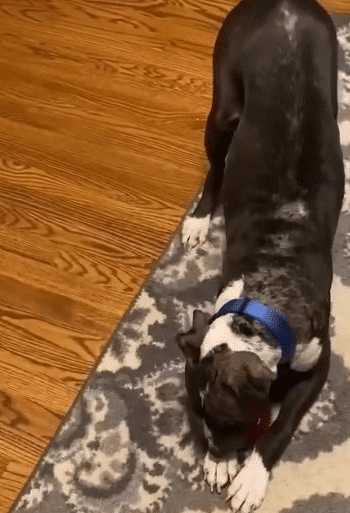
The puppy who had been found with irritated skin and a badly damaged coat now looked healthy and bright.
His fur had returned.
His body was stronger.
His posture had changed.
Where Thomas had once carried himself cautiously, he now approached the world with much more confidence.
The greatest transformation, however, was not the coat.
It was the energy.
Thomas wanted to move.
Play.
Explore.
Be involved.
At eight months old, those instincts had been buried beneath discomfort and exhaustion.
Now they were visible.
People who had seen only the earliest version of him could have struggled to believe they were looking at the same dog.
But they were.
Nothing magical had replaced Thomas.
Care had simply given his body time to become what it had been trying to become all along.
A healthy young dog.
Once He Felt Safe, His Real Personality Became Impossible to Hide
Thomas turned out to be affectionate.
Curious.
Social.
He enjoyed being around familiar people and responded enthusiastically when they approached.
He wanted companionship rather than distance.
Exploration became part of his routine.
So did play.
And each ordinary behavior carried special meaning because none of it had been easy to see during his first days of rescue.
Back then, almost everything about Thomas reflected discomfort.
Now his days contained choices.
Where to lie down.
Who to approach.
What to investigate.
When to play.
That freedom allowed caregivers to see Thomas as more than a medical case.
He was not simply “the puppy with the bad skin.”
He had preferences.
Habits.
People he liked.
A growing confidence.
And the unmistakable energy of a dog whose body was no longer using every resource just to cope.
This was the Thomas his caregivers had been waiting to meet.
Healing Was Complete Enough for the Next Question to Matter
Eventually, the rescue team no longer needed to ask whether Thomas would recover.
The larger question became:
What came next?
Thomas had spent months becoming healthier.
His skin had healed.
His coat had returned.
He had developed confidence around people.
Now he needed something treatment alone could never provide.
A permanent family.
A home where the routines that helped him recover could continue.
Regular meals.
Medical care when needed.
A place to sleep.
People who would notice if something changed.
And enough affection and stability for Thomas to remain the social young dog he had become.
The fact that he was ready for adoption represented a major milestone.
Five months earlier, the priority had been getting him through each day comfortably.
Now people could think in years.
Birthdays.
Walks.
Toys.
A favorite sleeping place.
All the ordinary experiences that once seemed very far away.
Thomas Was Never Meant to Be Defined by the Way He Was Found
The earliest images of Thomas are powerful because they show how much his body had been struggling.
But they can also become misleading if they are treated as the whole story.
Thomas was not his damaged coat.
He was not his inflamed skin.
He was not the tired posture rescuers saw in Houston.
Those were conditions he was living through.
They were never everything he was.
The months that followed proved it.
Underneath the discomfort was a dog who wanted to play.
A dog who enjoyed people.
A dog capable of trust.
A dog whose tail could wag with far more energy once his body stopped demanding all of it for survival.
That is what consistent rescue care uncovered.
Not a different dog.
The same one, finally comfortable enough to show himself.
Thomas’s life changed because people were willing to continue through the slow part.
The baths.
The treatments.
The meals.
The weeks when the difference looked small.
Then those small differences began accumulating.
New hair.
More strength.
A better appetite.
A tail wag.
Playfulness.
Confidence.
Five months later, the puppy once struggling through Houston looked almost nothing like the one who had first been noticed.
And yet the most important part of him had been there from the beginning.
He only needed enough care for everyone else to finally see it.


