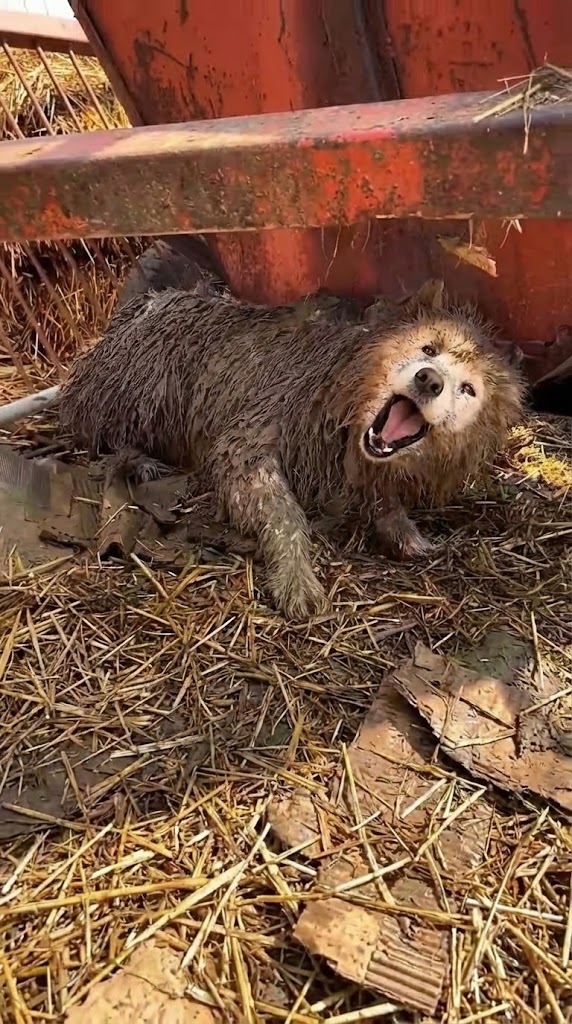
The rescuers recognized him almost immediately.
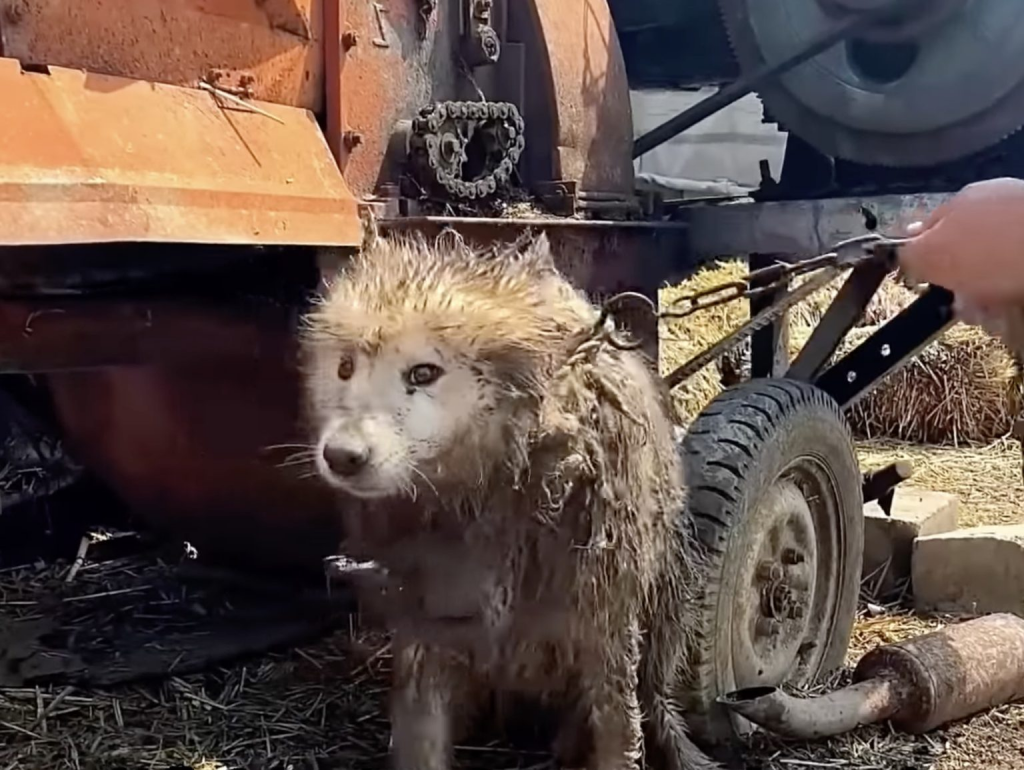
Beneath a piece of rusted machinery on an abandoned-looking farm, a small dog lay tethered to cold metal.
His coat was dirty and badly matted.
His body trembled whenever someone moved closer.
And around his neck, the chain had left painful wounds that were already infected.
Then came the part nobody expected.
This was not a dog they were meeting for the first time.
This was Beike.
Months earlier, the same rescue team had helped him recover and placed him with a family.
Now they were rescuing him all over again.
They Knew His Face Before They Reached the Chain
Beike had already been through rescue once.
According to the original account, the team had previously taken him into care when he was weak, helped him recover, and later placed him with people they believed would look after him.
Seeing him again under those circumstances was therefore especially alarming.
The chain around his neck had been left in place long enough to damage the skin.
The area was inflamed and infected.
Every movement pulled against the restraint.
Beike also appeared extremely frightened when people came near.
Whatever had happened since his first adoption, he clearly needed to leave again.
Video: Beike Is Found Chained Again After Rescuers Realize They Had Saved Him Before
The Chain Came Off — But Beike Did Not Suddenly Relax
Once rescuers secured the situation, the restraint was removed.
Beike did not immediately begin moving around freely.
Instead, his body remained tense.
His tail stayed low.
His eyes moved quickly around the unfamiliar activity.
The source describes the people at the property as dismissive of his condition, with one man reportedly insisting that Beike was “fine.”
The visible injuries suggested otherwise.
Rather than leaving him there, the rescue team took Beike directly for veterinary care.
Even Basic Handling Triggered a Strong Fear Response
At the clinic, Beike’s behavior showed how difficult ordinary care had become for him.
Sudden sounds made him flinch.
His body shook during handling.
When staff attempted to bathe him, his fear intensified enough that completing the process safely became difficult.
The sound of a dryer also triggered a strong reaction, according to the source.
The team did not simply restrain him more forcefully.
Instead, they used sedation so Beike could rest while his body was examined and treated without adding unnecessary stress.
That also gave veterinarians a better look at the wounds hidden beneath his coat.
The Damage Around His Neck Needed Immediate Care
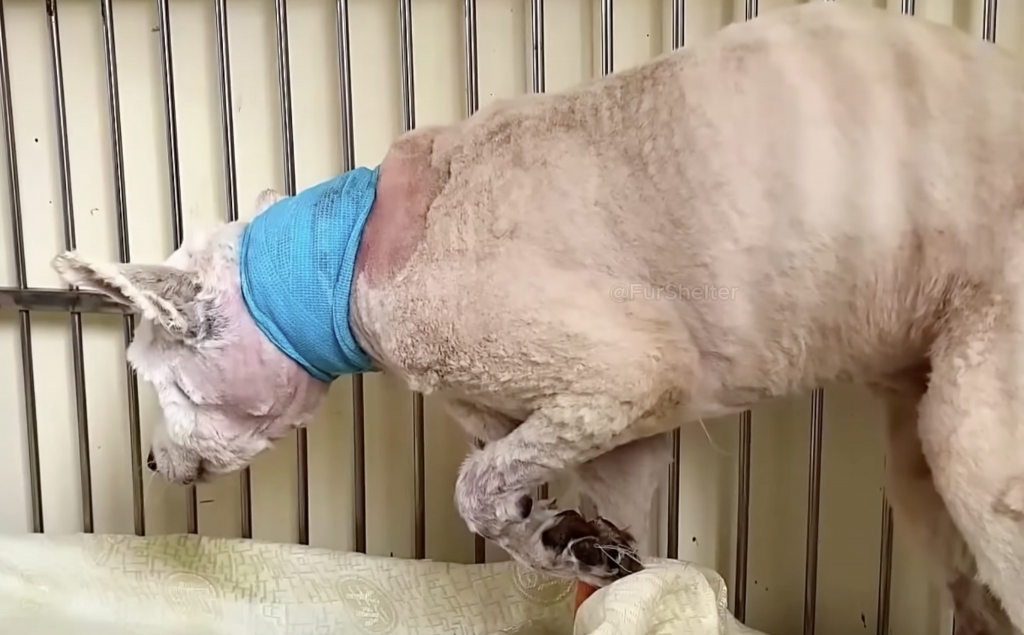
Once Beike was relaxed enough for a proper examination, the condition of his neck became clearer.
The wounds caused by the chain were deep.
Some areas were infected.
His coat also needed extensive grooming before the skin underneath could be properly cleaned.
The source mentions older scars elsewhere on his body as well, though it does not establish when or how each one occurred.
Treatment focused on what could be addressed now.
Cleaning the wounds.
Managing infection.
Relieving discomfort.
And giving Beike somewhere quiet enough to recover.
Rebuilding Trust Took Longer Than Treating the Wounds
Physical treatment could begin immediately.
Behavioral recovery could not.
During the first days, Beike remained withdrawn.
Fast movements made him tense.
Direct contact was not always welcome.
So caregivers changed the way they interacted with him.
They sat nearby without reaching.
Placed food within comfortable distance.
Spoke softly when entering.
And allowed Beike to decide when he wanted to come closer.
Nothing dramatic happened at first.
That was the point.
He needed repeated experiences in which nobody forced him into interaction.
Then He Put His Head Near a Caregiver’s Hand
One afternoon, a caregiver sat close to Beike and rested a hand on the floor.
She did not reach toward him.
Beike watched.
Then moved forward.
According to the source, he eventually rested his head against her fingers.
It was a small interaction.
But it was different from the dog who had trembled during even basic care shortly after rescue.
After that, similar moments became easier.
His posture relaxed during meals.
He tolerated grooming better.
And he began spending more time near familiar people.
His Former Owner Reportedly Came Back for Him
Just as Beike was becoming more settled, the rescue account describes another confrontation.
The previous owner appeared at the clinic and demanded that Beike be returned.
This time, the rescue team refused.
The source says staff stood together and made it clear that Beike would not be going back to the place where he had been found chained.
After an argument, the man eventually left.
For Beike, nothing about his routine changed afterward.
He remained in care.
His wounds continued healing.
And nobody put the chain back around his neck.
Outdoors Began to Look Different to Him
As Beike’s physical condition improved, caregivers began taking him outside.
At first, he remained cautious.
Then he started exploring.
Grass replaced the muddy ground beneath the machinery.
Open space replaced the small radius allowed by the chain.
He also met other rescued dogs.
Initially, Beike watched them from a distance.
Later, he moved closer.
Eventually, he joined in gentle play.
The changes were gradual, but they showed that his attention was shifting away from constant vigilance and toward ordinary dog behavior.
Three Months Later, He Barely Resembled the Dog They Found
Around three months after the second rescue, Beike looked very different.
His coat was cleaner and fuller.
His body appeared stronger.
His posture was more relaxed.
And he increasingly approached caregivers on his own.
He leaned into touch.
Greeted familiar people.
Ran through the yard.
And rested near those he had learned to recognize.
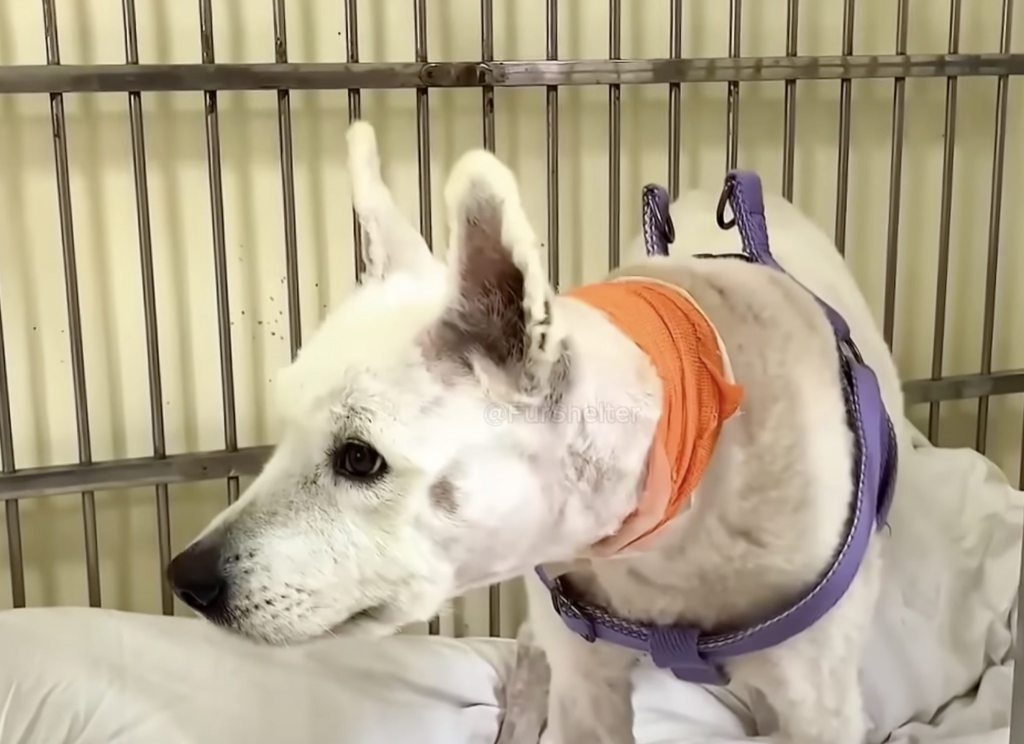
The dog found trembling beneath rusted machinery was no longer spending every moment trying to make himself smaller.
Being Rescued Once Had Not Guaranteed He Was Safe Forever
That is what makes Beike’s story different from many rescue stories.
The first rescue was not the ending.
He had already been removed from danger once.
Already recovered.
Already been placed into what rescuers believed would be a safe home.
Then they found him again.
Chained.
Injured.
And afraid of basic handling.
The second rescue therefore required more than treating a wound.
The team also had to accept that a previous placement had failed.
This time, they were far more determined about what would happen next.
Beike’s story did not change because someone saved him once.
It changed because, when that first promise of safety failed, the same people were willing to come back and save him again.


