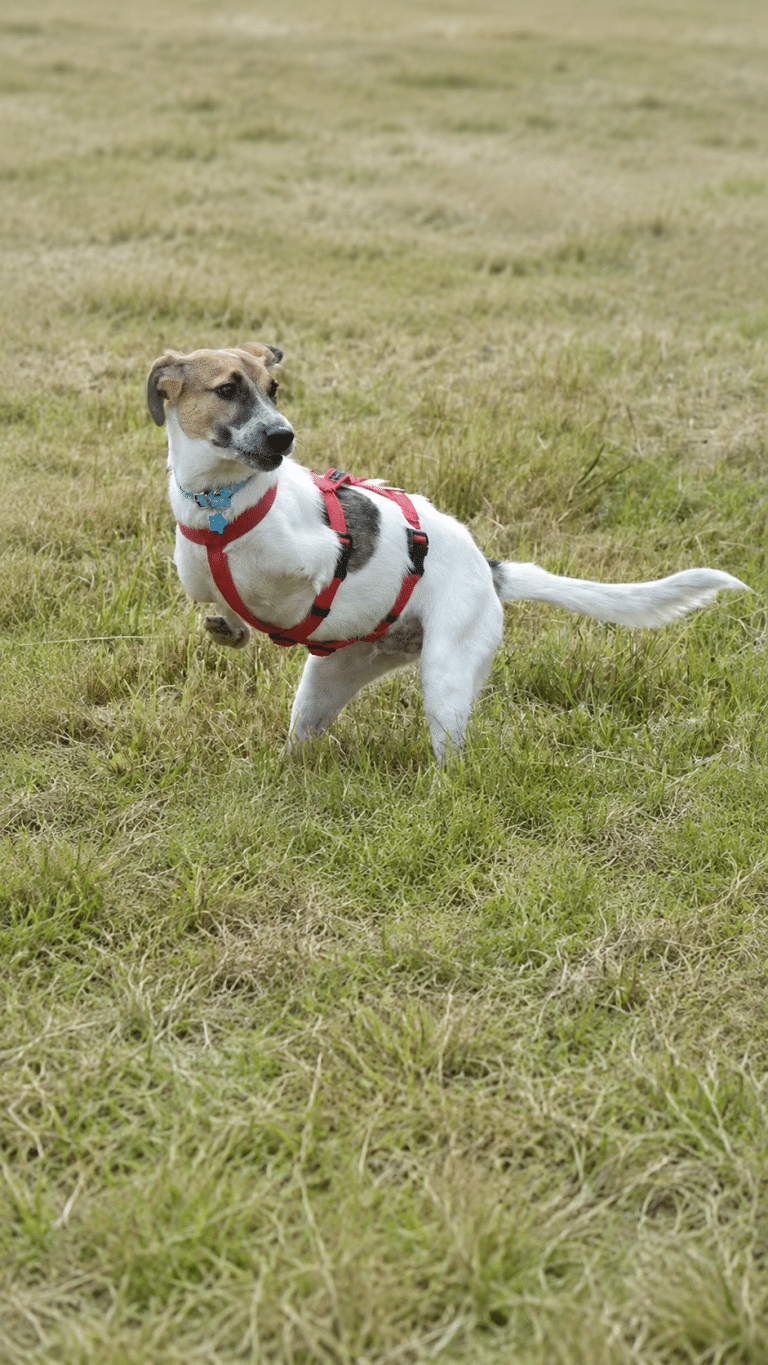
The first thing Karen noticed about Reuben was not what his body was missing.
It was how much life he carried inside such a small puppy.
He was playful, affectionate, and eager to explore everything around him. He wanted toys, attention, and the company of other dogs just like any curious young pup.
Reuben had been born with serious differences affecting both front legs. One was only partially formed, while the other was completely absent.
Yet when he arrived in Karen’s home after being rescued from Romania, he did not behave like a dog waiting to be pitied.
He behaved like a puppy ready to live.
A Rescue Gave Him the Chance to Be Seen
Reuben was only a few months old when Safe Rescue for Dogs helped bring him out of Romania.
Animals with significant physical differences can face uncertain futures. Some are overlooked by adopters, while others may never receive the support needed to move comfortably and remain healthy as they grow.
Reuben needed a family willing to look beyond the obvious challenges.
Karen did exactly that.
When she met him, she saw a small dog filled with curiosity and affection. His unusual front limbs were part of his body, but they were not the most important thing about him.
He wanted to be close to people.
He wanted to investigate new rooms.
He wanted to join whatever the other dogs were doing.
Instead of asking whether Reuben could live like every other dog, Karen began learning what kind of life would work best for him.
That decision gave the little puppy something every animal deserves.
A genuine opportunity.
Video: Born Without Front Legs, Reuben Still Found His Own Joyful Way to Play
He Quickly Invented His Own Way to Move
Reuben could not walk using the typical four-legged pattern.
Instead, he relied on his strong back legs.
He learned to lift the front of his body and move forward in small, energetic hops. His balance was unusual, but his determination to reach people, toys, and other dogs helped him practice constantly.
Watching him cross a room could be surprising at first.
Then his personality took over.
Reuben did not pause to consider how different his movement looked. He simply focused on where he wanted to go.
If a toy caught his attention, he moved toward it.
If someone sat on the floor, he approached for affection.
If the other dogs began playing, he found a way to join them.
His method was not effortless. Supporting his body on two back legs placed additional demands on his muscles and joints.
But Reuben adapted with the body he had.
Every hop showed how quickly animals can develop their own solutions when they are given a safe environment in which to learn.
Family Life Came Naturally to Him
Once Reuben settled into Karen’s home, he became part of the household routine.
He played with the other dogs and showed interest in the same objects that entertained them. Toys were carried, nudged, and claimed with the confidence of a puppy who clearly believed they belonged to him.
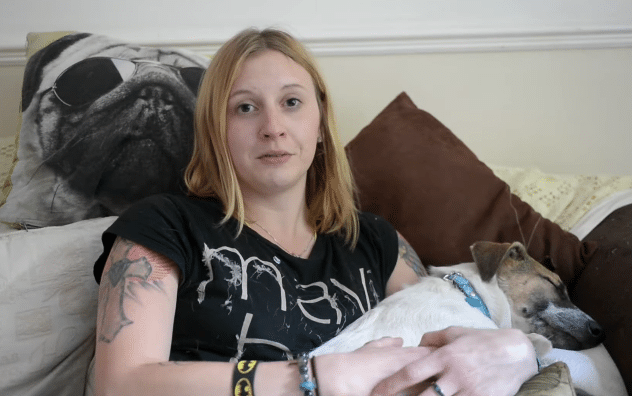
He also formed a close bond with Karen’s daughter.
Reuben enjoyed curling up beside her for long periods of affection. When he was not exploring, he often wanted to be held or included in whatever the family was doing.
These moments changed how people viewed him.
At first, visitors might notice his missing and partially formed front legs.
After spending time with him, they noticed something else.
His enthusiasm.
His curiosity.
His desire to be close.
The physical difference that seemed impossible to overlook gradually became only one small part of the dog standing in front of them.
Reuben was not spending his days thinking about what he could not do.
He was busy enjoying everything already within reach.
Some Adventures Required Extra Support
Although Reuben moved confidently around the home, longer outings could place more strain on his body.
Hopping on two back legs required significant effort. Uneven ground, long distances, and extended activity could become tiring even when his enthusiasm remained high.
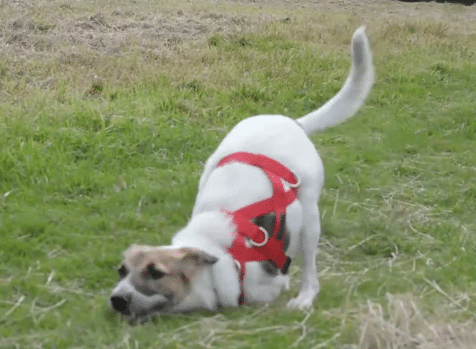
Karen used a supportive harness when necessary.
The harness allowed her to steady Reuben and reduce some of the pressure on his body while he explored outside. It did not replace his own movement, but it gave him help when the environment became more demanding.
This balance was important.
Reuben needed opportunities to move and build strength.
He also needed protection from overworking the joints and muscles carrying most of his weight.
Karen paid attention to his energy and comfort rather than assuming that excitement meant he could continue indefinitely.
Reuben might have wanted every adventure to last forever.
His family made sure he could enjoy those adventures safely.
A Custom Wheelchair Could Give Him Greater Freedom
As Reuben grew, Karen began looking for another way to support his mobility.
Her goal was a custom wheelchair designed for his body.
The wheels could support his front half while allowing his back legs to power him forward. This would potentially help him move across longer distances without placing the same repeated strain on his body.
Karen created a fundraiser called “Help Us Raise Money to Get Reuben Running.”
The title reflected what she hoped the equipment might offer him.
Reuben was already active.
He was already happy.
The wheelchair was not intended to turn a miserable dog into a joyful one. That joy had been present from the beginning.
It could give an enthusiastic dog more independence and help him participate in activities with greater comfort.
People online began responding to his story.
They saw Reuben hopping through the house, playing with other dogs, and seeking affection from his family. Support grew not simply because he had a disability, but because viewers could see exactly how much he wanted to experience.
The wheelchair represented more room for that personality to move.
“Reuben the Wonder Dog” Found an Online Family
As more people learned about him, Reuben gained followers through a Facebook page named “Reuben the Wonder Dog.”
The name captured the affection people felt for him.
His videos and photographs showed ordinary scenes made memorable by the way he approached them.
Reuben playing.
Reuben hopping toward someone he loved.
Reuben resting beside family members.
Reuben showing interest in every new object placed within reach.
His story challenged a common assumption about disabled animals.
People sometimes imagine that a dog with a physical difference must live in constant sadness or frustration. Reuben’s daily behavior offered a more complex picture.
He faced practical challenges.
He needed adaptations.
His family had to consider the long-term effects of his movement and provide support when necessary.
But none of those realities prevented him from experiencing comfort, excitement, companionship, and play.
Reuben did not need people to pretend his disability did not exist.
He needed them to recognize that disability and happiness could exist in the same life.
His Body Was Different, but His Needs Were Familiar
Reuben’s story resonated because beneath the unusual way he moved, his needs were remarkably ordinary.
He wanted companionship.
He wanted to play.
He wanted to explore.
He wanted a comfortable place to sleep and familiar people nearby.
Those needs were no different from those of countless other dogs.
What changed was how his family helped him meet them.
A harness supported him during certain outings.
A future wheelchair could give him more mobility.
The layout of the home could be adjusted to keep his pathways safe.
Rest could be offered before his excitement pushed his body too far.
None of these accommodations diminished his life.
They expanded it.
Reuben’s happiness did not come from ignoring the challenges he faced. It came from living with people willing to find thoughtful ways around them.
He Was Given the Life Others Might Have Thought Impossible
Today, Reuben continues to live surrounded by people who value him exactly as he is.
He plays with canine companions.
He seeks cuddles from his family.
He moves through the house using the method he taught himself and approaches daily life with the same enthusiasm Karen noticed when they first met.
The future that once seemed uncertain has become a life filled with familiar routines, affection, and opportunity.
Reuben’s story does not suggest that love alone removes every physical difficulty.
He still needs support.
His body still requires careful consideration.
And equipment such as a custom wheelchair can make an important difference to his comfort and independence.
But his life also proves that a body does not have to fit one expected shape before it can hold joy.
Reuben was born without fully formed front legs.
He was not born without curiosity.
He was not born without affection.
And he was certainly not born without the desire to participate in the world around him.
A rescue team gave him a path out of uncertainty.
Karen gave him a home.
His family gave him the support needed to move through life in his own way.
The puppy some people might have viewed only through his limitations grew into a dog remembered for something much greater.
Not what he lacked.
But how completely he embraced everything he had.


