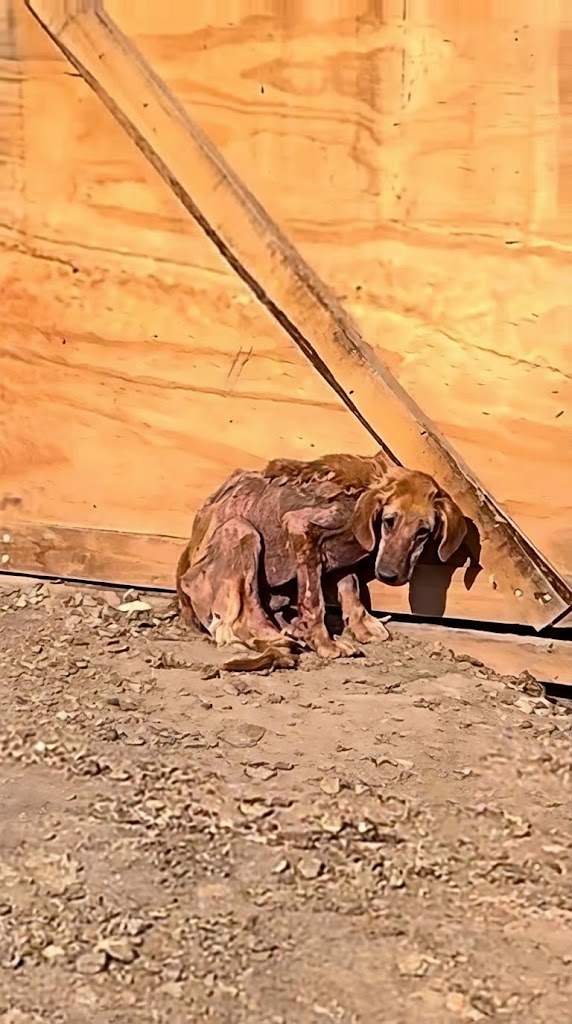
For a long time, Bruno survived by staying away from people.
He moved along village roads, empty lots, and patches of tall grass, rarely remaining in one place for long.
According to the rescue account, people often shouted or chased him away when he came close.
Over time, his body began showing the cost of that life.
His coat was patchy.
Old marks were visible across his skin.
And one leg had become so badly injured that putting weight on it was almost impossible.
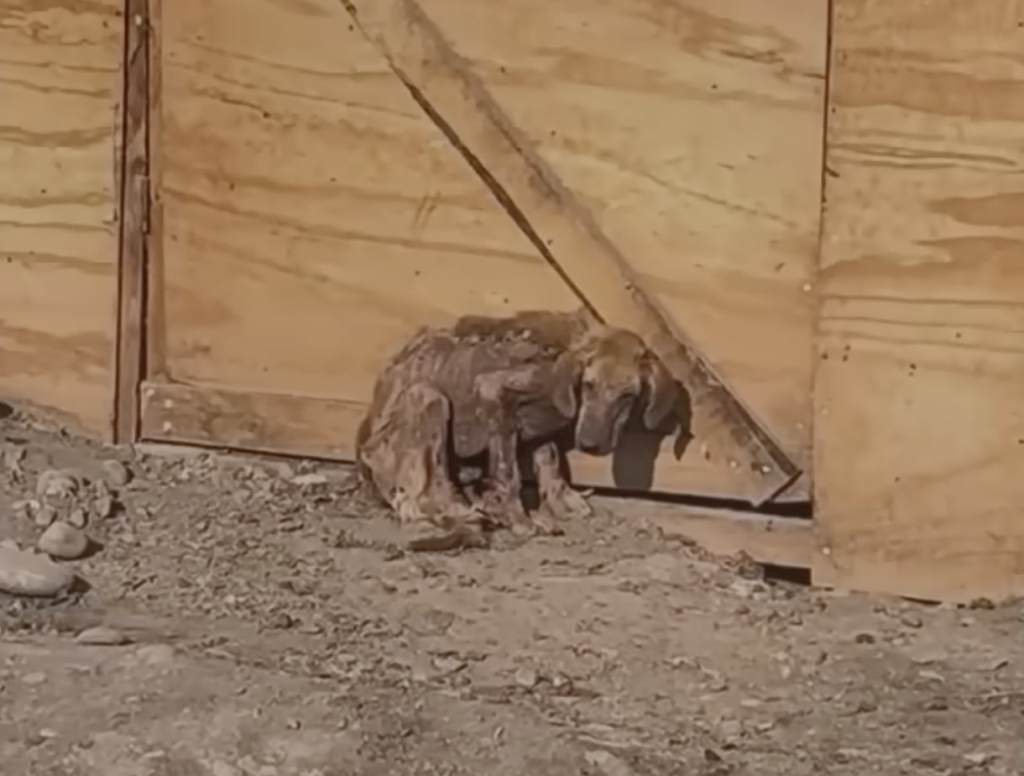
Then one morning, rescuers found him lying near a dry patch of ground.
Bruno noticed them.
And even in his weakened condition, his first response was to try to crawl away.
The Leg Had Become Too Damaged for Bruno to Keep Moving
By the time rescuers reached him, Bruno could no longer escape very far.
The injured leg was in extremely poor condition.
The source describes an earlier trapping injury that had gone untreated long enough for infection to worsen significantly.
Bruno had also become weak from living without consistent food, water, or medical care.
When the rescuers moved closer, they did not chase him.
They crouched down.
They spoke quietly.
And they allowed him time to watch them.
Bruno remained tense, but his body simply did not have enough strength left to keep retreating.
Eventually, the team was able to lift him.
He trembled while being carried.
But for once, no one was driving him farther away.
They were taking him somewhere he could finally receive treatment.
Video: Bruno Tried to Crawl Away From Rescuers — Then They Discovered His Leg Could Not Be Saved
The Infection Had Already Reached the Bone
At the rescue lodge, Bruno’s condition was examined more closely.
The injury was not recent.
Infection had progressed deeply enough to involve the bone.
His weakened body had already been compensating for the damaged leg for some time.
Veterinarians faced a difficult decision.
The limb could not be safely preserved.
Amputation was necessary.
For Bruno, the surgery meant losing a leg.
But it also meant removing a source of severe infection and ongoing pain.
The procedure was completed successfully.
When Bruno woke, the injured limb was gone and the surgical site was protected with clean bandaging.
Now the next challenge could begin.
Learning how to live comfortably on three legs.
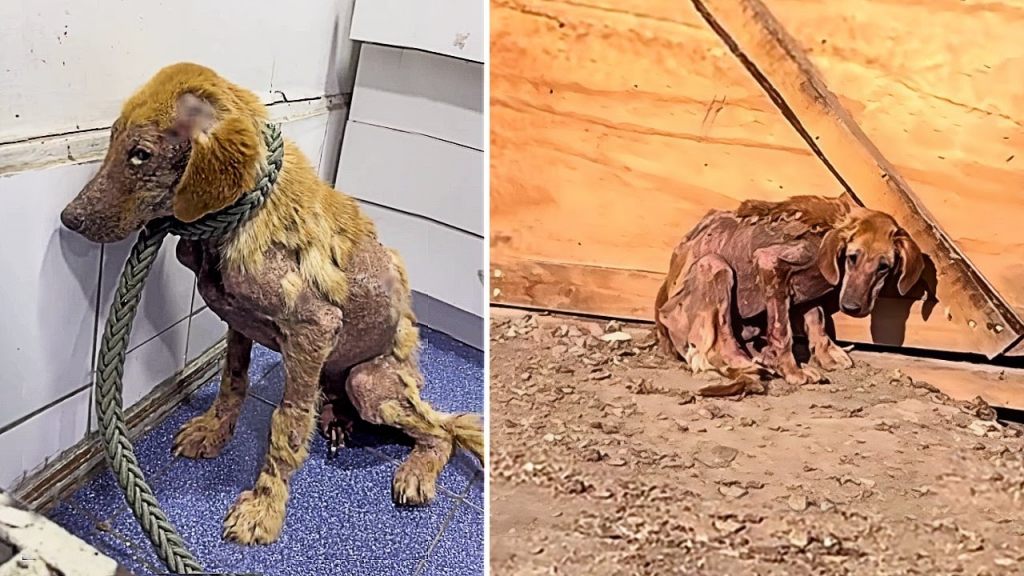
At First, Bruno Watched Everything From a Distance
Once he was stable enough, Bruno moved into foster care.
The home was quiet.
Meals appeared regularly.
There was a soft place to sleep.
But Bruno did not immediately behave like a relaxed household dog.
He watched carefully.
He remained cautious when people moved close.
And unfamiliar situations could make him tense.
His foster caregiver did not force interaction.
She kept routines predictable.
Food arrived at similar times.
Her voice became familiar.
Gentle contact happened only when Bruno seemed comfortable with it.
At the same time, she helped him adjust physically to the loss of his leg.
Standing required a new balance.
Turning felt different.
Even walking across a room required his body to redistribute weight in a way it had never needed before.
Progress came slowly.
Three Legs Were Enough to Begin Exploring Again
Little by little, Bruno became steadier.
His remaining legs strengthened.
His movements became more confident.
Short distances inside the house gradually became easier.
Then he started exploring more of his surroundings.
One afternoon, his foster caregiver placed a small ball nearby.
Bruno looked at it for a while.
At first, nothing happened.
Then he leaned forward and nudged it with his nose.
The ball rolled.
Bruno watched.
Then he interacted with it again.
For a dog whose recent life had been dominated by injury, treatment, and caution, that tiny moment mattered.
He had enough comfort and energy left for curiosity.
Play was beginning to enter his life.
The Dog Who Once Tried to Escape Began Greeting His Foster Mom
Weeks passed.
Bruno’s physical condition improved.
His coat thickened.
His body gained strength.
And moving on three legs became increasingly natural.
His behavior around his foster caregiver changed too.
When she entered the room, his tail began moving.
At first, the response was small.
Then it became more enthusiastic.
Bruno followed familiar sounds around the house.
He explored instead of remaining in one place.
He accepted affection more readily.
The cautious dog who once tried to crawl away from rescuers was beginning to approach people he knew.
There was no single instant when everything changed.
Trust grew through repetition.
Another meal.
Another gentle interaction.
Another night spent somewhere warm.
Another morning when the same person was still there.
Foster Care Became the Home Bruno Needed
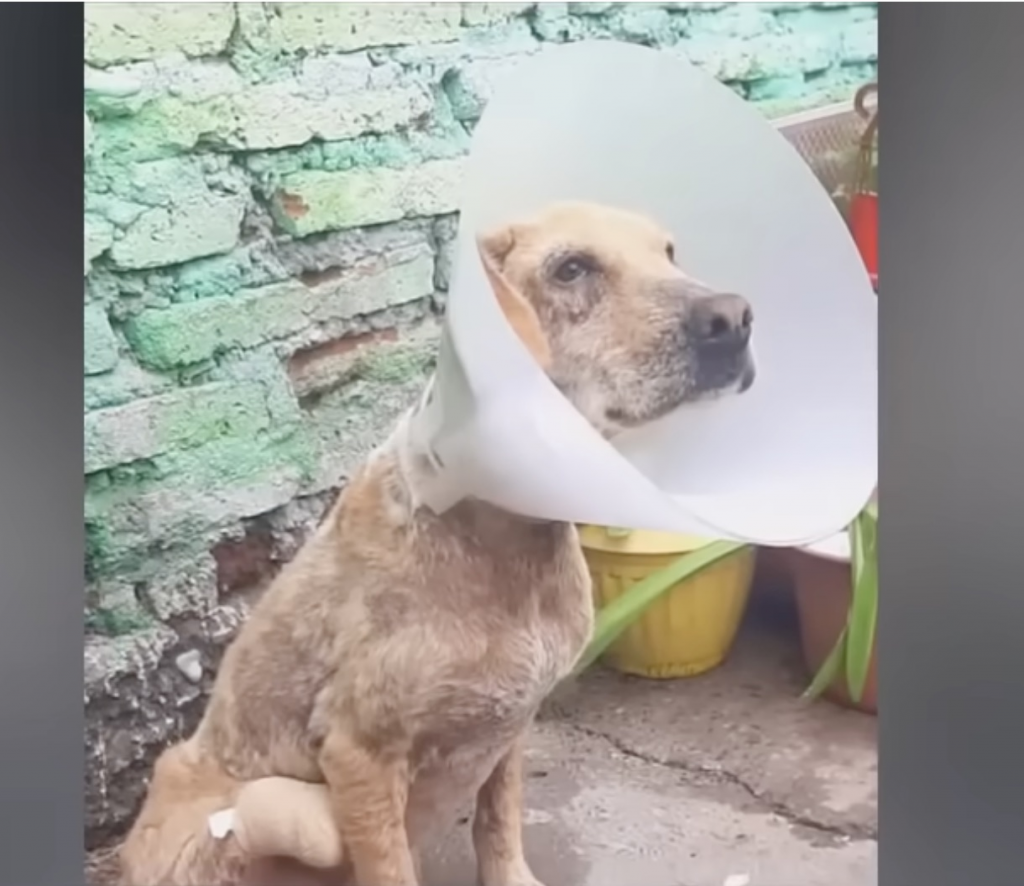
Bruno’s recovery had originally been about giving an injured dog somewhere safe to heal.
But as the weeks passed, the relationship became much more permanent.
He had routines.
A caregiver he recognized.
A place where he could rest without being chased away.
And enough confidence to move through the home as though he belonged there.
The source describes Bruno eventually having a home and family rather than returning to the uncertain life he had known outside.
Losing a leg had changed his body permanently.
It did not prevent him from building a full daily routine.
He could walk.
Explore.
Play.
Seek attention.
And rest somewhere safe.
Bruno Lost a Leg — But He Gained the Chance to Stop Running
Today, Bruno moves through life on three legs.
His scars remain.
So does the physical change left by the amputation.
But those are no longer the only things that define his days.
He has regular meals.
Warm places to rest.
People he recognizes.
And a home where no one drives him away when he comes close.
His rescue began with a dog trying to crawl from the people approaching him.
He was weak.
His injured leg was severely infected.
And he had little reason to understand why these strangers were different from the people who had chased him before.
So they showed him slowly.
They did not pursue him aggressively.
They carried him to care.
Veterinarians removed the leg that could no longer be saved.
A foster caregiver helped him learn a new way to move.
Then came a ball.
A tail wag.
A familiar home.
Bruno could not keep the leg he had lost to injury.
But eventually, he no longer needed to keep running either.


