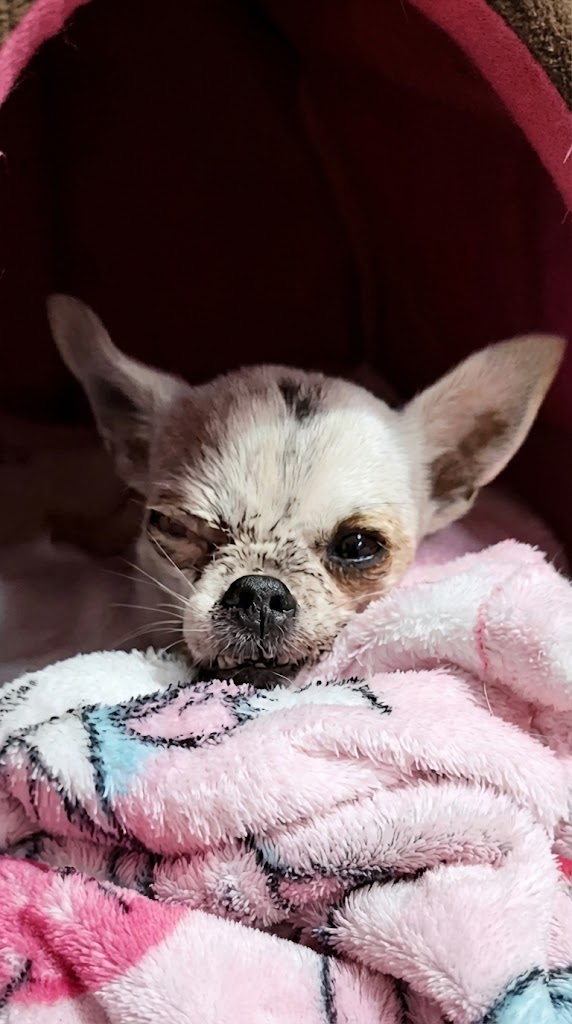
The cries were impossible to ignore.
On July 10, rescuers from a local animal welfare group were nearby when they heard the sound of a dog in severe distress.
They ran toward it.
What they found would turn into one of the most difficult cases they had handled.
A dog named Chico had suffered catastrophic injuries during an alleged attack involving the person who had been responsible for his care.
According to the rescue account, intervention came while the incident was still unfolding.
The immediate priority became Chico.
He was alive.
Barely.
His face had suffered extensive trauma. His jaw was badly damaged. Several teeth were missing. One eye had been injured beyond what anyone could assess in those first frantic moments.
Even more concerning was what could not be seen from the outside.
Chico had sustained serious head trauma.
He could not properly use his legs.
His body offered almost no response as rescuers prepared him for emergency treatment.
There was no time to think about what his life might look like a month later.
The question was whether he would make it through the night.
The First Goal Was Simply to Keep Chico Alive
At the veterinary clinic, the extent of Chico’s injuries became clearer.
His mouth had sustained major damage.
The roof of his mouth was badly injured.
His jaw and teeth would require extensive treatment.
The trauma to his head raised concerns about neurological damage, while the injury to one eye was severe enough that saving normal vision appeared unlikely.
Chico was in critical condition.
Everything had to happen in stages.
Doctors could not repair every injury at once.
First, he had to be stabilized.
Pain had to be managed.
His breathing and neurological condition needed close observation.
Feeding was also complicated by the damage inside his mouth.
For the veterinary team, the first twenty-four hours were dominated by uncertainty.
Chico was physically present in the clinic, surrounded by people trying to help him.
But there was no guarantee his body could withstand what had happened.
So they watched.
Hour after hour.
Every breath mattered.
Every response mattered.
And while the injuries were severe, Chico made it through the first night.
That alone gave the team a reason to continue.
VIDEO: Chico Was Barely Alive After Severe Trauma — Then His Recovery Took an Unexpected Turn
On the Second Day, One Small Response Changed the Mood
The following day brought the first encouraging sign.
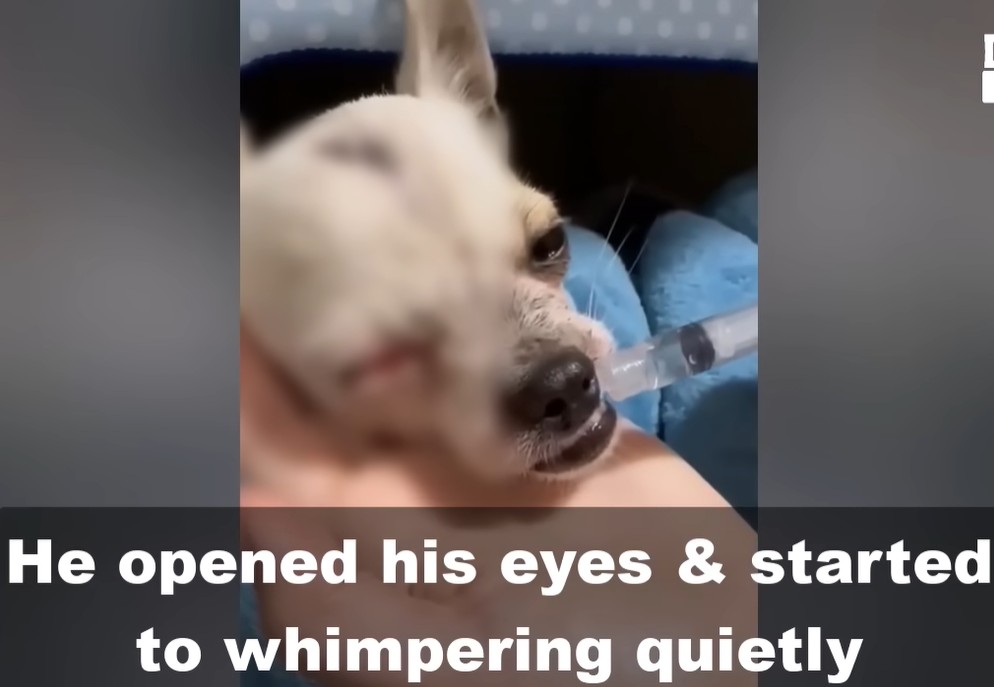
Chico opened his remaining responsive eye.
Then came a faint sound.
A small whimper.
It was not a dramatic recovery.
He did not suddenly lift his head or try to stand.
But after a first day when his survival had been uncertain, even that small reaction mattered.
The veterinary staff now had evidence that Chico was responding to the world around him.
Treatment continued.
His mouth required reconstructive work because the injuries interfered with normal eating and healing.
Veterinary surgeons worked to repair the damaged roof of his mouth.
A feeding tube became part of his daily care while the tissue recovered.
His injured eye was another difficult decision.
Doctors initially attempted to preserve what they could.
But the damage was too extensive.
Eventually, removing the eye became the safest option for preventing continued pain and complications.
Chico would leave the ordeal with only one eye.
But at that stage, vision was far from the team’s greatest concern.
They were watching his legs.
Chico still could not move normally.
The head trauma had affected far more than his face.
His Legs Would Not Do What His Body Asked of Them
The neurological damage created another frightening possibility.
Paralysis.
Chico could not simply get up and walk away from the treatment table.
His legs were not responding as they should.
Even if the injuries to his mouth and eye healed, there remained a chance that his ability to walk might never fully return.
That changed the recovery plan.
Chico needed rehabilitation almost immediately.
But rehabilitation had to be balanced against everything else his body was enduring.
He had fresh surgical injuries.
He was weak.
He still required assisted feeding.
And yet allowing his muscles to remain completely inactive carried its own risks.
So the team began carefully.
His body was supported.
His limbs were moved gently.
The goal was not to force him to stand.
It was to keep his muscles engaged while watching for any neurological response.
There were no promises.
The people caring for Chico could only create the best conditions possible and see what his body was capable of doing.
Then, on the third day, they introduced another form of therapy.
Water.
Hydrotherapy Gave Chico a Way to Move Without Carrying All His Weight
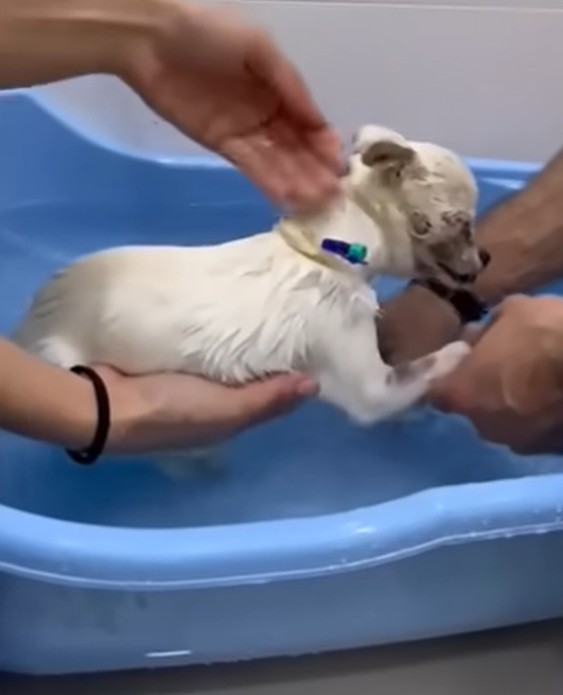
Hydrotherapy can allow an injured animal to practice movement while the water supports part of the body’s weight.
For Chico, that mattered.
On land, his weakened legs struggled beneath him.
In water, the rehabilitation team could guide his body while reducing some of the pressure involved in standing.
The first sessions were difficult.
Everything was unfamiliar.
Chico had already endured veterinary examinations, surgery, medications, feeding tubes, and constant handling.
Now he was being lowered into water and encouraged to move limbs that had barely responded.
The team stayed close.
They supported his chest.
They guided his legs.
They prevented him from becoming overwhelmed.
Chico did not understand the medical reason behind any of it.
What mattered was that he continued participating.
The people around him became a predictable presence.
They lifted him.
Supported him.
Put him down carefully.
Returned later.
And did the same thing again.
Gradually, the rehabilitation sessions began producing small responses.
A leg moved with more purpose.
His body resisted gravity a little better.
His muscles began doing more of the work.
Those changes were tiny compared with normal walking.
For Chico, they were the beginning of something nobody had been willing to guarantee.
Seven Days After the Rescue, Chico Tried to Stand
About a week into his recovery, something changed.
Chico pushed himself upward.
For days, people had been supporting almost all of his movement.
Now his own body was trying to participate.
He stood.
At first, his balance was uncertain.
His legs were weak.
His body still carried bandages and the evidence of everything it had endured.
But Chico was upright.
The moment lasted long enough for everyone around him to understand what they were seeing.
The dog who had arrived unable to properly use his legs was beginning to support himself again.
Standing did not mean he was healed.
There was still rehabilitation ahead.
His mouth still needed time.
His surgical sites still required care.
His weight remained low.
Coordination needed improvement.
But the possibility of walking no longer existed only in hope.
They had seen the first step toward it.
Literally.
After standing came attempts to move.
One uncertain step.
Then another.
Caregivers remained beside him, ready to catch his body whenever his strength failed.
Each day added a little more.
Chico had begun walking back into his own life.
His Recovery Was Built From Repetition, Not a Single Miracle
The changes became easier to see over the following weeks.
Chico gained weight.
His surgical wounds healed.
His remaining eye became more alert.
The feeding tube was no longer the defining feature of his days.
Most importantly, his mobility continued improving.
He practiced walking.
He continued rehabilitation.
He learned to compensate for changes in his vision and balance.
Some days were better than others.
A recovery involving major head trauma does not move in a perfectly straight line.
There can be fatigue.
Hesitation.
Small setbacks.
New adjustments.
But Chico kept participating.
The clinic staff saw more of his personality as his physical condition improved.
He responded to familiar voices.
He accepted affection.
He increasingly sought interaction rather than lying quietly through treatment.
The medical team had first known him primarily through injuries.
A damaged jaw.
A wounded eye.
Weak legs.
Neurological concerns.
As those problems became more manageable, the dog beneath them became easier to see.
Gentle.
Social.
Interested in the people around him.
Chico was not simply becoming a healthier patient.
He was becoming himself again.
The Veterinarian Who Rebuilt His Body Couldn’t Simply Walk Away
Eventually, Chico reached a stage every rescue hopes to reach.
The immediate medical crisis was ending.
That created a new question.
Where would he go?
His treatment team had spent countless hours with him.
They had seen the dog who arrived barely responsive.
They had watched him open his eye.
Supported him in the water.
Held him during procedures.
Celebrated the first time he stood.
Then watched those first uncertain steps become stronger.
One veterinarian in particular had been deeply involved in his care.
She had performed or assisted with the procedures that repaired the damage to his mouth and helped guide him through the most vulnerable part of recovery.
By the time Chico was ready to leave the clinic, the relationship had changed.
He was no longer simply another case.
The veterinarian decided to adopt him.
That meant the person who knew his medical history in extraordinary detail would also become the person responsible for the next chapter of his life.
Chico left the clinic not for another temporary placement, but for a home.
The transition mattered because recovery was not completely finished when the hospital doors closed behind him.
He still needed understanding.
Routine.
Continued monitoring.
And someone familiar with the ways his injuries might affect him long term.
He had all of that waiting.
Home Taught Chico What Recovery Looked Like Outside a Clinic
Clinic life had been about survival and rehabilitation.
Home introduced Chico to ordinary things.
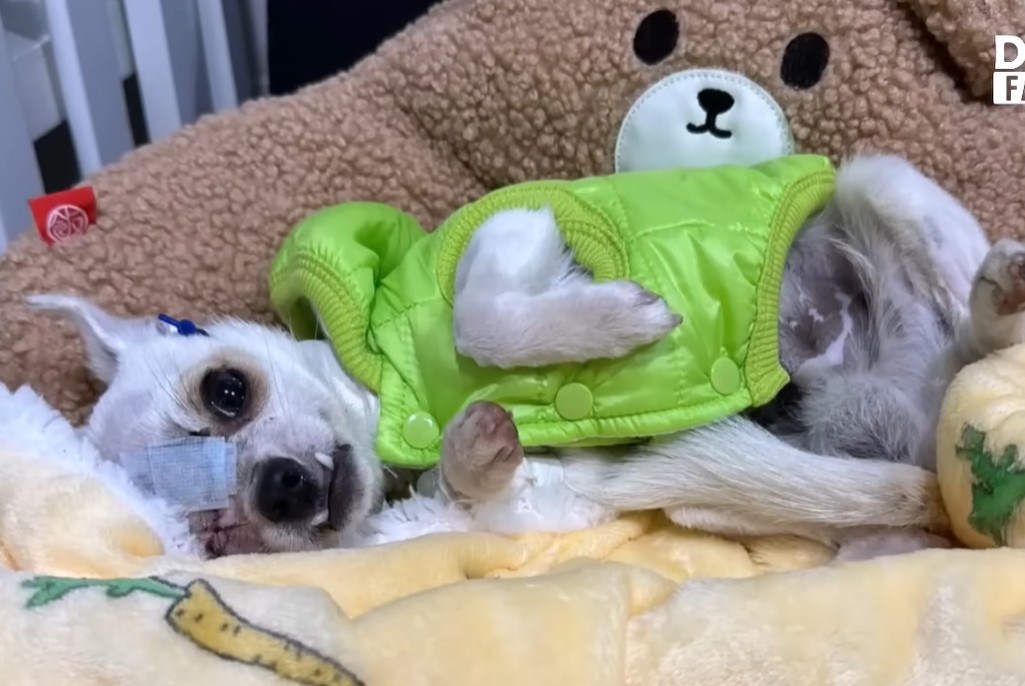
A place to sleep that was not part of a treatment room.
Daily routines without constant procedures.
Food served because it was mealtime, not because someone was measuring whether his body could tolerate it.
Time beside a person he already trusted.
There were adjustments.
Chico had lost an eye.
His body had survived serious neurological trauma.
Those experiences could not simply be erased.
But dogs are remarkably capable of adapting to changes in vision and movement when their surroundings are consistent and safe.
Chico learned.
He became more confident moving around.
His steps steadied further.
He responded to familiar spaces.
And instead of spending every day surrounded by medical equipment, he began having the quiet experiences that make a home feel normal.
Resting.
Following someone through a room.
Waiting for food.
Seeking attention.
Sleeping deeply because there was no emergency waiting when he woke up.
Those ordinary moments were as meaningful as his first steps.
They showed that the goal had moved beyond keeping Chico alive.
He was building a life.
Chico’s Greatest Change Cannot Be Seen in His Medical Records
The medical transformation was extraordinary enough.
A dog who arrived with devastating facial injuries, severe head trauma, an irreparably damaged eye, and major mobility problems survived surgery and eventually walked again.
But there was another part of Chico’s recovery that cannot be captured by an X-ray or a veterinary chart.
He continued allowing people close.
The circumstances surrounding his injuries could easily make humans focus only on betrayal.
But Chico’s behavior afterward told a more complicated story.
He accepted care.
He allowed hands to support him.
He worked with rehabilitation staff.
He formed relationships with the people helping him recover.
Eventually, one of those relationships became permanent.
That may be the most important contrast in his story.
The worst moment of his life involved a human.
So did many of the moments that saved him.
Someone heard his cries.
People intervened.
Veterinarians stabilized him.
Surgeons repaired what they could.
Rehabilitation staff supported his legs.
And ultimately, the veterinarian who helped piece his body back together opened her home to him.
Chico did not get his original body back exactly as it had been.
He lost an eye.
He carries the history of serious injuries.
But he also regained movement.
Strength.
Routine.
Safety.
And a person who chose to make his future permanent.
When Chico arrived at the clinic, no one knew whether he would survive the first twenty-four hours.
Seven days later, he was trying to stand.
After that came steps.
Then recovery.
Then home.
His story does not need to prove that every terrible experience can be erased.
It proves something simpler.
A life can be ba


