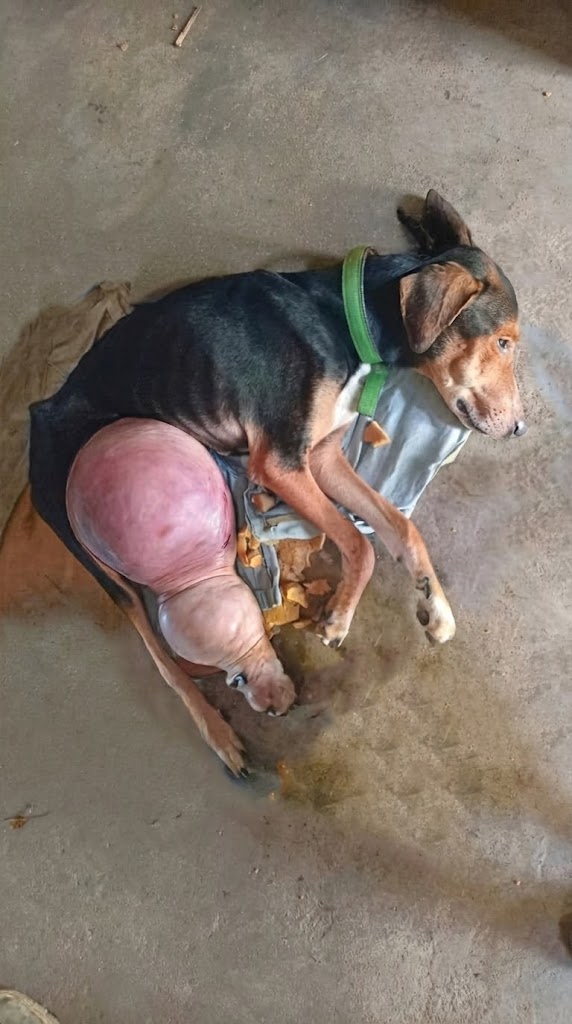
At first, Duke only had a slight limp.
It was easy to think he had stepped awkwardly or strained something while playing.
But the limp did not disappear.
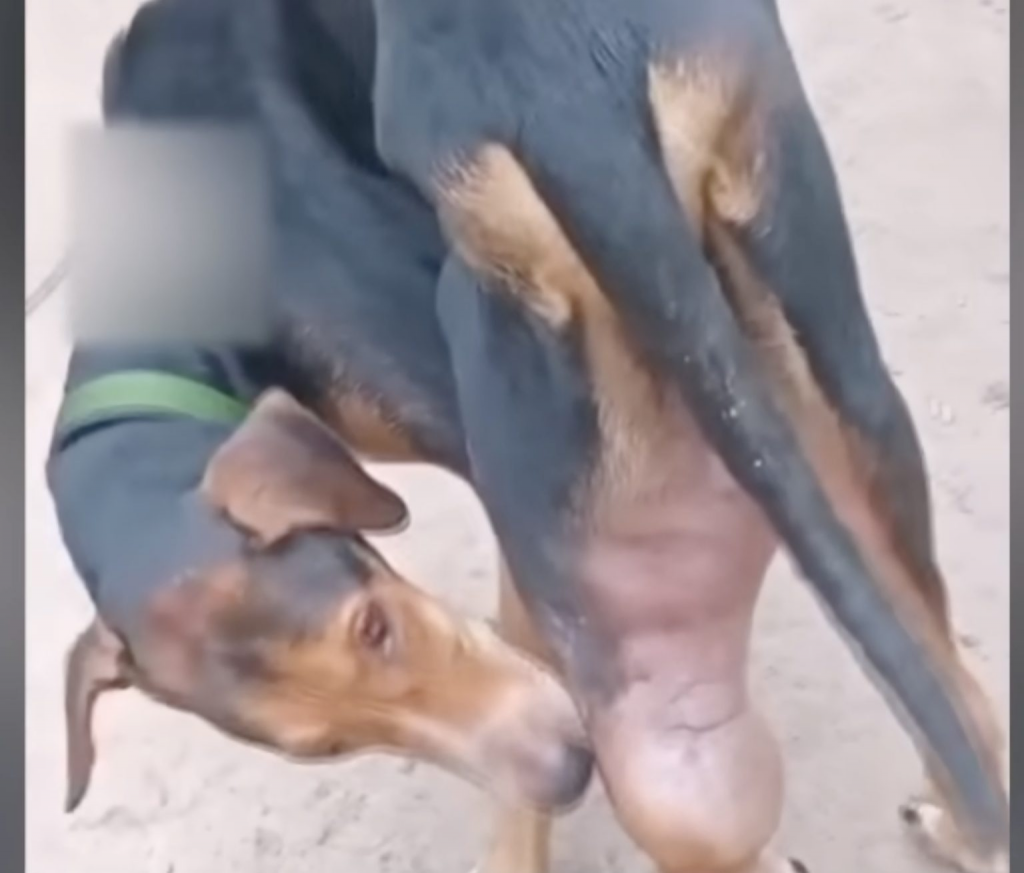
His leg began to swell.
Standing took longer.
Walking became slower.
And as the swelling continued to grow, it became increasingly clear that Duke was dealing with something far more serious than a temporary injury.
His owner took him for veterinary testing.
The images brought difficult news.
To give Duke the best chance of moving forward without the worsening pain, one of his legs would have to be removed.
The Limp Slowly Became Impossible to Ignore
Duke had once moved easily.
Then his owner began noticing small changes.
He hesitated before standing.
Shifted his weight away from one leg.
Walked more carefully than before.
The affected limb also started becoming visibly swollen.
Instead of improving with time, the problem continued getting worse.
That was when Duke was taken for more detailed veterinary evaluation.
Video: Duke’s Swollen Leg Makes Every Step Difficult Before Surgery Changes His Life
X-Rays Showed a Serious Problem Inside the Bone
Veterinarians performed imaging on Duke’s affected leg.
According to the original account, the tests showed an aggressive disease involving the bone.
The source describes the condition as rare and progressive, but it does not provide the exact medical diagnosis.
What was clear was that the disease was not expected to stop on its own.
The leg was becoming increasingly painful.
The swelling continued.
And leaving the condition untreated could place Duke’s health at greater risk.
The veterinary team discussed the available option with his owner.
Amputation.
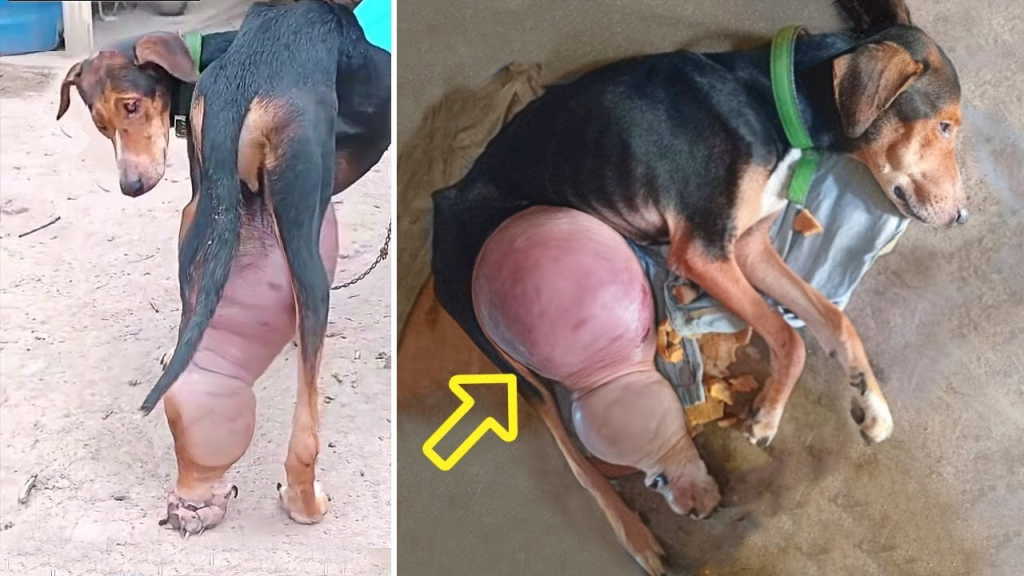
Saving Him Meant Removing the Painful Leg
For Duke’s owner, the decision was difficult.
Removing an entire limb can sound extreme when a dog has spent his life moving normally on four legs.
But the goal was not simply to remove something that looked abnormal.
It was to address the part of Duke’s body causing increasing pain and carrying a serious disease.
Once the decision was made, surgery was scheduled.
Duke was prepared for the procedure.
Then his family waited.
Hours later, the veterinarian returned with the news everyone had hoped for.
Duke had made it through the operation.
Waking Up Was Only the Beginning
The surgery solved one major problem.
But it created an entirely new physical challenge.
Duke now had to learn how to balance on three legs.
His center of gravity had changed.
Standing felt different.
Turning required a new pattern of movement.
During the first days, he needed help.
He wobbled.
Lost balance.
And sometimes had to stop before trying again.
Caregivers stayed close enough to steady him when necessary.
His Body Began Learning a New Way to Move
Dogs can often adapt remarkably well after losing a limb, but that adaptation still takes time.
For Duke, progress came gradually.
His remaining legs became stronger.
His balance improved.
He learned how to rise without relying on the missing limb.
Then he began walking longer distances.
Turning became easier.
Steps that had required concentration slowly became more automatic.
One day, Duke stood confidently without assistance.
Not long afterward, he started moving faster.
Three Legs Were Enough to Run Again
As Duke’s strength returned, rehabilitation began looking less like rehabilitation.
He moved across the yard.
Climbed steps.
Followed his owner.
Then he ran.
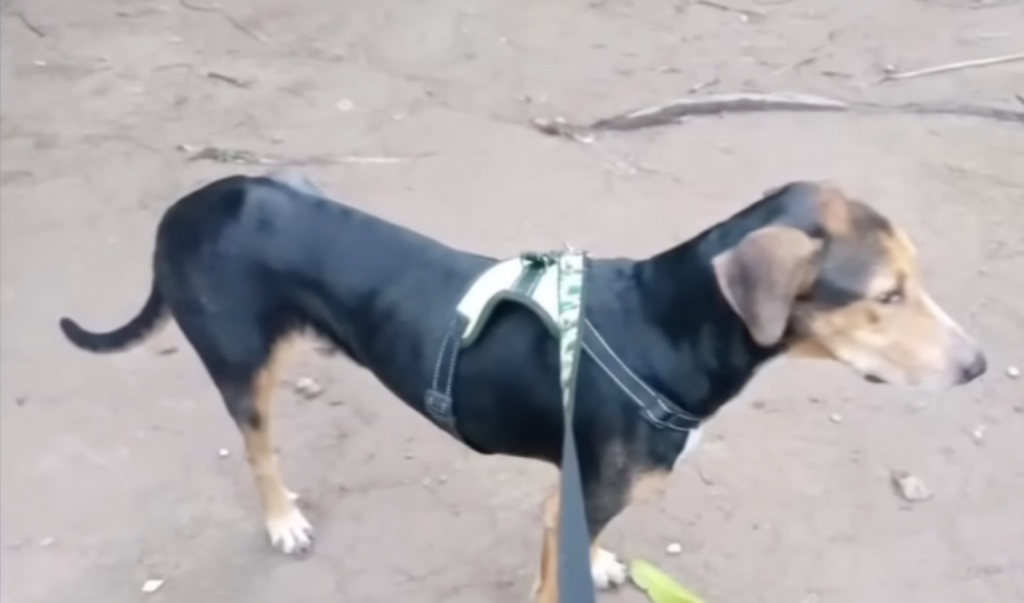
The difference from the dog struggling with the swollen leg was striking.
Before surgery, movement had become increasingly painful.
After recovery, Duke could move using three healthy limbs without carrying the same diseased leg.
He also began playing again.
Balls returned to the routine.
So did time outdoors.
And long rests in warm patches of sunlight.
His Daily Life Became Ordinary Again
One of the most meaningful parts of Duke’s recovery was how unremarkable his days eventually became.
He ate.
Slept.
Played.
Went outside.
Spent time with his owner.
The missing leg remained visible.
But it was no longer the center of every decision.
Duke had adapted.
His family had adapted too.
What once seemed like an enormous change became simply part of how he moved.
His Owner Stayed Through Every Stage
Duke’s recovery required more than the operation itself.
There were difficult nights.
Follow-up care.
Exercises.
Moments when standing required assistance.
And repeated opportunities for him to practice moving differently.
His owner remained involved throughout those stages.
That consistency mattered.
Not because affection alone could treat the disease in Duke’s bone.
It could not.
But it gave Duke the environment needed to recover after medical treatment had addressed the immediate problem.
Losing a Leg Did Not Mean Losing His Life
Duke’s story can sound frightening when reduced to one fact.
A dog needed an amputation.
But the larger story is about what happened afterward.
The diseased leg was removed.
The painful swelling was no longer part of every step.
Duke learned a new way to balance.
Then walk.
Then run.
His body changed permanently.
His ability to enjoy everyday life did not disappear with it.
Sometimes the most compassionate medical decision is also the hardest one to accept.
For Duke, losing one leg became the step that allowed the rest of him to keep moving.


