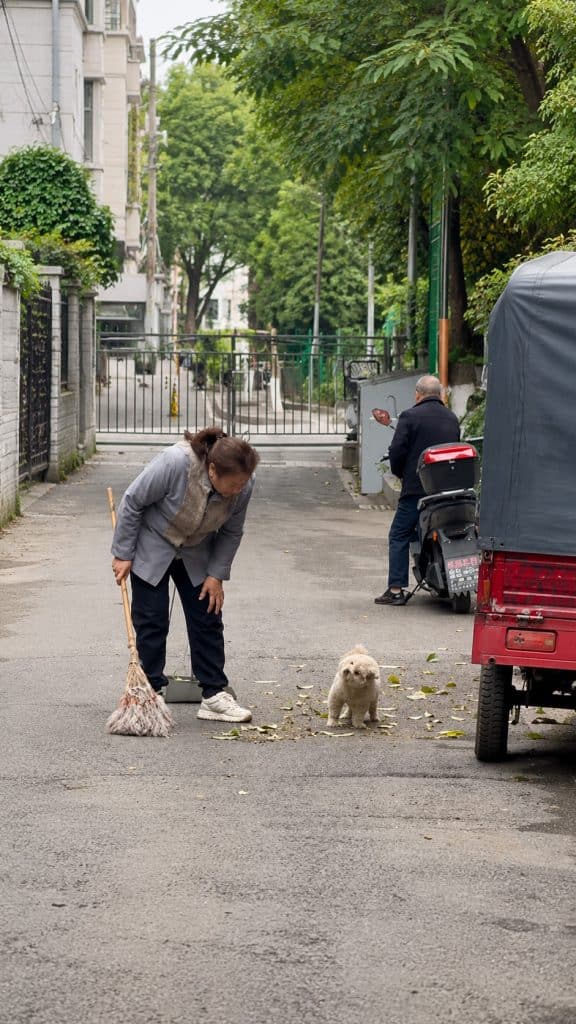
The small cream-colored puppy wandered along the road with his head tilted to one side. His steps were uncertain, his body looked fragile, and every unfamiliar movement seemed to make him nervous.
When someone tried to approach, he pulled away.
When a hand came too close, he cried out.
Even food offered gently by a stranger was not enough to convince him to come forward.
He needed help, but he was too frightened to accept it.
The rescuers could see that something was wrong with the way he walked. His unusual head position was concerning, and his reaction to being touched suggested that he might be experiencing discomfort.
They approached patiently and eventually managed to bring him to an animal hospital.
But during the veterinary examination, the team discovered something they had not expected.
The little puppy had no teeth.
And what happened after that discovery would lead him from a frightening roadside encounter to a life filled with affection, play, and the comfort of sleeping in someone’s arms.
A Frightened Little Puppy Wandering Along the Road
The puppy was still very young when rescuers first encountered him.
His cream-colored coat and small body gave him the appearance of an ordinary, vulnerable little dog.
But there was something unusual about the way he moved.
His head remained tilted to one side as he walked.
His steps were cautious, and he seemed uncertain about the people approaching him.
The rescuers could tell that he needed attention.
A puppy wandering near a road is already vulnerable to traffic and other dangers. His unusual posture and fearful behavior made the situation even more concerning.
But approaching him was not easy.
Whenever someone moved too close, the puppy became visibly nervous.
If a hand reached toward him, he cried out.
When the rescuers offered food, hoping to encourage him to approach, he was still too frightened to accept it directly from a stranger’s hand.
He was not showing the playful curiosity people often associate with puppies.
Instead, he appeared guarded and uncomfortable.
The rescuers did not know his history.
They could not tell how long he had been wandering or whether he had previously received veterinary care.
What they could see was a young dog who needed to be removed from the road and examined.
So they resisted the temptation to rush.
They spoke softly, gave him space, and worked patiently to bring him to safety.
The little puppy was frightened, but the people helping him were determined not to leave him behind.
VIDEO: A Frightened Puppy Walks With His Head Tilted and Cries When Rescuers Try to Touch Him
Every Gentle Approach Was Met With Fear
One of the most difficult parts of the rescue was the puppy’s response to human contact.
He was small enough to be carried, but he did not readily allow anyone to pick him up.
His body became tense when people approached.
He pulled away from unfamiliar hands.
And when someone attempted to touch him, he cried.
Those reactions made the rescuers concerned about possible pain as well as fear.
They could not know exactly what the puppy had experienced before they found him.
His behavior alone could not reveal whether he had been mistreated, injured, or simply frightened by his circumstances.
But it was clear that forcing contact could make an already stressful situation worse.
So the rescuers continued with patience.
They allowed him time to observe them.
They avoided sudden movements.
And they made every effort to handle him gently.
Eventually, they managed to bring the puppy away from the road.
It was an important first step.
He was no longer exposed to the dangers of passing vehicles, and his rescuers could finally arrange the medical attention he needed.
But getting him to safety did not answer the most troubling questions.
Why was his head tilted?
Was something causing him pain?
And why did such a young puppy react so strongly when someone tried to touch him?
Those questions would need to be addressed at the animal hospital.
The Veterinarians Made a Surprising Discovery
At the veterinary hospital, the medical team began examining the puppy.
They assessed his general condition and paid attention to his unusual head position.
They also needed to understand whether his fearful reactions were associated with a physical problem.
Then, during the examination, they discovered something unexpected.
The puppy had no teeth.
For such a young dog, the finding immediately drew attention.
It was an important detail that his rescuers had not known when they first encountered him.
The absence of teeth could affect how a dog eats, depending on the animal’s age and circumstances.
However, the available account does not establish why his teeth were missing or whether the condition was responsible for his head tilt.
It also does not provide a definitive diagnosis for his unusual walking posture.
Those questions remain unanswered in the recorded story.
What the rescuers now understood was that the little puppy needed careful medical attention and a feeding routine appropriate for his condition.
His reluctance to accept food from a stranger could not simply be treated as stubbornness.
He was a vulnerable animal whose health and behavior needed to be considered together.
The veterinary team began caring for him.
And the long process of helping him become more comfortable around people was about to begin.
Medical Care Was Only the First Part of His Recovery
The puppy received fluids at the hospital, and the veterinary team continued monitoring him.
He had arrived in a fragile condition, with an unusual head position and considerable fear of being handled.
His caregivers needed to support his physical health while making sure that necessary treatment did not overwhelm him.
During the early stages, he remained cautious.
He was still uncertain when unfamiliar people approached.
He sometimes tensed his body or appeared ready to pull away.
But the people caring for him did not expect immediate trust.
They understood that a frightened animal might need time to become accustomed to a new environment.
The puppy was given a comfortable place to rest.
His needs were monitored.
And his caregivers approached him gently as they continued providing treatment.
Meals became part of a predictable routine.
So did the quiet attention of the people responsible for his recovery.
Every interaction offered an opportunity for him to become more familiar with his surroundings.
A person entering the room did not have to mean an uncomfortable examination.
Sometimes, it meant food.
Sometimes, it meant a fresh place to rest.
And sometimes, it simply meant someone sitting nearby without expecting anything from him.
Little by little, the puppy’s reactions began changing.
He was not suddenly transformed into a confident dog.
But he was becoming more comfortable.
And soon, the same hands he had once avoided would be able to offer him affection.
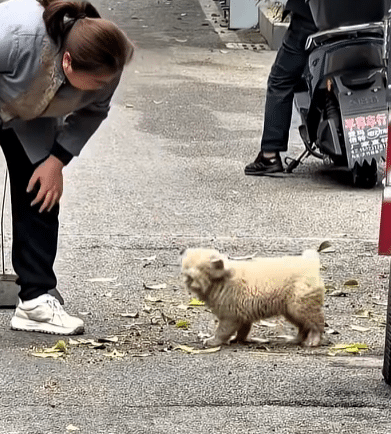
The Puppy Who Once Cried at Every Touch Began to Relax
The changes appeared gradually.
At first, the puppy remained guarded whenever someone reached toward him.
He needed time to understand the routines of his new environment.
But his caregivers continued treating him gently.
They did not rush him into interactions he found frightening.
They allowed him to become familiar with their voices and movements.
Over time, he began accepting care more calmly.
The tension in his posture gradually eased.
His eyes appeared brighter.
And he became increasingly willing to allow gentle physical contact.
For the people who remembered his behavior on the roadside, these were encouraging developments.
They had seen him pull away when someone offered a hand.
They had heard him cry when people tried to touch him.
Now, he was beginning to respond differently.
He could remain close to familiar caregivers without the same visible fear.
He could receive affection.
And he was becoming more interested in the world around him.
The account does not specify exactly how long this adjustment took.
But the contrast between his early behavior and his later interactions was unmistakable.
The puppy was no longer behaving like an animal who needed to avoid every approaching hand.
He was beginning to enjoy being close to people.
Then came a small, wonderfully funny moment that revealed just how comfortable he had become.
Someone asked about his missing teeth.
And the little puppy opened his mouth.
An Unexpected Little Moment Made Everyone Smile
One of the most memorable moments in the puppy’s recovery came when someone asked about his teeth.
The little dog opened his mouth.
It was almost as though he had decided to demonstrate exactly what the person was talking about.
The gesture was amusing and unexpectedly endearing.
Of course, there is no way to know whether the puppy understood the question.
His mouth movement may simply have coincided with the interaction.
But after everything the rescuers had witnessed, the moment was particularly touching.
Here was the same puppy who had once cried when someone reached toward him.
The same little dog who had been too nervous to accept food from an unfamiliar hand.
Now, he was comfortable enough to interact closely with people.
His expression had softened.
His behavior was more relaxed.
And his personality was beginning to emerge.
The missing teeth remained a noticeable feature, but they were no longer the only thing his caregivers saw when they looked at him.
They saw a curious young dog.
A puppy who could respond to attention.
A little companion with amusing expressions and an increasingly playful nature.
His physical condition still required appropriate care, and the original account does not establish whether his head tilt eventually resolved.
But his behavioral transformation was already remarkable.
The puppy was becoming comfortable with the people who had rescued him.
And those people were about to make an important decision.
They wanted him to stay.
His Rescuers Decided He Belonged With Them
After his treatment and recovery care, the puppy received wonderful news.
The people who had rescued him decided to adopt him.
He would not have to leave the familiar caregivers who had patiently helped him through his frightening early days.
Instead, he would become a permanent member of their family.
For the little dog, this meant another major change.
The hospital and rescue environment had provided the foundation for his recovery.
Now, he would have a home.
A place where his caregivers understood his needs.
A place where he could rest comfortably.
And people who were prepared to continue looking after him.
His new family had already seen him at his most vulnerable.
They remembered his unusual walk.
His fear of unfamiliar hands.
And the discovery that he had no teeth.
None of those details prevented them from welcoming him.
They knew he needed appropriate care and patience.
And they were willing to provide both.
The puppy moved into his new home, where the ordinary routines of family life gradually became familiar.
He no longer had to navigate the road alone.
He did not need to depend on strangers noticing his condition.
And he had people who understood that his initial fear had required patience rather than force.
For a little dog whose story began with frightened cries beside a road, it was a beautiful change.
But the happiest part was still to come.
As he settled into his new home, his playful personality began appearing more often.
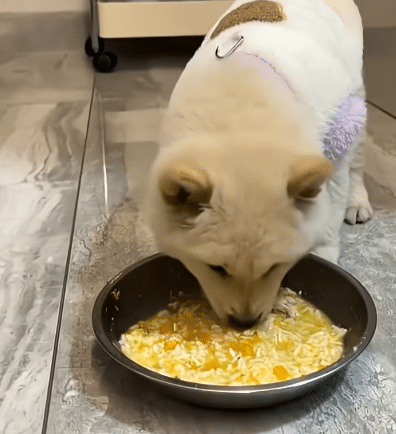
The Shy Little Puppy Finally Learned to Play
With time, the puppy became increasingly confident in his new surroundings.
He was no longer spending his days reacting nervously to every unfamiliar movement.
Instead, he began exploring.
He moved around his home with growing curiosity.
He played.
And he showed more interest in the ordinary activities taking place around him.
His caregivers could see the difference.
The puppy who had once pulled away from their hands now enjoyed spending time with them.
He followed familiar people.
He accepted affection.
And he became comfortable enough to rest close to his owners.
He even began enjoying car rides.
For a dog who had once wandered along a road with an uncertain gait and a frightened expression, traveling in a vehicle with trusted people was a very different experience.
He could observe the world from a protected place.
There was no need to navigate traffic on his own.
And he had familiar companions beside him.
His physical characteristics remained part of his story.
The account does not confirm that his head tilt disappeared or that his missing teeth were restored or replaced.
But those details did not prevent him from enjoying many of the activities associated with a happy young dog.
He could play.
He could explore.
And he could spend time with the people who had chosen to bring him home.
Then came perhaps the most touching contrast of all.
The little puppy who had once cried when someone tried to touch him began sleeping peacefully in his owner’s arms.
The Dog Who Feared Human Hands Now Sleeps in Loving Arms
Among the later moments in the puppy’s story, one image stands out.
He is resting in his owner’s arms.
His body is relaxed.
There is no frantic attempt to escape.
No frightened cry when someone holds him.
He is simply sleeping.
It is a quiet scene, but its meaning becomes clear when compared with the beginning of his journey.
When rescuers first found him, even a gentle approach caused him to become nervous.
He avoided unfamiliar hands.
He could not be easily comforted.
And his unusual head position raised concerns about his physical health.
Now, he was comfortable enough with his family to rest against them.
The transformation did not happen through one dramatic act.
It required several important steps.
The rescuers first had to bring him away from the road without causing unnecessary distress.
The veterinary team needed to examine him and begin treatment.
His caregivers then provided a stable environment where he could become accustomed to receiving attention.
Finally, the people who had rescued him welcomed him into their home.
Each stage gave him another opportunity to become more comfortable.
His behavior gradually changed.
And the frightened little puppy became an affectionate companion.
The image of him sleeping in his owner’s arms captures the difference beautifully.
He was no longer avoiding the people who wanted to help him.
He could relax in their company.
For his family, seeing him rest so peacefully must have been a welcome reminder of how far he had come.
He Was Once Too Frightened to Accept Food — Now He Has a Family Who Understands Him
The beginning of this puppy’s story was filled with uncertainty.
A small cream-colored dog wandered along a road with his head tilted to one side.
He moved cautiously.
He cried when people tried to touch him.
And he was too frightened to accept food directly from an unfamiliar person’s hand.
The rescuers could see that he needed help, but bringing him to safety required patience.
They approached gently and eventually took him to an animal hospital.
There, veterinarians made the surprising discovery that he had no teeth.
He received fluids, examination, and continuing care.
The exact cause of his missing teeth and unusual head position was not established in the available account.
But the people looking after him understood that he needed a careful, supportive environment.
They gave him time.
They continued caring for him.
And gradually, the puppy began accepting human contact.
His body language relaxed.
His eyes appeared brighter.
And his personality began emerging.
One particularly sweet moment came when he opened his mouth during a conversation about his missing teeth, creating an amusing interaction with the people who had helped him.
Then his rescuers made the decision that would change the rest of his life.
They adopted him.
The little dog moved into a home where his needs were understood and his caregivers were familiar.
He began playing.
Exploring.
Enjoying car rides.
And eventually sleeping peacefully in his owner’s arms.
There is no need to pretend that every physical concern disappeared.
His head tilt and missing teeth are important parts of the account, and their underlying causes and long-term outcomes are not fully documented.
But what is clear is that his circumstances and behavior changed enormously.
He went from a frightened puppy wandering near a road to a cherished family member.
His story reminds us that helping a vulnerable animal does not always begin with being able to pick it up immediately.
Sometimes, the animal is frightened.
Sometimes, an attempt to touch it causes distress.
And sometimes, the most important first step is recognizing that the fear may be accompanied by a medical problem that needs professional attention.
For this little puppy, patience made the rescue possible.
Veterinary care addressed his immediate needs.
And a family gave him somewhere to belong.
Once, he cried when unfamiliar hands reached toward him.
Now, those same kinds of gentle hands can hold him while he sleeps.
The little dog who had been too frightened to accept help finally found people he could trust.
And this time, they were not simply taking him somewhere safe for a few days.
They were taking him home.


