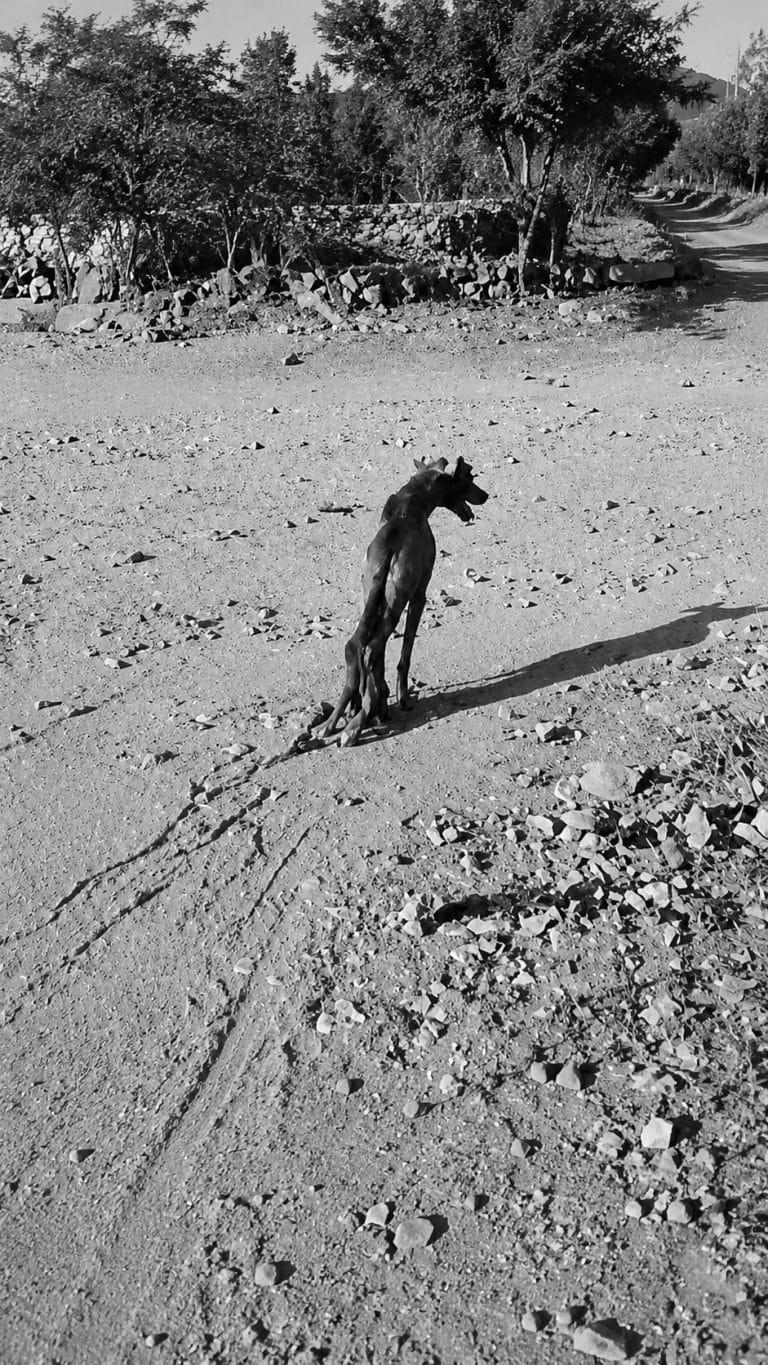
When rescuers first saw Beam moving across the dirt, they struggled to understand how he had survived for so long.
His body was painfully thin.
Every rib pressed visibly beneath fragile skin.
His back legs remained stretched behind him, unable to support his weight, while his front paws pulled the rest of his body forward one exhausting movement at a time.
He did not walk.
He dragged himself.
The rough ground scraped beneath his body as he searched for food, shelter, or simply another place to rest.
According to people living nearby, Beam had survived in this condition for years.
There was no dependable family waiting for him.
No protected place to sleep.
No certainty that food or water would be available the following day.
Yet whenever his front legs found enough strength, Beam pulled himself forward again.
The Dog Who Survived Using Only His Front Legs
Beam’s movement followed the same difficult pattern.
He planted his front paws against the ground.
He pulled.
His chest and abdomen shifted forward.
Then his motionless back legs followed behind him.
Every small distance required repeated effort.
A dog normally uses all four legs to distribute weight, balance the body, and absorb pressure from movement. Beam had been forced to rely almost entirely on the front half of his body.
That placed enormous strain on his shoulders and front legs.
It also left the rest of him in constant contact with the ground.
According to the rescue account, a serious spinal injury had damaged the nerves controlling his back legs. Nearby residents believed he had lived with the untreated condition for an extended period.
The exact origin of the injury was not explained.
No one could say with certainty when it happened or what caused it.
What rescuers could see was the result.
Beam could not raise his hindquarters.
He could not run from danger.
He could not walk toward food without dragging his body over dirt and stones.
His survival depended on the strength remaining in his front paws.
Even in his severely weakened condition, he continued using them.
He moved slowly, paused to rest, and then tried again.
Video: Paralyzed and Starving, Beam Pulls Himself Across the Dirt Until Help Finally Arrives
The Veterinary Tests Revealed Severe Spinal Damage
Rescuers removed Beam from the street and brought him to a veterinary clinic.
There, doctors began examining both his overall condition and the loss of movement in his back legs.
Neurological tests were performed.
X-rays were taken.
The team initially hoped the cause might involve a fracture or another injury that could be corrected more easily.
The results revealed a more complicated problem.
According to the rescue account, Beam did not have broken bones. Instead, veterinarians identified severe damage involving his spinal cord and nervous system.
The long period without treatment had made the prognosis especially uncertain.
Muscles that are not used for an extended time become weaker.
Joints lose mobility.
Nerve pathways may become increasingly difficult to restore.
Beam’s body had also been weakened by poor nutrition and the strain of surviving outdoors.
The veterinarians could not promise that he would walk again.
They could not know how much function might return even with intensive treatment.
But without intervention, his chances of meaningful improvement appeared extremely limited.
Surgery was presented as his only remaining opportunity.
It would be risky.
Recovery would be long.
And even a successful procedure might not restore normal movement to his back legs.
The rescuers still chose to move forward.
Beam had already spent years adapting to a body that could no longer carry him properly.
They believed he deserved the chance to receive treatment, even without a guaranteed outcome.
Surgery Was Only the Beginning
After the procedure, Beam remained extremely weak.
His body needed time to recover from surgery while also adjusting to a clean environment, regular meals, medication, and constant human care.
At first, even small movements exhausted him.
He spent long periods resting.
Caregivers monitored his incision, managed his pain, and helped reposition his body so he did not remain under pressure in one place for too long.
They also began introducing gentle rehabilitation exercises.
His legs were stretched carefully.
His joints were moved through controlled ranges of motion.
The exercises were not dramatic, but they were necessary.
Beam’s body needed repeated reminders of movements it had not performed normally in years.
During the second week, caregivers noticed another kind of change.
Beam appeared less tense around the people treating him.
At first, unfamiliar hands and medical handling had made him cautious.
Over time, he stopped reacting to every touch with the same uncertainty.
He rested beside caregivers.
He allowed them to support his body during exercises.
He began recognizing the daily routine surrounding him.
The source describes fear slowly leaving his eyes.
That inner feeling cannot be measured directly, but his behavior did become calmer.
He no longer flinched as frequently.
He tolerated physical therapy with greater ease.
And he began looking toward familiar people when they entered.
The medical team was still waiting for evidence that his nervous system might respond.
Then, around the twenty-fifth day, Beam attempted something no one expected to see so soon.
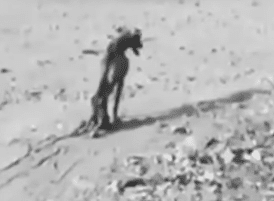
On Day 25, Beam Took Several Trembling Steps
Caregivers supported Beam as he tried to lift his body.
His legs shook beneath him.
His balance was uncertain.
For a moment, it appeared that his weight might collapse back toward the floor.
Then one paw moved.
His body shifted forward.
Another small step followed.
The movements were unstable and extremely slow, but they were genuine attempts at walking.
For the people who had watched Beam drag himself across the dirt, the sight was overwhelming.
He was not walking normally.
He was not suddenly cured.
His back legs remained weak, and he required support.
But his body was producing movement that had once appeared impossible.
Those few steps did not guarantee a full recovery.
Spinal injuries can improve unevenly, and early progress may be followed by long periods with little visible change.
The rescue team understood that the journey was far from complete.
Still, Day 25 provided something they had not possessed before.
Evidence that Beam’s body could respond.
By approximately Day 32, the rescue account noted that his severe spinal discomfort had begun easing.
He used his front legs with more confidence and continued participating in daily rehabilitation.
His progress remained slow.
Some sessions produced only tiny improvements.
On difficult days, Beam tired quickly and needed to rest.
But he continued attempting the exercises.
One step became a reason to try for another.
Water Gave Him a Way to Move Without Carrying His Full Weight
As the months passed, Beam’s rehabilitation became more intensive.
Daily work included stretching, assisted standing, strength exercises, and repeated efforts to improve coordination.
One of the most important parts of the program was hydrotherapy.
Inside the water, buoyancy supported much of Beam’s body weight.
His damaged spine and weakened legs did not have to carry the same pressure they faced on land.
This allowed him to attempt movement in a safer and more controlled environment.
At first, Beam appeared uncertain.
The sensation of water around his body was unfamiliar, and he needed support while learning how to position himself.
Caregivers remained close, holding him securely and guiding his movements.
Gradually, he began paddling.
His front legs worked confidently.
His body moved through the water without scraping against dirt or placing all of its weight on his shoulders.
For the first time in the documented journey, movement no longer required him to drag himself across a hard surface.
Hydrotherapy soon became one of the most active parts of his rehabilitation.
Beam appeared eager during swimming sessions.
He moved with greater freedom in the water than he could on land.
The exercise also helped strengthen his body while reducing pressure on the damaged areas.
As treatment continued, Beam gained weight.
His appetite improved.
His energy increased.
The skeletal dog found pulling himself over the ground slowly developed a healthier frame.
Then, around Day 150, caregivers noticed a movement they had been waiting months to see.
Beam’s back legs moved during a swimming session.
The motion was slight.
It did not mean he had regained full control.
But it suggested that some connection between his nervous system and hind limbs was still present.
For the people watching, that small movement justified every careful exercise that had come before it.
Recovery Continued Through Progress and Setbacks
Beam’s journey did not follow a smooth path.
More than a year passed while he continued rehabilitation.
Some days brought visible improvement.
On others, his body seemed tired and unresponsive.
That inconsistency is common in long-term spinal recovery.
Strength does not return at the same rate in every muscle.
Nerve function may remain limited.
Pain, fatigue, and stiffness can affect what an animal is able to do from one session to the next.
The rescue team adjusted Beam’s care according to what his body could tolerate.
They continued hydrotherapy.
They repeated strengthening exercises.
They helped him stand and move safely without forcing his legs beyond their ability.
Beam’s front legs remained his strongest source of movement.
Years of pulling himself across the ground had made them essential to his survival.
Now those same legs helped him participate in therapy and explore the protected environment around him.
His back legs showed occasional movement but did not regain enough reliable function for Beam to travel independently over longer distances.
The goal of rescue therefore began expanding.
It was no longer only about restoring what had been lost.
It was also about giving Beam a comfortable and active life with the abilities he still possessed.
That meant finding another way for him to move freely.
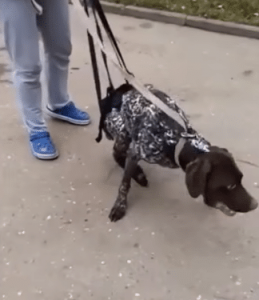
On Day 500, Wheels Gave Beam His Independence
Around Day 500, rescuers introduced Beam to a specially fitted wheelchair.
The frame supported his hindquarters while two wheels replaced the function his back legs could not consistently provide.
At first, Beam had to understand how the equipment moved with his body.
He took several cautious steps.
The wheels rolled behind him.
When he turned, the frame followed.
Then he began moving faster.
His powerful front legs pulled him forward, just as they had on the street—but everything else was different.
His body was no longer dragging across the ground.
His back legs were supported.
His skin and abdomen were protected from constant contact with dirt and stones.
Beam could choose where to go without exhausting himself after only a short distance.
The wheelchair did not repair his spinal cord.
It did something equally meaningful.
It gave him independence.
Beam began exploring open areas.
He followed the people caring for him.
He moved beside other dogs.
And once he understood how the wheels responded, his pace increased.
The dog who had once struggled painfully over every inch could now cross large spaces with confidence.
He could investigate new scents.
He could play.
He could travel over paths that would previously have been impossible for him to navigate safely.
The wheelchair became less like medical equipment and more like a natural extension of the way Beam moved through the world.
It allowed him to use the strength he had rather than remain limited by the function he had lost.
The Dog Who Dragged Himself Now Races Across Open Trails
Beam’s present life bears little resemblance to the conditions in which rescuers first found him.
He is no longer painfully thin.
He no longer searches the street for uncertain food.
His body does not scrape across rough ground each time he needs to move.
With the support of his wheelchair, Beam travels confidently through open spaces and along rocky trails.
He swims during therapy and recreation.
He interacts with other dogs.
He wakes in an environment where food, shelter, and assistance are available every day.
His back legs may never function exactly as they did before his spinal injury.
The rescue account does not claim that Beam achieved a complete neurological recovery.
His transformation came through a combination of surgery, rehabilitation, improved health, and adaptive mobility.
That distinction matters.
Beam’s success is not valuable only because he took several steps.
His life is not lesser because he eventually required wheels.
Recovery does not always mean returning an animal’s body to the condition it had before an injury.
Sometimes it means reducing pain.
Building strength.
Restoring choice.
And finding practical ways for the animal to participate fully in life.
Beam’s wheelchair did not represent defeat.
It represented freedom.
Beam’s Miracle Was Built One Day at a Time
When Beam was discovered, every movement required a struggle.
He pulled himself across the dirt using only his front paws while his weakened body followed behind.
According to nearby residents, he had survived that way for years.
Then rescuers took him from the street.
Veterinarians examined the damage.
Surgery gave him a possibility, but not a promise.
Rehabilitation turned that possibility into hundreds of days of work.
Around Day 25, he took several trembling steps.
Around Day 150, his back legs moved slightly in the water.
By Day 500, a wheelchair allowed him to travel independently.
None of those moments happened quickly.
None erased the difficult days between them.
Beam experienced fatigue.
He faced setbacks.
His body did not respond perfectly to every treatment.
But the people around him continued adjusting their care rather than deciding that incomplete recovery meant failure.
They celebrated movement without demanding a miracle.
They used therapy when therapy helped.
They introduced wheels when wheels offered greater freedom.
And through it all, Beam continued participating.
His story is not about a paralyzed dog suddenly waking up able to run.
It is about a dog being given every available way to keep moving forward.
First with his front paws.
Then through supported steps.
Then in water.
And finally with wheels carrying the part of his body that could no longer carry itself.
Once, Beam dragged himself across the ground because stopping meant he might not reach food or safety.
Today, he moves because there are fields to explore, dogs to follow, and people waiting for him nearby.
His transformation took more than a year.
It required surgery, rehabilitation, equipment, daily attention, and extraordinary patience.
The miracle was not instant.
It appeared in small signs spread across hundreds of days.
A trembling step.
A movement beneath the water.
A pair of wheels beginning to roll.
And a dog who had every reason to stop trying—but kept moving toward the life waiting ahead.


