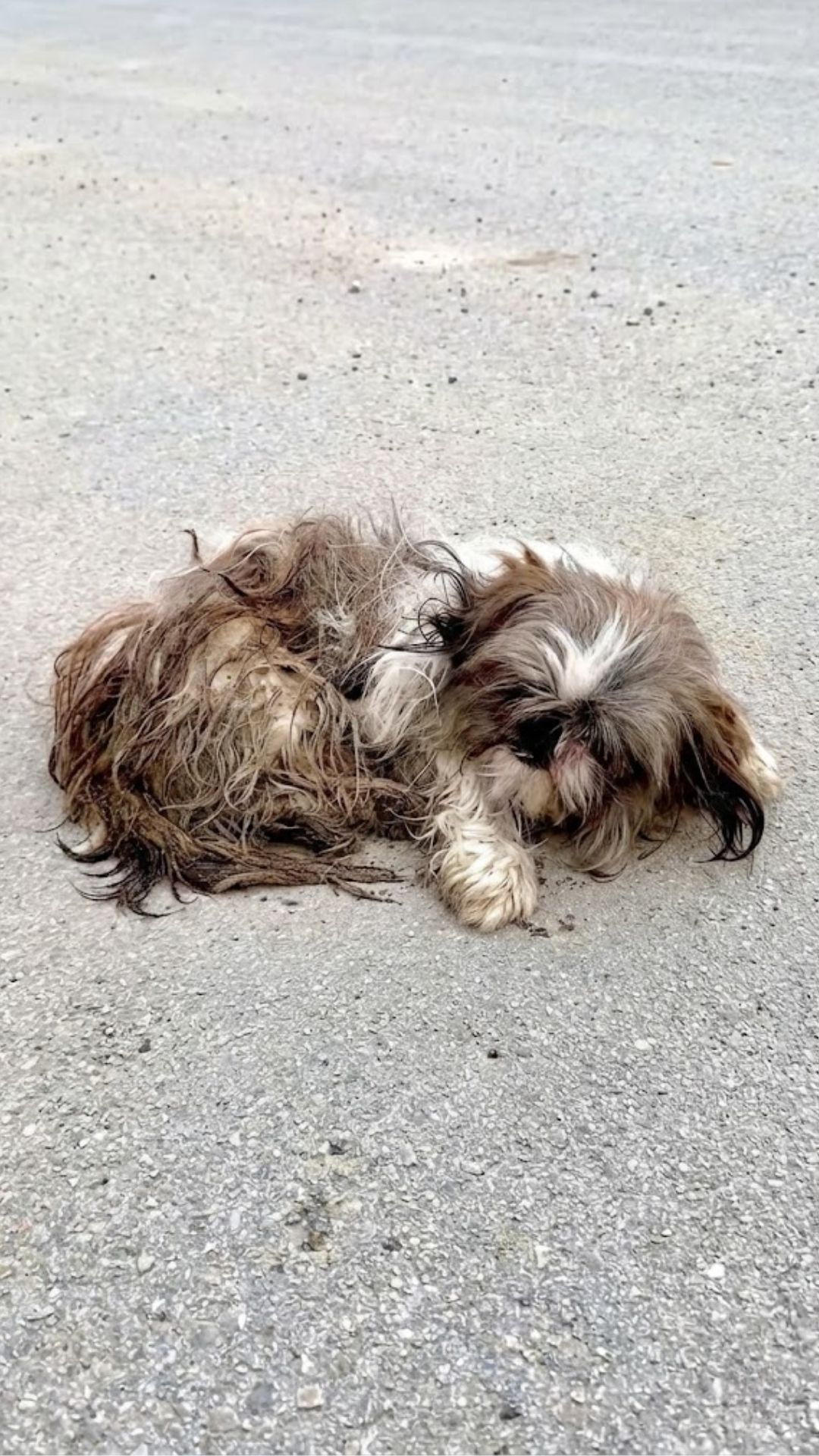
The little dog had found the kind of hiding place most people would never notice.
In the corner of a parking lot, close to a trash area, a small Shih Tzu stayed low against the concrete.
When footsteps came near, he moved.
Not toward them.
Away.
He slipped between parked cars, keeping as much distance as he could from anyone trying to approach.
His coat was long and badly tangled.
His body trembled.
And although no one could know exactly how he had ended up there, one thing was obvious:
He did not seem ready to trust the people trying to help him.
Later, he would be given the name Pesi.
But before that could happen, rescuers first had to convince a frightened little dog to stop running long enough for someone to carry him somewhere safe.
Every Attempt to Get Close Sent Him Back Into Hiding
Rescuers did not try to corner him immediately.
That could have made the situation worse.
Pesi was small enough to disappear beneath vehicles, and every sudden movement caused him to retreat deeper into the narrow spaces between them.
So the rescuers slowed everything down.
No chasing.
No raised voices.
No grabbing at him when he came within reach.
They stayed nearby.
Spoke quietly.
Waited.
Then tried again.
For a dog who could not understand their intentions, the only way to make the encounter less frightening was through their behavior.
Move slowly.
Leave him an escape route.
Do not force contact before necessary.
Eventually, the distance between Pesi and the rescuers became small enough.
He allowed himself to be lifted.
There was no dramatic moment of immediate affection.
He was simply a frightened dog being carried away from the parking lot.
But that alone changed his circumstances completely.
The concrete and parked cars disappeared behind him.
For the first time, Pesi was heading somewhere people could properly examine what he needed.
Video: Pesi Hides Between Cars After Being Left Behind — Then Rescuers Finally Bring Him to Safety
Beneath His Long Coat Was Another Problem
At the clinic, Pesi was scanned for identification.
According to the rescue account, no microchip was found.
His coat also needed attention.
The long fur had become severely matted, with sections pulling tightly against his body.
For a Shih Tzu, a coat that is normally soft and flowing can become extremely uncomfortable when tangles are allowed to build for too long.
But the caregivers did not immediately focus on making Pesi look different.
They removed the worst areas first, enough to reduce the discomfort.
A complete grooming could wait.
Something else was more concerning.
Pesi appeared to withdraw almost completely once he was inside.
He did not explore.
He showed little curiosity about the unfamiliar room.
And when food was placed near him, he did not eat.
The rescuers had succeeded in getting him off the street.
Now they faced a different challenge.
How do you help a dog who has reached safety but does not yet behave as though he understands that?
For Five Days, Pesi Barely Left His Bed
The first day passed.
Pesi remained quiet.
Food was offered.
He ignored it.
Water and other basic care remained available, and the team continued monitoring his condition, but he showed little interest in interacting with anyone.
Then came the second day.
The pattern was much the same.
Pesi stayed close to his bed.
He did not bark for attention.
He did not wander around the clinic.
He did not suddenly approach the people caring for him.
By the third and fourth days, the team understood that forcing interaction would not help.
So they stopped expecting Pesi to respond on anyone else’s schedule.
People sat near him without reaching constantly toward him.
They spoke softly.
Meals were placed within easy reach.
Then they gave him space.
Even a full bath was delayed.
His coat needed attention, but the caregivers decided that overwhelming him with another unfamiliar experience could wait until he was more settled.
For five days, much of Pesi’s recovery looked like almost nothing happening.
But something important was happening.
The people around him kept returning.
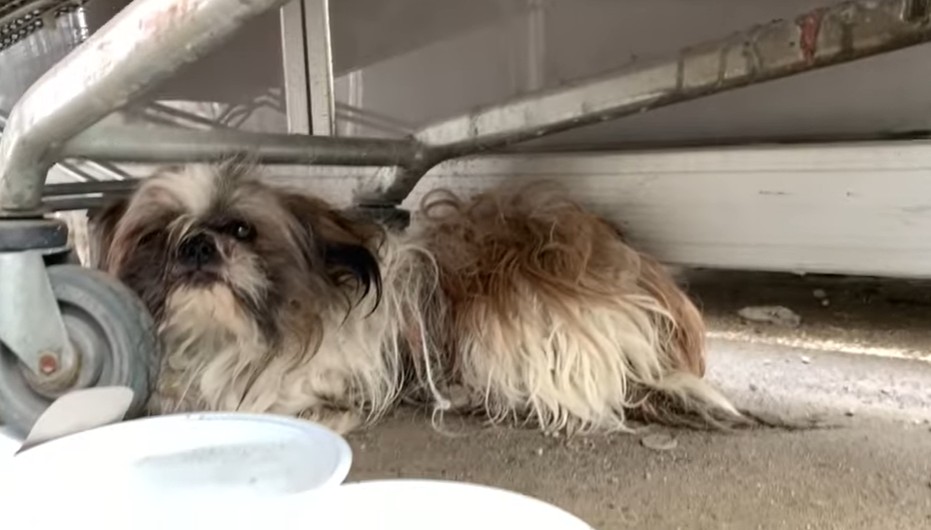
He Did Not Have to Earn Their Patience
Pesi did not need to wag his tail for someone to bring another meal.
He did not need to come when called.
He did not have to appear grateful.
Care continued regardless.
Morning arrived.
Someone checked on him.
Food appeared.
A familiar voice spoke nearby.
Then the room became quiet again.
Evening came.
Pesi still had the same safe place to rest.
Then another morning followed.
For an animal whose recent circumstances were uncertain, predictability mattered.
No one could know exactly what Pesi understood about his past or why he had become so withdrawn.
Describing him as grieving or having lost the will to live would require knowing feelings that could not be directly observed.
What could be observed was enough.
He was barely moving.
He was refusing food.
He avoided interaction.
And pressure did not improve any of those things.
So the caregivers tried something simpler.
They stayed.
Day after day, they gave Pesi experiences that ended without fear.
Nothing was demanded from him afterward.
Trust, if it came, would have to be his decision.
On the Fifth Morning, Pesi Finally Looked Around
Then, on the fifth morning, something changed.
Not dramatically.
Pesi lifted his head.
The movement was small enough that it might have meant little to someone who had just walked into the room.
To the people who had watched him remain almost motionless for days, it was impossible to miss.
He looked around.
Familiar caregivers were nearby.
The same people who had brought meals.
The same voices that had spoken quietly without forcing him to respond.
Pesi pushed himself upward.
His legs were slightly uncertain beneath him, but he stood.
For the first time in days, he appeared interested in more than remaining curled on his bed.
Then food was offered again.
Pesi looked at it.
Leaned closer.
And ate.
Only a small amount at first.
One bite.
Then another.
No one treated the moment as proof that every problem had disappeared.
But after five days of refusal, it represented an important change.
Pesi was engaging again.
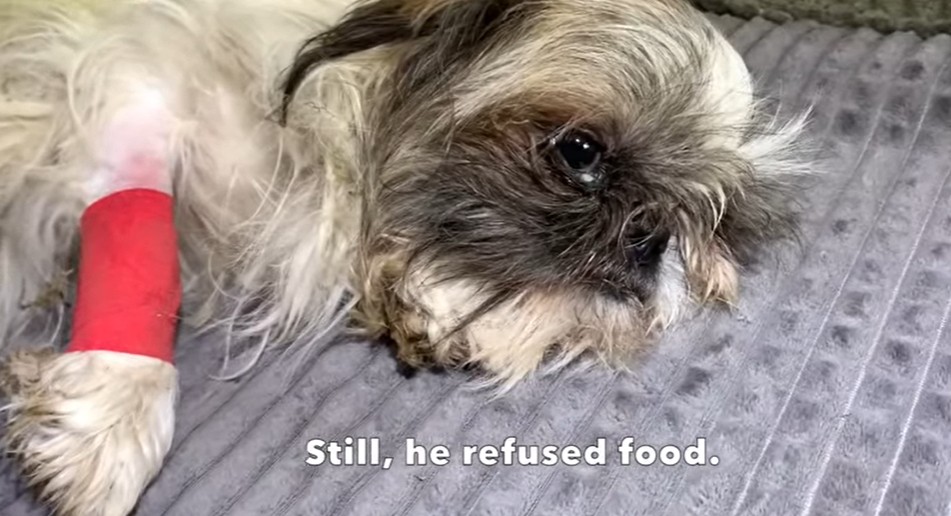
Once He Began Eating, Other Small Changes Followed
Food gave Pesi’s body more energy.
But the behavioral changes remained gradual.
He started moving around the room more often.
Instead of keeping his head down whenever someone approached, he sometimes watched them.
Familiar voices earned more of his attention.
Then came another small milestone.
His tail moved.
Not constantly.
Not with the enthusiasm he would show later.
Just enough to reveal that his response to the people around him was changing.
The caregivers continued using the same approach that had worked during those quiet first days.
No sudden expectations.
No constant handling.
Let Pesi decide when he wanted to come closer.
Over time, he did.
He began accepting gentle contact without retreating.
Then staying near people for longer.
Curiosity slowly replaced the stillness that had defined his arrival.
Only after his condition and behavior improved did the team decide he was ready for the grooming they had postponed.
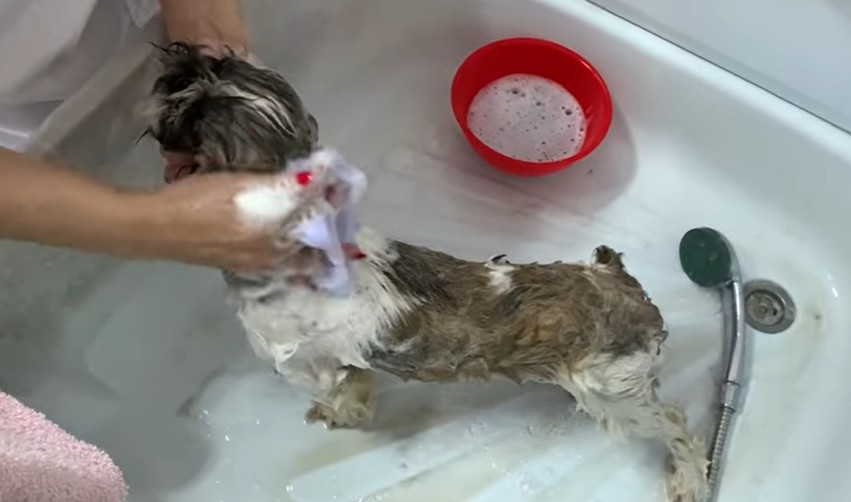
His First Proper Bath Revealed the Little Dog Underneath
By then, Pesi had enough stability to handle a full grooming session more comfortably.
Warm water soaked through the long coat.
Dirt began washing away.
The remaining tangles could be worked through carefully.
Matted sections that had pulled against him were removed.
Throughout the process, caregivers monitored his response and kept the experience as calm as possible.
Gradually, the dog hidden beneath the neglected coat appeared.
Smaller than all the fur had made him look.
Bright-eyed.
Gentle.
And increasingly interested in the people around him.
The transformation was visually striking.
But the appearance was not the most important difference.
Five days earlier, Pesi had remained almost completely still while food sat beside him.
Now he was participating.
Looking around.
Responding.
Allowing people to care for him without immediately withdrawing.
The bath did not create that change.
It simply happened after enough trust had already been built for Pesi to tolerate it.
The real transformation had begun much earlier.
On the floor beside his bed.
During all those quiet hours when nobody forced him to become ready before he was.
The Parking Lot Dog Began Seeking People Out
As Pesi became more comfortable, his personality became easier to see.
He walked around with greater confidence.
He responded when someone called.
Affection that once seemed overwhelming became something he could enjoy.
Instead of retreating when a person moved closer, Pesi sometimes leaned into the contact.
His tail wag became easier to notice.
Then ordinary dog behavior began replacing the withdrawn stillness.
Exploring.
Following people.
Investigating new smells.
Resting comfortably rather than remaining tightly guarded.
These things may sound small.
That is exactly what made them meaningful.
A successful rescue does not always end with something spectacular.
Sometimes the clearest evidence of recovery is that an animal begins behaving normally.
Pesi could simply be curious.
He could simply enjoy a gentle hand against his coat.
He could eat without anyone watching anxiously to see whether he would take the first bite.
He could lie down because he wanted to rest—not because he seemed unwilling to move.
Ordinary life was beginning to return.
Five Quiet Days Became the Most Important Part of His Story
Pesi’s transformation is easy to summarize through the visible moments.
A frightened Shih Tzu hides between cars.
Rescuers bring him to safety.
His matted coat is cleaned.
He becomes brighter and more affectionate.
But the most important part may be the stretch in which almost nothing seemed to happen.
Five days.
Five days when Pesi did not provide the kind of progress people naturally hope to see.
No excited greeting.
No playful behavior.
Almost no interest in food.
Very little movement.
And yet the caregivers continued.
They did not interpret his lack of response as a reason to stop caring.
They did not force him into interaction simply to make something happen.
They allowed quiet to be part of the recovery.
That patience eventually gave Pesi the opportunity to make the next move himself.
He lifted his head.
He stood.
He ate.
Everything that came afterward grew from those small decisions.
Another meal.
Another step.
A tail wag.
A bath.
A little more trust.
Pesi Needed Time More Than He Needed a Miracle
There is no way to know exactly what Pesi remembered about life before the parking lot.
The rescue account does not give us every answer.
We cannot know precisely why he refused food for those first days or what thoughts accompanied his withdrawn behavior.
We do not need to invent them.
His actions tell enough of the story.
When rescuers first approached, he hid.
At the clinic, he remained almost motionless.
For five days, he barely engaged.
Then something shifted.
Not because anyone forced him.
Because the environment around him stayed predictable long enough for him to begin responding to it.
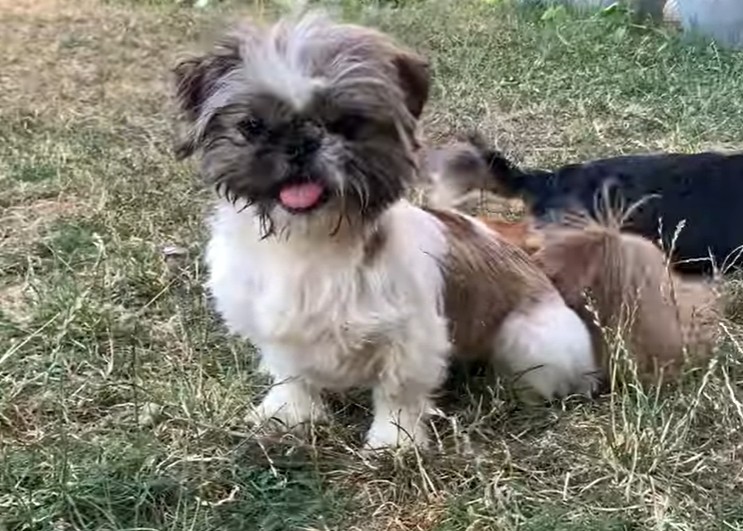
Today, the dog described in the rescue account is dramatically different from the little figure hiding beside parked cars.
His coat is clean.
He moves with confidence.
He accepts affection.
He engages with the people around him.
And the change did not begin with the bath or the haircut.
It began when someone saw a frightened dog and decided that being difficult to approach was not a reason to leave him behind.
Then it continued when those same people discovered that rescue sometimes means doing less.
Sitting nearby.
Leaving food within reach.
Speaking softly.
Returning tomorrow.
Pesi did not need to be convinced in a single emotional moment that the world was safe.
He needed evidence.
Five days gave him some.
A familiar person returned.
Then returned again.
And again.
Until finally, on the fifth morning, Pesi lifted his head and looked at the people who had stayed.
Then he stood.
Then he ate.
His recovery did not begin with a dramatic leap forward.
It began with one bite.
And sometimes, one bite is enough to tell you that a frightened little dog is ready to try again.


