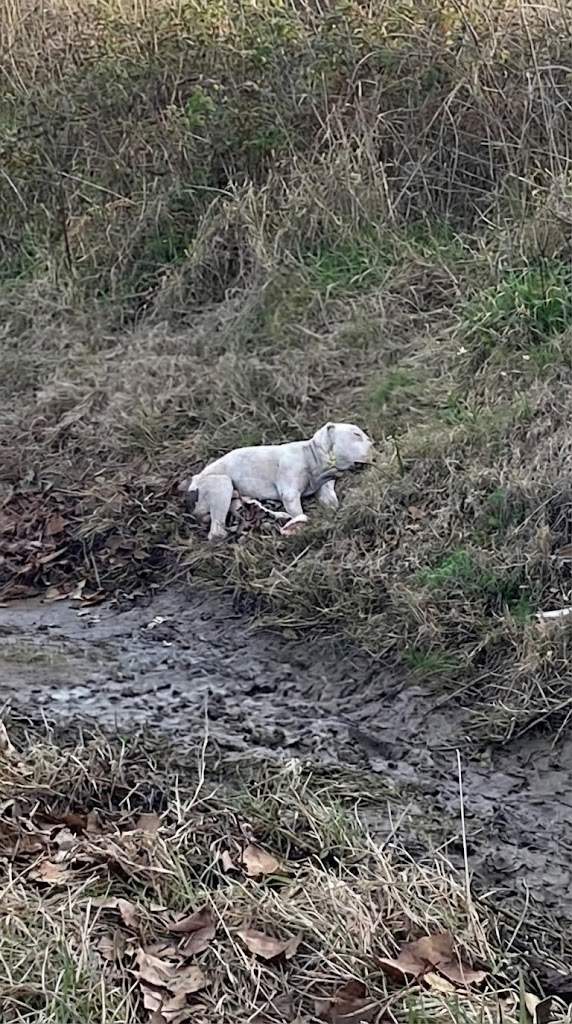
Big Head was not wandering when rescuers found him.
He was lying beside another dog who had already died.
His own body was painfully thin.
Fleas covered his coat.
And when he tried to move, his legs seemed too weak to support him for long.
No one knew exactly how long he had stayed there.
What rescuers could see was simple.
Big Head had remained close to the other dog even as his own strength faded.
Eventually, someone stopped.
And for the first time, Big Head did not have to decide what happened next on his own.
He Stayed Beside the Other Dog Instead of Walking Away
The scene immediately stood out.
Big Head was pressed close to the motionless body beside him.
He did not appear interested in leaving the area.
He was severely underweight, and his weakened condition suggested he had gone without proper food and care for some time.
His eyes looked tired.
His movements were slow.
And fleas covered much of his body.
It would be easy to describe his behavior as grief or loyalty.
Those emotions cannot be proven from the footage alone.
What is clear is that Big Head remained beside the other dog until rescuers arrived.
Video: Big Head Is Found Too Weak to Leave the Dog Beside Him
He Was Too Weak to Walk Away on His Own
A rescuer approached carefully.
Big Head did not try to run.
He did not resist much when the person came close.
According to the original account, he leaned against the rescuer and rested his head near the person’s arm.
His body appeared exhausted.
Because walking was difficult for him, the rescuer lifted him and carried him toward the vehicle.
That was the moment Big Head finally left the place where he had been lying.
Whatever connection he had shared with the other dog remained behind.
Now the priority was keeping him alive and helping his body recover.
The First Night Was About Basic Comfort
Once Big Head reached safety, no complicated treatment began immediately.
The first steps were much simpler.
His coat needed to be cleaned.
The fleas had to be removed.
He needed food and water.
And he needed somewhere warm enough to rest.
Big Head was given a careful bath.
The process was slow because his body was already fragile.
Afterward, he was dried and wrapped in towels.
Food was offered next.
At first, he ate cautiously.
Small bites.
Then more.
For a severely underweight dog, simply eating and resting safely were important early milestones.
That night, Big Head slept on a soft bed.
The Veterinary Exam Brought Better News Than Expected
The following morning, Big Head was taken to a veterinary clinic.
Considering his appearance, rescuers were prepared for serious medical findings.
According to the original rescue account, however, the examination brought some relief.
His bloodwork was within normal ranges.
Tests for viral disease were negative.
His organs appeared to be functioning normally.
There was no major hidden illness identified that explained his weakness.
Big Head’s condition seemed to be driven largely by severe neglect, poor nutrition, parasites, and exhaustion.
That meant the treatment plan could focus on something straightforward.
Food.
Rest.
Consistency.
And time.
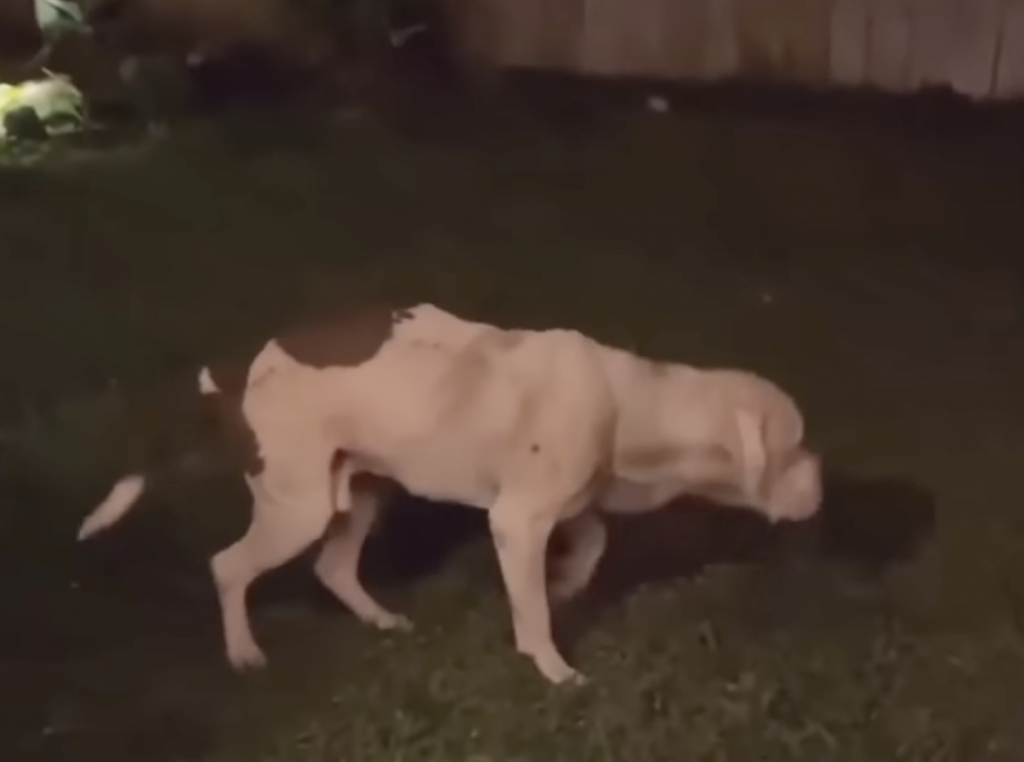
His Strength Returned Before His Confidence Did
Back in the home environment, Big Head had another adjustment to make.
He was no longer alone.
Other dogs moved around the house.
A cat was there too.
People came and went.
At first, Big Head remained cautious.
His tail stayed low.
His movements were measured.
And he often stayed close to the rescuer.
But over time, he began responding differently.
He lifted his head when someone called him.
He explored more of the house.
He accepted touch without pulling away.
Then his tail began moving.
The changes were small.
But they showed that the environment was becoming familiar.
Other Animals Became Part of His New Routine
Big Head gradually became comfortable around the other dogs in the home.
At first, he mostly watched.
Later, he moved closer.
Then came a small playful hop toward another dog.
It was brief.
But it was very different from the exhausted animal first found lying beside the road.
The household cat also became part of his surroundings.
There was no instant friendship.
Instead, the animals slowly learned how to share the same space.
Big Head began understanding that the home had routines.
Meals came regularly.
People returned.
Other animals were nearby without threatening him.
Those repeated experiences helped him settle.
Weeks of Care Changed His Body Completely
As the days turned into weeks, the physical difference became obvious.
Big Head gained weight.
His coat improved.
The fleas were gone.
His movements became stronger.
The dog who once could barely support himself now had enough energy to move freely around the house.
Then came ordinary behaviors that would have seemed impossible at the beginning.
He rested on the couch.
Played with toys.
Chose sunny places to sleep.
Approached people for attention.
None of those things were dramatic.
That was exactly what made them meaningful.
Big Head was no longer living in crisis.
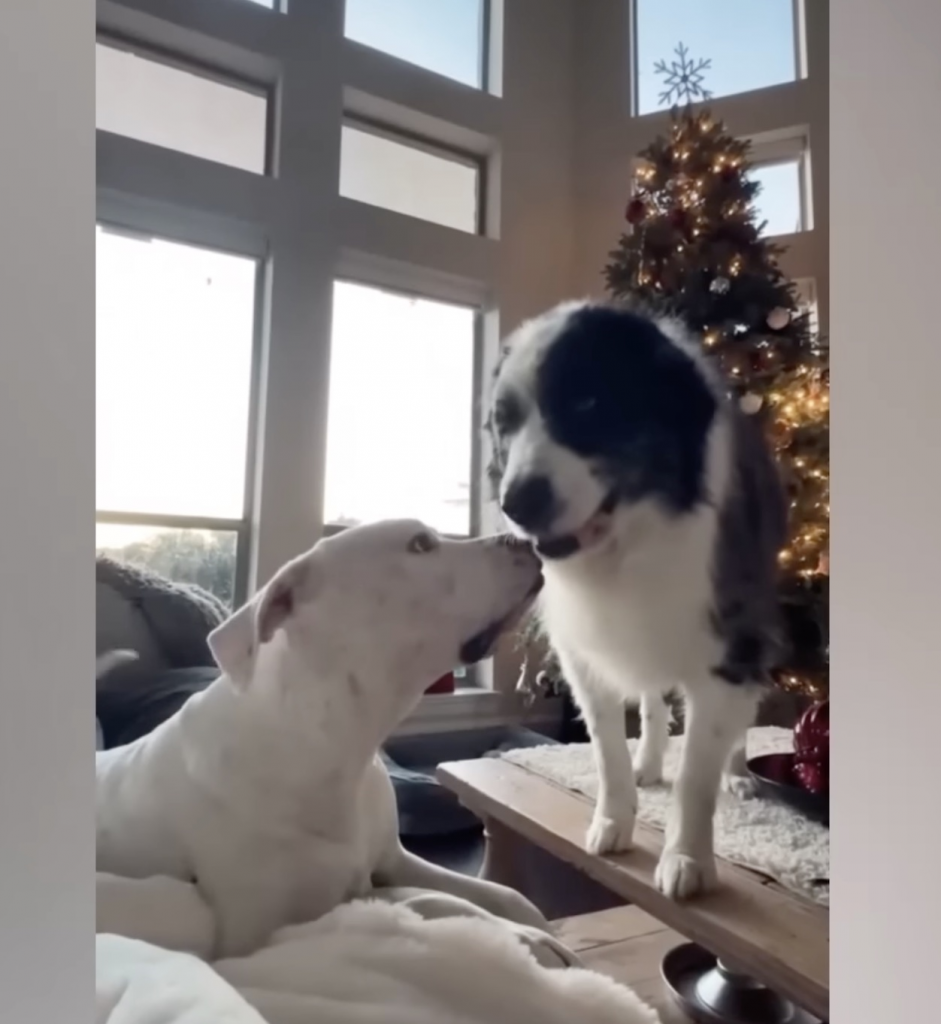
The Dog Who Could Not Leave Became Part of a Family
Eventually, Big Head’s life became defined by something very different from the place where he was found.
He had regular food.
A safe place to sleep.
Other animals around him.
And people who expected him to remain.
The thin dog covered in fleas slowly became a healthy companion.
His past did not need to disappear for that transformation to matter.
Whatever had happened before rescuers arrived, Big Head had survived long enough for someone to find him.
And once he was carried away, he was finally given the things his body had been missing.
Nutrition.
Safety.
Rest.
And steady care.
No One Can Know Why He Stayed
One part of Big Head’s story will always invite interpretation.
Why did he remain beside the other dog?
Was it familiarity?
Attachment?
Confusion?
Exhaustion?
The original account describes it as loyalty and grief, but the footage cannot tell us exactly what Big Head understood.
What it can show is enough.
He stayed.
He was too weak to continue much longer.
And when someone finally approached, he allowed himself to be carried away.
Today, Big Head no longer lies beside a roadside with nothing around him.
He sleeps in a home.
Shares space with other animals.
And moves through his days with a body strong enough to choose where he wants to go.
He once stayed in one place until he could barely stand.
Now he has somewhere safe to return to every day.


