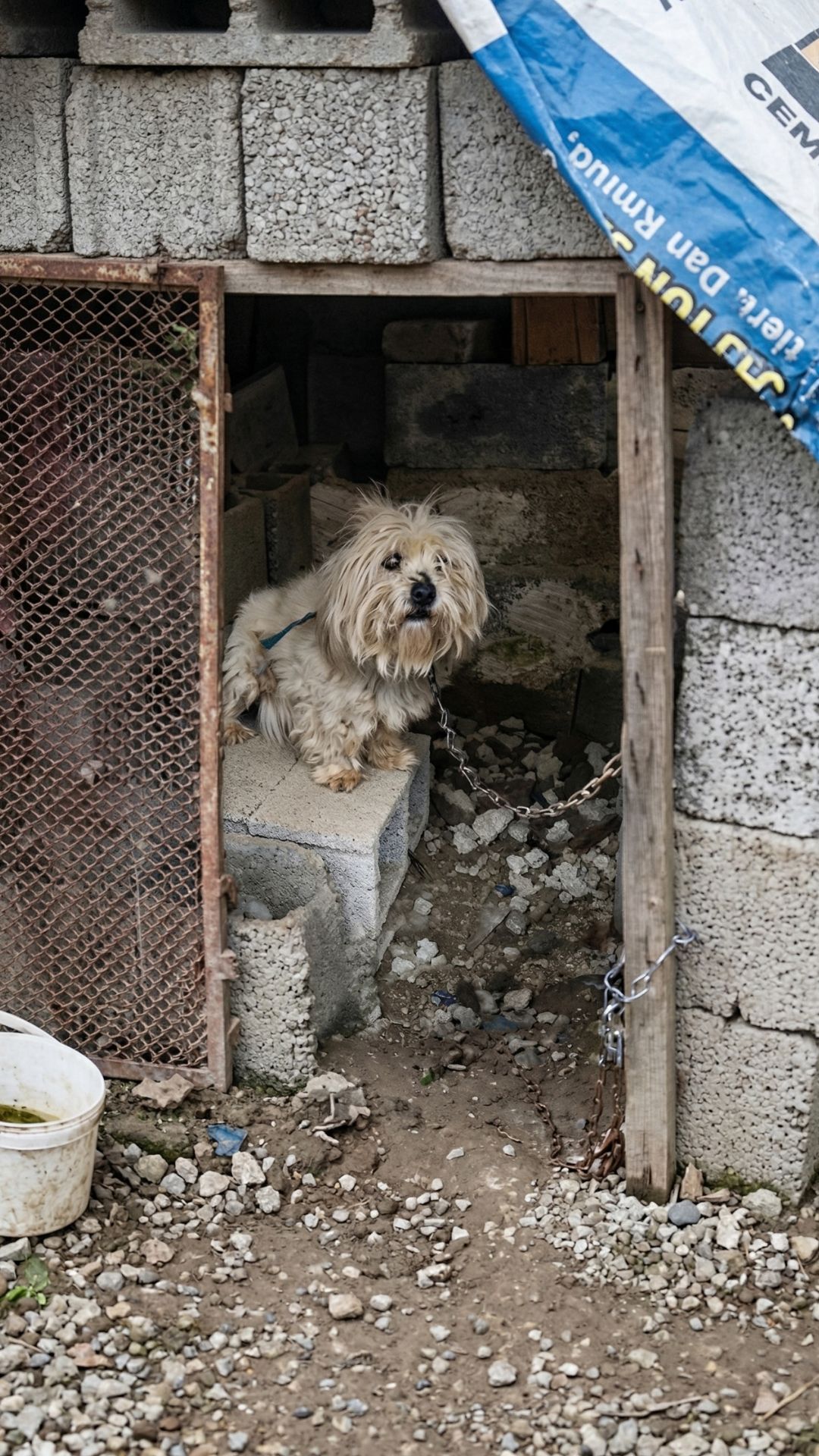
For years, Ihsan’s world ended only a few steps from where it began.
A short chain restricted every movement. Bare ground served as the place where he stood, rested, and watched one day quietly turn into the next.
There were no walks through open fields.
No soft bed waiting indoors.
No familiar voice calling him simply because someone was happy to see him.
Ihsan had also reportedly been used repeatedly for breeding, valued for what he could produce rather than treated as a companion deserving affection and care.
By the time rescuers reached him, they expected to find a dog who had learned to keep people at a distance.
Instead, Ihsan slowly walked toward them.
His tail moved in a small, gentle wag.
And when the chain was finally removed, he did not try to run away.
He simply stood there, as if he were waiting to understand how far freedom might allow him to go.
His Entire Life Had Been Reduced to One Small Space
Long-term neglect does not always arrive through one visible emergency.
Sometimes, it becomes a routine.
The same chain.
The same ground.
The same limited circle in which an animal is expected to spend every hour of every day.
That was the life Ihsan had known.
His movement was controlled by the length of the chain attached to him. He could turn, sit, lie down, and take a few steps, but he could not choose where to go.
He could not follow an interesting scent beyond the boundary.
He could not search for shade, companionship, or a more comfortable place to rest if those things were outside his reach.
His surroundings may have changed with the weather, but his daily experience remained painfully narrow.
Rain could turn the ground damp.
Heat could make the exposed area uncomfortable.
Cold nights could settle around him.
Still, the chain remained.
According to his rescuers, Ihsan had also been used for breeding. His life was not centered on his comfort or happiness. He was kept for a purpose that benefited others, then returned to the same restricted existence.
There is no way to know precisely what Ihsan thought during those years.
What rescuers could see was the result.
His coat had been left without proper grooming.
Dirt and heavy mats had accumulated across his body.
The limited conditions around him offered little of the stimulation, movement, and companionship dogs naturally seek.
He had survived.
But survival and living are not the same thing.
A dog may continue eating, breathing, and responding to the world while still being denied nearly every experience that gives life variety and meaning.
Ihsan had not been given the freedom to explore.
He had not been treated as a family member.
He had been left at the end of a chain for so long that rescuers could not reasonably expect him to understand human contact as something safe.
Yet when help finally entered his small world, Ihsan did something that no one was prepared to see.
He moved toward it.
Video: Ihsan Walks Toward His Rescuers as the Chain That Held Him for Years Is Finally Removed
He Greeted Help With a Gentle Wag
The rescue team approached cautiously.
Dogs who have spent long periods restrained can react in many different ways when unfamiliar people enter their space.
Some retreat as far as the chain allows.
Some bark defensively.
Others remain motionless, uncertain whether movement will make the situation worse.
The rescuers did not know which response Ihsan would show.
They moved slowly and watched his body language.
Ihsan looked toward them.
Then he stepped forward.
There was no frantic lunging or desperate attempt to escape. His approach was quiet, and his tail began to move with a soft wag.
The gesture was small, but it changed the atmosphere around the rescue.
This dog had every reason to be cautious.
People had controlled his movement for years. Human hands had attached the chain, determined his living conditions, and repeatedly used him for breeding.
Still, Ihsan did not immediately assume that every new person intended to harm him.
He allowed the rescuers to come closer.
When someone reached toward the chain, he remained still.
The team worked carefully at the point where the restraint was secured. They did not pull him or create unnecessary noise.
Then the connection that had controlled so much of his life came loose.
The chain fell away.
For the first time in years, Ihsan could move without being stopped after only a few steps.
He did not race immediately across the property.
He did not seem to understand his freedom through one dramatic burst of movement.
Instead, he stood quietly near the rescuers.
That reaction was no less powerful.
Freedom was completely unfamiliar.
The world beyond the chain had always existed in front of him, but he had never been allowed to enter it on his own terms.
Now there was no metal pulling him backward.
No fixed boundary beneath his feet.
Only open space and people waiting patiently for him to decide what to do next.
The rescuers guided him away from the place where he had been kept.
Ihsan followed.
The dog who had spent years unable to choose his direction was finally walking toward a different life.
His Coat Revealed the Care He Had Gone Without
Once Ihsan arrived at the clinic, the team began examining his physical condition.
There was encouraging news.
He did not appear to be suffering from a major illness.
But that did not mean his years of neglect had left no visible effect.
His coat had become heavily matted.
Thick knots of tangled fur covered large portions of his body, pulling against the skin and restricting comfortable movement.
Matted fur is more than a cosmetic problem.
When tangles grow tight and heavy, they can place constant tension on the skin beneath them. Dirt and moisture may become trapped inside, making it difficult to keep the area clean.
Ordinary actions such as sitting, stretching, or walking can become uncomfortable when every movement pulls against hardened knots.
For Ihsan, the condition of his coat showed how long basic grooming had been ignored.
This was not a small tangle caused by a few days outdoors.
Layers had built up over time.
The grooming process therefore could not be rushed.
Trying to pull or cut through the mats carelessly could cause additional pain. The team needed to work section by section, separating damaged fur from healthy skin while keeping Ihsan as calm as possible.
Clippers and grooming tools introduced new sounds and sensations.
Ihsan had already been removed from the only environment he knew, transported to an unfamiliar clinic, and handled by people he had only just met.
Even necessary care could feel confusing.
But once again, he surprised everyone.
He allowed the team to help him.
They spoke calmly and supported his body while the heavy mats were removed little by little.
With each section of tangled fur that came away, Ihsan’s true shape became easier to see.
His skin could breathe.
His movement became less restricted.
The weight pulling across his body gradually disappeared.
The transformation was not about making him look more attractive.
It was about giving him physical relief.
By the time the grooming session was complete, Ihsan could move without the same tight mass of fur tugging at him.
His posture appeared softer.
His body looked lighter.
For years, people had allowed dirt and matted hair to accumulate around him.
Now patient hands were removing that burden—not because they wanted something from Ihsan, but because his comfort finally mattered.
Freedom Began With Ordinary Things
Leaving the chain behind was one major change.
Learning how to live without it was another.
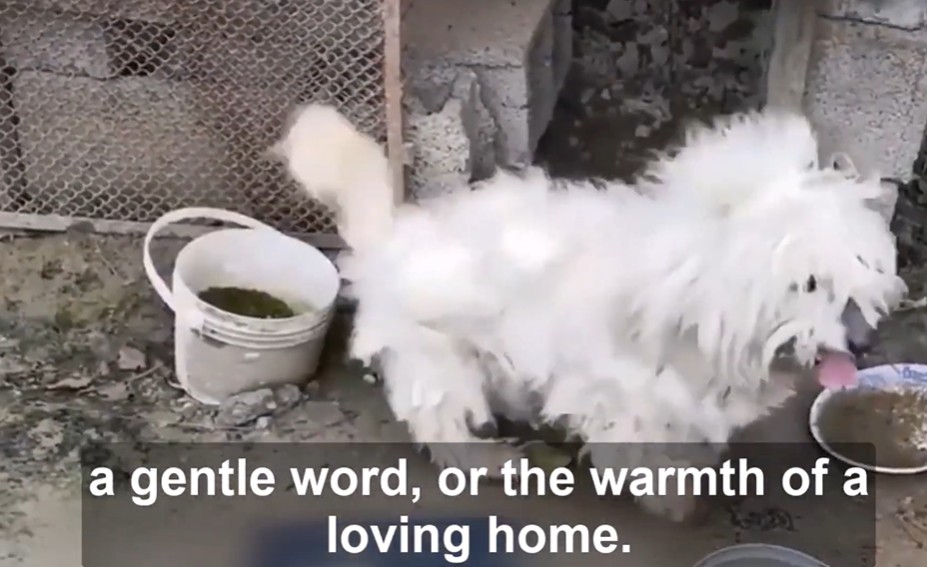
At the rescue facility, Ihsan encountered simple comforts that had never been a normal part of his day.
A soft bed.
A clean room.
Fresh water placed nearby.
Food provided without demanding anything in return.
Space to move in more than one direction.
At first, he explored cautiously.
He took several steps, stopped, and looked around.
Open space can be overwhelming to an animal accustomed to a fixed boundary. Ihsan had spent years learning exactly how far he could move before the chain stopped him.
Now nothing pulled against his neck or body when he continued forward.
He could turn left.
He could walk right.
He could approach a person or create distance.
Those choices were ordinary for most dogs.
For Ihsan, they were new.
The caregivers allowed him to discover the environment at his own pace.
They did not surround him or overwhelm him with attention.
They offered affection, but they also gave him room to observe.
The same gentle dog who had approached rescuers began showing interest in the people around him.
He accepted touch.
He listened when familiar voices entered.
He rested more comfortably as the days passed.
Then another side of him began to appear.
Ihsan became playful.
At first, the changes were subtle.
His movements grew more animated.
He showed curiosity toward objects around him.
He responded with greater enthusiasm when caregivers approached.
Over time, moments of play became part of his routine.
This was the dog who had spent years in one restricted patch of ground.
He had not lost the ability to enjoy himself.
It had simply been given almost no opportunity to emerge.
Video: After Years on a Chain, Ihsan Discovers Open Space, Soft Beds and the Joy of Play
His Personality Had Survived Beneath the Neglect
One of the most remarkable things about Ihsan was not only that he recovered physically.
It was the way his gentle temperament remained visible after everything he had endured.
Long-term restriction could have made close contact difficult for him.
He might have associated people entirely with control.
He might have avoided hands, refused affection, or remained constantly guarded.
Instead, Ihsan continued meeting people with a quiet openness.
That did not mean the past had no effect.
He still needed time to understand new places and routines. Freedom itself required adjustment.
But the caregivers were not dealing with a dog who had lost every desire for connection.
Ihsan appeared to welcome companionship.
He remained gentle during care.
He became interested in life beyond the small space that had once defined his days.
As his body grew more comfortable, his movements changed.
The heaviness created by matted fur disappeared.
Regular care improved his physical condition.
Safe surroundings allowed him to rest without remaining attached to a chain.
These improvements gave his personality room to become more visible.
He was curious.
He was affectionate.
He could be playful.
He enjoyed the presence of people who treated him with patience.
The contrast was difficult to ignore.
The people who had kept Ihsan had viewed him largely through what he could provide as a breeding dog.
The rescuers began seeing him as an individual.
They noticed what made him comfortable.
They observed the ways he communicated.
They responded when he wanted affection and gave him space when he needed rest.
For the first time, Ihsan’s value was not connected to reproduction or usefulness.
He did not need to earn care.
He received it because he was alive and deserved to be treated kindly.
That change may have been one of the most important parts of his rescue.
Removing a chain changed his physical circumstances.
Recognizing his individual worth changed the meaning of his life.
A Family Chose the Dog He Had Always Been
When potential adopters learned about Ihsan, his past was impossible to ignore.
He had spent years restrained.
He had been used repeatedly for breeding.
His coat had been left in a severely matted condition.
Those facts explained why he had needed rescue.
But they did not describe everything he was capable of becoming.
The family who adopted Ihsan looked beyond the circumstances in which he had been found.
They saw his gentle behavior.
They noticed his willingness to trust.
They saw a dog who responded to kindness without demanding anything more than safety and companionship.
According to the account of his rescue, Ihsan’s transition into the home was peaceful.
He entered this new environment with the same quiet openness he had shown when rescuers first approached him.
There was still much for him to learn.
A permanent home contained different rooms, sounds, routines, and expectations. But unlike the life he had left behind, none of those things were controlled by a chain.
Ihsan could move through the house.
He could choose where to rest.
He could approach his family when he wanted attention.
He could step away when he needed quiet.
His family did not keep him because of what he could produce.
They welcomed him because they wanted him to belong.
That distinction reshaped every part of his day.
Meals were not simply enough to keep him alive.
They became part of a dependable routine.
A bed was not bare ground selected by the length of a restraint.
It was a comfortable place where he could stretch and sleep safely.
Human voices were no longer connected only to commands or use.
They could offer reassurance, affection, and the simple pleasure of being included.
Ihsan did not need to understand his entire new life immediately.
The family gave him time.
Each ordinary day provided another answer to the uncertainty he may have carried.
The door opened, and he was allowed to walk through it.
A person approached, and the touch was gentle.
Night arrived, and he remained warm and protected.
Morning came, and the same people were still there.
Through those repeated experiences, a permanent home became more than a new location.
It became a place where Ihsan finally belonged.
His Days Are No Longer Measured by the Length of a Chain
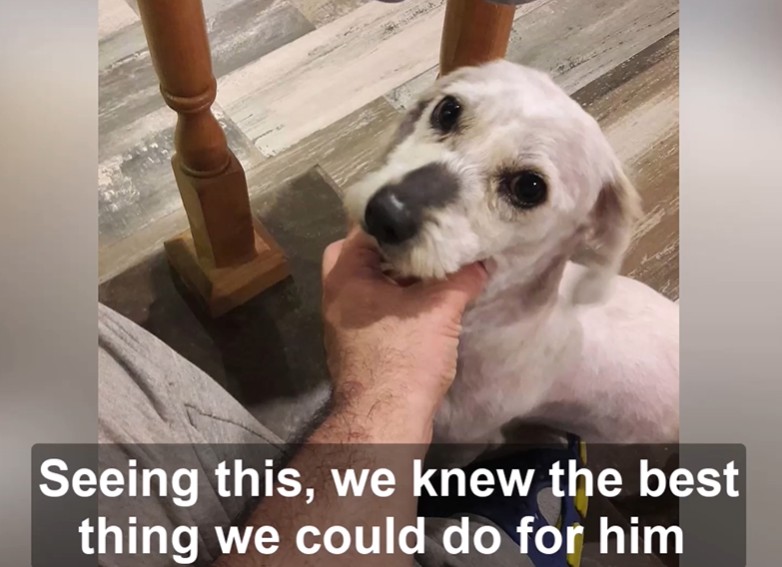
Today, Ihsan’s world extends far beyond a few steps of bare ground.
He has open space to move.
Comfortable places to rest.
People who care about what he needs and how he feels.
His days are no longer identical periods of waiting.
He can explore.
He can play.
He can seek affection.
He can make choices that were denied to him for years.
The transformation is visible in the way he carries himself.
The heavy mats are gone.
His movements are easier.
His posture is more relaxed.
The gentle spirit rescuers noticed on the first day has been given room to flourish.
Ihsan’s past remains part of his story.
Rescue does not erase the years an animal spent neglected, nor does adoption make those experiences cease to matter.
What rescue can do is change what comes next.
For Ihsan, what came next was grooming that brought relief.
A safe place where he could learn to move freely.
People who saw him as a companion rather than a resource.
And ultimately, a family who chose him for the dog he was—not for anything he could provide.
The chain once determined the limits of his world.
It decided where he could stand.
How far he could walk.
Where he would sleep.
Now those decisions belong to Ihsan and the people committed to caring for him.
He can follow a familiar voice across the room.
He can settle into a soft bed.
He can move toward affection without metal pulling him backward.
These may seem like ordinary experiences.
For a dog who had lived so long without them, they represent an entirely different way of being alive.
The Most Powerful Part of His Story Was What Neglect Could Not Take
It would be understandable if Ihsan had greeted rescuers with fear.
No one would have blamed him for backing away.
After years of confinement and use, caution would have been a natural response.
Instead, he walked toward them.
His tail moved.
He allowed someone to reach for the chain.
That moment is what makes his story so difficult to forget.
The people who had controlled Ihsan’s life had taken away his freedom.
They had allowed his coat to become painfully neglected.
They had treated him according to what he could produce.
But somehow, they had not completely taken away his willingness to connect.
A gentle part of him remained.
It appeared in the soft wag of his tail.
In the way he stood quietly while the restraint was removed.
In his acceptance of patient grooming.
In the curiosity that emerged as he explored open space.
And in the affection he later offered to the family who gave him a home.
Ihsan did not need to become a different dog in order to deserve a second chance.
He needed people willing to recognize the dog who had been there all along.
His healing was not instant.
It arrived through practical acts repeated with care.
One chain removed.
One section of matted fur clipped away.
One comfortable place to rest.
One opportunity to explore.
One family deciding that he would never again be valued only for what he could give.
Today, Ihsan is no longer waiting at the edge of a short chain.
The ground beneath him does not define the limits of his life.
He can walk forward for as long as he chooses.
And perhaps the most beautiful part of his journey is not simply that rescuers gave him freedom.
It is that when freedom finally arrived, Ihsan still had enough trust left to walk toward it.


