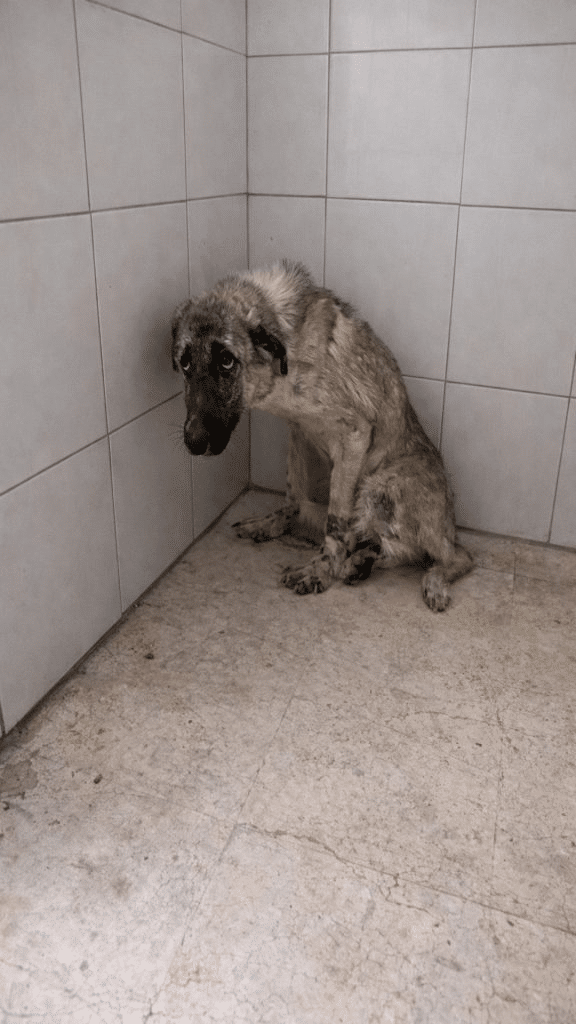
Copor did not bark when the couple found him.
He did not pull against the rope tied to the fence or attempt to run when they came closer.
The tiny puppy simply stood in place, his body trembling as he watched two unfamiliar people approach.
No one knew how long he had been there or what had happened before he was discovered.
But one thing was clear.
Copor was frightened, weak, and in urgent need of someone willing to move slowly.
The Puppy Who Could Not Stop Trembling
Copor appeared almost frozen beside the fence.
The rope limited where he could move, but fear seemed to restrict him even more. His body remained tense, and his eyes followed every movement the couple made.
He did not call out for attention.
He did not show aggression.
Instead, he stood silently and shook.
The couple understood that reaching toward him too quickly could make the situation worse. A frightened puppy may attempt to flee, pull against a restraint, or react defensively when surrounded.
So they kept their distance at first.
They spoke in quiet voices.
They avoided sudden movements.
The woman lowered herself closer to Copor’s level, allowing him to watch her without feeling crowded.
Little by little, the tension in his posture appeared to ease.
He was still uncertain, but he did not move away.
The couple carefully loosened the restraint and freed him from the fence.
They named him Copor.
It was a small act, but it marked an important change.
He was no longer an unidentified puppy waiting beside a road.
Someone had noticed him.
Someone was taking responsibility for what happened next.
Video: Copor Stands Trembling Beside a Fence—Then Gentle Hands Begin Earning His Trust
The Clinic Was Frightening, but He Was Not Alone
The couple took Copor directly to a veterinary clinic.
For a puppy already overwhelmed by unfamiliar people, the new environment was difficult.
Doors opened and closed around him.
Medical equipment made strange sounds.
Unfamiliar scents filled the room while staff members moved nearby.
Copor continued trembling and remained close to the people who had rescued him. The couple stayed beside him, offering the familiar voices and gentle presence he had begun to recognize.
The veterinary team examined him carefully.
Copor was significantly underweight and weak from inadequate nutrition. Parasites were also discovered and required treatment.
His physical condition would need time to improve.
He needed nutritious meals, medication, rest, and close monitoring to make sure his body responded safely.
But the caregivers also noticed how cautious he remained during every interaction.
Even a gentle hand could make him tense.
New people caused him to watch closely.
Sudden movement made him pull back.
The team could not know exactly what Copor had experienced before he was found. They could only respond to the behavior in front of them.
He needed medical care.
He also needed control over the pace of each interaction.
Trust Began With Food, Space, and Consistency
Copor’s caregivers did not expect immediate affection.
They allowed him to rest in a quiet area where he could observe the people around him without being constantly handled.
Food was offered in appropriate portions.
Fresh water remained nearby.
Medication was given calmly, with pauses whenever Copor appeared overwhelmed.
At first, he remained hesitant around the bowl.
He looked toward the caregivers before approaching, as though checking whether it was safe to eat.
No one pushed him forward.
After a while, he lowered his head and began taking small bites.
That first relaxed meal became an important milestone.
It showed that Copor was beginning to feel secure enough to focus on something other than the activity around him.
The caregivers continued following the same routine every day.
Meals arrived at dependable times.
People announced themselves with gentle voices before reaching toward him.
Hands moved slowly.
When Copor stepped away, no one followed or forced him back.
Gradually, he started remaining near people for longer periods.
He accepted a brief touch.
Then another.
One day, instead of retreating when a familiar caregiver entered, Copor took a cautious step forward.
The progress appeared small from the outside.
For Copor, every choice to approach required courage.
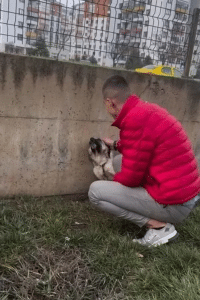
One Tail Wag Revealed How Much Had Changed
The first tail wag lasted only a moment.
A familiar person approached Copor slowly and spoke to him. His body remained cautious, but the tip of his tail moved.
Then it stopped.
The caregiver did not react loudly or reach for him immediately. She remained calm, allowing Copor to decide whether the interaction should continue.
A few days later, his tail moved again.
This time, it lasted longer.
As Copor’s health improved, his behavior began changing more visibly.
Regular meals helped him gain weight.
Treatment addressed the parasites that had weakened his body.
His coat gradually appeared healthier, and he had more energy to explore his surroundings.
The puppy who had once stood motionless beside the fence began walking around the room.
He sniffed blankets.
He investigated toys.
He watched other dogs and occasionally attempted to follow them.
Copor still had cautious moments.
A new sound might make him pause.
An unfamiliar visitor could cause him to step back.
But he recovered more quickly than before.
Instead of remaining frozen, he looked toward the caregivers he trusted and waited for reassurance.
Fear was no longer controlling every movement.
Curiosity was beginning to take its place.
The Frightened Puppy Began Seeking People Out
As the weeks passed, Copor became increasingly interested in companionship.
He no longer waited for caregivers to approach him every time.
Sometimes, he walked toward them on his own.
He stayed close when they sat beside him and began accepting longer periods of gentle affection. His tail wagged more frequently, especially when meals arrived or a familiar person entered the room.
Play became another part of his recovery.
At first, Copor only watched toys being moved across the floor.
Then he reached toward one with his paw.
Before long, he was carrying toys, following people through the room, and showing the bursts of energy expected from a young dog.
His transformation did not happen because the fear had been erased.
It happened because Copor received enough safe experiences to respond differently.
A person approached and stopped when he became uncomfortable.
A meal appeared and no one tried to take it away.
A caregiver left the room and returned later.
Each repeated experience gave him more information about the new world around him.
Not every person would frighten him.
Not every unfamiliar place was dangerous.
He could move closer and still remain safe.
The quiet puppy beside the fence was gradually revealing himself to be affectionate, curious, and eager to participate in life.
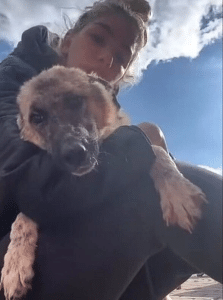
A Family Prepared to Let Him Adjust
When Copor was healthy enough to be considered for adoption, a family learned about his story.
They understood that the cheerful puppy they were meeting had once been afraid to move in front of people.
Instead of expecting him to become comfortable immediately, they allowed him to observe them.
They spoke softly.
They did not surround him.
They waited for Copor to decide when he was ready to come closer.
At first, he remained cautious.
New voices, scents, and movements required time to process. But the family respected the same boundaries that had helped him recover.
Copor approached slowly.
He sniffed their hands.
Then he stayed near them.
The relationship continued developing through repeated meetings and gentle interactions.
The family was not searching for a puppy who would behave perfectly from the first moment.
They were prepared to provide stability, routine, and patience.
Eventually, Copor went home with them.
The transition introduced another new environment, but this time he did not face it alone.
His family gave him a comfortable place to rest, regular meals, and time to learn the household routine. They allowed him to explore at his own pace and offered reassurance when something unfamiliar made him hesitate.
With each passing day, the new home became less frightening.
It became his.
The Life Beyond the Fence
Today, Copor’s life is filled with experiences that were missing when he was discovered.
He sleeps in a warm, protected home.
He receives the food and medical care he needs.
He plays, explores, and spends time with people who understand when he needs affection and when he needs space.
The trembling has been replaced by excited tail wags.
The puppy who once remained completely still now moves through his home with growing confidence.
Copor’s story is not about fear disappearing in a single dramatic moment.
His recovery was built through smaller ones.
A woman sitting quietly beside him.
A rope being removed without force.
A meal he felt safe enough to eat.
A hand he chose not to avoid.
A tail wag that lasted only a second.
Each moment showed Copor that his surroundings had changed.
He no longer needed to stand frozen and wait for something frightening to happen.
He could approach people.
He could play.
He could rest.
He could belong.
Once, Copor was found trembling beside a fence, uncertain about every person who came near.
Today, he runs toward a family that has given him something he had never been able to depend on before.
A safe place where kindness returns every day.


