The cries began sometime during the night.
They were faint enough to be ignored at first—an occasional sound drifting through a quiet residential area while lights went out and people settled into their homes.
By morning, the reason for those cries was finally visible.
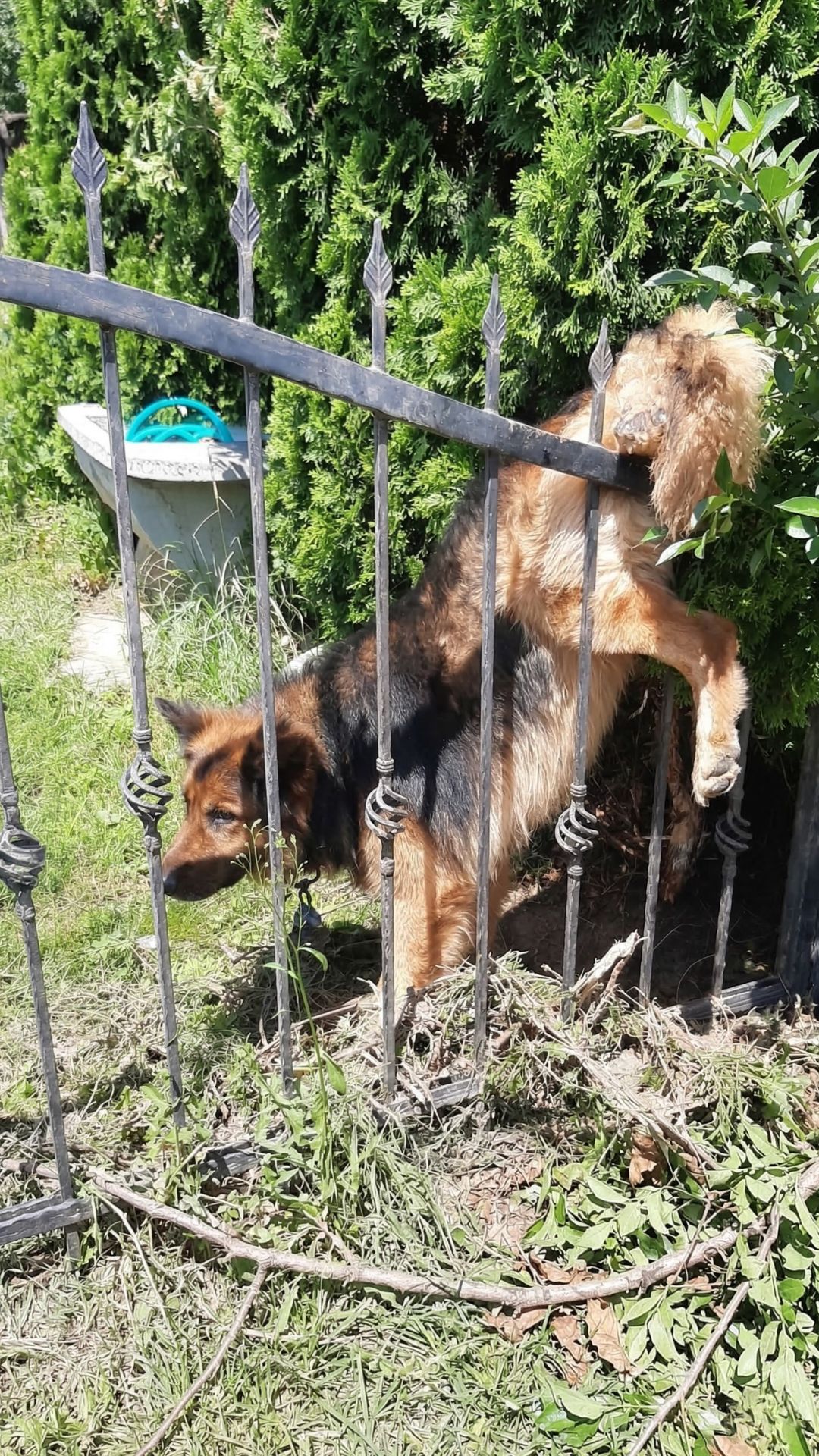
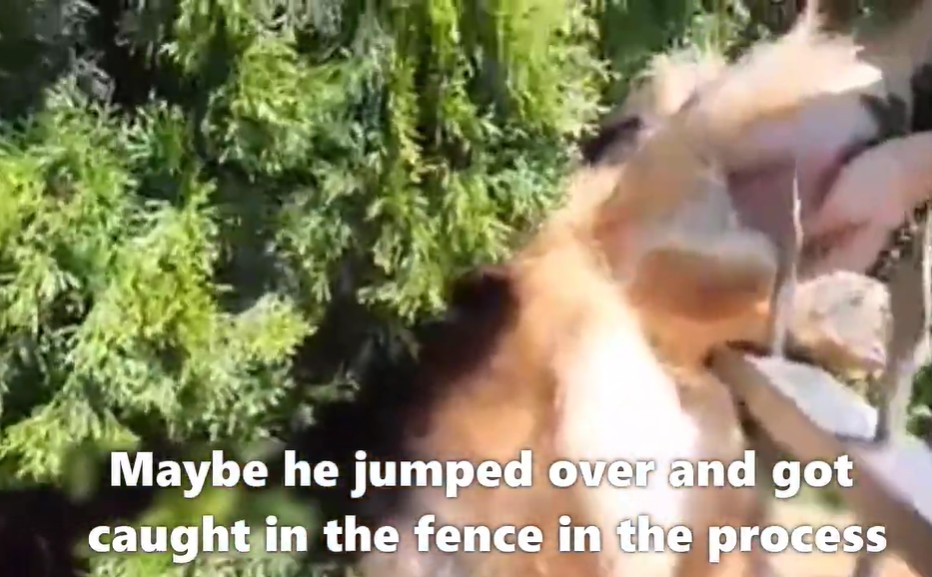
A dog had become trapped on a metal fence while apparently trying to cross toward a nearby lake.
He could not pull himself free.
He could not reach the ground.
And after spending hours suspended there, he had almost no strength left to struggle.
Then rescuers arrived.
By Morning, He Had Almost Stopped Fighting
The dog had likely been trapped for hours.
By the time rescuers reached him, the frantic struggling that might have happened earlier had stopped. His body hung nearly motionless against the fence, exhausted from the night.
The team approached carefully.
Any sudden movement could make the situation worse, so freeing him required patience and control.
Then they noticed a small reaction.
His tail moved.
Only slightly.
But for rescuers looking at an animal who appeared completely exhausted, that tiny movement showed that he was still responsive.
The surroundings offered another clue about how the accident may have happened.
Just beyond the fence was a lake.
The dog was severely dehydrated, making it possible that he had attempted to cross the barrier while trying to reach the water.
One decision driven by thirst had left him trapped there through the night.
Now getting him down safely became the only priority.
Video: He Tried to Reach the Water Beyond the Fence — Then Spent the Entire Night Trapped
The First Thing He Wanted Was Water
Rescuers carefully freed the dog from the metal barrier and lowered him to the ground.
He was weak and badly dehydrated.
Once he was stable enough, water was offered.
He drank eagerly.
It was a simple moment, but it made the circumstances of the rescue even harder to forget.
The lake had been just beyond the fence.
Now, after hours of being unable to reach it, the dog finally had the water his body desperately needed.
But dehydration was only one concern.
The fence had caused a significant abdominal injury, and he needed veterinary care immediately.
He was transported to a clinic, where the team began assessing the extent of the damage.
During the examination, rescuers noticed something else.
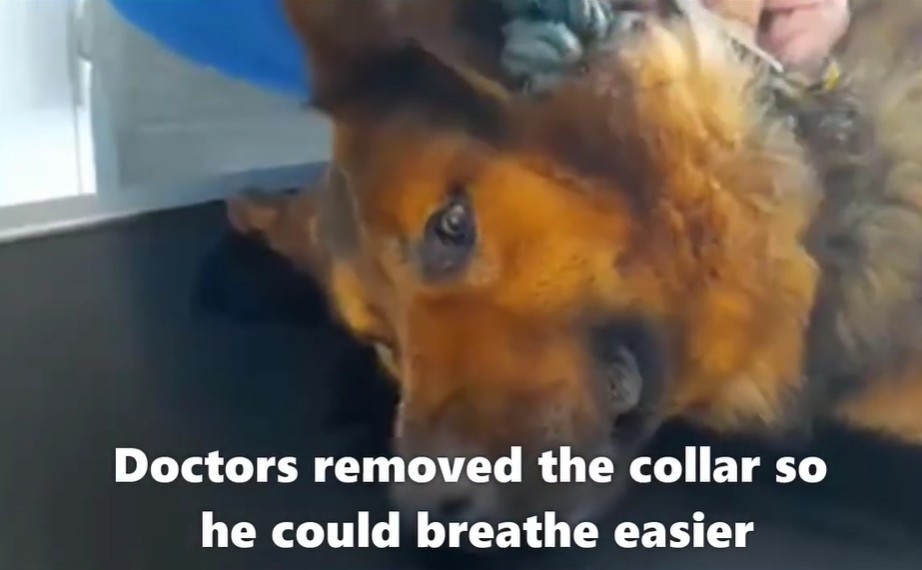
He was wearing a collar.
That raised an obvious question.
Did someone have a home waiting for him?
At that point, however, no owner had appeared.
The medical team could not wait for an answer.
The dog needed treatment now.
Surgery Was Only the Beginning of the Fight
At the clinic, veterinarians found that the injury extended through the abdominal area and required surgical treatment.
The dog was also suffering from severe dehydration after the long night outside.
Surgery was performed, but the hours afterward remained uncertain.
His body had endured prolonged stress before reaching the clinic.
Following the procedure, he became unresponsive and required intensive monitoring.
The team watched him closely.
Additional complications developed.
There was significant swelling, and he temporarily needed assistance with normal bodily functions.
He also showed little interest in food.
For the first few days, recovery was anything but guaranteed.
The rescuers who had brought him in could do little except continue treatment and watch for signs that his body was beginning to respond.
For a while, those signs were difficult to find.
Then small changes started appearing.
A Few Bites of Food Changed the Mood in the Room
Recovery did not arrive in one dramatic moment.
It began quietly.
The swelling gradually started to decrease.
His condition became more stable.
Then he showed interest in food.
At first, it was only a small amount.
But after days of refusing to eat, even a few bites mattered.
He began responding more clearly when familiar voices were nearby.
He lifted his head.
He became more aware of what was happening around him.
Each change suggested that the most dangerous phase might finally be passing.
The veterinary team continued monitoring his injuries while supporting his recovery.
Food returned little by little.
Strength followed.
And the dog who had spent an entire night unable to free himself was beginning to participate in life around him again.
Thirty Days Made Him Almost Unrecognizable
Over the following weeks, the changes became increasingly obvious.
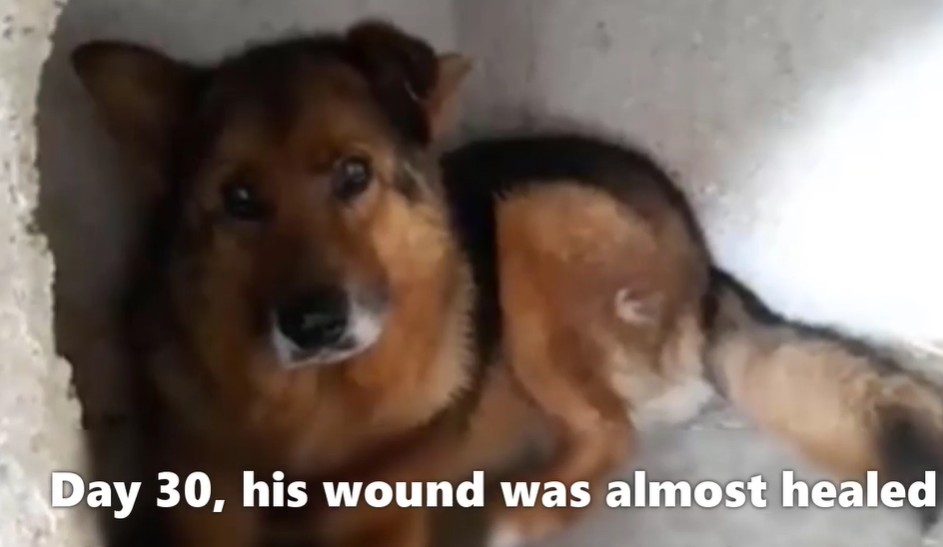
His surgical wound healed.
The swelling resolved.
He regained strength.
A visible scar remained across his abdomen, evidence of how serious the accident had been, but it no longer prevented him from moving forward.
His behavior changed too.
Instead of lying exhausted and withdrawn, he began greeting people.
His tail moved freely.
He accepted affection and appeared increasingly comfortable around the caregivers who had been with him through the most difficult part of his recovery.
Approximately 30 days after the rescue, the difference between the dog at the clinic and the dog found on the fence was remarkable.
He had arrived dehydrated, severely injured, and barely responsive.
Now he was standing, interacting, and looking toward people with interest.
The accident had left a mark on his body.
It had not taken away his ability to connect.
The Collar Raised a Question That Never Got Answered
From the beginning, one detail had remained difficult to overlook.
The dog had been wearing a collar when rescuers found him.
That suggested he may once have belonged to someone.
Yet during the period described by rescuers, no owner arrived to claim him.
No familiar person appeared at the clinic.
Whatever circumstances had led him to that fence remained unclear.
Rescuers could only work with what they knew.
There was a dog who needed care.
And once he recovered, there was a dog who needed somewhere safe to go next.
A collar by itself could not provide that.
What he needed was the consistency he had received during treatment—regular food, protection, medical attention, and people who noticed when something was wrong.
After everything his body had endured, returning to uncertainty was not the ending anyone wanted for him.
Now He Is Waiting for a Different Kind of Home
Today, the dog who once hung helplessly from a fence has recovered from his most serious injuries.
He can move comfortably again.
He greets people with a wagging tail.
He accepts gentle attention.
And the long night beside the lake has become part of his past rather than his everyday reality.
Now he is waiting for a permanent home.
One where water will always be within reach.
Where a collar truly means someone is watching over him.
Where an ordinary night does not become another fight for survival.
His story began with something every animal understands instinctively.
Thirst.
He saw water beyond a barrier and tried to reach it.
That attempt nearly cost him his life.
But what happened afterward came down to a different instinct entirely—the human decision to notice suffering and respond.
By morning, he had almost stopped struggling.
Someone reached him anyway.
And because they did, the dog who once spent an entire night trapped above the ground is now standing on his own again, waiting for the final part of his rescue story to begin.


