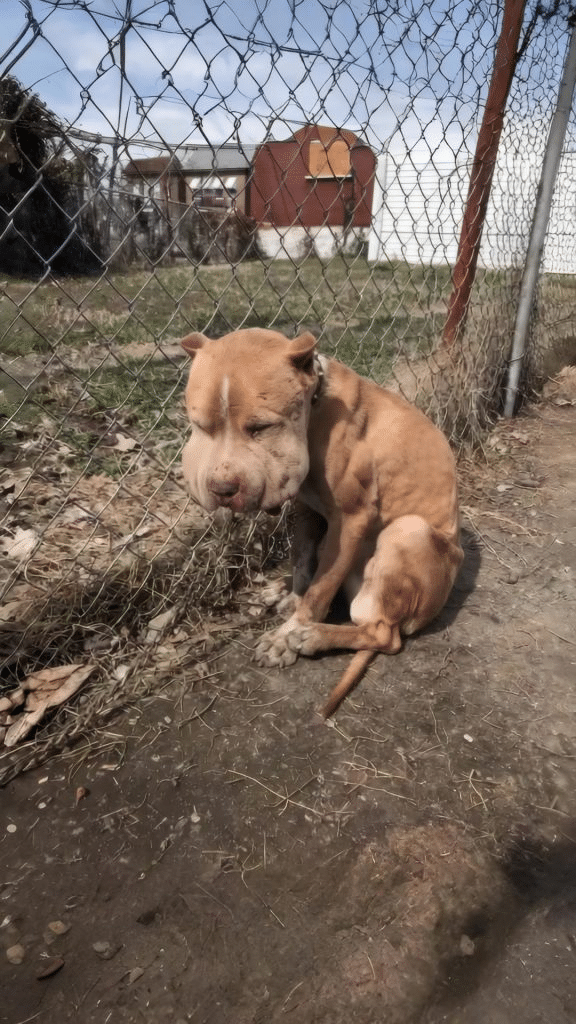
The dog did not bark when someone approached.
He did not pull against the restraint holding him to the fence.
He barely moved at all.
Along a quiet stretch of road, the frail dog simply remained where someone had left him—his body low, his energy gone, and no obvious way to leave on his own.
People may never know exactly how long he waited there.
What mattered was that eventually, someone stopped.
They walked toward him.
Knelt down.
And for the first time, the dog lifted his eyes toward the person beside him.
That quiet moment became the beginning of everything that followed.
He Had Stopped Fighting the Restraint
From a distance, the situation looked simple.
A dog tied to a fence.
Up close, his condition told a more troubling story.
He was thin.
Weak.
His posture remained low to the ground.
And unlike a frightened dog desperately pulling to get away, he appeared to have very little energy left for struggling.
The person who approached did not know how he would react to being touched.
So they moved carefully.
There was no reason to add more fear to an animal who was already exhausted.
The dog watched.
Then allowed the person to come closer.
When hands finally reached toward the restraint, he did not snap or retreat.
He simply stayed there.
Soon, the thing keeping him attached to the fence was removed.
For the first time since being left there, he was free to move.
But he did not run.
Video: Marco Was Found Tied to a Fence and Too Weak to Leave — Watch the Moment Someone Finally Freed Him
Freedom Did Not Immediately Bring His Strength Back
Once Marco was released, the effects of his condition became even clearer.
He remained weak.
His body did not suddenly fill with energy simply because the restraint was gone.
Even standing appeared difficult.
The safest next step was veterinary care.
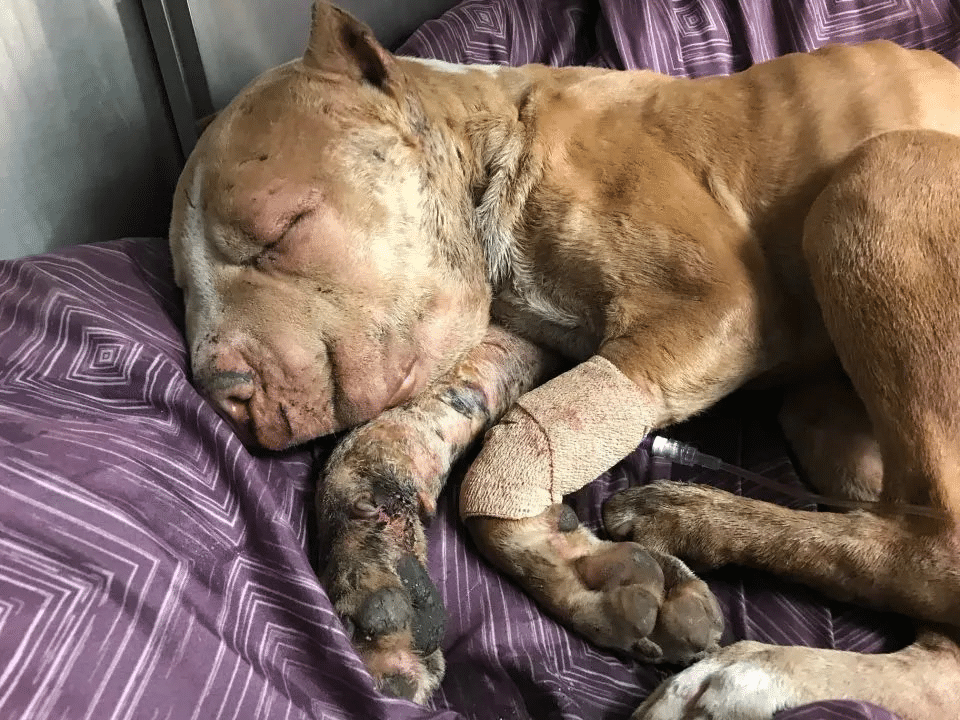
At the clinic, rescuers learned that Marco was dehydrated and physically depleted. He also had injuries that required attention.
Whatever had happened before he was discovered, his condition suggested that his difficulties had not begun that morning.
Recovery would take more than removing a chain.
His body needed food.
Fluids.
Rest.
Treatment.
Most of all, it needed time.
So the people caring for him stopped expecting a dramatic transformation.
Instead, they began watching for smaller signs.
The First Tail Movement Meant More Than It Looked Like
Marco remained gentle during treatment.
Despite everything changing around him—new rooms, unfamiliar people, examinations and care—he continued allowing people near him.
Then caregivers noticed something.
When someone entered, his tail moved.
Only slightly.
It was not the energetic wag of a healthy dog eager to play.
But it was a response.
Marco was paying attention.
He was beginning to recognize the people bringing food and comfort.
Over the following days, other changes appeared.
He started eating more consistently.
He held his head higher.
He remained standing for longer periods.
His strength was returning slowly enough that each improvement could easily have been missed if no one had been watching closely.
But the people around Marco were watching.
And eventually, they saw something they had been waiting for.
He walked.
His First Steps Were Small, but They Changed Everything
Marco did not suddenly race across the room.
His first movements were cautious.
His body was still recovering from weakness, and his legs needed time to carry him comfortably again.
A few steps were enough.
Then a little farther.
Each attempt allowed his body to rebuild strength and coordination.
The difference between the dog at the fence and the dog now moving through a safe space became more visible every day.
Before, there had been nowhere for him to go.
Now, movement had a purpose.
A bowl of food nearby.
A comfortable place to rest.
A familiar caregiver entering the room.
Marco was no longer using his energy merely to endure another day.
He was beginning to use it to participate in the world around him.
Then a Child Sat Beside Him
Physical healing was only one part of Marco’s transformation.
The more comfortable he became, the more his gentle personality appeared.
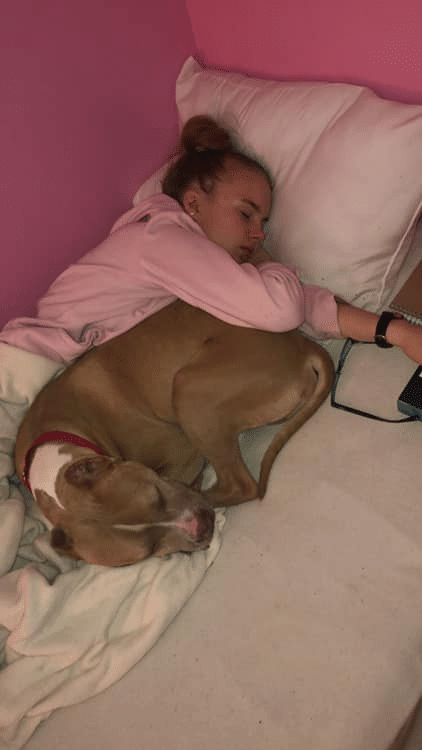
Then he met a child.
She did not rush toward him.
She did not surround him with attention or demand that he play.
She simply sat nearby.
She spoke softly.
And she gave Marco the choice to decide what happened next.
He stayed.
Then he began following her.
The connection developed without a dramatic introduction.
Marco simply seemed increasingly comfortable in her presence.
He rested nearby.
Stayed close.
And began fitting into the rhythm of the household around him.
For a dog who had once been found alone and restrained, the ordinary act of choosing to remain beside someone carried a very different meaning.
A Safe Place Slowly Began Feeling Like Home
At first, everything after Marco’s rescue was about recovery.
Meals.
Veterinary care.
Rest.
Helping him regain enough strength to move comfortably.
But as his health improved, another question emerged.
What would happen after he recovered?
Marco had already begun answering it in his own way.
He had formed connections.
He had routines.
He knew where to rest.
He recognized the people around him.
And the child he had grown close to had become part of his daily life.
What might initially have been considered temporary care gradually became something much more permanent.
There was no need for one dramatic moment when everyone suddenly decided he belonged.
It had happened gradually.
Marco was no longer simply staying there while he healed.
He was home.
The Fence Became Part of a Life He No Longer Had to Live
The image of Marco beside the fence remains difficult to forget.
A thin dog restrained in place.
Too weak to struggle much.
Waiting without knowing whether anyone would stop.
But that image captures only one moment in his life.
It does not show the meals that came afterward.
The medical care.
The first movement of his tail.
The first careful steps.
Or the child who sat beside him without asking for anything.
Today, Marco can move freely.
He has somewhere comfortable to sleep.
Familiar people surround him.
And instead of being attached to one place because he cannot leave, he now stays close because he chooses to.
That is perhaps the greatest difference between the beginning and the life that followed.
Sometimes Rescue Begins With Something Very Quiet
Marco did not attract help by making himself impossible to ignore.
He did not bark continuously.
He did not break free and chase someone down the road.
He simply remained beside the fence.
Someone noticed.
Then that person stopped long enough to understand that the dog needed more than a passing glance.
One restraint was removed.
One veterinary visit followed.
Then came food.
Treatment.
Rest.
Trust.
And eventually, a family.
None of those moments would have happened without the first one.
A person approaching a quiet dog and deciding not to keep walking.
Marco’s life did not change because of one enormous gesture.
It changed because one small act opened the door to another.
And then another.
Until the dog who once had no choice but to remain beside a fence finally had something completely different:
A place he could leave whenever he wanted—
and people he chose to stay beside.


