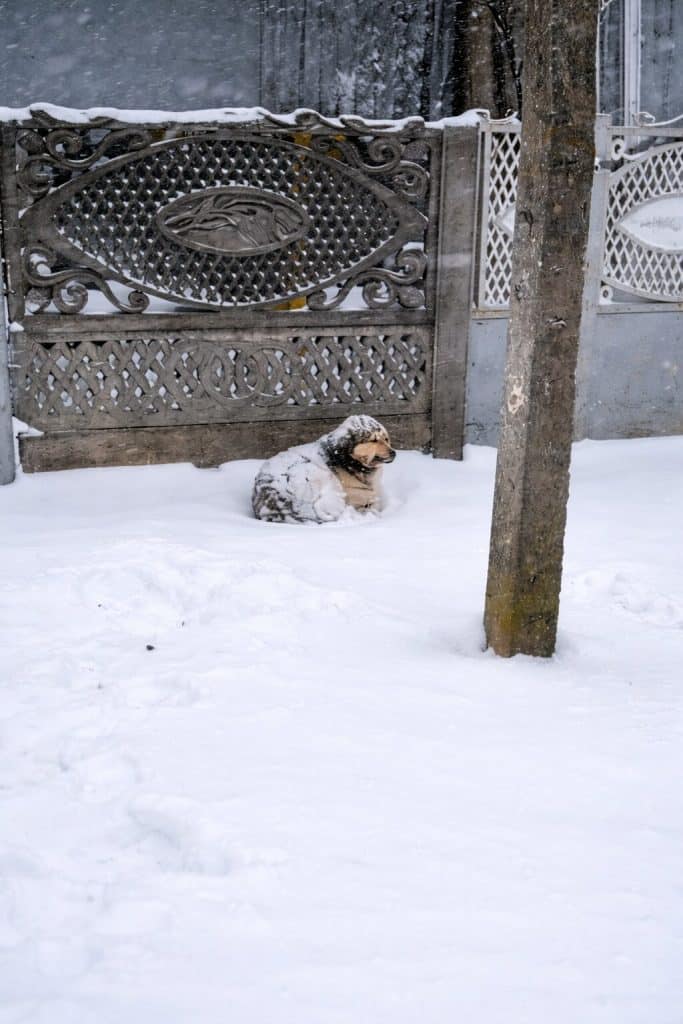
At first, the small shape on the frozen ground barely looked like an animal.
Snow had settled across his coat, blending his body into the white landscape surrounding him. He was curled tightly inward, trying to protect whatever warmth remained as the temperature dropped to approximately –15°C.
From a distance, there was almost no movement.
Then someone looked more closely.
The little dog was still breathing.
His eyes remained open, quietly following the person standing nearby. He was exhausted and dangerously cold, but some part of him was still holding on.
The dog, later named Buran, had reportedly lived outdoors since he was a puppy. He knew how to search for scraps, hide from danger, and find temporary places to rest.
But the winter had pushed him close to the limit.
This time, survival would depend on whether he could accept help from the very people he had learned to avoid.
The Small Shape Almost Hidden Beneath the Snow
The storm had covered nearly everything around the quiet property.
Snow rested across the ground, collected against fences, and continued falling over the curled animal lying near the edge of the area.
Buran had drawn his legs beneath his body and tucked himself inward. It was the only protection he could create against the freezing air.
He had no insulated shelter.
No dry bedding.
No warm room waiting nearby.
The ground beneath him was frozen, and the snow accumulating across his fur made it increasingly difficult for his body to preserve heat.
When the passerby first realized he was alive, the situation appeared urgent.
Remaining in that position for much longer could have placed Buran in even greater danger. Yet approaching him created a different problem.
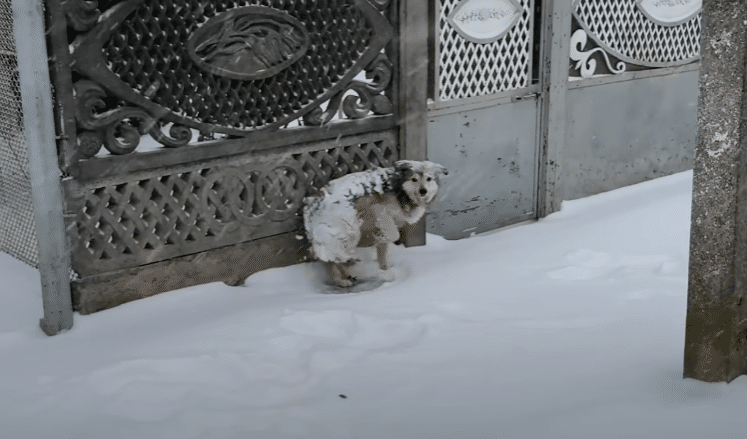
The moment people moved closer, he gathered what little strength he had and ran.
He crossed part of the snowy field, trying to increase the distance between himself and the unfamiliar humans behind him.
He did not move like a healthy dog.
His body was tired, and the cold had already drained much of his energy. He could not travel far, but fear kept telling him to try.
For a stray who had survived outside from a young age, avoiding people may have been one of the habits that kept him safe.
He could not understand that these strangers were worried about him.
He only knew that they were coming closer.
The rescuers resisted the urge to chase.
Running after Buran could have caused him to panic, waste his remaining strength, or disappear into an area where reaching him would become more difficult.
Instead, they stopped.
They remained nearby, spoke in gentle voices, and offered food.
Buran watched from a distance.
Hunger and exhaustion pulled him toward the rescuers.
Instinct told him to stay away.
For a while, he stood between those two choices.
Video: Rescuers Find Buran Nearly Buried Beneath Snow as Temperatures Fall to –15°C
Fear Made Him Run, but Patience Brought Him Back
The rescuers understood that getting Buran to safety would require cooperation rather than force.
They lowered their bodies so they appeared less threatening.
Food was placed where he could see and smell it.
No one rushed directly toward him.
Every time Buran considered moving closer, the people remained calm. They allowed him to control the distance and discover that approaching did not immediately lead to danger.
Little by little, he returned.
His movements were cautious.
He stretched his neck toward the food while keeping his body prepared to retreat. His eyes followed every shift of a hand or foot.
But the cold continued working against him.
Buran no longer had enough energy to run repeatedly across the snow. His body needed food, shelter, and warmth more urgently than his fear could allow him to understand.
Eventually, the rescuers were able to secure him safely.
Once he was no longer trying to escape, his exhaustion became even more apparent.
Buran stopped resisting.
The small dog who had found enough strength to flee moments earlier now allowed himself to be carried away from the frozen field.
The rescuers named him Buran, a name connected with winter storms.
But the name did not have to determine his future.
As they brought him indoors, they made sure the night in the snow would be his last.
For Buran, the transition was immediate.
One moment, frozen ground pressed beneath his body.
The next, he was surrounded by blankets, sheltered from the wind, and watched over by people determined to help him recover.
His body had escaped the cold.
His mind would need more time to understand that he no longer had to run.
Warmth Was Something His Body Had Nearly Forgotten
Inside the rescue shelter, Buran entered a world unlike the one in which he had grown up.
Warm blankets replaced snow.
Fresh water stood within reach.
Food arrived without requiring him to search through rubbish or wander long distances.
Gentle hands examined his trembling body while the room remained calm and protected.
For most family dogs, these things are ordinary.
For Buran, they were unfamiliar.
The rescue team learned that he had reportedly been living outdoors since he was a puppy. Although he was believed to be only around two years old, much of his young life had already been shaped by homelessness.
He had grown without dependable routines.
Food appeared only when he found it.
Shelter lasted only until weather, people, or other animals forced him to move again.
Rest could never be complete because danger might approach at any moment.
That way of living teaches a dog to remain alert.
It teaches him to guard distance.
It teaches him that safety is temporary and that trusting the wrong person can carry consequences.
At first, Buran watched everything around him carefully.
When someone entered, his eyes followed.
When a hand approached, his body remained prepared to move.
Even lying on soft bedding may have felt strange after so much time resting outdoors.
The caregivers did not expect immediate affection.
They understood that rescue was not complete simply because Buran was no longer in the snow.
He needed to experience warmth repeatedly before he could rely on it.
One quiet night indoors.
Then another.
A meal arriving at a predictable time.
A blanket remaining beneath him when he woke.
A person approaching gently and leaving without causing pain.
These simple experiences slowly began answering the uncertainty that had shaped his life.
Buran’s body stopped trembling.
His breathing became calmer.
He began sleeping for longer periods instead of lifting his head at every sound.
The frozen field had disappeared from view.
Day by day, he started believing it might remain in the past.
His Care Began With a Bath and a Complete Examination
Once Buran was stable enough, the rescue team began addressing the effects of living outdoors without regular care.
His coat was dirty and tangled from exposure to weather, damp ground, and whatever temporary shelter he had been able to find.
The caregivers bathed him gently.
Warm water moved through the fur that had protected him as well as it could during the winter. Dirt loosened, and the physical traces of his old life gradually washed away.
Areas of tangled coat were carefully trimmed.
Beneath the neglected fur, rescuers began seeing the young dog more clearly.
The visible transformation was immediate, but grooming was only part of the process.
Buran also needed veterinary attention.
At the clinic, his eyes and ears were examined.
His teeth were checked.
Veterinarians evaluated his general condition after prolonged exposure to outdoor life and the severe cold in which he had been found.
Preventive care began, including the vaccinations needed to protect him from illnesses that can spread among unvaccinated dogs.
Every part of the examination was unfamiliar.
There were new smells, equipment, hands, and people standing close to him.
Yet Buran remained relatively calm.
The caregivers continued moving carefully and allowed him time to understand what was happening.
He could not know why someone was looking inside his ears or examining his teeth.
But he could observe that no harm followed.
The same gentle hands that held him during treatment later returned with food or affection.
That consistency mattered.
For Buran, veterinary care was not only about protecting his physical health.
It became another lesson in trust.
A person could hold him without hurting him.
A hand could touch a vulnerable place and then withdraw.
Human attention could bring relief rather than danger.
As treatment continued, Buran’s posture softened.
He accepted help more easily.
He allowed people to remain close.
The dog who had run through the snow to escape rescuers was slowly learning that being approached did not always mean he needed to flee.
Other Rescued Dogs Helped Teach Him a New Routine
Buran eventually began spending time around other rescued dogs at the shelter.
Each had arrived with a different history.
Some had been abandoned.
Others had survived hunger, injury, or prolonged neglect.
They could not explain safety to Buran in words, but their behavior offered examples he could observe.
The other dogs approached caregivers when meals arrived.
They rested on beds without constantly watching the door.
They played, explored, and returned to familiar sleeping places.
They behaved as though food and safety would still exist the following day.
For a young dog raised without stability, those routines could be meaningful.
Buran began moving more freely through the shelter.
Instead of remaining hidden in one protected corner, he explored.
He watched the other dogs.
He became interested in their play and gradually joined them.
Companionship gave him something outdoor survival had rarely allowed.
He no longer had to face every unfamiliar sound alone.
He could follow the calmer reactions of dogs who already understood the environment.
When they remained relaxed around a caregiver, Buran could see that there was no immediate danger.
When they gathered for meals, he learned that food appeared regularly.
When they settled at night, he began understanding that the shelter would still be there when morning came.
His life developed a predictable rhythm.
Eating.
Resting.
Walking.
Playing.
Receiving care.
Then repeating those same safe experiences the next day.
The change did not mean every fearful habit disappeared.
Buran could still be cautious around new situations or unfamiliar people. A dog who has relied on distance for much of his life may need time before confidently approaching everyone.
But fear no longer seemed to control every movement.
Curiosity began taking its place.
The small dog once curled beneath snow now walked around the shelter with other animals beside him.
He no longer searched constantly for scraps.
He did not have to locate a new sleeping place before darkness arrived.
And when cold weather returned outside, he could rest in warmth.
The life he had known was being replaced by one built around routine rather than uncertainty.
At Only Two Years Old, Most of His Life Is Still Ahead
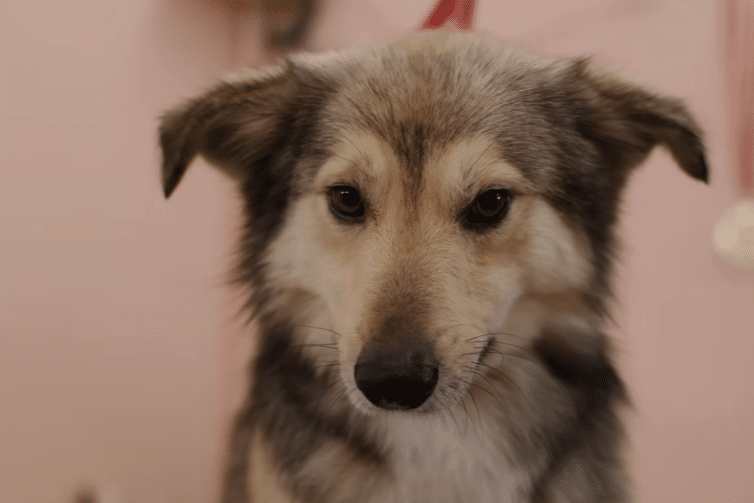
Buran is believed to be approximately two years old.
That estimate places his story in a different perspective.
He had not spent a long lifetime on the streets.
He had simply never known much else.
From puppyhood into early adulthood, outdoor survival had been his normal life. The habits that seemed deeply established had formed during nearly every stage of his development.
But Buran was still young.
He had time to create new associations.
Time to discover new routines.
Time to learn what it meant to belong to a household rather than move between temporary hiding places.
His transformation was visible in ordinary moments.
He allowed familiar people to approach.
He rested peacefully indoors.
He interacted with the other dogs.
His eyes showed more curiosity and less constant vigilance.
The dog rescued from –15°C conditions no longer spent every day preparing for the next threat.
He could play.
He could sleep.
He could accept affection without immediately retreating.
Still, one important part of his journey remained incomplete.
Buran had not yet found a permanent family.
The shelter had given him safety and allowed his recovery to begin, but a forever home could offer something even more personal.
A familiar person greeting him every morning.
A bed used only by him.
A predictable household where the same voices, rooms, and routines became part of his daily life.
Because Buran had spent so much of his young life outdoors, his ideal family would need patience.
They could not expect him to understand every household rule immediately.
New sounds might make him hesitate.
Unfamiliar visitors might require careful introductions.
Affection would need to develop at the pace that made him comfortable.
But Buran had already demonstrated that he could learn to trust.
When rescuers first approached in the snow, he ran.
Later, he accepted food.
Then he allowed himself to be carried.
He tolerated grooming and veterinary care.
Finally, he began living comfortably around people and other dogs.
Each step showed his ability to adapt when kindness remained consistent.
A patient family would not be starting with a dog incapable of connection.
They would be continuing the progress Buran had already made.
He No Longer Has to Disappear to Survive
Buran’s rescue began because someone noticed what could easily have been overlooked.
Against the snow, his small body almost disappeared.
He was not barking loudly or running toward people.
He was curled inward, conserving the last warmth he had while the temperature remained dangerously low.
The person who found him could have mistaken the motionless shape for debris or assumed someone else would help.
Instead, they stepped closer.
They noticed his breathing.
They saw his eyes watching.
And they chose not to leave him there.
That decision brought Buran indoors before the winter conditions could take anything more from him.
But the deeper rescue unfolded afterward.
It happened through warm nights that taught him he could sleep.
Meals that appeared without searching.
A bath offered gently.
Veterinary care delivered with patience.
Other rescued dogs showing him how life inside the shelter worked.
And caregivers who continued returning even when he remained cautious.
The warmth Buran discovered was not only physical.
Blankets protected his body from the cold.
Consistency protected him from the uncertainty he had always known.
He learned that a safe place did not have to disappear overnight.
He learned that people could come closer without causing pain.
He learned that allowing someone to care for him did not mean surrendering to danger.
Today, Buran’s story is still moving toward its final chapter.
He is warm.
He is protected.
He has companionship.
But somewhere beyond the shelter, there may be a family capable of giving him the permanence he has never experienced.
A family willing to move slowly.
To celebrate small steps.
To understand that trust earned carefully can become especially meaningful.
Buran once hid beneath snow because making himself invisible was one of the few ways he knew to survive.
Now, people know his name.
They see the gentle young dog behind the fear.
And when the right family finally finds him, he may discover that the safest place is no longer somewhere he must search for.
It will be home.


