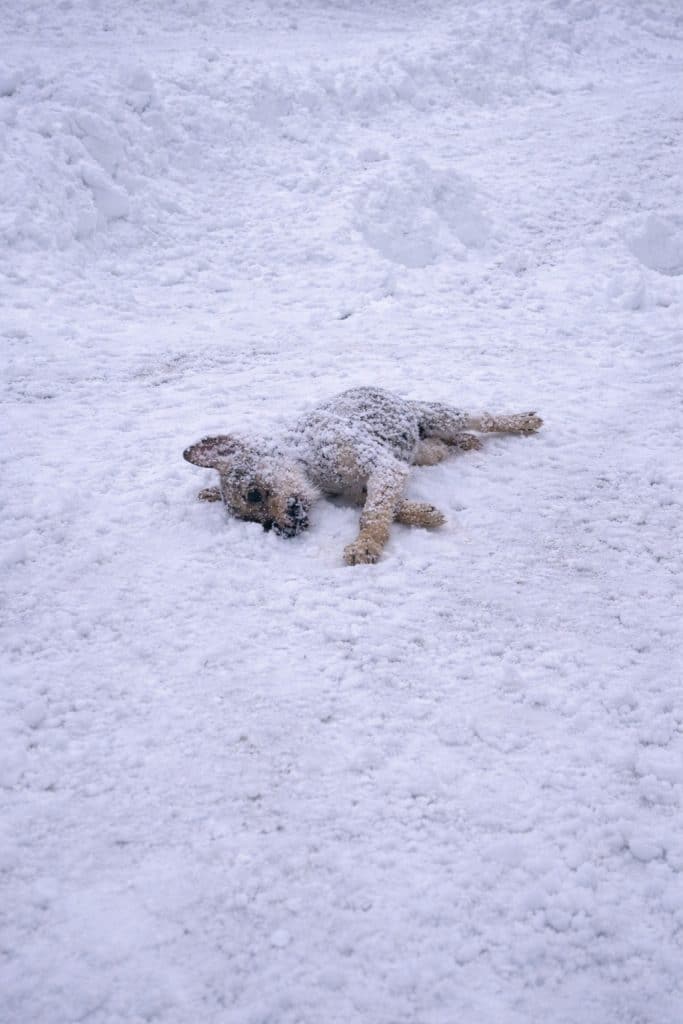
The cry was so faint that it could easily have disappeared into the cold night.
Somewhere in the darkness, a tiny puppy was injured, frightened, and completely alone. No one knew how long he had been lying there or whether his weakening body could survive until morning.
Rescuers had only an incomplete message and a vague location to guide them.
Still, they began searching.
When they finally found the puppy curled beside scattered trash, he was trembling from the cold and barely able to respond. Every weak sound showed that he was still alive, but the rescuers immediately understood that finding him was only the beginning.
The puppy, later named Hana, would need emergency surgery, a blood transfusion, and weeks of patient care.
Even then, no one knew whether he would ever stand again.
A Weak Cry Led Rescuers Into the Darkness
Late that evening, an urgent message appeared in a local animal rescue group.
A concerned resident reported that a small stray puppy had apparently been attacked by a neighbor’s dog. According to the message, the injured puppy was then taken away and abandoned somewhere nearby.
The details were limited.
There was no exact location.
No clear description of where the puppy had been left.
And no way to know how much time had already passed.
The rescuers could not confirm everything that had happened before they arrived. What mattered was that a vulnerable animal might still be outside, injured and exposed to the cold.
They began checking the surrounding area.
Under the night sky, they searched narrow paths, dark corners, and places where a frightened puppy might crawl to hide. They called softly and stopped often to listen.
For long stretches, there was nothing.
No movement.
No barking.
No response to their voices.
The silence made the search increasingly frightening. With every passing minute, the rescuers worried that the puppy’s condition could be worsening somewhere beyond their sight.
Then they heard it.
A tiny cry.
The sound was weak and brief, but it gave them a direction.
Following it carefully, the rescuers eventually noticed a small shape curled near a pile of discarded rubbish.
At first, the puppy was difficult to distinguish from the objects around him.
He was extraordinarily small.
His body trembled.
Every few moments, another quiet sound escaped him, as though crying required nearly all the strength he had left.
The rescuers approached without wasting time.
The puppy did not try to flee.
He appeared too exhausted and injured to move away from them.
They wrapped him gently in a blanket, protecting his body from the cold as they lifted him from the ground.
There would be time later to ask how he had ended up there.
At that moment, only one thing mattered.
He needed a veterinary clinic immediately.
Video: Rescuers Follow a Faint Cry and Find Hana Shivering Alone Beside a Pile of Trash
His Head Injury Required Immediate Surgery
At the clinic, the veterinary team began examining the puppy as soon as he arrived.
His condition was critical.
He had suffered serious trauma to the head, and the injury was affecting the way his small body responded. He was weak from shock, exposure, and everything he had endured before being found.
X-rays and urgent examinations helped the doctors assess the damage.
The results left little room for delay.
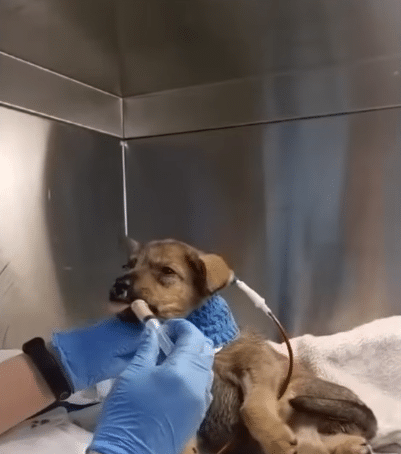
Hana needed emergency surgery.
Waiting could allow his condition to deteriorate further, but operating on such a tiny and unstable patient carried its own risks.
His small size made every part of the procedure more delicate.
His body had very little strength in reserve.
And no one could guarantee how he would respond to anesthesia or treatment.
Still, without intervention, his chances appeared even smaller.
The veterinary team prepared for surgery.
Hana also received a blood transfusion to support his weakened condition. His body needed every possible advantage as the doctors began working to stabilize the injury.
Outside the treatment area, the rescuers could do nothing except wait.
They had reached Hana before the freezing night could take him.
Now his survival depended on the medical team and on whether his fragile body could endure the procedure.
Nearly two hours passed.
The waiting felt much longer.
No one spoke about a full recovery yet.
The only hope was that Hana would make it through the operation and show some sign that his body was still responding.
Eventually, the doctors completed the procedure.
Hana remained extremely vulnerable.
Then someone noticed a small movement.
It was not a dramatic awakening.
Only a slight reaction to the people and voices around him.
But that tiny response carried enormous meaning.
He was still there.
He was still fighting.
The rescuers gave him a name.
Hana.
Until that night, he had been an unidentified puppy hidden in the darkness.
Now he was a patient with people waiting for him to recover.
Three Days Later, He Managed His First Sips of Milk
Surgery had addressed the immediate emergency, but Hana’s condition remained serious.
For the next several days, he stayed under constant observation.
His body struggled to regulate its temperature, so the caregivers kept him warm and monitored him carefully. Medication was administered according to the veterinary plan, and every change in his condition was noted.
At first, progress was difficult to see.
Hana spent long periods resting.
He had little energy to move, and his responses remained limited.
The people caring for him learned to recognize improvement in the smallest details.
His breathing became steadier.
His eyes appeared slightly more aware.
He reacted a little more strongly when someone spoke or adjusted his bedding.
For a healthy puppy, those actions might have seemed ordinary.
For Hana, each one suggested that his body was continuing to respond after the surgery.
On the third day, caregivers offered him milk.
At first, he seemed too weak to take it.
They remained patient, supporting him carefully and allowing him time.
Then Hana began to drink.
Only a small amount.
Only a few cautious sips.
But nourishment was essential if his body was going to repair itself. Every drop gave him energy he had not possessed while lying alone in the cold.
The caregivers did not expect him to finish a full meal immediately.
They worked slowly.
Hana drank a little, rested, and tried again later.
Over time, feeding became more consistent.
That first milk did not mean the danger had completely passed, but it marked an important change.
Hana was no longer simply being kept alive through emergency intervention.
He was beginning to participate in his own recovery.
His progress continued moment by moment.
A little more milk.
A longer period of alertness.
A calmer breath while resting.
There was no sudden transformation.
Hana’s healing came through tiny improvements that accumulated across each day.
The same puppy who had barely managed a weak cry in the darkness was now receiving warmth, medicine, nourishment, and uninterrupted care.
For the first time, his body had everything it needed to begin fighting in a safer place.
Leaving the Clinic Did Not Mean His Recovery Was Finished
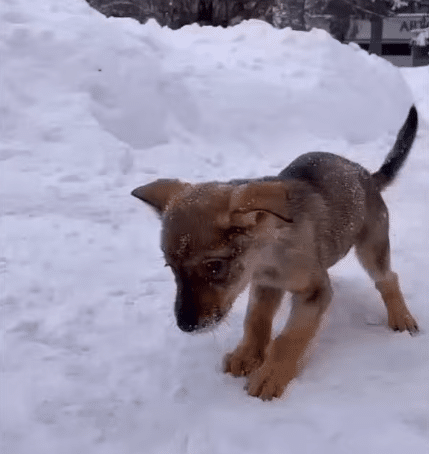
Ten days after the operation, Hana became stable enough to leave the veterinary clinic.
Reaching that point was a major achievement.
Only a short time earlier, no one knew whether he would survive the night, the surgery, or the critical days that followed.
Now he could continue recovering outside the hospital.
But going home from the clinic did not mean he was completely healed.
Hana still required medication.
He needed regular monitoring and follow-up examinations.
His movements remained limited, and his body had not yet regained the strength or coordination expected in a healthy puppy.
He was placed in a warm, protected environment where caregivers could continue watching him closely.
Soft bedding supported his body.
Meals arrived regularly.
He no longer had to cry in the darkness before someone noticed that he was hungry, cold, or uncomfortable.
During those early days outside the clinic, Hana also began forming new associations with people.
Before his rescue, human contact may have been connected with frightening experiences. The information reported to rescuers suggested that he had been injured and then left alone, although the full circumstances could not be confirmed.
Now hands brought something different.
They carried him carefully when he needed support.
They offered food and medicine.
They adjusted his blankets.
They touched him gently during treatment and stopped when he needed rest.
Hana began recognizing familiar voices.
He learned that being lifted no longer meant he would be taken somewhere and abandoned.
The same people returned each day.
That consistency mattered.
Trust in an injured animal rarely appears after one kind interaction. It grows through repeated experiences in which nothing frightening follows.
A meal.
A quiet voice.
A gentle examination.
A safe night.
Then the same care again the following morning.
Hana was still physically fragile, but the environment around him had become dependable.
He could use his energy for healing instead of trying to survive alone.
Standing Required Him to Learn How to Use His Body Again
As Hana’s awareness and general health improved, another challenge became clear.
He could not stand or walk normally.
The severe trauma had affected his strength, coordination, and balance. His tiny muscles had weakened during the critical period when he could barely move.
Veterinarians monitored him during follow-up visits.
There were encouraging signs.
His eyes looked brighter.
He reacted more clearly to the people around him.
His legs began showing stronger responses.
Still, pushing himself upright remained difficult.
Hana would place his paws against the surface beneath him and attempt to lift his body.
Sometimes he managed to rise slightly.
Then his balance failed, and he lowered himself again.
On other attempts, his legs trembled beneath him before he could support his full weight.
The caregivers never treated those moments as failure.
Every attempt required Hana to use muscles and coordination that his body was only beginning to recover.
They supported him when necessary but avoided forcing him to continue after he became tired.
Rest was part of the rehabilitation too.
The goal was not to make Hana walk as quickly as possible.
It was to give him safe opportunities to rebuild strength without placing unnecessary pressure on his healing body.
Progress appeared slowly.
He held himself up for slightly longer.
His paws became better positioned beneath him.
He began correcting his balance instead of immediately falling to one side.
Each improvement prepared him for the moment everyone hoped would eventually arrive.
But no one could promise exactly when that would happen.
Recovery after serious trauma does not always follow a predictable schedule.
Some days brought noticeable progress.
Other days appeared almost unchanged.
The caregivers continued anyway.
They supported Hana through short exercises.
They celebrated small improvements.
And when he became exhausted, they returned him to his soft bedding and allowed him to sleep.
Hana had survived because people acted quickly on the night he was found.
Now he was improving because those same people understood how to wait.
One Month After His Rescue, Hana Took a Step
Approximately one month after Hana was rescued, he tried to stand again.
By then, he had made many attempts.
The movement began in the same careful way.
He positioned his front paws.
Gathered his hind legs beneath him.
Then slowly pushed his body upward.
This time, he remained standing.
His legs trembled slightly.
His balance was not perfect.
But he did not immediately fall.
The people nearby stayed quiet, afraid that sudden excitement might distract or frighten him.
Hana steadied himself.
Then he moved one paw forward.
It was a tiny step.
His body wobbled as his weight shifted, but he managed to remain upright.
Then came another step.
The puppy who had once been found motionless beside a pile of trash was walking.
He was not yet moving with the balance or confidence of a completely healthy puppy. His gait still reflected the injury and the long recovery behind him.
But Hana was moving under his own power.
The moment represented far more than physical progress.
That step was connected to every decision that had carried him forward.
The resident who sent the urgent message.
The rescuers who searched despite having only vague information.
The faint cry that guided them through the darkness.
The blanket wrapped around his freezing body.
The emergency operation.
The blood transfusion.
The first few sips of milk.
Ten days of intensive clinical care.
And weeks of patient rehabilitation after he left the hospital.
Hana’s first step did not erase any of those difficult moments.
It showed that they had led somewhere.
The people around him had never been able to promise that he would walk again.
They had simply continued giving him the opportunity to try.
Now hope was no longer represented only by steadier breathing or brighter eyes.
Hope was moving across the floor on four small, uncertain paws.
The Cry That Almost Went Unheard Changed His Entire Future
Hana’s recovery was still continuing after he began walking.
His body needed more time to become stronger.
His coordination could continue improving through careful activity, follow-up care, and rest.
There would likely be more difficult days alongside the encouraging ones.
But his life was no longer defined by the place where he had been abandoned.
He was no longer the unidentified puppy hidden beside rubbish in the freezing night.
He had a name.
A safe place.
Medical care.
Regular food.
And people who noticed when he needed help.
Hana’s story also showed that rescue rarely ends at the moment an animal is picked up from the street.
Finding him was essential.
But so was the surgery.
So was the blood transfusion.
So were the days spent monitoring his temperature and waiting for a reaction.
So were the slow feedings when he could manage only a little milk.
And so were the weeks in which caregivers supported his body as he tried repeatedly to stand.
Rescue continued every time someone returned.
Every time a follow-up examination was completed.
Every time Hana fell and was allowed to rest before trying again.
His progress came from urgent medical treatment combined with patient daily care.
Neither could have replaced the other.
Without the surgery, his injuries may have remained life-threatening.
Without the weeks of support afterward, his weakened body may never have had the chance to rebuild.
Hana’s first steps became the most visible part of his transformation.
But the quieter moments mattered just as much.
The first time his body became warm.
The first time he reacted to a familiar voice.
The first time he drank.
The first time he pushed against the floor instead of lying completely still.
Those milestones formed the path toward walking.
The weak cry that started his rescue could easily have gone unnoticed.
It was small enough to disappear beneath the sounds of the night.
But someone heard about the puppy.
Rescuers searched.
And when they finally found him, they refused to assume that his fragile condition meant it was too late.
One month later, Hana answered their efforts with a step.
Then another.
The road ahead still required care, but it was now a road he could begin walking himself.
Once, Hana could do nothing except cry softly and wait in the darkness.
Today, he is warm, protected, and moving toward a future that almost disappeared before it had the chance to begin.


