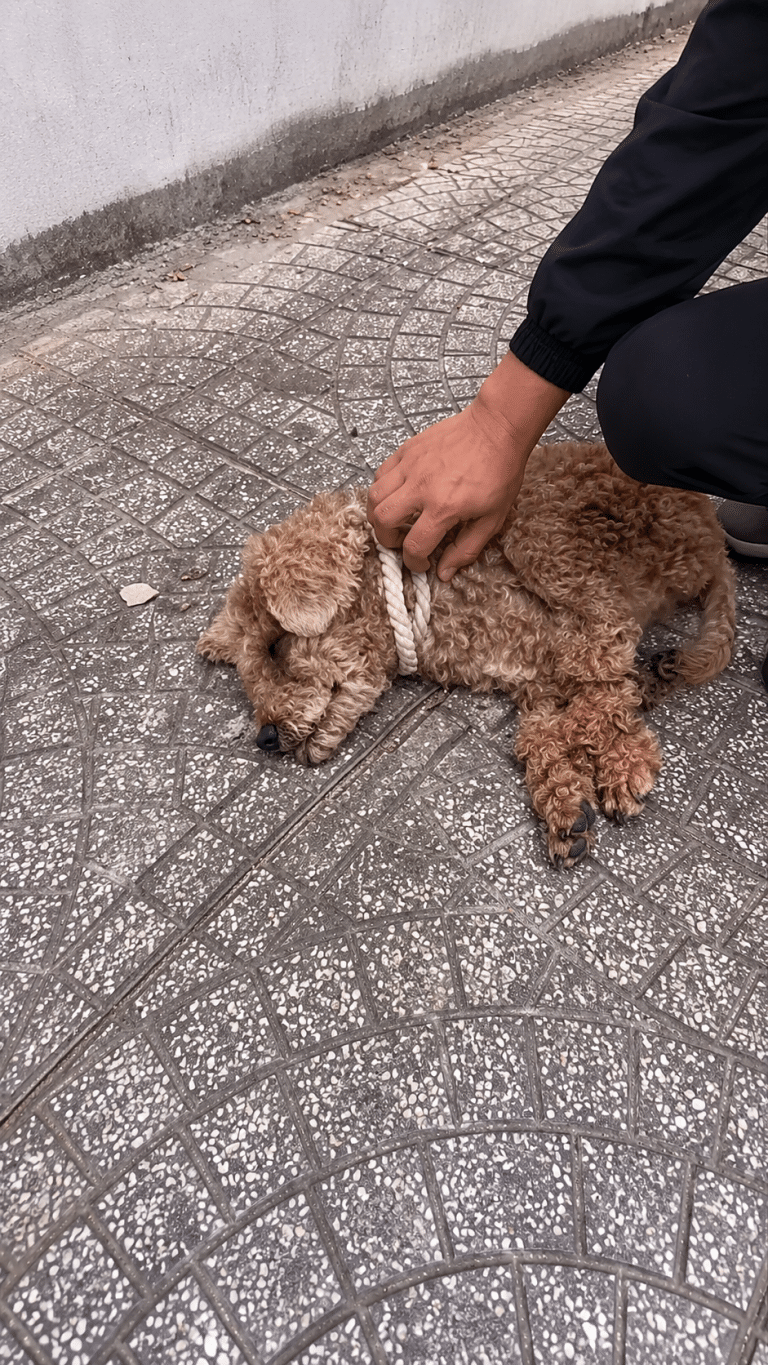
The tiny dog lay motionless on a bed of dry leaves beside the road.
Rope and metal wire were still wrapped tightly around his small body.
His eyes were closed.
His breathing was so weak that, from a distance, he barely appeared alive.
According to the account accompanying the rescue footage, the puppy had been punished after eating leftover rice. He was allegedly poisoned, restrained, and abandoned where no one was expected to find him in time.
By the time help arrived, he was no longer responding.
A local veterinarian hurried to the scene, lifted the limp puppy into his arms, and searched for any sign that there was still time to save him.
For several terrifying moments, there was almost nothing.
Then the veterinarian detected a faint pulse.
The puppy was still alive.
But only barely.
A Small Body Was Hidden Beneath Rope and Wire
The roadside scene offered little indication of how long the puppy had been lying there.
Dry leaves surrounded his body.
There was no shelter.
No water.
No one nearby caring for him.
The restraints remained wrapped around him even though he was too weak to move.
According to the rescue account, the dog’s condition followed an act of deliberate cruelty. The report claims he had eaten leftover food and was then poisoned and abandoned by the person responsible for him.
The footage alone cannot independently establish every event that occurred before the rescue.
But it clearly shows the condition in which the veterinarian found him.
The puppy was unconscious.
His body was restrained.
His breathing appeared weak and irregular.
And he required immediate medical intervention.
The veterinarian began cutting through the materials around him.
Each piece had to be removed carefully so the dog could be examined without causing additional injury.
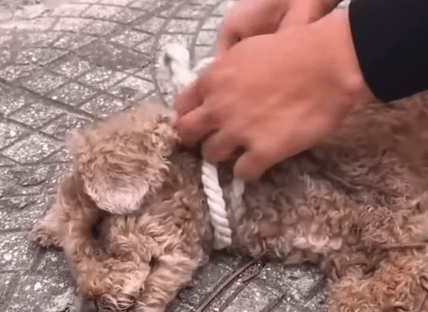
Rope came away first.
Then the metal wire.
Only after the restraints were removed could the veterinarian properly position the puppy and assess how little his body was responding.
He called to him.
He touched his chest.
He checked for breathing and circulation.
The dog did not open his eyes.
Video: Unconscious Puppy Is Found Bound Beside the Road as a Veterinarian Fights to Save Him
The Veterinarian Began Treatment on the Roadside
There was no time to wait for the puppy to regain consciousness on his own.
His breathing was too weak.
His pulse appeared unstable.
His body felt cold and unresponsive in the veterinarian’s arms.
Emergency support began immediately.
The puppy received oxygen to assist his breathing.
Fluids were administered to support his severely weakened condition.
His heartbeat was monitored closely while the veterinarian watched for any change.
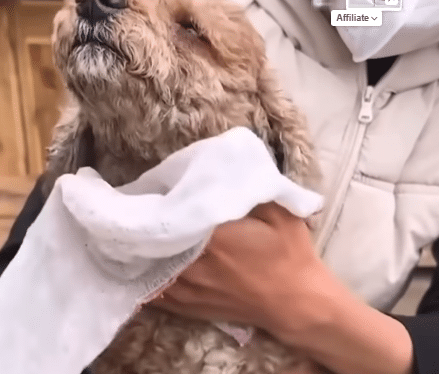
Towels were wrapped around the small body to help preserve warmth.
Everything happening around him was urgent, but the veterinarian’s movements remained controlled.
A fragile animal in critical condition cannot be handled roughly simply because time is limited.
The puppy needed speed without panic.
Care without unnecessary movement.
And someone willing to continue even when there was almost no visible response.
Minutes passed.
The puppy remained still.
The rise and fall of his chest was difficult to see.
The veterinarian continued checking his heart and adjusting the support being provided.
There was no guarantee the dog would survive.
The source does not provide laboratory results identifying the substance allegedly used to poison him, nor does it describe a formal toxicology examination.
What it does show is a puppy in profound distress receiving emergency care while unconscious.
At that point, the cause mattered less than the immediate danger.
His body needed help to continue functioning.
One Tiny Movement Changed the Entire Rescue
For what felt like an unbearably long time, the puppy showed almost no reaction.
His paws remained still.
His eyes stayed closed.
His head rested heavily against the towels supporting him.
The veterinarian did not stop.
Oxygen continued.
Fluids continued.
His pulse was checked again and again.
Then something moved.
It was not a dramatic recovery.
The puppy did not suddenly sit up or begin walking.
One paw shifted slightly.
A small twitch passed through his body.
Then came a deeper breath.
The veterinarian leaned closer, watching carefully to make sure the movement was not imagined.
Another response followed.
The puppy’s body began showing signs that it was reacting to the treatment.
His breathing grew a little more noticeable.
His muscles no longer appeared completely motionless.
And eventually, his eyelids began to open.
The change was small, but it marked an enormous turning point.
Only minutes earlier, the veterinarian had been holding an unresponsive dog whose pulse seemed to be disappearing.
Now the puppy was beginning to return to awareness.
He was still critically weak.
He still required monitoring and continued medical support.
But his body had responded.
The fight was no longer happening only through the veterinarian’s hands.
The puppy was participating too.
Even After Waking, He Appeared to Search the Road
As the puppy regained partial awareness, his behavior remained subdued.
He could not stand confidently.
He did not suddenly become energetic.
His body had endured too much for an immediate transformation.
According to the rescue narration, the puppy began sniffing and looking around as though searching for a familiar person.
It is impossible to know exactly what he expected to find.
A dog waking after a medical crisis may respond to scents, sounds, or remembered surroundings without understanding what has happened.
The footage cannot prove that he was consciously searching for the person who allegedly abandoned him.
But it does show a vulnerable animal trying to orient himself after regaining consciousness.
His nose moved through the air.
His head turned weakly.
His eyes followed the area around him.
The behavior affected the veterinarian deeply.
Whatever had happened before the rescue, the puppy still appeared attentive to human presence rather than completely withdrawn from it.
He did not understand accusations.
He did not understand why restraints had been placed around him.
He only knew that he was awake, disoriented, and surrounded by unfamiliar people and sensations.
The veterinarian could not explain any of that to him.
He could only make sure the next human interaction was gentle.
The Veterinarian Refused to Send Him Back
Once the puppy was stable enough to leave the roadside, another decision had to be made.
He still needed medication.
He needed regular nourishment.
He needed a warm and clean place where his condition could be observed closely.
Most importantly, he could not safely return to the circumstances described in the rescue account.
The veterinarian decided to take him home.
This did not mean the puppy’s recovery was complete.
It meant the next phase could begin somewhere protected.
At home, the dog received soft bedding instead of dry leaves.
Nutritious food replaced the scraps associated with the reported incident.
Medication and monitoring continued.
The veterinarian and his girlfriend shared the work of caring for him.
At first, the puppy remained physically weak.
His body rested for long periods.
His movements were hesitant.
Unexpected contact could cause him to tense, and his expression often appeared subdued.
The caregivers did not force interaction.
Food was offered regularly.
Hands approached slowly.
The puppy was allowed to rest without being surrounded or handled more than necessary.
Recovery after a life-threatening event requires more than one successful emergency response.
The body must continue processing food and fluids.
Breathing and circulation must remain stable.
Any remaining effects of the suspected poisoning must be monitored.
And the animal needs enough calm to sleep.
The roadside rescue had kept the puppy alive.
The quiet routine at home gave him a chance to become stronger.
His Body Began Responding to Daily Care
Progress appeared gradually.
The puppy began eating with more interest.
His movements became steadier.
He remained awake for longer periods and started paying closer attention to the people around him.
At first, he simply watched.
He followed the veterinarian’s movements across the room.
He sniffed an approaching hand before allowing contact.
He rested nearby without immediately trying to move away.
Then his body began relaxing more visibly.
His posture softened.
He accepted gentle touch.
And eventually, his tail moved when familiar caregivers approached.
A wagging tail does not explain everything a dog feels.
It does not erase what happened or prove that every trace of fear has disappeared.
But in the context of this puppy’s condition, the change mattered.
He had gone from lying unconscious beside the road to responding actively to the people caring for him.
His physical strength also continued returning.
The dog who had once been unable to react now lifted his head easily.
He moved around the home.
He showed interest in food, scents, and activity.
The difference was not created through one emotional moment.
It was built through repetition.
Medicine given on schedule.
Meals prepared every day.
Fresh water.
Warm bedding.
Careful observation.
Gentle contact that stopped when he appeared uncomfortable.
Each routine provided another experience that did not end in pain.
Trust Returned Through Small, Ordinary Moments
The puppy’s recovery was not only visible in his appetite or movement.
His relationship with the people around him also began changing.
In the early days, he appeared uncertain and physically withdrawn.
He had little energy to seek attention.
He tolerated care because his body needed it, not because he was immediately ready to interact.
As time passed, he began choosing to stay closer.
He watched the veterinarian and his girlfriend as they moved around the home.
He approached food without the same hesitation.
He allowed himself to settle near them.
Then he began responding to affection.
The source describes this as the puppy learning that not every human would cause him harm.
That conclusion cannot be confirmed directly because no one can know exactly how the dog interpreted each interaction.
But his behavior showed increasing comfort.
He no longer remained tense during every approach.
His tail moved more often.
He sought proximity instead of remaining completely distant.
These were meaningful signs.
Trust is rarely restored through dramatic gestures.
For animals recovering from frightening experiences, it often develops through predictability.
The same people return.
The food bowl is filled.
A gentle hand approaches and does not hurt.
The night passes safely.
Then the routine begins again.
Over time, the puppy had enough of these experiences to behave differently.
The dog found bound and unconscious beside the road was slowly becoming an active member of the household.
Two Choices Created Two Completely Different Outcomes
The rescue account presents a disturbing contrast.
According to the story, one person responded to a puppy eating leftover rice with punishment, poison, restraints, and abandonment.
Another person arrived to find the same puppy unconscious and chose to fight for his life.
One action left him beside the road.
The other removed the ropes.
One treated his hunger as an offense.
The other fed him while he recovered.
One left him without protection.
The other opened a home to him.
The allegations surrounding the puppy’s earlier treatment should be understood as claims contained in the original account unless independently confirmed through an investigation.
But the documented rescue and recovery still demonstrate something important.
A vulnerable animal’s future can depend entirely on what the next person chooses to do.
The veterinarian could have concluded that the puppy was already too close to death.
He could have stopped when the first minutes of treatment produced no visible response.
Instead, he continued.
He kept providing oxygen.
He kept checking the faint heartbeat.
He kept the puppy warm.
Then he noticed the twitch that showed the dog was still fighting.
That persistence connected one fragile moment to everything that came afterward.
The first opened eye.
The first stronger breath.
The first meal at home.
The first relaxed rest.
The first movement of his tail.
The Puppy Who Nearly Died Now Sleeps Somewhere Safe
The final scenes of the puppy’s journey look entirely different from the roadside where it began.
The ropes and wire are gone.
There are no dry leaves beneath his body.
He no longer lies exposed while struggling to breathe.
Instead, he rests in a protected home with people monitoring his health and responding to his needs.
He receives food without having to search for discarded scraps.
He sleeps on soft bedding.
He experiences touch that is careful rather than harmful.
The source does not provide a long-term veterinary report, a legal outcome, or details about whether anyone was held accountable for the alleged abuse.
Those parts of the story remain unanswered.
What is shown is the immediate outcome for the puppy.
He survived.
His strength returned.
He began responding warmly to the veterinarian and his girlfriend.
And the person who first held his nearly lifeless body chose to keep protecting him after the emergency had passed.
His story did not change because someone offered a few comforting words beside the road.
It changed because one veterinarian acted.
He cut away the restraints.
He began treatment before there was any guarantee of success.
He continued when the puppy did not respond.
And when the dog finally opened his eyes, the veterinarian made sure he would not wake only to be returned to danger.
The puppy could not explain what had happened to him.
He could not identify the substance affecting his body or ask someone to remove the wire.
He could only remain there until another person noticed.
This time, the person who found him did more than look.
He stopped.
He lifted the puppy from the leaves.
And when one faint pulse revealed that life was still present, he refused to let it disappear.


