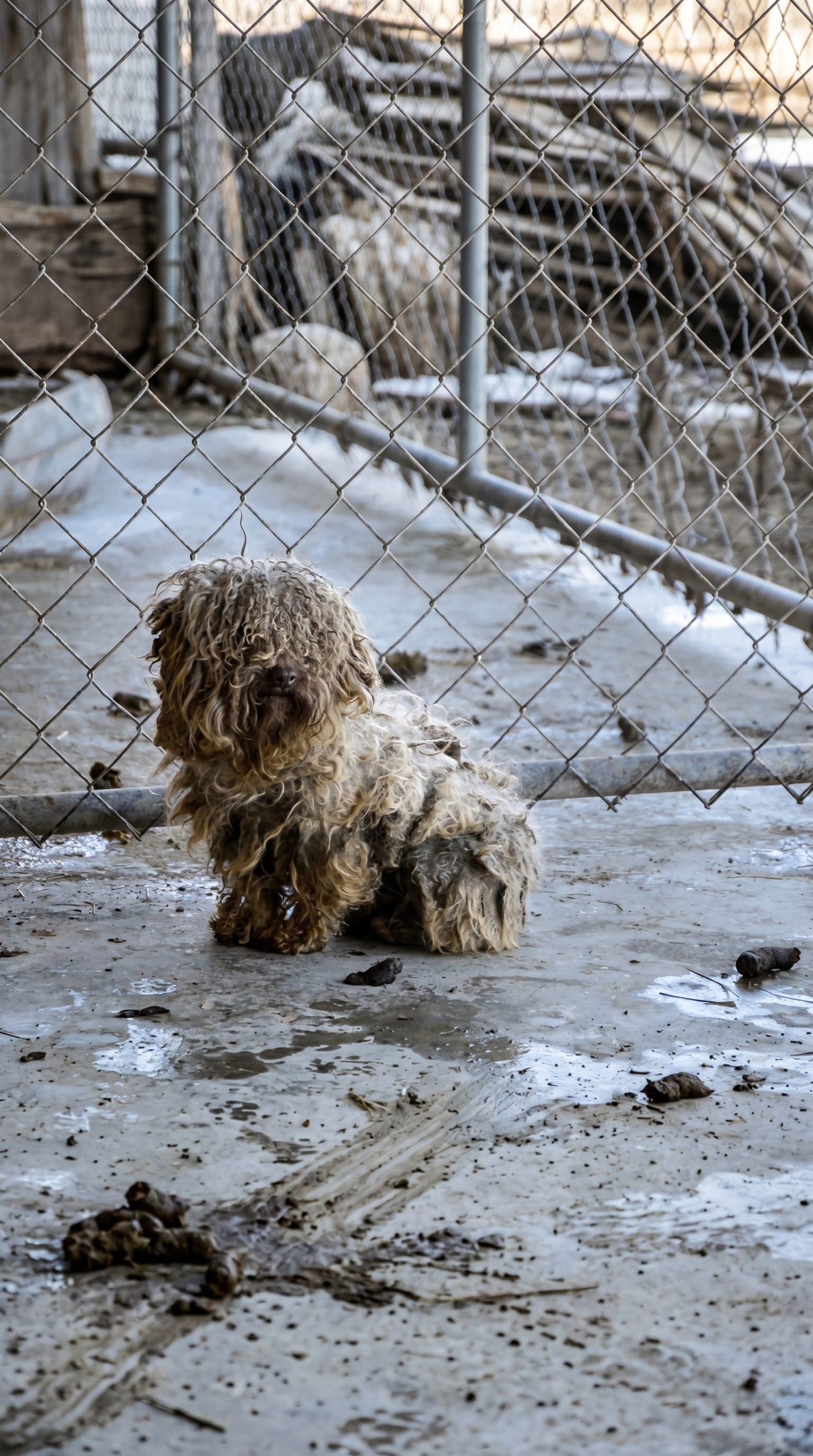
At first, rescuers could barely tell where the dog began.
Inside a neglected breeding property in rural Arkansas, a small animal sat almost completely hidden beneath layers of severely matted fur.
The coat had grown so thick that it obscured his shape.
His movement was limited.
Even identifying what kind of dog he was had become difficult.
Yet beneath all of that tangled weight was a living animal still waiting to be helped.
They would later name him Mikhail.
And before he could learn what a home felt like, rescuers first had to free him from the coat that had become a physical burden.
He Was Found During the Rescue of More Than 100 Dogs
The discovery took place in February 2014, when the HSUS Animal Rescue Team entered a large breeding property in rural Arkansas.
More than 121 dogs were reportedly removed from the operation, along with dozens of other animals.
The conditions were severely neglected.
Dogs were being kept in enclosures that offered little comfort, and rescuers moved carefully through the property looking for animals requiring immediate attention.
Then they found Mikhail.
He was small.
Quiet.
And almost completely concealed beneath his own coat.
The fur had not simply become untidy.
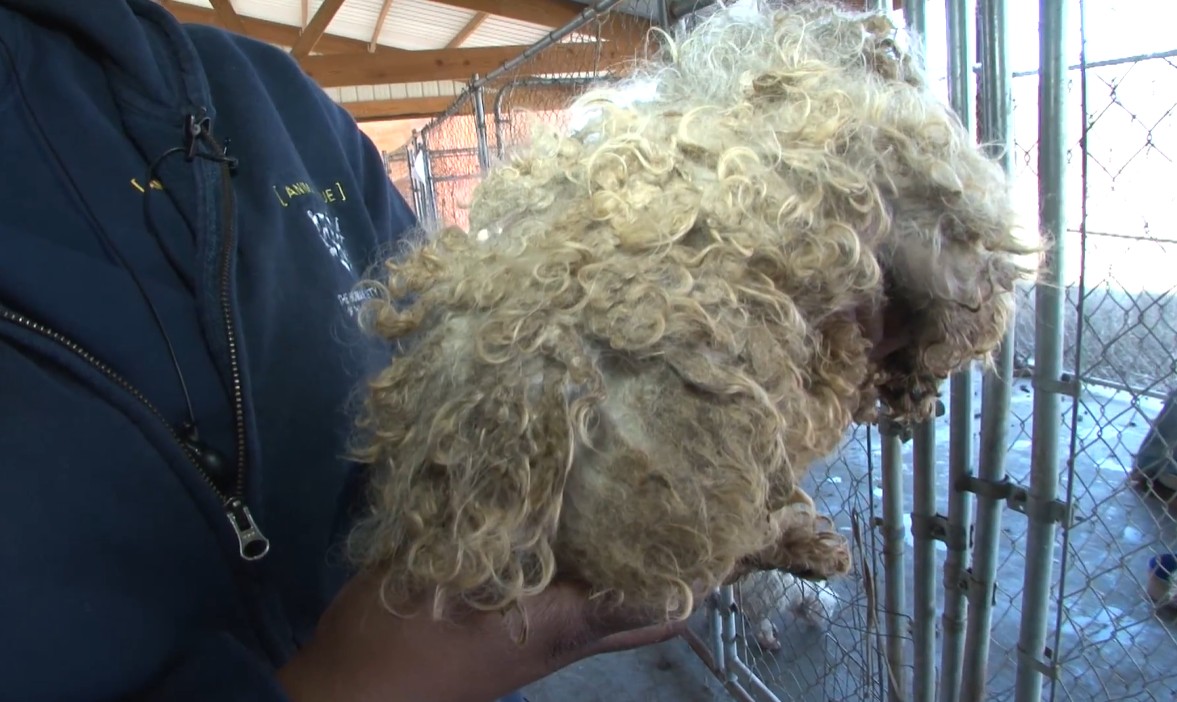
It had formed thick, hardened mats that covered much of his body.
The layers made it difficult to see his true size.
His age and even his physical shape were hard to judge at first glance.
Most importantly, the coat restricted his movement.
Before anything else could happen, that weight had to come off.
Video: Rescuers Find a Tiny Dog Almost Completely Hidden Beneath Years of Matted Fur
Removing the Coat Had to Be Done One Careful Section at a Time
Mikhail could not simply be brushed.
The mats were far beyond ordinary tangles.
Veterinary staff carefully restrained him so the coat could be removed without causing additional discomfort or injury.
Then the slow work began.
Piece by piece, sections of hardened fur were cut and shaved away.
Each removal revealed a little more of the dog underneath.
A leg.
His body.
The actual outline of a much smaller animal than the coat had suggested.
As the heavy mats fell to the floor, Mikhail was gradually able to move without the same restriction.
For the first time, rescuers could see him clearly.
He was tiny.
Fragile.
And understandably cautious.
The physical change happened in hours.
The emotional adjustment would take much longer.
A Foster Home Became His First Introduction to Ordinary Life
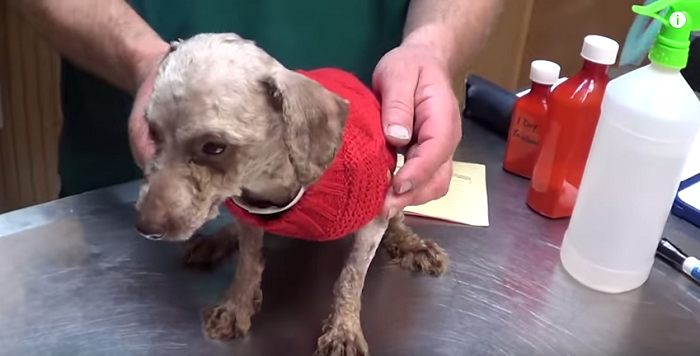
After the rescue and veterinary care, Mikhail was placed into foster care.
For a dog coming from a breeding environment, ordinary household experiences could be unfamiliar.
Quiet rooms.
Soft places to rest.
People moving around freely.
Regular attention.
Nothing about that life could be assumed to make sense to him immediately.
That was the version of Mikhail that Melita Yearwood first met.
She did not yet know every detail of his history.
She simply saw a timid little dog who needed patience.
That was enough.
Melita brought him home.
At first, the arrangement was meant to give Mikhail somewhere safe while he continued adjusting.
But the more time she spent with him, the more attached she became.
His quiet personality began to emerge beneath the fear.
Soon, fostering no longer felt temporary.
Melita decided that Mikhail would stay.
He had found a family.
Learning His Past Only Made His New Family More Determined to Help
Melita learned more about Mikhail’s earlier life after watching footage from the rescue.
The images showed the conditions from which he had come and the extent of the coat that once surrounded him.
Seeing it was difficult.
By then, however, Melita already knew the dog Mikhail was becoming.
He was not simply an animal defined by the place where he had been found.
He was gentle.
Sensitive.
And beginning to respond to the safety around him.
For Melita, learning about the past did not change whether Mikhail belonged in her home.
If anything, it made the progress she was seeing feel even more significant.
A dog who had once lived in extreme neglect was now sleeping somewhere warm.
He had regular meals.
Human companionship.
And a person who had decided he was not going anywhere.
Destiny Helped Show Him How to Be a Dog Again
Recovery did not happen immediately.
Mikhail remained timid for a while.
New situations could still feel overwhelming.
But the household gave him something the breeding property never could.
Time without pressure.
One especially important companion was Destiny, Melita’s poodle.
Destiny helped introduce Mikhail to the ordinary rhythms of life with another dog.
Walks.
Play.
Following someone through the house.
Resting nearby.
The small interactions added up.
Mikhail began exploring more confidently.
He became interested in his surroundings.
Then playfulness appeared.
The dog who had once been physically restricted by his coat could now move through open rooms and outside spaces without that burden.
He followed Destiny.
Ran.
Played.
And increasingly behaved like a dog who understood that the world around him was finally safe enough to enjoy.
The Dog Who Once Could Barely Move Began Running Freely
Over time, the contrast became difficult to miss.
Mikhail’s coat grew back in a healthy form.
His movements became easier.
His body no longer disappeared beneath layers of hardened mats.
But the most meaningful changes were visible in his behavior.
Fear stopped dominating every moment.
Curiosity appeared.
Then joy.
Mornings could now begin with walks around the neighborhood.
Back inside, Mikhail and Destiny could chase one another through the living room.
These were ordinary moments.
That was precisely what made them remarkable.
Mikhail’s life was no longer centered on enduring uncomfortable conditions.
He had room to move.
Choices about where to rest.
A dog companion.
A person who loved him.
The animal rescuers once had difficulty even seeing beneath all that fur had become unmistakably himself.

His Past Was Severe — But It No Longer Decides His Days
Mikhail’s story began in conditions he could not change.
He could not remove the mats himself.
He could not leave the property.
He could not choose the care he needed.
Other people had to make those decisions for him.
Rescuers entered.
Veterinary staff removed the coat carefully.
A foster home gave him somewhere safe to recover.
Then Melita made the arrangement permanent.
And Destiny helped make everyday life feel less unfamiliar.
None of those steps erased what came before.
They changed what came afterward.
Once, Mikhail was almost hidden beneath the physical evidence of long-term neglect.
Today, he can walk through his neighborhood, play inside his home, and move wherever he chooses.
He is no longer a dog buried beneath matted fur.
He is simply Mikhail.
A small dog with a family.
A companion.
And a life where the next day is expected to be safe.
That may be the clearest measure of how far he has come.
He is not merely surviving anymore.
He finally gets to live.


