
For decades, Marcia Cross has stood out as one of television’s most recognizable and compelling actresses. With her striking screen presence, emotional range, and ability to portray deeply complicated women, she has built a career that stretches far beyond any single role.
Many viewers remember her best as the elegant yet troubled Bree Van de Kamp on Desperate Housewives. Others first discovered her through the unforgettable Kimberly Shaw on Melrose Place. Yet behind those celebrated performances is a much longer story—one shaped by persistence, personal challenges, family, and an enduring dedication to acting.
From her early years in Massachusetts to becoming a familiar face in millions of homes, Cross’s journey reveals how a performer can continue evolving through changing eras of television while remaining unmistakably herself.
An Early Passion for Acting
Marcia Cross was born on March 25, 1962, in Marlborough, Massachusetts. Growing up in a close-knit family, she developed an interest in performing at an early age and eventually decided to pursue acting seriously.
That ambition led her to Juilliard in New York City, where she received formal dramatic training. The demanding environment helped prepare her for a profession in which talent alone is rarely enough. Actors must also learn patience, discipline, adaptability, and how to continue moving forward after rejection.
Cross entered the industry with that foundation, gradually building experience instead of becoming an overnight star.
Her career would ultimately show just how valuable that patience could be.

Finding Her Footing in Daytime Television
Like many actors who later became major television stars, Cross developed her craft through early appearances in daytime dramas.
She appeared in productions including The Edge of Night and One Life to Live, taking on roles that gave her opportunities to work through emotionally demanding material and develop confidence in front of the camera.
Soap operas can be particularly challenging for performers because of their fast production schedules and constantly developing storylines. For an emerging actress, that environment offered valuable experience.
Rather than simply serving as a temporary stop on the way to bigger roles, those early years became an important foundation for Cross.
She was learning how to create believable characters, handle dramatic scenes, and connect with television audiences—skills that would become increasingly important as her career progressed.
Moving Into Primetime Television
By the late 1980s, Cross was beginning to appear more frequently in primetime productions.
One notable step came when she joined Knots Landing, playing Victoria Broyelard. The role introduced her to a wider television audience and placed her within one of the era’s established primetime dramas.
It was an important transition.
Cross had already demonstrated that she could handle the demanding rhythm of daytime television, but primetime programming offered different opportunities and broader exposure.
Soon, she would land the character that transformed her career.

Kimberly Shaw Made Her Impossible to Forget
In the 1990s, Cross joined Melrose Place as Dr. Kimberly Shaw.
The character became one of the most memorable figures associated with the series.
Kimberly was far from simple. Her storylines moved through romance, betrayal, psychological turmoil, obsession, and increasingly unpredictable behavior. That complexity gave Cross an opportunity to display a much wider range than audiences had previously seen from her.
She could appear vulnerable in one moment and deeply unsettling in another.
Rather than portraying Kimberly as a one-dimensional television villain, Cross gave the character emotional intensity that made even her most dramatic storylines captivating to watch.
As Melrose Place became a major part of 1990s television culture, Kimberly Shaw became one of its most talked-about characters.
For Cross, the role represented a major breakthrough.
She was no longer simply a working actress appearing across television. She had become someone audiences remembered.

Life Away From the Spotlight
Following her success on Melrose Place, Cross continued acting while also making choices that reflected interests beyond Hollywood.
Her career did not follow a simple upward line from one blockbuster role to another. Instead, she continued developing professionally while pursuing other priorities in her life.
That willingness to step outside expectations would become part of what made her later return to television so significant.
By the early 2000s, Cross had accumulated years of experience playing dramatic and complex characters.
Then came the role that introduced her to an entirely new generation of viewers.
Bree Van de Kamp Changed Everything
In 2004, Desperate Housewives premiered and quickly became one of television’s biggest cultural phenomena.
Cross was cast as Bree Van de Kamp, a meticulously organized suburban homemaker whose polished exterior concealed a life filled with emotional conflict.
At first glance, Bree appeared to have everything under control.
Her home was immaculate. Her manners were precise. She valued tradition, order, and appearances.
But beneath that carefully maintained surface was a woman struggling with marriage problems, family conflict, grief, loneliness, fear, and her own imperfections.
That contrast gave Cross extraordinary material to work with.
She could make Bree funny without turning her into a caricature. She could make her stern while still revealing vulnerability. Even when the character made questionable choices, Cross often allowed audiences to understand the emotions underneath them.
It became one of the defining performances of her career.
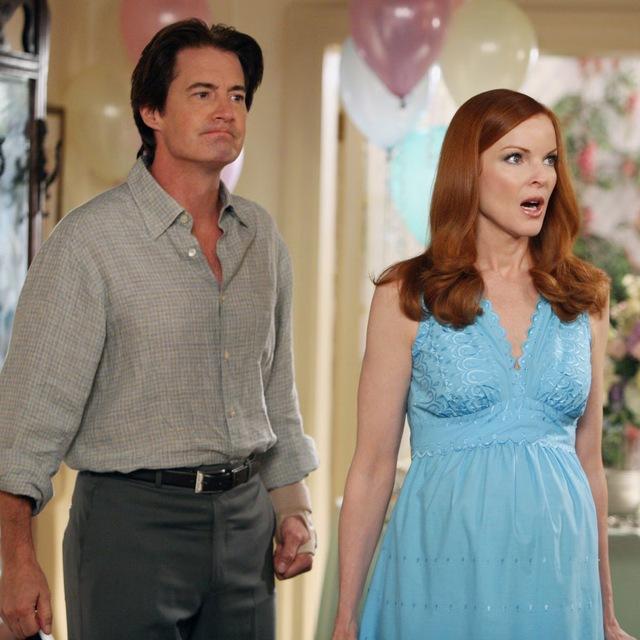
Why Bree Van de Kamp Connected With Viewers
Part of Bree’s appeal came from contradiction.
She desperately wanted life to look perfect, yet her world repeatedly refused to cooperate.
The character’s obsession with maintaining appearances created comedy, but it also revealed something deeply human: the fear that admitting weakness might cause everything to fall apart.
Across the series, audiences watched Bree experience enormous changes.
Relationships ended. Families evolved. Secrets emerged. Personal tragedies reshaped her life. Yet Bree continually attempted to rebuild herself.
Cross played those transitions with restraint, often allowing a small facial expression or controlled line delivery to reveal emotions that Bree herself refused to openly acknowledge.
That ability helped transform what could have been a stereotypical suburban character into someone far more layered.

Recognition for an Iconic Performance
Cross’s work on Desperate Housewives earned widespread industry recognition.
She received major award nominations, including recognition from the Primetime Emmy Awards and Golden Globe Awards, while the show’s ensemble also attracted attention from the Screen Actors Guild.
Yet the lasting importance of Bree Van de Kamp extends beyond awards.
For many viewers, Bree became one of the characters most closely associated with the entire series.
Even years after Desperate Housewives ended, scenes featuring Bree continue to circulate among fans, and discussions about the show’s most memorable characters frequently return to Cross’s performance.
The role demonstrated something that had already been visible in Melrose Place: Cross had a particular gift for portraying women whose composed exteriors hid complicated emotional worlds.

Marriage and Motherhood
While her professional career was flourishing, Cross was also building a family.
In 2006, she married Tom Mahoney. The following year, the couple welcomed twin daughters.
Motherhood became an important new chapter in Cross’s life.
Balancing family responsibilities with a demanding television career presented challenges familiar to many working parents, although doing so while starring in a hugely successful television series brought an unusual level of public attention.
Cross has spoken over the years about the importance of family and the changes motherhood brought to her life.
It offered a different perspective beyond acting and fame, placing priorities outside Hollywood at the center of her world.

Facing a Major Health Challenge
Years later, Cross faced one of the most difficult experiences of her personal life when she was diagnosed with anal cancer.
After undergoing treatment, she publicly discussed her experience and eventual recovery.
Speaking openly about the disease was significant because anal cancer can still carry stigma and embarrassment that discourage people from discussing symptoms or seeking information.
Cross chose a different approach.
Rather than hiding what she had experienced, she used her visibility to encourage more open conversations about the disease.
Her willingness to speak publicly helped bring attention to the importance of awareness, medical screening, and conversations between patients and healthcare professionals.
For someone whose most famous characters were often defined by carefully maintained appearances, Cross’s real-life openness presented a striking contrast.
She chose candor over silence.

Turning a Personal Experience Into Advocacy
Following her cancer experience, Cross increasingly used interviews and public appearances to raise awareness.
Her message was not built around fear.
Instead, she emphasized the importance of reducing shame surrounding diseases that people may find uncomfortable to discuss.
Health conversations can become especially difficult when they involve parts of the body that society treats as embarrassing or private. Cross’s decision to speak publicly helped challenge that discomfort.
By discussing her own experience, she could reach people who might otherwise never encounter information about the disease.
Her advocacy added another dimension to her public identity.
She was no longer known only for fictional characters and television awards. She had also become someone willing to use personal hardship to encourage conversations that could benefit others.
A Career That Continued to Evolve
Cross did not disappear after Desperate Housewives.
She continued appearing in television and exploring new roles, showing that her career was never dependent on a single character.
That longevity is noteworthy in an entertainment industry that often moves quickly from one generation of performers to another.
Some actors spend their careers searching for one character audiences will remember.
Cross created at least two.
Kimberly Shaw and Bree Van de Kamp could hardly be more different, yet both became defining characters within their respective television eras.
That says something about Cross’s versatility.
She has repeatedly demonstrated an ability to make heightened television drama feel emotionally believable, whether portraying psychological instability, suburban perfectionism, personal tragedy, or dark comedy.

More Than One Famous Television Role
It would be easy to describe Marcia Cross simply as “the actress from Desperate Housewives.”
But that description misses much of what made her career remarkable.
Long before Bree Van de Kamp walked onto Wisteria Lane, Cross had spent years developing her craft. She worked in daytime television, appeared across primetime dramas, and created one of Melrose Place‘s most memorable characters.
Then, decades into her career, she found another role that became even bigger.
That kind of reinvention is difficult.
It requires talent, but also patience and the willingness to keep taking chances after success has already been achieved.

The Lasting Appeal of Marcia Cross
There is an elegance to Cross’s performances that has made her particularly effective at playing controlled characters.
But what makes those performances memorable is what lies beneath that control.
Her strongest characters often appear composed while everything around them—or inside them—is threatening to collapse.
Cross understands how to communicate that tension.
Sometimes it appears through dialogue. At other times, it is visible through silence, posture, or a carefully restrained reaction.
That subtlety helped Bree Van de Kamp become far more than the immaculate homemaker viewers first met.
It also helped make Kimberly Shaw one of the unforgettable figures of 1990s television.

A Legacy Built on Talent and Resilience
Marcia Cross’s story is ultimately about longevity.
She began as a young actress learning her craft, worked her way through daytime television, broke into major primetime dramas, became a standout presence on Melrose Place, and eventually reached another level of fame through Desperate Housewives.
Outside acting, she built a family and later faced a serious health challenge that she chose to discuss openly in hopes of helping others.
Those experiences have given her public story dimensions that extend well beyond Hollywood.
Her journey has included extraordinary professional highs as well as deeply personal challenges, but through each chapter she has continued moving forward.
And that may be the most enduring element of Marcia Cross’s career.
She became famous by portraying characters who survived complicated lives behind seemingly perfect appearances. Away from the screen, her own journey has demonstrated a quieter kind of strength—one built not on perfection, but on adaptability, openness, and resilience.