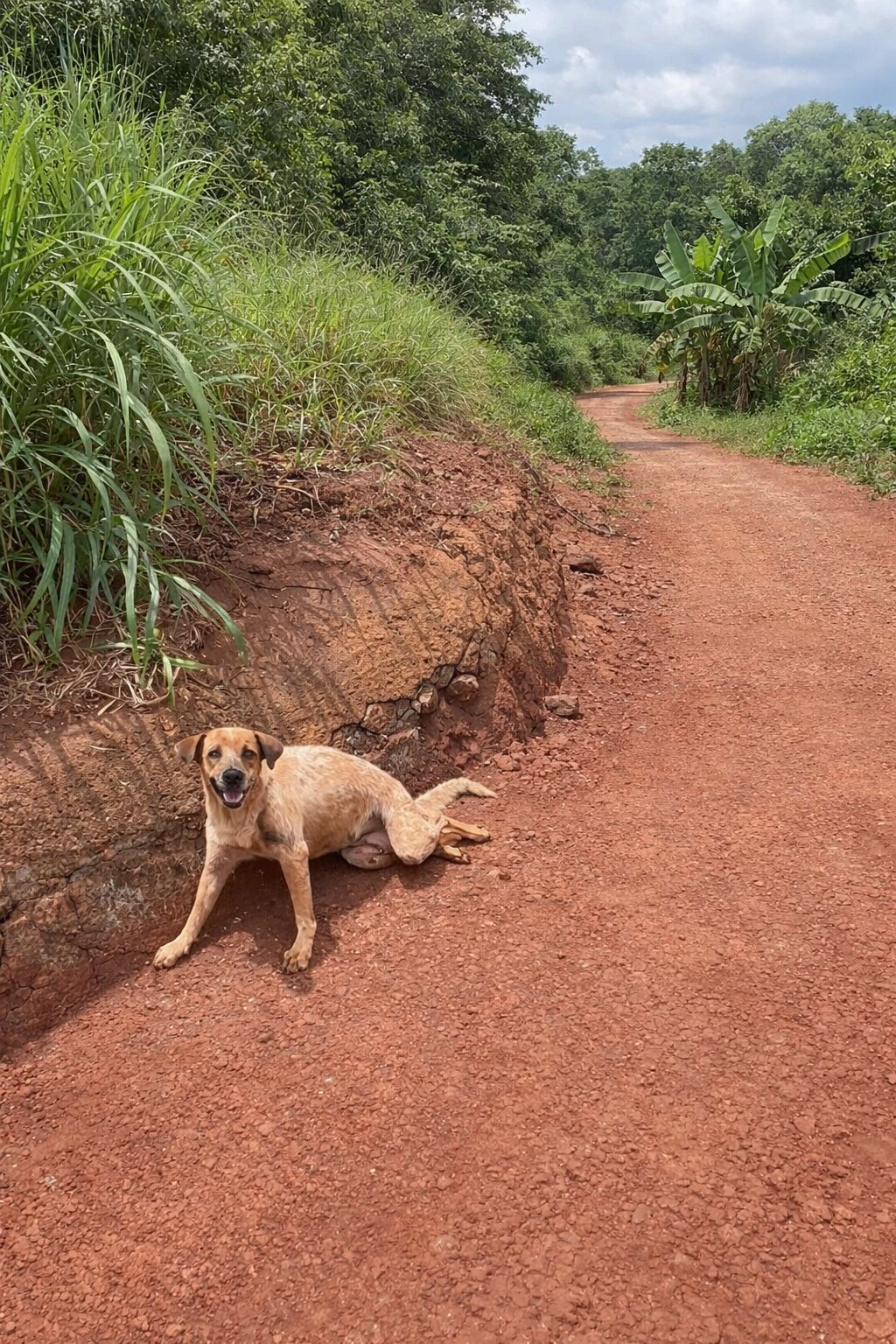
Cars continued rushing past.
It was a cold December day, and near the edge of a busy highway, a dog lay almost completely still.
At first, she could have been mistaken for an animal simply resting beside the road.
But when someone stopped and moved closer, it became clear that something was wrong.
The dog was alive.
She was alert enough to respond.
But her back legs were not working.
She could not stand.
She could not move herself away from the traffic.
And with vehicles passing only a short distance away, remaining there was dangerous.
The passerby carefully lifted her from the roadside and brought her for veterinary care.
She would soon be given a name.
Marina.
And what doctors discovered over the following weeks would make her case even more complicated than anyone first imagined.
Her Back Legs Would Not Support Her
At the clinic, Marina underwent examinations and imaging to determine why she could not use her hind legs.
The findings pointed to a significant spinal injury.
That explained the paralysis.
Her rear limbs were not responding normally, and the medical team knew recovery would likely require more than rest alone.
Veterinarians discussed surgery.
Even then, no one could promise that Marina would walk normally again.
The goal was to give her the best possible opportunity for improvement while preventing further complications.
The rescue team decided to proceed.
Treatment would be expensive.
Recovery would be long.
But people following Marina’s case began contributing toward her care.
With enough support raised, the surgery went ahead.
Video: Marina Was Found Paralyzed Beside a Highway — Then Her Long Recovery Began
Surgery Was Only the First Part of Her Recovery
The operation was completed successfully, but Marina’s story did not change overnight.
Her spinal injury still required careful rehabilitation.
Twice each week, she began attending physical therapy sessions.
The work was repetitive and slow.
Exercises were designed to encourage movement, maintain muscle condition, and support whatever neurological recovery might still be possible.
Some sessions showed almost no dramatic change.
Then there would be a small movement.
A slight response.
A little more control than before.
For the people caring for Marina, those tiny improvements mattered.
Her recovery was being measured in details most people would never notice.
A leg responding differently.
A better attempt to reposition herself.
A little more strength through her body.
There was no single moment when everything suddenly became normal again.
Progress came gradually.
Marina Remained Calm Through the Long Therapy Sessions
Physical rehabilitation can be demanding, especially for an animal already adapting to major mobility changes.
Yet Marina remained manageable during her sessions.
She allowed caregivers to support her body.
She tolerated repeated exercises.
And over time, the routine became familiar.
Her caregivers could not know exactly what she understood about the treatment.
What they could see was that she continued participating without constant resistance.
That made the long process easier.
For weeks, Marina’s life revolved around a predictable schedule.
Rest.
Medication.
Therapy.
Monitoring.
Then therapy again.
Everyone was focused on her spine.
That was why another change almost a month later caught them completely off guard.
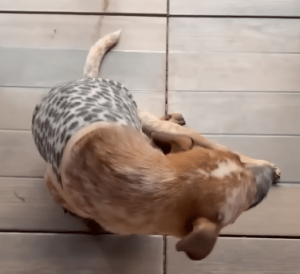
Then Her Belly Began Looking Different
About one month after Marina’s rescue, her caregiver noticed that her abdomen appeared more rounded.
Given everything she had been through, the change raised immediate concern.
Marina had undergone surgery.
She was receiving medication.
Her body was already dealing with a serious neurological injury.
The veterinary team wanted to make sure the swelling was not connected to another medical problem.
So they scheduled an ultrasound.
The examination began with everyone looking for a possible complication.
Instead, the screen showed something entirely different.
Marina was pregnant.
And there was more than one puppy.
The Ultrasound Revealed Four Puppies
The ultrasound showed four developing puppies.
According to the rescue account, the veterinary team found them to be developing normally at that stage.
For Marina’s caregivers, the discovery changed the entire recovery plan.
Until then, nearly every decision had focused on her spinal injury.
Now there were four additional lives to consider.
The timing was especially striking.
Marina had been found unable to move beside a highway.
She had undergone major treatment.
She had been attending rehabilitation for weeks.
And throughout all of it, she had also been carrying puppies.
The discovery answered one question about her changing body.
But it created several new ones.
How would pregnancy affect rehabilitation?
Could Marina continue therapy safely?
And most importantly, how would the puppies be delivered?
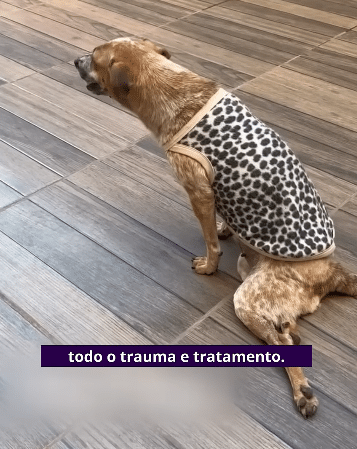
Her Spinal Condition Changed the Birth Plan
Because of Marina’s neurological condition, veterinarians did not expect a normal delivery to be the safest option.
According to the rescue account, they explained that her impaired nerve function could interfere with the physical process required for natural birth.
So the team began preparing for a planned cesarean section.
The goal was to monitor Marina closely and deliver the puppies surgically when the appropriate time arrived.
Until then, her care became even more carefully balanced.
Her spinal recovery still mattered.
But so did pregnancy.
Therapy continued under supervision.
Veterinary monitoring became more important.
And every decision had to account for both Marina and the four puppies developing inside her.
Her case was no longer simply about helping a paralyzed dog regain mobility.
It was also about safely bringing an unexpected litter into the world.
Marina’s Recovery Had Become Two Journeys at Once
The change in circumstances did not stop Marina’s rehabilitation.
She continued working through her therapy sessions while the pregnancy progressed.
Her caregivers watched for signs of discomfort.
Veterinarians monitored the puppies.
And the rescue team prepared for the delivery ahead.
Marina still had an uncertain neurological future.
Walking again was not guaranteed.
Her spinal injury still required long-term care.
But the ultrasound had shifted the emotional center of her story.
She was not recovering alone.
Four puppies were developing while their mother was learning how to live with a body that no longer moved the way it once had.
That made every successful day feel larger.
Not because it proved the impossible.
But because Marina continued making progress through an unusually complicated medical situation.
Her Story Was Still Far From Finished
At the point documented in the rescue account, Marina had not yet reached the end of her journey.
The puppies were still growing.
The cesarean section was still ahead.
Her rehabilitation was continuing.
And no one yet knew exactly how much function her hind legs might eventually regain.
There were still unanswered questions.
But one thing had already changed completely.
Marina was no longer lying beside a highway with no way to move herself to safety.
She had veterinary care.
She had people supporting her rehabilitation.
She had a plan for the delivery of her puppies.
And she had time.
That mattered most.
Her story did not need a perfect ending to be meaningful.
It was enough that someone noticed the motionless dog beside the road.
Enough that she was carried away from traffic.
Enough that treatment began.
And enough that, one month later, an ultrasound revealed four small lives no one had known were there.
Marina’s future was still uncertain.
So was the future of her puppies.
But for the first time since she was found beside the highway, uncertainty no longer meant being alone.
Now it meant there were people beside her, watching closely, ready for whatever came next.


