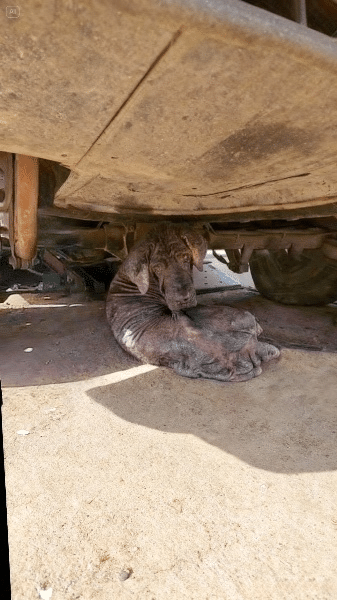
For years, Mingo seemed to exist at the edge of everyone else’s world.
He was an older stray, quiet and cautious, moving through the streets without demanding attention.
His coat had become rough.
His body showed the wear of time.
And unlike younger dogs who might run toward strangers or bark for food, Mingo often kept his distance.
He had learned to survive without expecting much from people.
But age was making that life harder.
Food was uncertain.
Rest was never truly secure.
And beneath his tired appearance were medical problems that had apparently gone untreated for a long time.
Then one day, someone finally looked at Mingo closely enough to realize he needed more than another meal on the street.
He needed help.
Growing Older Had Made Survival More Difficult
Life outside is demanding for any dog.
For Mingo, age added another layer.
His body was no longer as strong as it once might have been, and every day required him to continue searching for food and safe places to rest.
When rescuers approached, he did not immediately come running.
He stayed back and watched.
That caution made sense.
Mingo had no reason to know whether these unfamiliar people would be safe.
So the team did not force the interaction.
They moved slowly and allowed him time to observe.
Once they were close enough to examine him, several problems became apparent.
His skin needed treatment.
His ears showed signs of infection.
And one of his hind legs appeared abnormal.
Further examination suggested an older fracture had healed incorrectly.
Mingo had apparently been living with that limitation for some time.
Video: Mingo Had Grown Old and Overlooked on the Streets—Then Someone Finally Gave Him a Chance
His First Days Were About Comfort and Medical Care
Because Mingo was a senior dog, rescuers wanted to understand his overall health before making assumptions about what recovery might look like.
Testing began.
His infections were treated.
He was given appropriate food, a clean place to rest, and the kind of routine that had been missing from his life outside.
Nothing needed to happen quickly.
Mingo’s body was already carrying years of wear.
The goal was to make him comfortable while allowing his strength to return gradually.
Even simple care was unfamiliar.
During his first bath, Mingo vocalized and appeared unsure of what was happening.
Warm water, close handling, and the unfamiliar environment may all have been new or stressful sensations.
So the team remained gentle.
They cleaned him carefully and avoided turning necessary care into something more frightening than it had to be.
Recovery Came Through Small, Repeatable Things
Mingo did not transform overnight.
Much of his early progress happened quietly.
He ate more consistently.
He rested.
His skin and ear problems began responding to treatment.
His energy slowly improved.
Caregivers continued following the same routine each day.
Meals.
Medication.
Clean bedding.
Gentle interaction.
Rest.
Those ordinary things gave Mingo’s body a chance to recover from the demands of street life.
They also gave him something else.
Predictability.
The same people returned.
Food arrived without competition.
A hand approaching him was followed by care rather than discomfort.
And gradually, his response to people began changing.
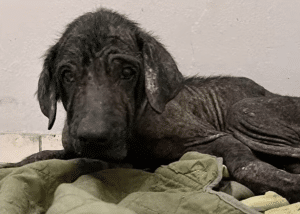
He Stopped Pulling Away From Every Gentle Touch
At first, Mingo was cautious when someone came close.
Over time, that distance became smaller.
He allowed caregivers to touch him.
He appeared more relaxed around familiar voices.
He began learning to walk with a leash, taking the process one step at a time.
For a dog accustomed to moving independently through the streets, being guided by a person was another unfamiliar experience.
The team did not expect immediate confidence.
They allowed him to adjust.
A few steps.
A pause.
Another short walk.
The goal was not perfect leash behavior.
It was helping Mingo learn that being beside a person could also mean safety.
That trust developed gradually, just like his physical recovery.
His Test Results Brought Encouraging News
Because of Mingo’s age and condition, there had been concern that additional serious health problems might be present.
According to the rescue account, his test results did not reveal a major underlying illness.
That was encouraging.
There were still issues to manage.
His old leg injury would not simply disappear.
His body was still that of a senior dog who had spent years without consistent care.
But the team could now focus more confidently on improving his quality of life rather than preparing for a much more serious diagnosis.
With treatment continuing, Mingo began looking more alert.
His posture improved.
His eyes appeared brighter.
He showed greater interest in what was happening around him.
The changes were not dramatic.
They were the steady signs of an older dog finally receiving what his body had needed.
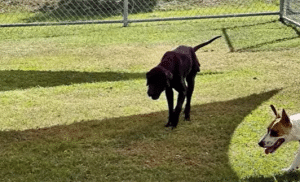
Senior Dogs Do Not Need to Become Puppies Again
Mingo was never going to turn into a young dog.
That was not the goal.
His recovery was not measured by whether he could run faster than other dogs or suddenly behave as though the years on the street had never happened.
The important changes were much simpler.
He could rest comfortably.
He had enough to eat.
His infections were being treated.
He no longer needed to spend every night alert to what might happen around him.
His older leg could be managed with his comfort in mind.
And people were paying attention to how he felt.
For a senior animal, a good second chance does not have to mean becoming young again.
Sometimes it means finally being allowed to grow older safely.
Mingo Began Living Instead of Constantly Searching for the Next Safe Place
As the weeks passed, the difference became easier to see.
Mingo became more comfortable in his surroundings.
He rested more deeply.
He responded to caregivers.
He moved through his days without the same urgency that had defined life outside.
There was food waiting.
There was somewhere clean to sleep.
There were people who noticed changes in his health.
Those things may sound ordinary.
For Mingo, they represented an entirely different kind of life.
He no longer had to spend each day solving the same questions.
Where could he rest?
Would there be food?
Was it safe to stay?
The answers were finally becoming predictable.
Mingo’s Second Chance Came Because Someone Looked Beyond His Age
Older stray dogs are easy to overlook.
They may not have the energy of puppies.
Their bodies may carry old injuries.
Their coats and faces may show years that cannot be erased.
But none of that makes their comfort less important.
Mingo did not need people to pretend his past had never happened.
He needed people willing to care for the dog standing in front of them now.
An older dog.
A cautious dog.
A dog with medical needs.
And a dog still capable of trusting when given enough time.
His rescue was not built around one dramatic miracle.
It was built around people deciding that his remaining years mattered.
Once, Mingo moved quietly through the streets while most of the world passed him by.
Now someone notices when he eats.
When he rests.
When he needs care.
When he takes another comfortable step.
He may never become the dog he could have been under different circumstances.
He does not need to.
What matters is that he no longer has to face old age alone.
And for Mingo, that may be the most meaningful second chance of all.


