I left home that morning for one ordinary reason.
My computer needed to be repaired.
There was no plan to rescue an animal, no preparation for bringing anyone home, and certainly no reason to think the day would end differently from any other.
Then the rain began falling harder.
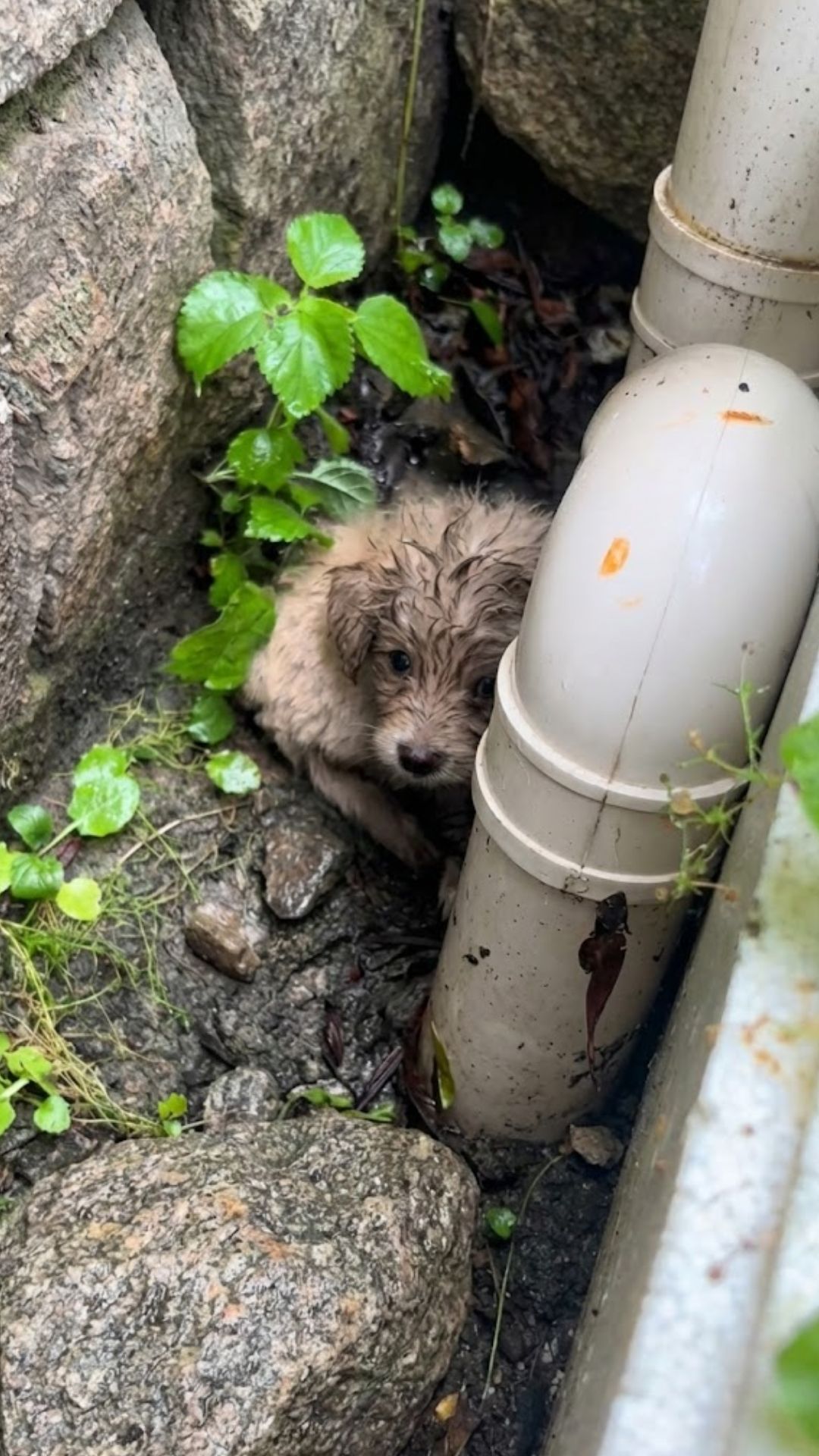
At a crowded intersection, beside a shallow roadside ditch, I noticed something small curled into the mud.
At first, I almost couldn’t tell what it was.
Then it moved.
A tiny puppy was lying there alone, soaked through and trembling as cars continued past him.
I knew my family had one strict rule.
No dogs.
But standing there in the rain, leaving him behind no longer felt like an option.
He Was Shivering Beside the Road While Everyone Passed
The puppy had curled himself into the smallest shape possible.
Rainwater ran through his thin coat.
Mud covered his body.
Every few seconds, another car passed close enough to remind me how dangerous that roadside was.
When I approached, he did not come toward me.
Instead, he flinched.
His little body tightened as though he expected whatever happened next to be something frightening.
So I slowed down.
I reached toward him carefully and lifted him from the ditch.
He weighed almost nothing in my arms.
Once he was inside the car, away from the rain, I went to a nearby shop and bought a little food.
The puppy ate quickly.
Then something changed.
His body loosened.
He curled beside me and fell asleep.
Only minutes earlier, he had been trembling in the mud.
Now he was dry, fed, and finally able to rest.
I still didn’t know what I was going to tell my family.
Video: A Tiny Puppy Found Shivering in the Mud Finally Reaches Safety
The Answer at Home Came Immediately
My household was already full.
Grandparents.
Parents.
Siblings.
And everyone understood the same rule.
Dogs were not allowed.
The moment I arrived carrying a wet, muddy puppy, there was very little discussion.
“No.”
“He can’t stay.”
I understood why they reacted that way.
A dog meant responsibility.
Food.
Cleaning.
Medical care.
Time.
And I had brought him home without warning anyone.
But after seeing him beside that road, I could not imagine taking him back outside.
So I looked for another solution.
In one corner of the property was an old storage area filled with boxes and dust.
I cleared it out.
Swept the floor.
Moved everything that could hurt him.
Then I laid down blankets to create a dry place where he could sleep.
It was not a perfect home.
But compared with the roadside ditch, it was warm and protected.
I named him Rainy.
It seemed fitting.
If that storm had not slowed everything down that day, I might never have noticed him.
His First Toy Was Made From an Old Shirt
Rainy arrived with nothing.
No bed of his own.
No collar.
No collection of toys waiting in a basket.
But once he had food and somewhere safe to rest, his personality gradually began appearing.
One afternoon, I took an old shirt and cut the fabric into strips.
I braided them together into a simple rope.
It was hardly a real dog toy.
Rainy did not care.
The moment I gave it to him, he grabbed it and carried it around proudly.
He chewed it.
Pulled it.
Tossed it into the air.
Then chased it across the floor.
Watching him play made it difficult to connect this energetic little puppy with the trembling animal I had lifted from the mud.
The toy cost almost nothing.
To Rainy, it seemed to be enough.
I Tried Taking Him Somewhere Else
Although Rainy was settling in, the disagreement at home did not disappear immediately.
I knew my family had not planned for a dog.
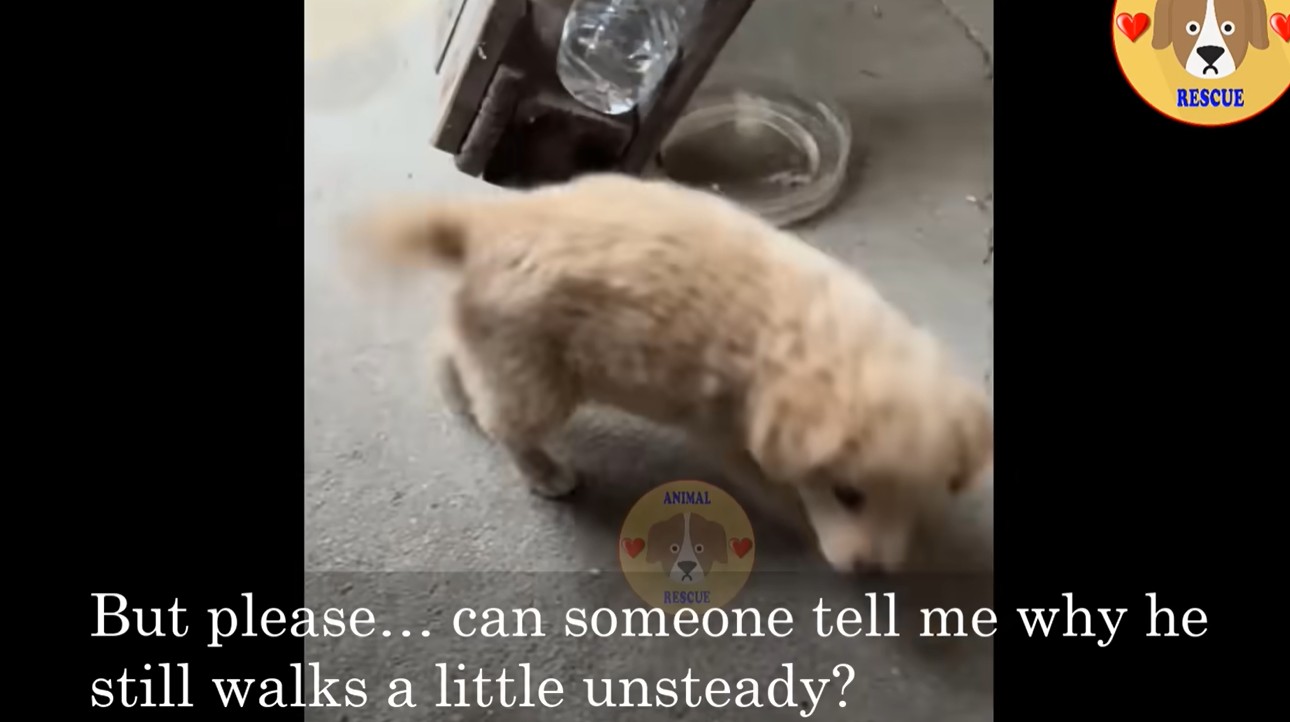
Eventually, I tried placing Rainy at my grandmother’s nearby home, hoping it might be a better arrangement.
On paper, it seemed reasonable.
He would still have shelter.
I could still visit.
And the tension at my house might ease.
But Rainy did not understand any of that.
After I left, he cried.
He had already experienced enough uncertainty for such a young dog, and another change of surroundings seemed difficult for him.
Then one evening, I saw something that made the decision much harder to ignore.
Rainy was sitting beneath a streetlight.
He was not running around.
He was not interested in playing.
He simply sat there facing the direction I had gone.
Whether he understood exactly where I was could not be known.
But I knew I did not want to keep moving him from place to place.
So I went back.
And I brought Rainy home again.
Bringing Him Home Was Only the Beginning
Getting Rainy out of the storm solved one immediate problem.
It did not guarantee that he was healthy.
He had been found outdoors while still very young, and his small body needed proper care.
I took him to a veterinarian and began the vaccinations recommended to protect him from serious infectious diseases, including parvovirus and distemper.
For a vulnerable puppy, preventive care mattered.
Rainy remained surprisingly calm through much of the process.
The puppy who had initially flinched when I approached him was now becoming accustomed to being handled.
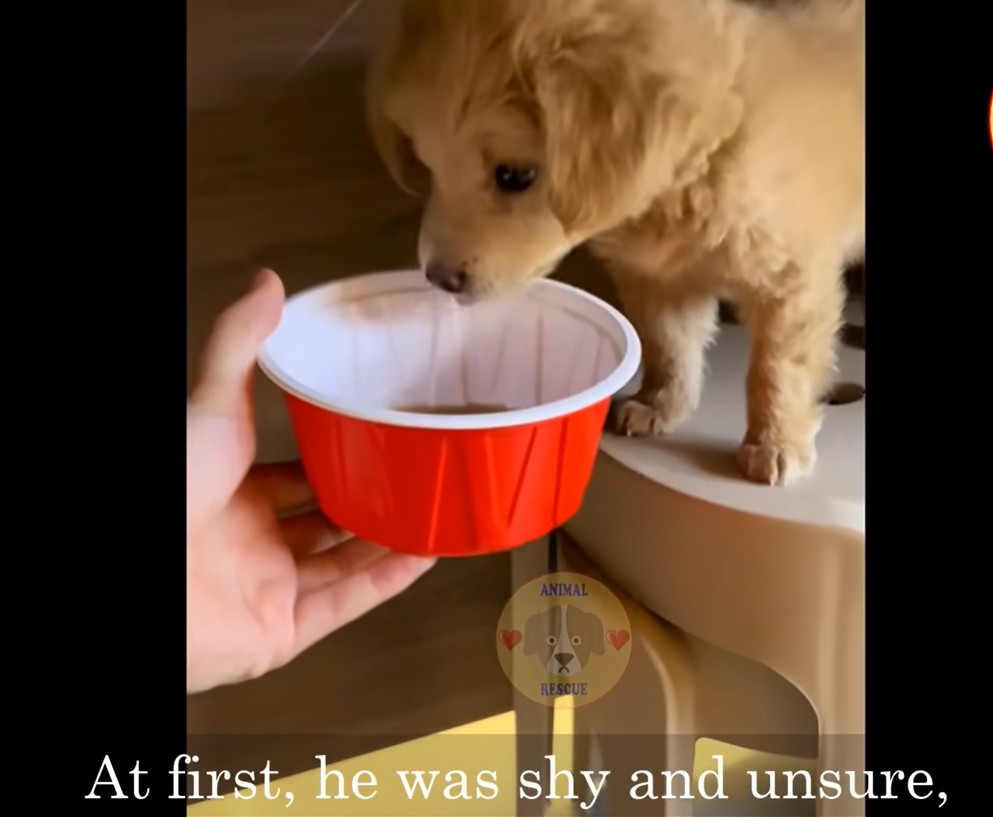
His appetite improved.
His body grew stronger.
He became more energetic.
Every healthy day gave us a little more confidence that the frightening afternoon beside the road was moving farther into his past.
My Family Began Seeing a Different Dog
Rainy did not win everyone over in a single dramatic moment.
The change happened gradually.
My family saw me feeding him.
Cleaning his space.
Taking responsibility for his veterinary care.
They also saw what Rainy was becoming.
He was playful.
Affectionate.
Excited whenever someone entered the room.
The dog they had originally imagined as another burden began becoming part of the household routine.
A hand would reach down to pet him.
Someone would stop to watch him play.
People who had once insisted that he could not remain began reacting differently when he came running toward them.
Rainy had not forced anyone to change their mind.
He simply kept being Rainy.
Little by little, the rule that once seemed permanent became less important than the puppy already living among us.
The Puppy From the Mud Learned How to Play
As Rainy grew, the transformation became impossible to miss.
He no longer curled into himself when someone approached.
He ran across the floor.
His paws tapped quickly behind people as he followed them through the house.
His old homemade rope toy remained one of his favorite things.
He carried it around, tugged at it, and sometimes spun with so much excitement that everyone nearby had to laugh.
The trembling gradually disappeared.
His body filled out.
His energy seemed endless.
There was nothing extraordinary about many of his new days.
That was exactly what made them special.
He could wake up somewhere dry.
Eat without searching for scraps.
Play without watching traffic.
Sleep without rain soaking through his coat.
The ordinary life of a loved dog had once been completely unavailable to him.
Now the Rain Means Something Different
Storms still come.
Heavy rain still hits the streets.
Cars still pass the intersection where I once noticed a small shape curled beside the road.
But Rainy does not have to face any of that alone anymore.
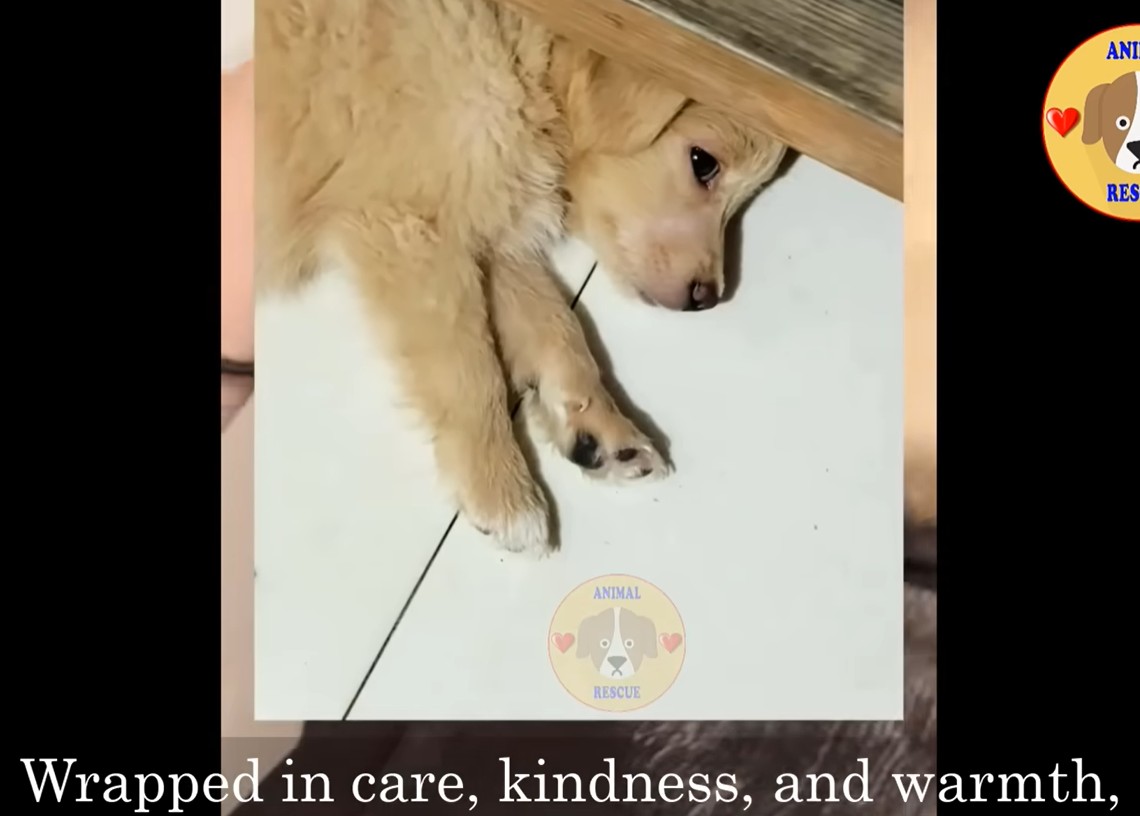
He sleeps inside.
He has food.
He has people who recognize his routines, his favorite toy, and the little behaviors that make him unmistakably himself.
Sometimes I still think about how easily that day could have passed differently.
I could have continued driving.
I could have assumed someone else would stop.
I could have remembered my family’s rule and decided helping him would create too many problems.
Instead, I picked him up.
At the time, I thought I was simply getting a puppy out of the rain.
I did not realize that one small decision would eventually change an entire household.
Rainy entered our lives as a frightened stray nobody had planned for.
He stayed long enough to become family.
And the rule that once seemed so clear—
“No dogs.”
—was never quite the same again.


