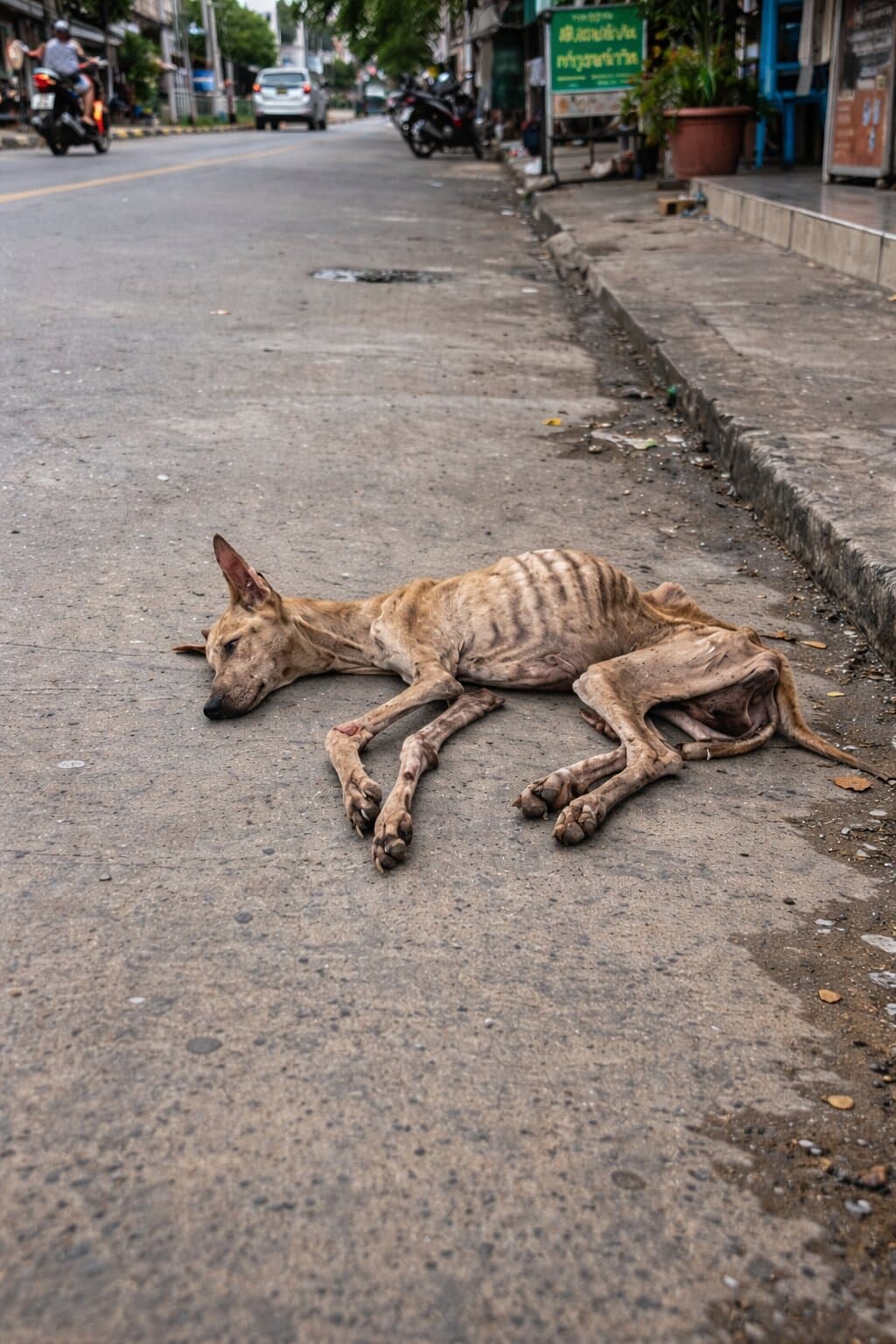
When rescuers first saw Noah, there was very little about his condition that suggested an easy recovery.
He was painfully thin.
One front leg was injured, his body had been weakened by severe malnutrition, and even lifting his head appeared to require effort.
According to those caring for him, his chance of survival was estimated at only 1%.
For the first several days, nobody expected dramatic progress.
They focused on something much smaller.
Keeping him warm.
Helping him eat.
And giving his exhausted body one more day to respond.
Then, while Noah was still lying almost motionless, his tail moved.
Only slightly.
But everyone noticed.
He Was Too Weak to Stand When Help Arrived
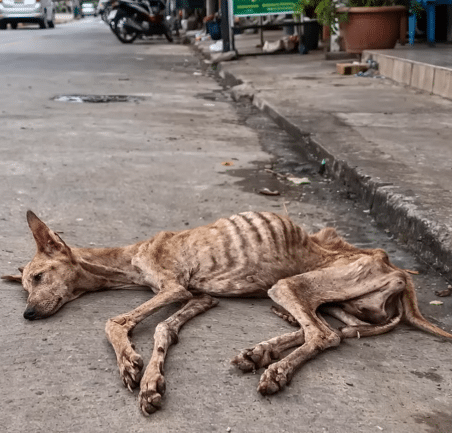
Noah’s body showed the effects of prolonged hardship.
There was very little weight left on his frame.
His injured front leg made movement even more difficult, and he lacked the strength to compensate with the rest of his body.
Standing was not possible.
Walking was out of the question.
Most of the time, Noah simply remained lying down.
Even his reactions to voices and movement around him were limited.
For rescuers, the situation was serious enough that recovery could not be assumed.
They could not simply place a bowl of food beside him and wait for his strength to return.
Noah needed help with the most basic parts of surviving.
So instead of asking his body to do more, the caregivers adjusted everything around what he could manage.
Video: Noah Could Barely Move—Then Small Signs of Recovery Began Appearing
At First, Eating Required Someone Beside Him
Food was offered in tiny amounts.
Sometimes Noah was fed carefully by spoon because he did not have enough strength to eat normally on his own.
Warm blankets were placed around his body.
The people caring for him stayed nearby while allowing him to rest.
There was no attempt to make him stand before he was ready.
No forced walking.
No expectation that he would suddenly become energetic after a few meals.
At this stage, simply keeping food down and resting comfortably mattered.
For several days, that was what recovery looked like.
A little nourishment.
A little sleep.
Another check.
Another meal.
Then something happened that would have seemed completely ordinary in a healthy dog.
Noah’s tail moved.
It was a tiny motion.
It lasted only a moment.
But for an animal who had barely been responding to the world around him, it showed that he was still aware of the people beside him.
More importantly, he was still responding.
His Progress Was Measured in Inches, Not Miles
The following days did not bring a sudden transformation.
Noah was still weak.
His leg was still injured.
His body still had a great deal of rebuilding to do.
But small changes became easier to notice.
He shifted his position without as much assistance.
He reacted when familiar people approached.
At times, he tried to lift more of his body away from the bedding.
Each attempt was shaky.
Sometimes he could manage only a little before lying back down.
That was enough.
The caregivers were not measuring Noah against a healthy dog.
They were comparing him with the dog they had met only days earlier—the one who could barely move at all.
Seen that way, every small effort mattered.
By the Third Week, Something Had Clearly Changed
Around the third week of care, Noah began interacting with his surroundings differently.
Familiar voices caught his attention.
He lifted his head more often when caregivers approached.
His attempts to support himself became stronger.
Then another important milestone arrived.
Noah began eating on his own.
It was a simple action, but it reduced how much assistance he needed and showed that his appetite and strength were returning together.
Meals became part of his own routine rather than something caregivers had to coax him through.
His body was still thin.
His movements were still careful.
But Noah was no longer spending every moment simply lying still.
He was participating in his recovery.
The Day Noah Began Standing Changed Everything
Eventually, Noah gathered enough strength to push himself upward.
At first, his legs were unsteady.
His injured front leg had already made movement difficult, while weeks of weakness meant the rest of his body had to rebuild strength gradually.
He stood briefly.
Then rested.
He tried again.
With time, standing became easier.
Standing led to steps.
The first attempts were slow and uncertain, but the distance Noah could cover gradually increased.
No one needed him to move quickly.
The goal was simply safe, steady progress.
Regular nutrition helped restore the weight he had lost.
His muscles became stronger.
And the dog who once could not lift himself from the ground began moving through the space around him under his own power.
Weeks of Consistent Care Began Showing on His Body
As Noah continued eating and moving, his physical appearance changed as well.
The sharp outline of his body gradually softened as he gained weight.
His coat improved.
His eyes appeared more alert.
He no longer looked completely exhausted after every small movement.
Those changes had taken weeks rather than days.
There had been no single treatment that instantly transformed him.
Instead, Noah’s recovery came from repeated care.
Nutritious meals.
Rest.
Attention to his injury.
A clean, protected place to recover.
And enough time for his body to respond.
The difference became more noticeable with every passing week.
The dog who had once appeared unable to stand was beginning to look like a dog preparing to live normally again.
Two Months Later, Noah Wanted More Than Rest
By approximately two months into his recovery, Noah’s world had expanded considerably.
He could walk.
Then he began moving more freely.
Eventually, play entered his routine.
That may have been one of the clearest signs of how far he had come.
In the beginning, Noah had needed nearly all of his energy simply to remain stable.
Now he had enough strength left over to explore and interact.
His relationship with people changed too.
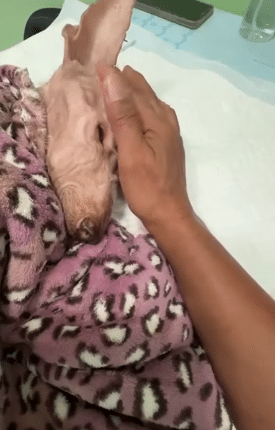
Rather than remaining almost motionless as caregivers approached, Noah began leaning into gentle contact.
He accepted affection.
He stayed close.
The dog whose early days had revolved around spoonfuls of food and blankets was now showing the ordinary behaviors of an animal beginning to feel comfortable.
His Recovery Was Built From Moments Almost Too Small to Notice
Looking at Noah later, it would have been easy to focus only on the dramatic difference between the beginning and the end.
But that would miss most of his story.
His recovery was not one miracle.
It was dozens of quiet milestones.
The first meal he managed.
The first movement of his tail.
The first time he lifted more of his body.
The first time he ate without assistance.
The first attempt to stand.
The first uncertain steps.
Then another.
And another.
Each one appeared small on its own.
Together, they changed what seemed possible for him.
A One Percent Chance Was Still a Chance
When Noah arrived, the people around him had been given very little reason to expect an easy outcome.
His condition was severe.
His body was depleted.
He could not stand.
According to the rescue account, his estimated chance of surviving was only 1%.
But percentages could not determine exactly what would happen next.
Caregivers could only respond to the dog in front of them.
So they fed him when he could not feed himself.
Kept him warm when he had no strength to move.
Waited when progress was slow.
And noticed every small sign that his body was beginning to return.
Noah did not suddenly leap to his feet.
He recovered in the least dramatic way possible.
Little by little.
Day by day.
Until the dog who had once barely been able to move was walking, playing, eating, and seeking affection again.
At the beginning, one percent did not sound like much.
For Noah, it was enough to begin.


