In a quiet corner of the shelter, two rescued dogs sat close enough for their shoulders to nearly touch.
One was a small brown dog who had lost an eye. He moved carefully through unfamiliar spaces, often tilting his head as he listened to sounds around him.
Beside him rested a black-and-white dog whose coat had recently been freed from thick, neglected mats.
To anyone watching, they were simply sharing a peaceful moment.
But in the shelter’s imaginative telling of their story, the two survivors were discussing music—and discovering that companionship could make an uncertain world feel safer.
Two Survivors Meeting in a Quiet Corner
The brown dog had learned to navigate life with only one eye.
He could still explore, follow familiar people, and participate in the activity around him. But reduced vision meant that distances and sudden movements sometimes required more caution.
The black-and-white dog faced a different kind of adjustment.
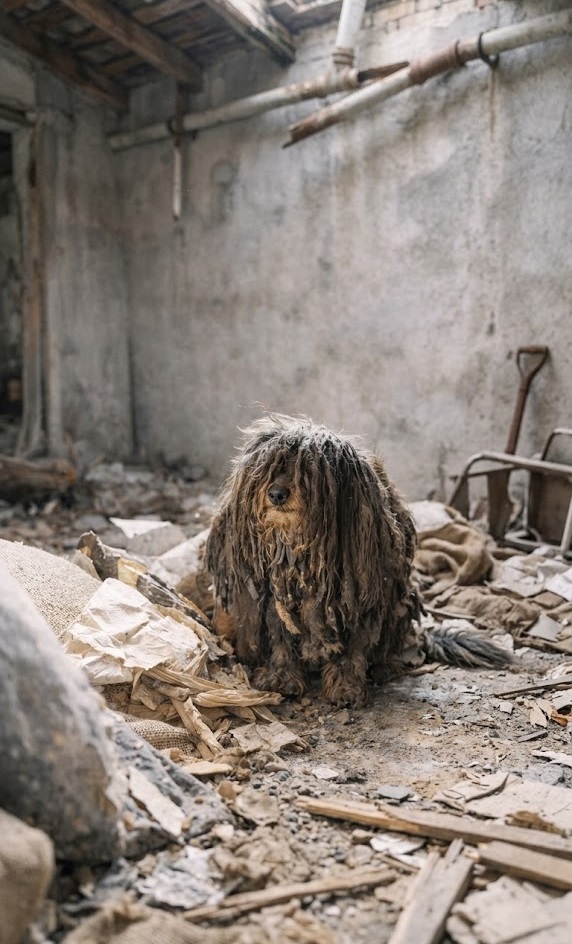
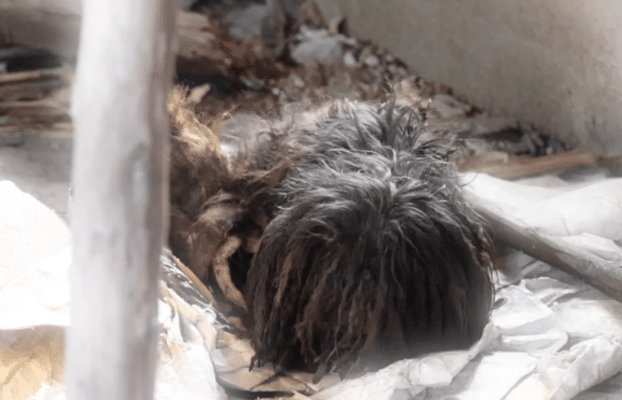
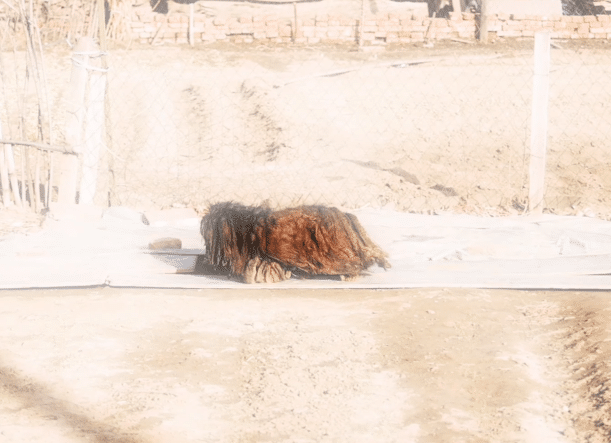
Before arriving at the shelter, he had reportedly spent time living outdoors in an abandoned yard. Without regular grooming, his coat had grown into long, rope-like mats that collected dirt and pulled against his skin.
Now both dogs were safe.
They had clean places to sleep.
Meals arrived without uncertainty.
People approached them with patience rather than driving them away.
Yet physical rescue did not mean every old fear disappeared immediately.
The dogs still needed time to understand their new environment.
Sitting together seemed to help.
In the playful narrative surrounding their video, the brown dog asks whether his companion performs rap music.
The answer comes with a correction.
Not rap.
Reggae.
The exchange is fictional and lighthearted, but it gives personality to a genuine moment between two animals who appeared comfortable in each other’s company.
Video: Two Rescued Dogs Share a Quiet Moment as Fireworks Echo Beyond the Shelter
A Coat That Had Become Too Heavy to Carry
The black-and-white dog’s unusual appearance had once been shaped by neglect rather than style.
His coat had grown without maintenance for a long period. Individual strands twisted together until the fur formed thick cords across his body.
From a distance, the mats might have resembled long musical dreadlocks—an image that inspired the “reggae dog” idea in the story.
But the physical reality was far less playful.
Matted fur can tighten close to the skin.
It traps dirt and moisture.
It may conceal parasites, irritation, and small injuries that cannot be properly examined until the coat is removed.
Every movement can cause the tangled sections to pull in different directions.
When rescuers found him, the dog was exhausted and in need of care.
Professional grooming became one of the first important steps in his recovery.
The team removed the mats gradually, working carefully around sensitive areas. They did not attempt to brush through knots that had already hardened against the body.
Piece by piece, the heavy coat fell away.
Underneath was a smaller dog who could finally be examined, washed, and treated properly.
The grooming changed his appearance dramatically.
More importantly, it gave him physical relief.
He could lie down without resting on compacted fur.
He could move without the coat pulling against him.
And he could begin discovering life beyond the neglected yard where he had once survived.
The One-Eyed Dog Experienced the World Differently
The brown dog’s missing eye created challenges that were less visually dramatic but still important.
Dogs can often adapt well to vision loss in one eye. However, they may need additional time when judging distances or responding to movement from the affected side.
The shelter staff adjusted their approach accordingly.
They made sure he could hear or see them before being touched.
They avoided surprising him from the side where his vision was limited.
They kept important objects in predictable locations whenever possible.
These small accommodations helped him feel more confident.
In the imaginative conversation, the brown dog becomes interested in music because sound offers something steady in a world that cannot always be interpreted through sight.
The dogs were not truly discussing instruments or musical genres.
Still, the idea reflects something meaningful about rescued animals.
Safety is often learned through patterns.
A familiar voice.
The sound of a food bowl being prepared.
Footsteps belonging to a caregiver who always approaches gently.
The breathing of another dog resting nearby.
For an animal adjusting to limited vision, those dependable sounds can become an important part of understanding the environment.
His black-and-white companion offered another kind of reassurance.
The dog did not need to explain anything.
He only needed to remain close.
Fireworks Brought the Old Fear Back
Their peaceful moment was interrupted when fireworks sounded in the distance.
The sudden noise changed the brown dog’s posture immediately.
His body became tense.
He lowered himself and appeared uncertain about where the sound was coming from.
Fireworks can be frightening for many dogs, including those without a known history of trauma. The volume is intense, the explosions are unpredictable, and animals cannot understand why the noise is occurring.
For a rescued dog already adjusting to unfamiliar surroundings, the reaction may be especially strong.
The shelter staff remained attentive.
They did not force him to stand or expose him to more noise than necessary. Calm voices and a protected resting area gave him space to settle.
The black-and-white dog stayed nearby.
Whether he intentionally understood his companion’s distress cannot be known. But his presence created a striking image.
One dog trembling.
Another sitting close.
No dramatic intervention.
Only quiet company until the tension slowly began to ease.
The fictional dialogue imagines the black-and-white dog reassuring him that the danger belongs to the past.
Real healing is rarely that simple.
An animal may understand logically, through repeated safe experiences, that a shelter is different from the street. Yet the body can still react automatically when a sound resembles something frightening.
That reaction is not failure.
It is part of recovery.
Safety Was Taught Through Repetition
The shelter could not remove every fear in one day.
Instead, caregivers focused on creating routines the dogs could understand.
Meals came at regular times.
Bedding remained clean and comfortable.
People approached slowly.
The dogs were allowed to rest near one another without being forced into interaction.
Each ordinary day added another safe experience.
The brown dog heard a loud sound and discovered that no one chased him.
The black-and-white dog watched a caregiver enter and learned that the person brought food or gentle attention.
They slept and woke in the same protected environment.
They began recognizing familiar voices.
Over time, the shelter became more than the place where their visible injuries had been treated.
It became the place where uncertainty started losing its control.
Neither dog needed to become fearless.
They only needed enough stability to recover after fear appeared.
That recovery could be seen when the one-eyed dog lifted his head after the fireworks.
His body gradually relaxed.
He remained near his companion instead of attempting to escape.
The frightening sound had passed.
The shelter was still there.
So were the people caring for him.
And so was the dog sitting quietly by his side.
What They Lost Did Not Define Their Future
The two dogs arrived with very different histories.
One had lost an eye.
The other had carried a coat so neglected that it became a physical burden.
Those details were part of their lives, but they were not the complete story of who they were.
The brown dog remained observant and capable of building relationships.
The black-and-white dog revealed a calm presence beneath the coat that had hidden him.
Together, they created a gentle image of rescue that did not depend on dramatic action.
Two dogs sitting beside each other.
One becoming frightened.
The other remaining close.
A shelter allowing both of them the time and space they needed.
The playful conversation about reggae gives the moment humor and imagination. Beneath it, however, is a quieter truth.
Animals do not need to understand every detail of another animal’s past to offer companionship.
They share space.
They notice posture and movement.
They rest close enough to provide warmth and familiarity.
Sometimes that is enough to make a difficult moment easier.
The dogs are not defined by the missing eye, the matted coat, or the nights they spent without dependable care.
Their lives now contain other things.
Safety.
Routine.
Gentle hands.
And the quiet company of another survivor who does not need an explanation.
Their world may never feel completely predictable.
But it no longer has to be faced alone.


