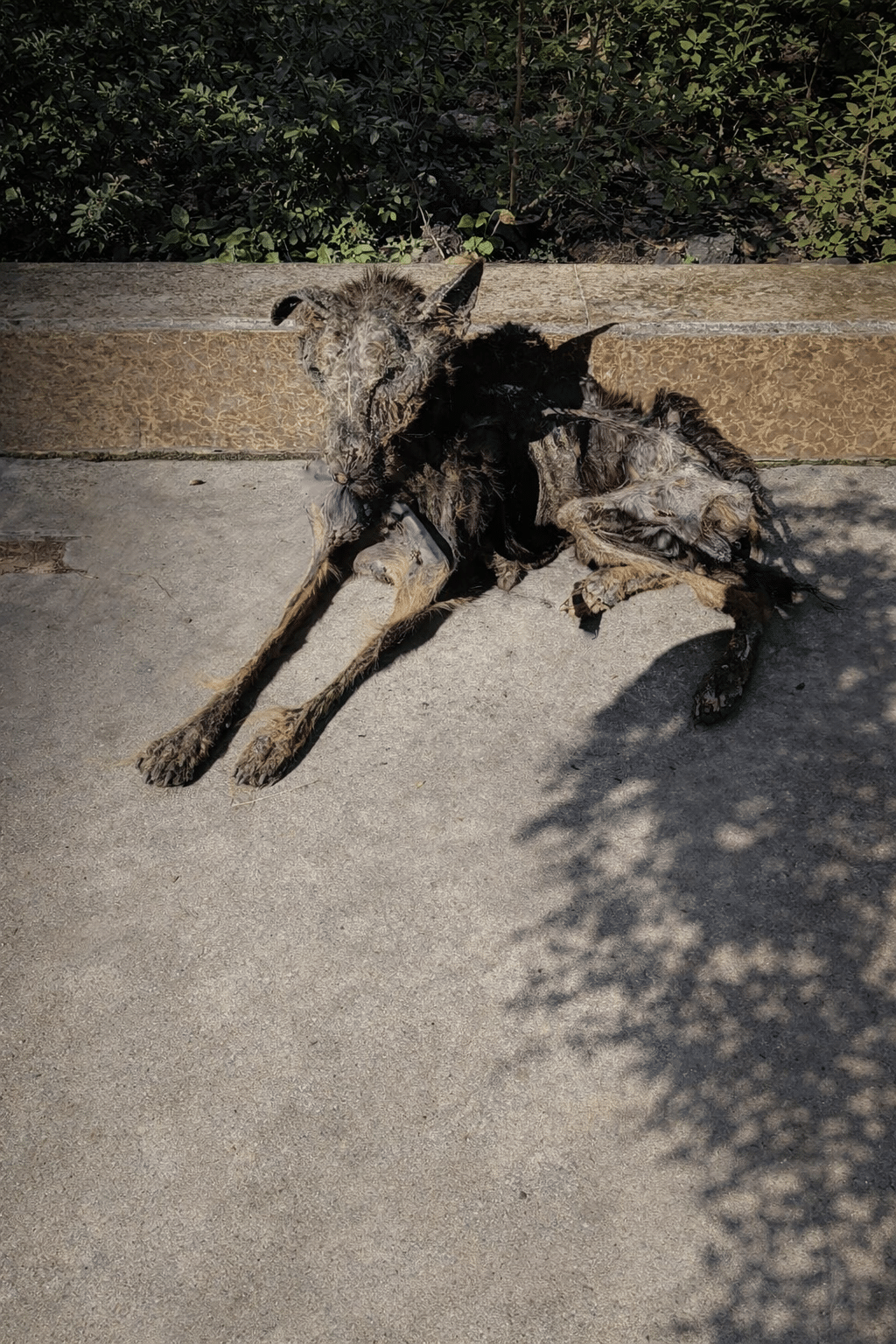
The first photograph was difficult to forget.
A thin dog stood somewhere out of reach, his body almost completely stripped of fur.
His skin looked inflamed.
His face was worn.
And even through a single image, it was obvious that something had been wrong for a very long time.
Someone saw that photo and decided Beezer could not simply remain another dog people felt sorry for online.
They needed to find him.
That turned out to be harder than expected.
Beezer appeared briefly, then disappeared again.
No one seemed to know exactly where he stayed.
Rescuers began asking questions, following scraps of information through the neighborhood and hoping they could reach him before his condition became worse.
Eventually, they did.
And when Beezer finally stood in front of them, the photograph suddenly seemed incomplete.
His real condition was even more serious.
Beezer Had Been Abandoned After He Became Sick
According to a neighbor, Beezer had once belonged to someone.
But after severe mange changed his appearance and his health began declining, he was reportedly abandoned.
The neighbor had wanted to intervene.
There was another complication.
According to the rescue account, the former owner was known locally for an aggressive temper and was sometimes seen carrying a machete.
That fear had discouraged people from getting involved directly.
Meanwhile, Beezer’s condition continued worsening.
By the time rescuers reached him, he was approximately eight years old and weighed only 33 pounds.
His skin was severely inflamed.
Most of his fur was gone.
An infection contributed to a strong odor around his body.
His gums were pale, consistent with significant anemia.
Only a few teeth remained.
There was also an unusual wound around his nose that needed further investigation.
Yet while rescuers were taking in the extent of his condition, Beezer did something simple.
His tail moved.
Then moved again.
VIDEO: The Moment Beezer Finally Finds Safety
His First Veterinary Exam Revealed Problems No One Could See From the Photo
Beezer was taken for veterinary care as quickly as possible.
During the drive, he fell asleep.
There was no way to know exactly what he was feeling.
But his body had clearly been running on very little for a long time.
At the clinic, the team began building a clearer picture of his condition.
Beezer was too anemic to move directly into surgery.
Before any major procedure could be considered, he would need a blood transfusion and time to become stronger.
Then imaging revealed another surprise.
Beezer had swallowed a bottle cap.
X-rays also showed two bullet slugs still lodged inside his body.
The rescue account did not establish when those injuries occurred or who was responsible.
What mattered now was determining which problems required immediate treatment and which could be addressed once Beezer was more stable.
For the moment, strengthening him came first.
The Injury to His Nose Was Not What Veterinarians First Feared
Beezer’s damaged nose raised another concern.
At first, veterinarians considered the possibility of cryptococcus, a serious fungal infection that can affect the nasal area.
Additional testing, however, pointed to a different explanation.
The damage appeared to be the result of an old injury that had gone untreated and worsened over time.
That meant the treatment plan could be adjusted.
With proper care, the area gradually began improving.
Beezer’s breathing became easier.
His nose started healing.
At the same time, something else was changing.
He was beginning to form a relationship with the people around him.
One of the most important people in that process was his foster caregiver, Dr. Paulina Pepper.
Beezer developed a habit around her.
He would gently press his head against her chest.
It was a quiet behavior.
But it became one of the clearest signs that Beezer was growing comfortable enough to seek closeness on his own.
By the Seventh Day, He Was Beginning to Act Like a Dog Again
The changes came quickly enough for caregivers to notice but slowly enough to remain believable.
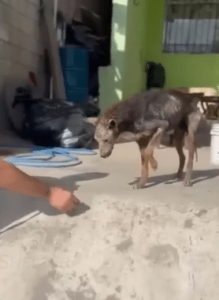
By around Day 7, Beezer was more relaxed in his surroundings.
His meals were regular.
His resting space was safe.
People approached him gently.
And the dog who had initially seemed worn down by illness began showing more energy.
He barked.
Moved around more.
Responded when familiar people appeared.
His tail continued wagging often.
These were ordinary behaviors for many dogs.
For Beezer, they marked the return of something that had been difficult to see beneath the mange, anemia, infection, and exhaustion.
His personality.
The medical team continued monitoring his blood condition.
The swallowed bottle cap still needed to come out.
But surgery had to wait until his body could tolerate it.
By around Day 18, Beezer had gained enough stability that the team could begin preparing more seriously for the procedure.
One Month Into Recovery, Beezer Was Finally Strong Enough for Surgery
Around a month after rescue, Beezer was ready.
Veterinarians operated to remove the bottle cap from his digestive system.
During the procedure, they also found something else.
A rock.
Beezer had swallowed that too.
While he remained under anesthesia, the veterinary team also addressed his dental problems and removed one badly damaged tooth.
The surgery itself was successful.
Recovery, however, was not completely smooth.
At one point, the surgical site reopened and required additional treatment.
The medical team responded quickly and continued managing the wound until Beezer could progress again.
Through all of it, his behavior remained remarkably social.
He continued responding positively to people.
His appetite improved.
His body gained strength.
And the same tail that had moved during his first rescue days remained one of his most consistent features.
By Day 50, Fur Was Beginning to Cover the Dog Everyone First Saw Online
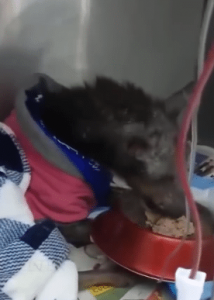
The transformation became especially obvious around Day 50.
Beezer’s coat was growing back.
The inflamed, nearly bare skin from his first photograph was slowly disappearing beneath new fur.
His body was gaining weight.
His face looked healthier.
And with each week, the dog beneath the illness became easier to recognize.
As the coat returned, rescuers noticed something they had barely been able to see before.
Beezer resembled a Shepherd-type dog.
The dog who had looked so frail and unfamiliar in the original photo was taking on a completely different appearance.
But appearance was not the most important change.
Beezer now moved toward people.
He accepted affection.
He showed curiosity.
He behaved like a dog expecting good things to happen rather than simply enduring whatever came next.
Once he was stable enough, he was transferred to the rescue organization Hand in Paw for the next stage of his journey.
Beezer’s Final Move Was Not to Another Clinic
After everything Beezer had been through, the next transition was completely different.
He was adopted.
A woman welcomed him into her home while he was still continuing to gain weight and regrow his coat.
He did not need to look completely recovered before he could belong somewhere.
He only needed the right person to see the dog he had already become.
The home gave Beezer the things that had been missing from so much of his earlier life.
Regular meals.
A safe place to sleep.
People who noticed when he needed care.
Affection that did not disappear when his appearance changed.
His body still had healing left to do.
His coat was still filling in.
But the uncertainty surrounding where he would go next was finally gone.
Beezer had a home.
The Photo That Started the Search No Longer Defines Him
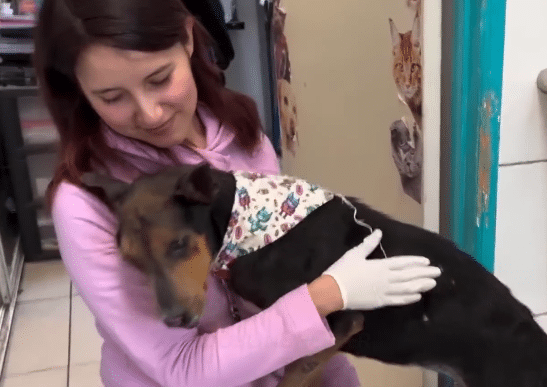
The first image of Beezer captured a dog at one of the lowest points of his life.
Thin.
Nearly hairless.
Sick.
Easy to remember for all the wrong reasons.
But that image eventually became only the beginning.
After it came the search.
The neighbor’s information.
The rescue.
The clinic.
The transfusion.
The discovery of the bottle cap and bullet slugs.
Treatment for his nose.
Dr. Paulina Pepper’s foster care.
Day 18.
Surgery.
The rock.
The reopened wound.
Day 50.
New fur.
Hand in Paw.
And finally, a family.
None of those later moments existed in the original photograph.
That is what rescue added.
Not a different past.
A future.
Beezer Did Not Need People to Forget What Happened — He Needed Someone to Keep Showing Up
Beezer’s story is easy to frame as a dramatic transformation.
And physically, the change was remarkable.
But the deeper pattern was simpler.
Someone saw a photograph and searched.
A neighbor shared information.
Veterinarians treated the problems they found.
A foster caregiver stayed close through recovery.
A rescue organization carried the process forward.
An adopter opened her home.
Beezer’s life changed because different people continued the work after the most emotional moment had already passed.
He did not recover because one person saved him once.
He recovered because care kept happening.
Again.
And again.
The dog from the original photograph eventually became a dog with fur, strength, companionship, and a place to sleep every night.
But perhaps the clearest sign of change had been there from the beginning.
That tail.
Even when Beezer weighed only 33 pounds.
Even when his skin hurt.
Even when no one yet knew how many medical problems were hidden inside his body.
It moved.
Today, Beezer no longer has to rely on strangers following clues through a neighborhood just to find him.
His family knows exactly where he is.
And this time, no one is leaving him because he got sick.


