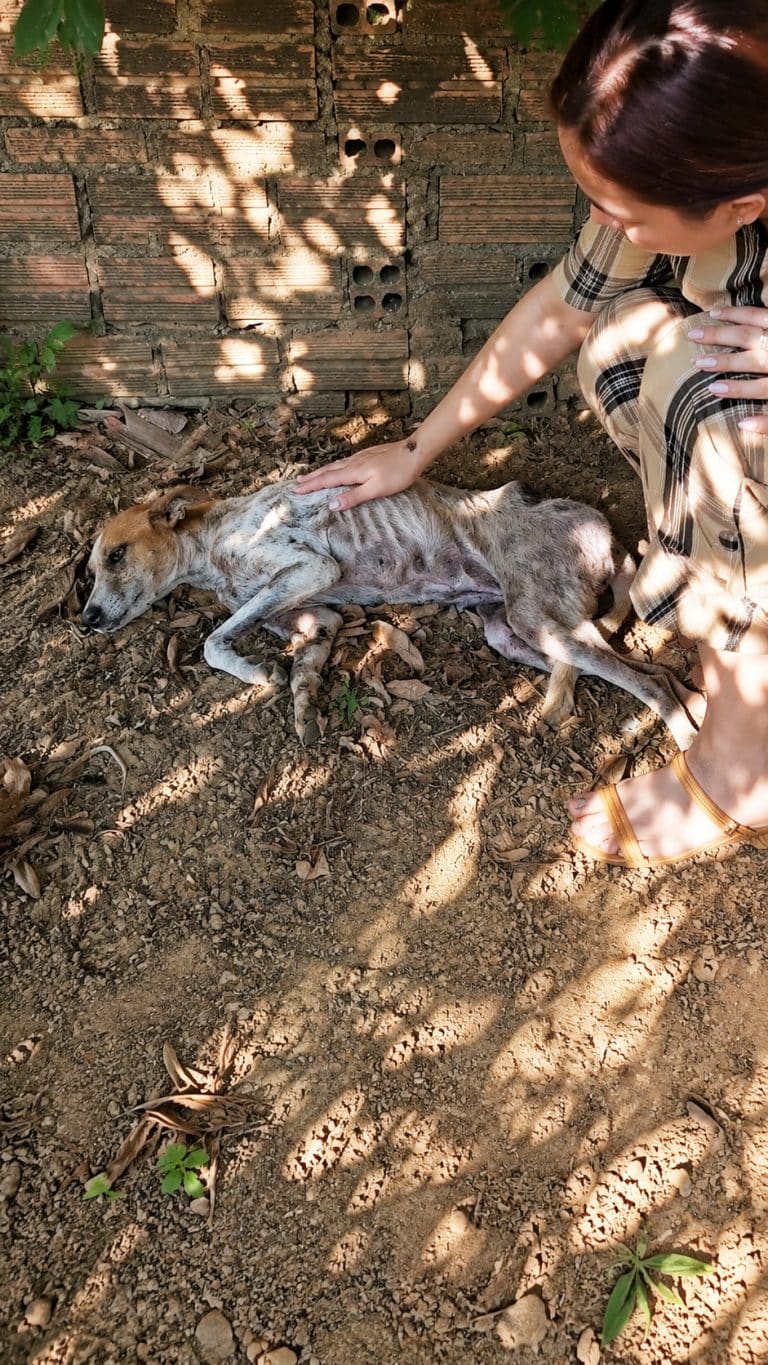
Pandora was curled beneath a tree when rescuers found him.
The elderly dog was painfully thin, his weakened body resting against the dirt while parasites and untreated wounds covered his skin. He could barely shift his position, much less stand and walk away.
Local residents said his owner had moved away months earlier.
Pandora had been left behind.
Yet even in his exhausted condition, he repeatedly lifted his head toward the nearby road, watching the distance whenever movement passed.
No one could know exactly who he expected to see.
What rescuers knew was simpler:
He had waited long enough.
An Elderly Dog Left Without Care
Pandora had reportedly spent months surviving near the same tree after the person responsible for him moved away.
There was no dependable shelter protecting him from rain or heat.
No regular food.
No medical treatment for the wounds, parasites, and weakness gradually affecting his body.
As his condition worsened, Pandora’s world became smaller.
Eventually, he appeared unable to travel far from the place where rescuers later discovered him. His ribs were visible, his coat was in poor condition, and even lifting his head required effort.
When people approached, Pandora did not bark.
He did not attempt to run.
He remained on the ground, watching quietly while rescuers assessed how to move him without causing additional pain.
His lack of resistance was not proof that he understood their intentions.
He may simply have been too tired to respond.
The team supported his fragile body carefully and carried him away from the tree.
Video: Elderly Dog Found Unable to Walk Beneath a Tree Is Finally Carried to Safety
The Veterinary Examination Revealed a Spinal Injury
At the clinic, Pandora received an urgent medical examination.
Veterinary staff cleaned his wounds and began removing the parasites covering his body. His hydration, weight, and general condition also required immediate attention after such a prolonged period without consistent care.
The team then investigated why Pandora could barely stand.
The examinations revealed serious damage affecting his spine.
That condition helped explain the weakness in his hind legs and why he had remained almost motionless when rescuers arrived.
Pandora’s age and malnutrition made treatment more complicated.
His body had lost muscle.
His skin needed time to heal.
And the spinal problem might prevent him from ever walking normally again.
The veterinary team could not promise that he would regain full mobility.
Their first goal was to reduce discomfort, treat the problems that could be managed, and give Pandora a stable environment in which to recover.
His First Days Were About Comfort, Not Progress
Pandora spent much of his early recovery resting.
Soft blankets replaced the bare ground beneath the tree. Warm meals were introduced carefully, and medication became part of his daily routine.
Caregivers cleaned his skin, monitored his wounds, and helped reposition him when he could not move comfortably on his own.
No one demanded that he stand.
No one expected an immediate tail wag.
Pandora had reached safety, but his body and behavior still reflected the instability of the life he had been living.
At first, he remained quiet when people entered.
He watched them closely but offered little response. The caregivers continued speaking to him in calm voices and announcing themselves before touching him.
The same people returned each day.
Meals arrived consistently.
Hands moved gently.
Gradually, Pandora began lifting his head when he heard familiar footsteps.
That small response became one of the first visible signs that he was engaging with his new surroundings.
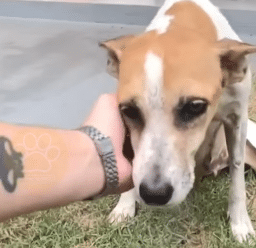
A Wheelchair Gave Him Another Way to Move
Because Pandora’s spinal injury limited the use of his hind legs, rescuers introduced him to a mobility cart designed for dogs.
The wheelchair supported the back of his body while allowing his front legs to move him forward.
At first, Pandora did not understand it.
The frame felt unfamiliar around his body, and the wheels changed the way he needed to balance. He moved slowly, sometimes stopping after only a short distance.
Caregivers remained beside him.
They adjusted the equipment to make sure it fit properly and supported him while he learned how to turn, stop, and move across different surfaces.
The goal was not to make Pandora perform for a camera.
It was to give him more independence.
Without support, he depended on people to carry him whenever he wanted to change locations. With the wheelchair, he could begin making some of those choices himself.
Each practice session remained short.
Pandora was allowed to rest whenever he became tired.
Little by little, the wheels became less confusing.
The Dog Who Rarely Moved Began Exploring
As Pandora became more comfortable in the wheelchair, his surroundings seemed to interest him again.
He moved toward new scents.
He watched other animals nearby.
He followed caregivers rather than remaining in one place and waiting for them to return.
His pace was slow, but it was purposeful.
Pandora began navigating outdoor areas with greater confidence. When a familiar person approached, his tail sometimes moved, and his posture appeared more relaxed.
The wheelchair did not repair his spine.
It did not remove every challenge associated with age or long-term neglect.
But it gave Pandora access to experiences he could no longer reach on his own.
He could move into the sunlight.
Explore beyond his bed.
And decide when he wanted to approach someone for attention.
Those choices mattered.
After months in which his physical world had narrowed to the area beneath a tree, Pandora finally had room to discover something beyond it.
Trust Grew Through Quiet Daily Routines
Pandora remained a calm dog throughout much of his treatment.
He accepted cleaning, medication, and assistance without showing aggression. Over time, that passive acceptance developed into more active connection.
He began responding to familiar voices.
He rested comfortably while caregivers sat beside him.
When touched gently, his body no longer remained as tense as it had during his first days.
Trust did not arrive because his past had been forgotten.
It grew because his present became predictable.
No one disappeared after feeding him once.
No one left him outside after helping him into the wheelchair.
The people caring for Pandora returned in the morning, remained through difficult treatments, and were still there the following day.
For an elderly animal who had experienced prolonged instability, consistency was one of the most meaningful forms of care they could offer.
The sadness viewers believed they saw in his early footage slowly gave way to observable changes:
A raised head.
A moving tail.
A willingness to explore.
A body resting without remaining constantly alert.
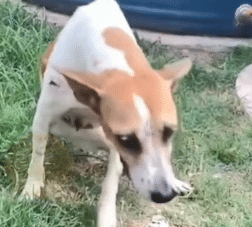
Senior Dogs Still Deserve a Future
Pandora’s story also reflects the challenges facing older rescue animals.
Senior dogs may arrive with chronic medical conditions, limited mobility, dental problems, or years of untreated illness. Their care can require more time and financial support than that of younger animals.
They may never become highly energetic.
Some will need medication or mobility assistance for the rest of their lives.
But quality of life is not measured only by speed, youth, or perfect health.
An elderly dog can still enjoy warm meals, fresh air, familiar voices, and the comfort of sleeping near people he trusts.
Pandora did not need to become young again.
He needed relief from discomfort.
A way to move.
And people willing to value the life he still had in front of him.
The wheelchair did not make him less deserving of a home.
It allowed more of his personality to become visible.
Pandora No Longer Waits Beneath the Tree Alone
By the end of his recovery journey, Pandora looked very different from the dog rescuers first carried away.
He remained elderly.
His spinal injury remained part of his life.
But he was no longer lying alone in the dirt without access to food, medical care, or shelter.
With the help of his wheelchair, Pandora could move through safe spaces and remain close to the people caring for him.
He received regular meals.
His wounds were treated.
Parasites no longer covered his fragile body.
Most importantly, he no longer had to watch the road wondering whether anyone would stop.
Pandora’s story did not become meaningful because every problem disappeared.
It became meaningful because people accepted the problems that remained and continued caring for him anyway.
For months, the old dog had stayed beneath the same tree after the life he knew moved on without him.
Then rescuers arrived.
They did not promise to return someday.
They lifted him into their arms—and stayed.


