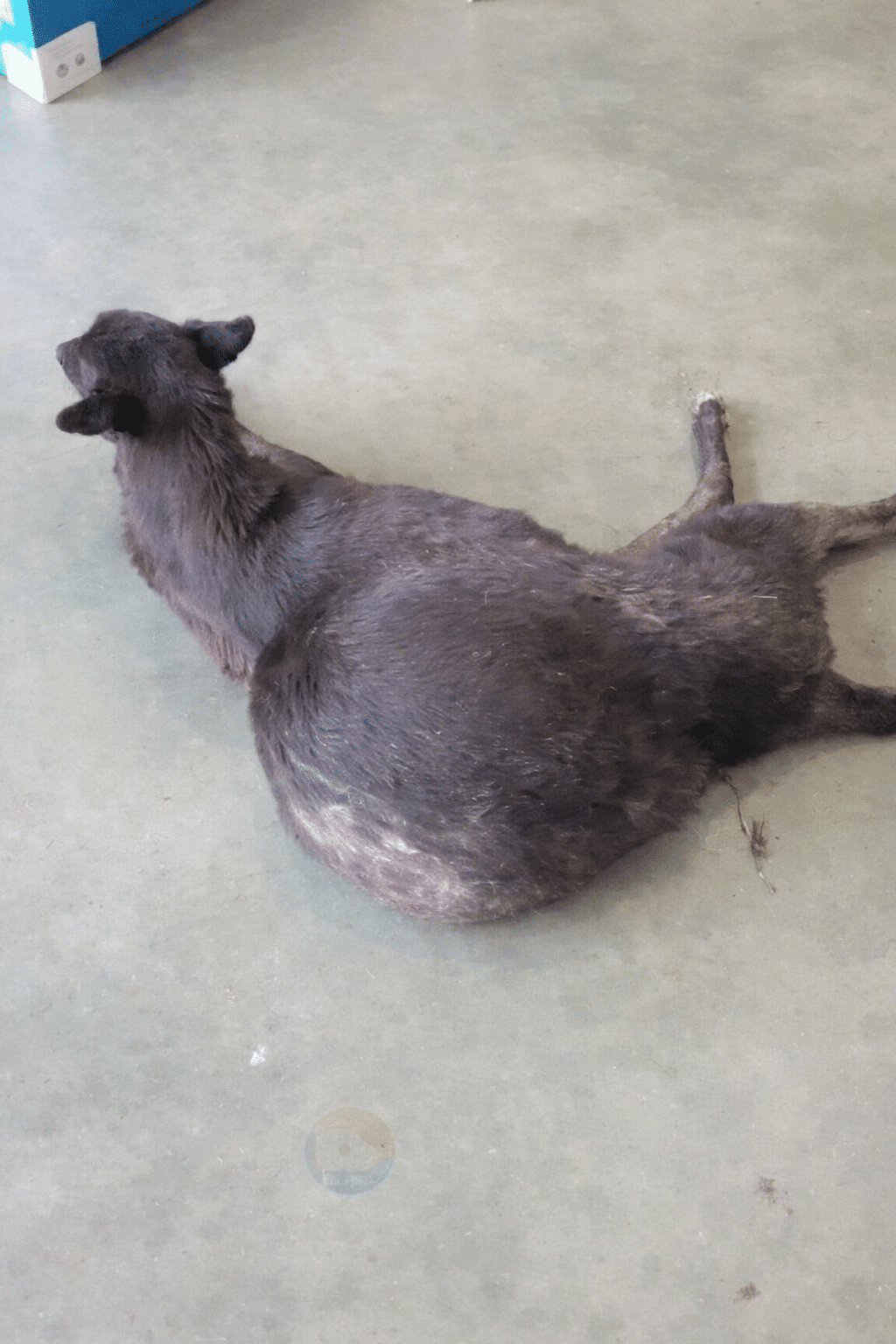
By the time anyone finally stepped in, Pat had already been carrying the weight for far too long.
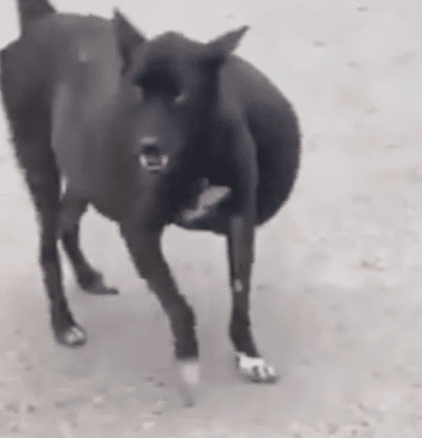
The stray dog had spent months on the streets with an enormous tumor hanging from his body, changing the way he walked and draining what little strength he still had.
Every step required effort.
Every movement had to compensate for a burden no dog should have been expected to carry.
According to his rescue story, Pat may have lived with the growth for nearly a year before receiving medical help.
No one could know exactly how many difficult days came before that moment.
What rescuers could see was enough.
Pat was exhausted.
His condition was severe.
And waiting any longer offered little hope.
The Tumor Had Become Part of Every Step He Took
Pat’s body showed the cost of surviving with such a large mass.
The tumor had grown until it dramatically altered his shape, forcing him to move around its weight wherever he went.
For a stray dog, daily life was already uncertain.
Finding food required walking.
Finding water required walking.
Searching for somewhere to rest required walking again.
Pat had to do all of it while carrying a growth that continued pulling against his weakened body.
Yet somehow, he kept moving.
When rescuers eventually reached him, there was no illusion that the situation would be simple.
This was not a case where food, rest, and a few days of medication would be enough.
Pat needed specialists.
He needed tests.
And most of all, the medical team needed to know whether his already depleted body could survive the treatment required to remove the tumor.
Video: Pat — The Brave Stray Who Faced an 11.5-Kilogram Tumor
The Question Was Not Only Whether Surgery Was Possible
Once Pat reached veterinary care, doctors began evaluating him carefully.
The tumor was enormous.
But its size was only one part of the problem.
Pat had been living in poor condition for a long time, and his body had already spent months compensating for the strain.
Before surgery could even be considered, veterinarians needed to determine whether he was strong enough to survive anesthesia and a major operation.
Tests were performed.
His overall condition was assessed.
The results offered little reassurance.
According to the rescue account, veterinarians estimated that Pat had only about a 20 percent chance of surviving the procedure.
That number placed everyone caring for him in an impossible position.
Surgery was extraordinarily risky.
But leaving the tumor untreated offered no meaningful path forward either.
There was no safe choice.
Only the possibility of giving Pat a chance that had arrived very late.
They Chose to Try
The decision was made to proceed.
Not because success was guaranteed.
It clearly was not.
The team moved forward because Pat’s condition had reached a point where doing nothing would leave him continuing to carry the same enormous burden.
Preparation had to be careful.
The veterinary team knew they were operating on a dog who was already exhausted before the procedure even began.
Every stage mattered.
Anesthesia.
Blood loss.
The length of the operation.
The stress placed on Pat’s weakened system.
Yet once the surgery started, the team continued working through the difficult procedure.
The goal was straightforward but daunting.
Remove the tumor.
Give Pat’s body the first real opportunity it had received in months to exist without that weight.
Eleven and a Half Kilograms Were Finally Removed
When the operation ended, the scale revealed just how much Pat had been carrying.
The tumor weighed approximately 11.5 kilograms.
It was an extraordinary amount of weight for an already weakened dog.
For the first time in nearly a year, according to his story, that mass was no longer attached to his body.
The surgery itself had succeeded.
The tumor was gone.
For those who had fought to get Pat into treatment, the moment brought understandable hope.
Perhaps his body would stabilize.
Perhaps the removal would allow him to begin recovering.
Perhaps the street dog who had spent so long struggling beneath an enormous physical burden would finally get the quieter life everyone wanted for him.
But surgery was only one part of the battle.
Pat still had to survive what came after.
The First Hours After Surgery Remained Critical
Removing the tumor did not erase the toll of the months before it.
Pat’s body had already been pushed extraordinarily hard.
The procedure itself added another major strain.
He needed close monitoring.
Rest.
Supportive care.
And time for his system to adjust after carrying such an enormous mass for so long.
Those around him watched carefully.
There had been little certainty from the beginning, and that uncertainty remained even after the successful operation.
The medical team had achieved what once seemed almost impossible.
But Pat’s condition was about more than the tumor alone.
His body had been weakened over time.
No operation could instantly restore everything illness and prolonged suffering had taken from him.
The hope now rested on whether he had enough strength left to recover.
The Second Chance Lasted Only One Day
Pat did not receive the long recovery everyone had hoped for.
The day after surgery, his body could no longer continue.
He passed away.
For the rescuers and veterinary team, it was a painful outcome after so much effort.
They had managed to remove the enormous tumor.
They had given Pat the medical chance he had gone without for months.
And still, it had not been enough to save him.
His condition had simply progressed too far.
There would be no photograph months later of Pat running through a yard.
No adoption story.
No transformation into the healthy dog everyone wanted to see.
His rescue ended differently.
But that does not mean it meant nothing.
Pat’s Final Chapter Was Different From the One Before It
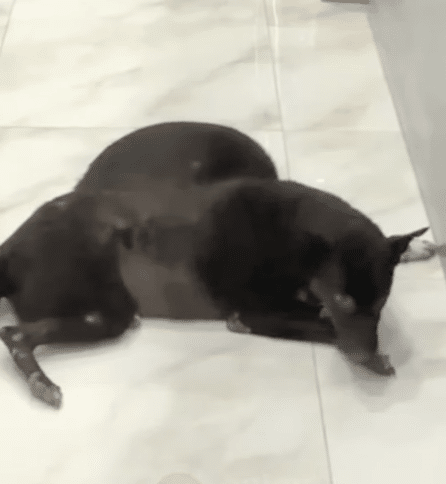
Before rescue, Pat had been a sick stray navigating the streets with an 11.5-kilogram burden attached to his body.
After rescue, he had people working for him.
Veterinarians examined him.
A team accepted the risk of attempting surgery.
Caregivers stayed nearby afterward.
His final hours were no longer defined by being overlooked.
The people around Pat could not undo the months he had spent struggling.
They could not give his weakened body more strength than it had left.
But they could make one promise true.
He would not be left to face the end in the same isolation in which he had spent so much of his life.
That difference matters.
Rescue is often associated with survival.
Sometimes it must also include dignity when survival is no longer possible.
Not Every Rescue Story Ends With Recovery
Pat’s story belongs to a difficult category of animal rescue.
Sometimes help arrives in time for treatment, rehabilitation, and adoption.
Sometimes it arrives when illness or injury has already progressed too far.
That reality can be painful to accept.
It can also tempt people to ask whether trying was worthwhile when the outcome is loss.
For Pat, the answer lies in what changed after he was found.
He received an examination instead of being left untreated.
He received surgery instead of continuing to carry the mass.
He received attention instead of being overlooked.
And when his body failed, there were people beside him who knew his name and cared what happened.
The operation did not give Pat the years everyone wanted.
It did give him a chance.
And until his final day, that chance was worth fighting for.
Pat’s Story Is a Reminder to Notice Before It Is Too Late
A tumor as large as Pat’s did not appear overnight.
His rescue story says he had lived with it for nearly a year.
That means his condition worsened over time while he continued surviving outside.
Street animals rarely have someone consistently monitoring their health.
There may be no person noticing that a lump has grown larger.
No routine veterinary examination.
No one responsible for deciding that today is the day treatment can no longer wait.
By the time rescuers become involved, they may be meeting an animal very late in the progression of disease.
Pat’s outcome cannot tell us what would have happened if he had received help sooner.
The source does not provide that answer.
What it does show is how limited the options had become by the time he finally reached medical care.
His surgery carried an estimated 20 percent chance of survival.
His tumor weighed 11.5 kilograms.
And although the operation succeeded, his body did not.
Pat’s story ended the next day.
But it did not end unnoticed.
For months, he had carried an enormous burden through the streets on his own.
At the end, he did not have to carry anything alone.
People had finally stopped.
They had finally seen him.
And they stayed.


