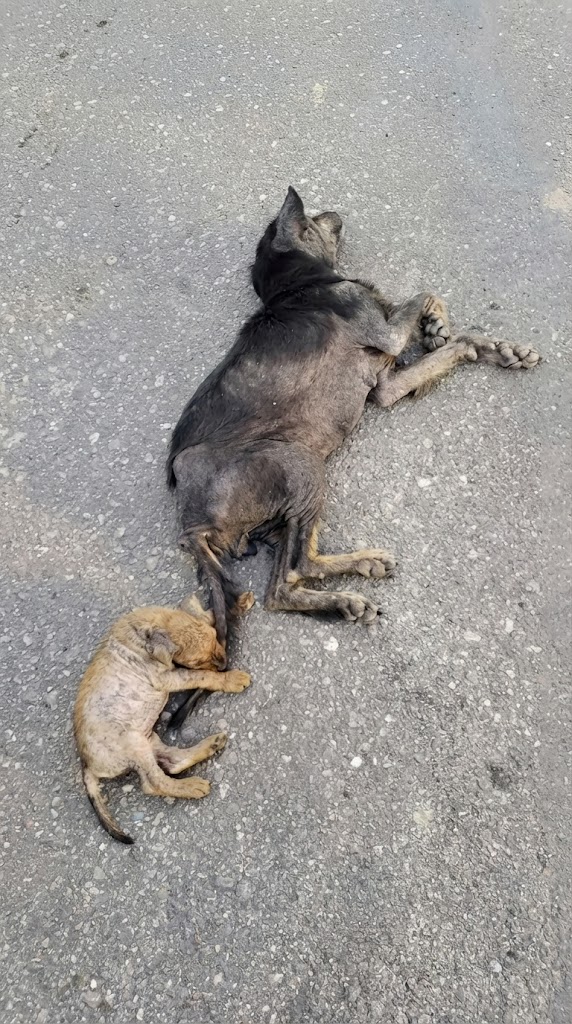
The mother dog had reached the point where her body simply could not keep going.
She lay on the ground, painfully thin, with almost no strength left to stand.
Beside her was one small puppy.
The puppy did not wander away.
She stayed pressed close to her mother, touching her gently and remaining near the only familiar body she knew.
According to the rescuers, the mother had spent much of her life being chased away because of her appearance.
People in the area had called her “ugly.”
Whatever had happened before that day, its effects were visible now.
Her ribs showed clearly.
Her coat and skin were in poor condition.
Her movements were weak.
And yet, even while exhausted, she remained close to her puppy.
When rescuers approached, the mother tried to respond.
But this time, there was simply not enough strength left in her body to go far.
Her Puppy Refused to Leave Her Side
The scene became even harder to forget because of what the puppy did next.
While the mother remained on the ground, the little dog stayed beside her.
She moved toward her mother’s tail.
Sniffed her.
Touched her gently.
Then settled close again.
There was no way to know what the puppy understood.
But her behavior was clear.
She was not leaving.
The rescuers approached slowly, careful not to frighten either dog.
The mother was extremely weak, but she remained attentive whenever someone came near her puppy.
Even in that condition, her attention repeatedly returned to the little dog beside her.
The rescuers quickly realized they were not dealing with one patient.
They had to save both.
VIDEO: She Collapsed Beside Her Puppy — But Still Tried to Stay Between Her Baby and the Rescuers
The Clinic Revealed How Much They Had Been Enduring
At the veterinary clinic, both dogs received a full examination.
They were severely malnourished.
Their bodies showed the effects of prolonged hunger.
But that was not the only concern.
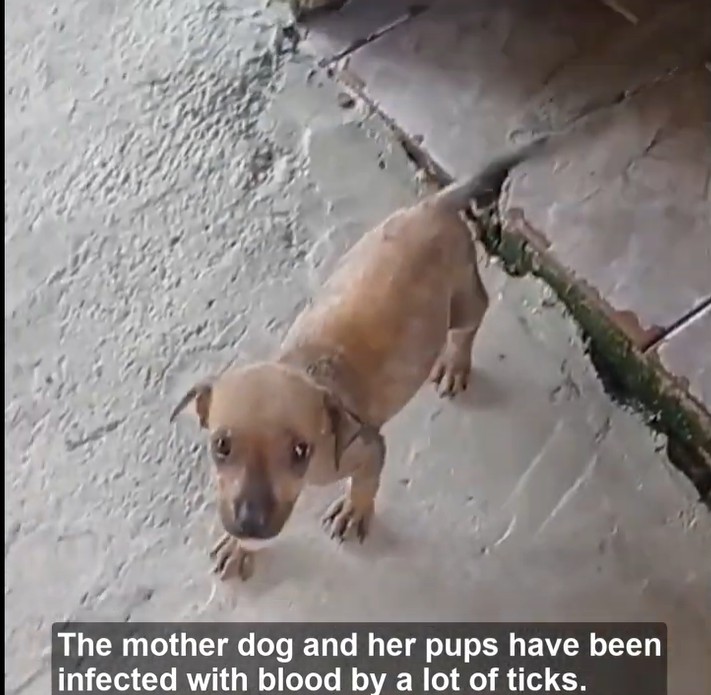
Both mother and puppy had been heavily affected by ticks.
For weakened animals, a serious tick burden can create additional medical complications, including problems involving the blood.
According to the rescue account, their bloodwork showed significant abnormalities associated with the infestation.
That helped explain why the mother had become so exhausted.
Her body was trying to manage several problems at once.
Poor nutrition.
Skin damage.
Parasites.
Weakness.
And the physical demands of caring for a puppy.
The mother had not collapsed because she had suddenly stopped trying.
Her body had simply reached its limit.
Recovery Started With the Basics
There was no single treatment that could reverse everything immediately.
Care began with fundamentals.
Food.
Hydration.
Parasite treatment.
Medication.
Clean bedding.
Rest.
And careful monitoring.
Because both dogs were severely weakened, everything had to be done gradually.
A body that has been deprived for a long time does not always respond well to sudden changes.
Meals needed to be appropriate.
Medication had to be monitored.
The mother needed time to regain strength.
The puppy needed support of her own.
Throughout those early days, the two remained close.
When the mother rested, the puppy stayed nearby.
When caregivers approached, both animals watched them carefully.
The rescuers did not try to separate them unnecessarily.
Their bond was already obvious.
So recovery became something they experienced together.
Day 10 Brought the First Encouraging Sign
The first several days were quiet.
There was no sudden transformation.
The mother spent much of her time resting.
Her body had very little reserve left, and healing required energy she had not had for a long time.
Then, around Day 10, something changed.
She began lifting her head more often.
She became more responsive to the people around her.
Her posture improved slightly.
These were small changes.
But small changes matter when an animal begins from such a weakened state.
Her appetite improved.
Her body slowly started responding to consistent care.
The puppy also became more active.
The two dogs who had arrived exhausted and fragile were beginning to show more interest in their surroundings.
Nobody rushed them.
There was no expectation that ten days of care could erase everything.
But for the first time, the direction of their story seemed different.
By Day 25, Her Appearance Had Changed
The mother had arrived with damaged skin and a coat that reflected the condition her body had been in.
That began changing as treatment continued.
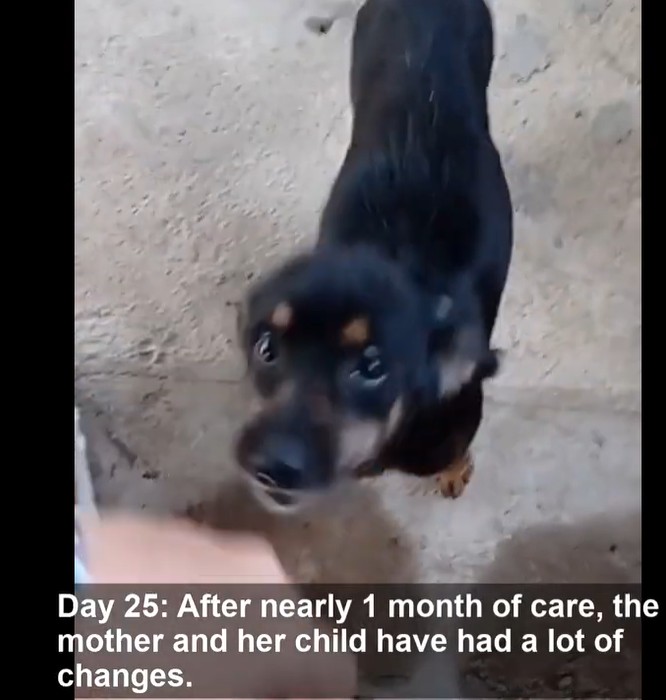
By approximately Day 25, the improvement was much easier to see.
Her skin looked healthier.
Inflammation had eased.
New fur began covering areas that had previously looked bare and damaged.
Her body was filling out.
Her face appeared more alert.
And the dog once described by people as “ugly” was becoming difficult to recognize.
But the transformation was not really about becoming beautiful.
She had never needed to earn kindness by looking better.
Her appearance had simply been showing what hunger, parasites, and poor health had done to her.
Once those problems were treated, the dog underneath finally had a chance to emerge.
The difference was not beauty replacing ugliness.
It was health replacing suffering.
Her Puppy Changed Beside Her
The little puppy was recovering too.
At first, she had remained almost constantly pressed near her mother.
As both dogs became stronger, her world slowly expanded.
She explored more.
She became curious about the people caring for them.
Her movements became more energetic.
But she continued returning to her mother.
Their relationship had survived whatever came before rescue.
Now they were able to experience something new together.
Regular meals.
Safe sleep.
Gentle handling.
Days when no one chased them away.
For the rescuers, keeping them together became increasingly important.
The puppy had relied on her mother through the most uncertain part of her early life.
The mother had stayed attentive to her puppy even while physically exhausted.
Separating them after recovery would have meant ending the one stable relationship they already had.
So when the time came to think about adoption, the goal was clear.
They needed a home willing to take both.
Finding One Home for Two Dogs Took Time
Medical treatment could be planned.
Finding the right family was less predictable.
Adopting one dog is a commitment.
Adopting two together can be more difficult.
The rescuers began searching for someone who understood that the mother and puppy came as a pair.
They needed more than a temporary place.
They needed a home where neither would be rejected because of appearance.
A home where the mother would not have to keep moving from one unsafe place to another.
A home where the puppy could grow up without losing the dog who had stayed beside her from the beginning.
The search continued for nearly a month.
Then the right person appeared.
Someone was willing to take them together.
Not just the puppy.
Not just the healthier-looking dog.
Both.
They Left Rescue the Same Way They Entered It — Together
The adoption changed the meaning of everything that had happened before.
The mother no longer needed to search for somewhere safe to rest.
The puppy no longer needed to remain close because the outside world was uncertain.
They had a home.
Food arrived every day.
There was clean water.
A protected place to sleep.
No one cared what the mother had once been called.
To her new family, she was not “the ugly dog.”
She was simply theirs.
And the puppy was still beside her.
The image was very different from the day rescuers first found them.
Then, the mother had been collapsed on the ground while her puppy stayed close.
Now she could stand.
Move.
Eat.
Rest.
Watch her puppy play.
The bond remained.
Only the circumstances around it had changed.
She Was Never Defined by the Way She Looked
The word “ugly” appears in this story because that was reportedly how some people had described the mother before her rescue.
But photographs taken later reveal why that label says much more about the people using it than about the dog.
Poor health can change an animal’s appearance dramatically.
Malnutrition removes weight.
Parasites damage skin.
Illness dulls a coat.
Exhaustion changes posture and expression.
Treat the underlying problems, and the animal people thought they understood can look completely different.
But even if the mother’s coat had never grown back perfectly, she still would have deserved care.
She did not become worthy on Day 25.
She was worthy on the day she lay exhausted in the dirt.
The only thing that changed was that someone finally treated her that way.
The Puppy Stayed — And Eventually, So Did Someone Else
The beginning of this story is quiet.
A mother dog on the ground.
A puppy beside her.
Neither animal knowing what would happen next.
Then came rescuers.
A clinic.
Treatment.
Day 10.
A lifted head.
Day 25.
Healing skin and returning fur.
Nearly a month of searching for a family.
And finally, an adoption that allowed mother and daughter to remain together.
The puppy had stayed close when her mother could barely move.
Later, rescuers stayed while both dogs recovered.
And eventually, a new owner chose to make that commitment permanent.
That is the part of their story worth remembering.
Not the word someone once used to insult the mother.
Not how thin she looked.
Not how badly her skin had deteriorated.
But the fact that one relationship survived all of it.
Mother beside puppy.
Puppy beside mother.
And now, a family beside both.
Once, the mother collapsed because her body had nothing left to give.
Today, she no longer has to spend every bit of strength simply surviving.
She can use it for something far more ordinary.
Standing in the sunlight.
Watching her puppy grow.
And living in a home where neither of them has to run away again.


