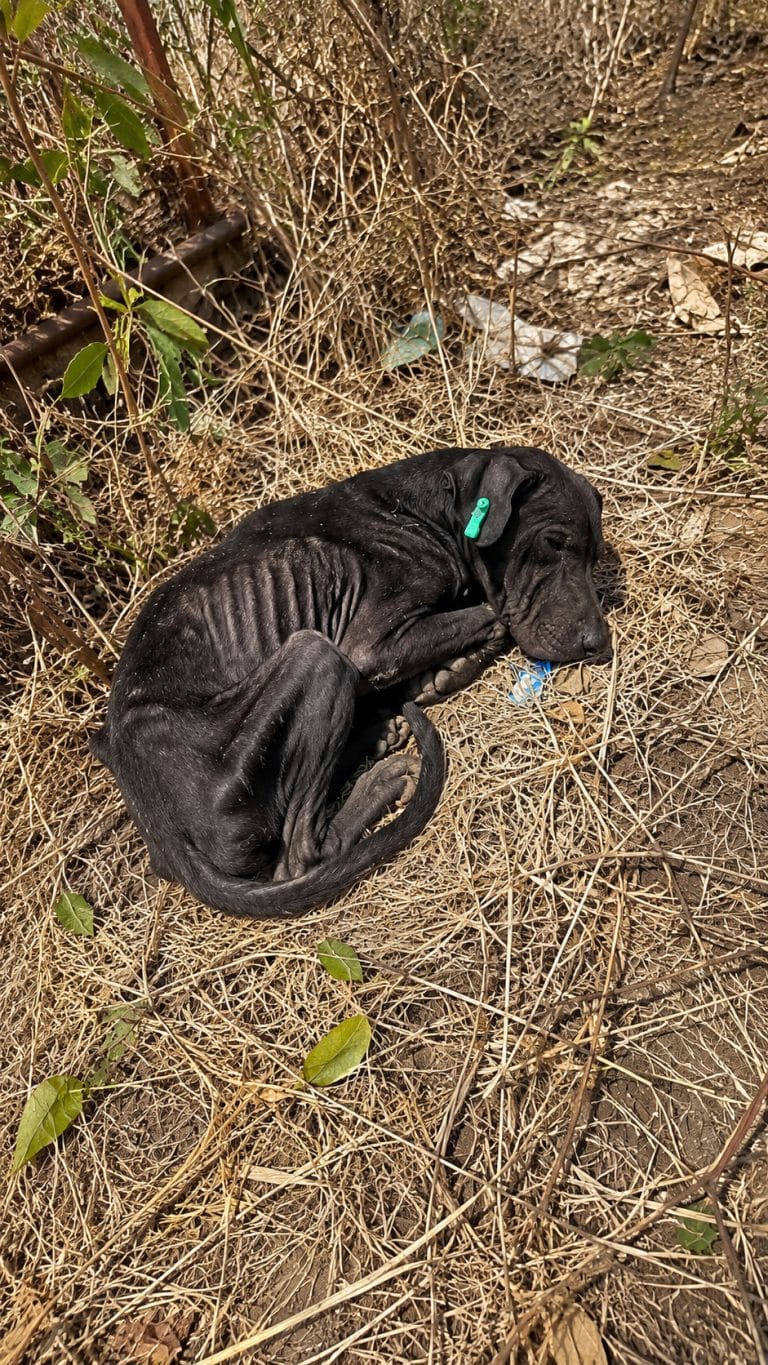
Bagira looked as though every remaining step required all the strength she had left.
The Shar Pei mix stood trembling in a residential area, painfully thin beneath a neglected coat that offered little protection from the cold. Her legs hesitated whenever she tried to move, and exhaustion seemed to reach far beyond simple hunger.
She was coughing.
Her breathing appeared strained.
And although her eyes still searched the faces around her, she no longer seemed certain that anyone would stop.
This time, someone did.
Her Fragile Body Was Beginning to Fail
Bagira’s condition revealed how long she had gone without the care she desperately needed.
Her ribs were clearly visible beneath her skin. The muscles that should have supported her body had weakened, leaving her unsteady and easily exhausted.
Even standing had become difficult.
She also showed signs of serious illness. She coughed frequently, had discharge around her nose, and appeared overwhelmed by a combination of infection, hunger, and prolonged physical stress.
There had reportedly been an earlier attempt to help her, but whatever care she received had not been enough. By the time rescuers found her again, she was in even worse condition.
This was not simply a dog who needed a few regular meals.
Bagira required urgent medical attention.
Her body was struggling.
But she was still holding on.
VIDEO: Bagira Could Barely Stand — Then Patient Care Helped Her Begin Again
The Veterinary Examination Confirmed Their Fears
Rescuers transported Bagira to a veterinary clinic without delay.
During the journey, she remained almost completely still. She did not resist or try to escape. She seemed too exhausted to respond to the unfamiliar surroundings.
At the clinic, the medical team performed a thorough examination.
Bagira weighed only 14.4 kilograms, far below a healthy weight for a dog of her size and build. Her bones were prominent, her muscles had significantly weakened, and she struggled to remain upright for long.
Veterinarians also found evidence of a serious infection affecting more than one part of her body.
The coughing, nasal discharge, fatigue, and physical weakness all suggested that her system had been under severe strain for some time.
Immediate treatment began.
She received intravenous fluids to address dehydration and support her weakened body. Medication was provided to control infection and inflammation, while her breathing, temperature, and overall condition were monitored closely.
The next several days would be critical.
Her First Victory Was Simply Lifting Her Head
At first, Bagira showed almost no response to the world around her.
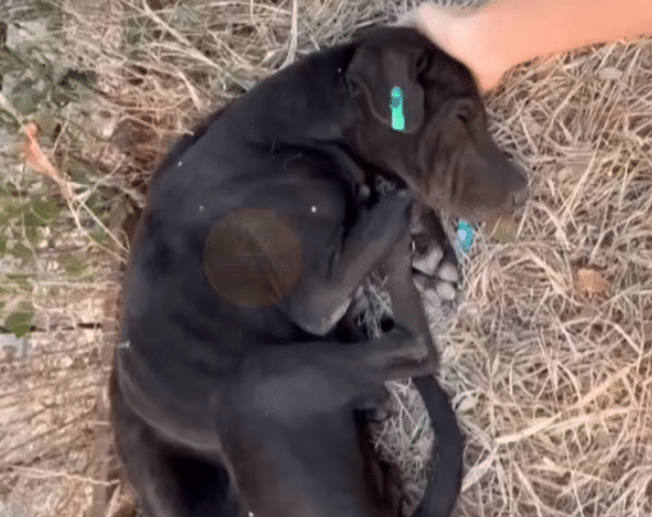
She rested beneath warm blankets while the medical team continued treatment. Gentle hands cleaned her, repositioned her when necessary, and made sure she remained as comfortable as possible.
She watched the people around her carefully.
There was uncertainty in her expression, but she did not appear aggressive.
It was as though she was trying to understand why these humans were staying close instead of ignoring her discomfort.
Then the first small changes appeared.
Bagira lifted her head.
She drank a little water.
She accepted a small amount of food.
For a healthy dog, these actions might have seemed ordinary. For Bagira, each one was evidence that her body still had the will to continue.
Then her tail moved.
It was only a small, cautious wag.
Not yet the joyful greeting of a healthy dog—but perhaps the first sign that she was beginning to feel safe.
Healing Required Care Around the Clock
Bagira’s condition remained too delicate for ordinary treatment alone.
She needed continuous observation and frequent adjustments to her care plan. The veterinary team watched her breathing, appetite, temperature, and energy throughout the day and night.
They encouraged her to eat without forcing her.
They kept her warm.
They cleaned her carefully and made sure she had a comfortable place to rest.
Progress was not consistent.
Some days brought encouraging changes.
Other days were slower, reminding everyone how fragile her recovery remained.
But no one expected a sudden transformation.
In cases like Bagira’s, healing often appears through very small victories.
A steadier breath.
A few more bites of food.
A longer period of alertness.
A dog who looks up when someone enters the room.
Little by little, Bagira began showing all of these.
She Had to Learn How to Stand Again
As the infection responded to treatment and regular nourishment began rebuilding her body, Bagira slowly regained strength.
Standing remained one of her greatest challenges.
Her legs trembled whenever she tried to rise. Sometimes she could support herself for only a few seconds before lowering her body back down.
Her caregivers stayed close, ready to steady her if needed.
They never forced her to remain standing longer than she could manage.
They simply gave her the opportunity to try.
Each attempt became part of her rehabilitation.
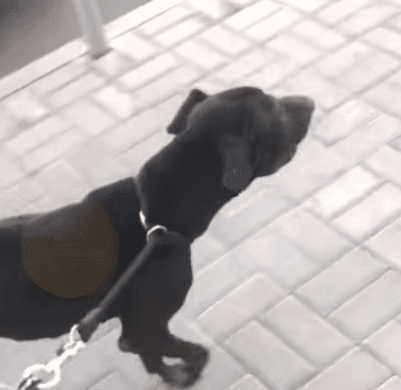
Bagira began holding herself upright for slightly longer periods. Her balance improved, and her legs gradually remembered how to support her weight.
Then she attempted a step.
It was slow and uncertain.
Soon, another followed.
The progress was cautious, but it belonged entirely to her.
For a dog who had once seemed too weak to move, every step was a victory.
Nearly One Month of Care Changed Everything
Over the following weeks, Bagira’s appearance and behavior began to transform.
She gained weight.
Her coat looked healthier.
Her breathing improved, and the coughing gradually became less frequent.
The most noticeable change appeared in her eyes.
They no longer carried the same distant exhaustion.
Bagira became more alert and curious about her surroundings. She watched people move through the room, responded when she heard familiar voices, and began exploring carefully whenever she felt strong enough.
The dog who had once struggled simply to remain standing was now walking with growing purpose.
She was no longer using every bit of energy merely to survive.
She was beginning to experience life again.
Her Gentle Personality Finally Had Room to Appear
As Bagira’s physical health improved, her caregivers discovered the dog who had been hidden beneath the illness.
She was gentle and calm.
She enjoyed peaceful companionship and preferred soft attention to loud excitement. Once she understood that she was safe, she accepted affection without hesitation.
Bagira began leaning toward the people who cared for her.
She stayed nearby when they entered the room and appeared reassured by their presence.
The trust did not arrive all at once.
It developed through the consistency of everyday care.
Meals came when expected.
Medication was given gently.
Warm bedding remained available.
And the same people continued returning, even on the difficult days.
Bagira learned that she could rest without being forgotten.
She could ask for comfort without being pushed away.
And she could trust that kindness would still be there when she woke.
A Foster Home Gave Her the Stability She Needed
Once Bagira was medically strong enough, she moved into foster care.
The quiet home environment offered something different from the clinic while still providing the stability she needed to continue recovering.
She had soft bedding.
Fresh water.
Regular meals.
And patient caregivers who understood that adjustment could not be rushed.
Bagira began relaxing more deeply.
Her tail wagged more often.
She followed her foster caregivers with curiosity and responded freely when they offered affection.
The weak, frightened dog discovered in the residential area slowly became a memory.
In her place was a gentle companion learning how comfortable ordinary life could feel.
Bagira Is Still Waiting for Her Forever Family
Bagira has completed the most difficult stage of her medical recovery.
She is stronger.
She is walking.
And she is emotionally ready to continue her journey.
But one important chapter has not yet been written.
Bagira is still waiting for a permanent home.
She needs a family that will offer consistency, patience, and kindness—not only during the easy moments, but whenever life becomes difficult.
Her past should not define how people see her.
She is more than the neglected dog who could barely stand.
She is affectionate.
Gentle.
Trusting.
And capable of building a deep bond with people who make her feel secure.
Bagira has already shown how much she can overcome when someone believes her life is worth the effort.
Now she needs people willing to make sure she is never abandoned again.
Her Life Was Rewritten by People Who Stayed
Bagira’s recovery was not created by one dramatic moment.
It was built through medical treatment, careful nutrition, warm blankets, rehabilitation, and the daily presence of people who refused to give up.
She was found sick, severely underweight, and unable to support herself properly.
Her future was uncertain.
But she was not left behind.
Today, Bagira can stand, walk, explore, and accept affection with growing confidence.
She is no longer merely surviving.
She is healing.
She is trusting.
And she is waiting for the family that will give her story the ending she has always deserved.
Sometimes a second chance begins when one person stops.
A new life begins when someone chooses to stay.


