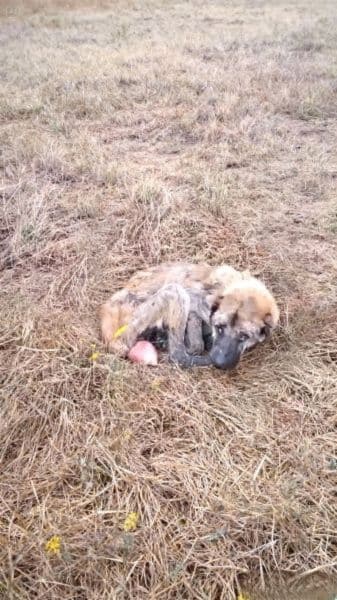
Almira was an Alabai, a dog built to be strong.
But when rescuers found her near a quiet garage, strength was almost the last thing anyone could see.
Her body was painfully thin.
Her movements were slow.
Even lifting herself seemed to require effort.
For more than two months, she had reportedly remained in that area, surviving in a body already worn down by years of repeated breeding and inadequate recovery.
There was no healthy coat hiding the problem.
No energy left to disguise how depleted she had become.
She looked like a dog who had been asked to give far more than her body could continue providing.
Yet when rescuers approached, Almira was still alive.
Still aware.
And still within reach of help.
Her Body Had Been Pushed Far Beyond What It Could Recover From
Almira’s condition did not appear to be the result of one bad week.
According to the rescue account, she had been repeatedly used for breeding without enough time, nutrition, or care to properly recover between pregnancies.
Over time, that kind of physical stress can leave a dog severely depleted.
By the time help reached her, Almira’s body reflected just how much had been taken out of her.
She was extremely underweight for a dog of her size.
Standing was difficult.
Her energy was almost gone.
Even small movements looked exhausting.
The rescuers did not need to know every detail of her past to understand that she needed emergency care.
Whatever had happened before, her body could not continue this way.
They approached carefully.
Supported her weight.
And prepared to move her somewhere she could finally receive the medical attention she had gone without.
VIDEO: Almira Had Been Used for Breeding Until Her Body Could Barely Continue
The Clinic Revealed Just How Fragile She Had Become
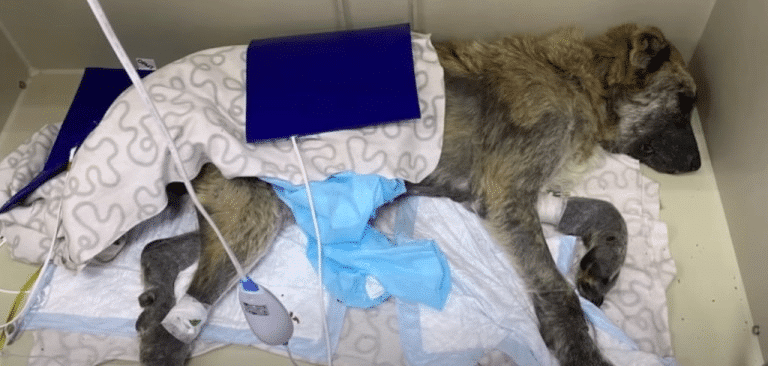
At the veterinary clinic, the team began evaluating Almira immediately.
Her low body weight was only one concern.
Her temperature was unstable.
Bloodwork showed how seriously her health had deteriorated.
The veterinarians understood that they were not dealing with a dog who simply needed more food.
Her entire system had been weakened.
The team focused first on stabilization.
Fluids.
Medication.
Monitoring.
Pain management.
Support for a body that had very little reserve left.
The source describes the situation as serious enough that surgery was also required.
There were no guarantees.
Almira had already endured a prolonged period of physical stress, and now her body had to tolerate medical treatment while severely depleted.
But she had finally reached people prepared to make decisions based on what she needed rather than what she could provide.
That difference became the foundation of everything that followed.
After Surgery, Even Standing Became a Milestone
Recovery did not begin with running.
It began with trying to stand.
Almira’s legs trembled beneath her.
She had lost so much strength that supporting her own body was difficult.
Caregivers did not push her.
A few seconds upright could be enough.
Then rest.
Later, another attempt.
A few steps.
Then another day.
Progress had to be measured differently for a dog in Almira’s condition.
A stronger appetite mattered.
A longer period on her feet mattered.
A calmer expression during treatment mattered.
The distance she walked was less important than the fact that she was beginning to move voluntarily again.
Her body had spent years being used.
Now every bit of energy could finally be directed toward herself.
Healing.
Eating.
Resting.
Rebuilding.
Food, Rest, and Time Began Returning What Her Body Had Lost
Almira’s recovery was not powered by one extraordinary intervention.
It depended on consistency.
Nutritious meals.
Medication.
Medical follow-ups.
Safe rest.
Enough time between efforts for her body to recover.
Little by little, she began gaining strength.
Her posture changed.
The severe exhaustion became less dominant.
She could remain standing longer.
Walk farther.
Show more interest in what was happening around her.
For caregivers, these improvements were important because they showed that her body was responding.
The dog who had once looked close to complete physical collapse was beginning to participate in her own routine.
Nothing needed to happen quickly.
Almira had already spent too much of her life being pushed.
This part would happen at her pace.
Gentle Hands Meant Something Different Now
Physical treatment was only one part of Almira’s recovery.
She also had to adjust to a very different relationship with people.
For a long time, human attention had reportedly been tied to breeding and demand.
Now hands approached for another reason entirely.
To clean.
To support.
To stroke her head.
To help her stand.
To make her comfortable.
At first, Almira remained quiet and cautious.
Caregivers allowed that.
They did not force affection.
They simply repeated the same gentle routines.
Voices became familiar.
Touch became predictable.
People arrived without asking anything difficult from her.
Slowly, Almira’s reactions changed.
Her eyes looked softer.
She responded when familiar people approached.
She accepted affection more easily.
Then she began seeking it.
The difference could not be explained by medicine alone.
Safety had become part of her daily life.
The Dog Who Once Barely Lifted Her Head Began Enjoying Ordinary Things
As weeks turned into months, Almira changed dramatically.
She became more mobile.
Her strength returned.
Her tail began moving more often.
She showed interest in the world around her.
And some of the most meaningful moments were also the simplest.
Warm blankets.
Sunlight.
A peaceful place to sleep.
Time outside.
The presence of other dogs.
These were ordinary experiences.
But Almira had spent so much of her life being valued for reproduction that ordinary life itself became something new.
She could rest without recovering for another pregnancy.
Eat without immediately being depleted again.
Move because she wanted to.
Sleep because she was tired.
Receive affection without owing anything in return.
That was the transformation rescuers had hoped for.
Not merely a healthier body.
A life that finally belonged to her.
Six Months Later, Almira Was Living in a Foster Home
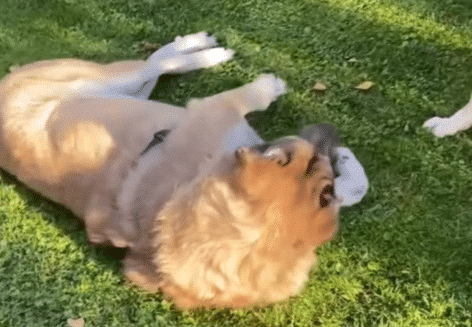
By around six months after rescue, Almira’s world looked completely different.
She was living in a foster home where patience and stability continued the work the clinic had begun.
Other dogs were part of the household.
A backyard gave her room to explore.
Soft places gave her room to rest.
Sunlight became something she could simply enjoy.
She no longer had to remain near the garage where she had once been found.
No one was measuring her worth through what she could produce.
Her value was no longer conditional.
She could simply exist as a companion.
The source does not describe a final permanent adoption, so there is no need to manufacture one.
A foster home was already a profound change from where Almira had started.
She had time.
Safety.
Medical support.
Companionship.
And people willing to let her future develop without pushing her.
Almira Finally Became More Than What Others Had Taken From Her
For years, Almira’s body had apparently been treated as something useful.
A means of producing litter after litter.
By the time rescuers reached her, the cost of that life was written across her entire body.
Thin frame.
Weak legs.
Unstable health.
Exhaustion.
But those things did not have to remain her identity.
Treatment gave her stability.
Surgery gave her a chance to recover.
Food rebuilt strength.
Time allowed her body to heal.
And gentle care showed her that human attention could exist without another demand attached to it.
That may be the most important part of Almira’s story.
Her rescue was not about returning her to productivity.
It was about ending the idea that she needed to produce anything at all.
Today, she can rest because she wants to.
Walk because she feels strong enough.
Stand in the sun.
Spend time around other dogs.
Accept affection.
Simply be Almira.
Once, nearly everything she had was taken from her body.
Now her days are finally giving something back.
Comfort.
Safety.
Choice.
And the chance to live as a dog instead of being valued only for what others could get from her.


