At first, people may have thought she was simply another stray crossing the road.
Then they watched her more closely.
The thin dog moved slowly through active traffic with her head lowered, her steps weak and uneven as vehicles passed frighteningly close.
She did not dart away.
She did not seem able to judge the danger around her.
She simply kept walking.
Her body was painfully thin, her movements were strained, and something about the way she carried herself made one driver stop.
That decision would change Diana’s life.
The Dog Who Barely Reacted to the Cars Around Her
Diana was in terrible condition.
Her body was extremely thin.
Old injuries could be seen across her skin, and her legs appeared barely strong enough to support her.
Still, she continued moving along the road.
Each step looked difficult.
Her pace was slow.
And the traffic surrounding her made the situation increasingly dangerous.
A dog in better condition might have run from the noise or reacted sharply when cars passed nearby.
Diana did neither.
Whether from exhaustion, fear, disorientation, or a combination of everything she had endured, she seemed unable to move herself somewhere safer.
One driver eventually pulled over.
The dog had not approached the vehicle.
She had not barked for attention.
Someone simply looked at her long enough to understand that she needed help.
Video: She Kept Walking Into Traffic — Diana’s Rescue and 200-Day Recovery
Even Food Was Not Enough to Bring Her Closer
People tried offering Diana food.
She noticed it.
For a moment, hunger seemed to pull her forward.
Then fear pulled her back.
She took a cautious step toward the food, hesitated, and retreated again.
Her body language remained tense.
Even when people kept their distance, Diana appeared uncertain about every movement around her.
Rescuers understood that getting her away from the road would require patience.
They could not simply chase her.
That might send her farther into traffic.
So they stayed nearby and allowed her time.
The hours passed.
As daylight faded, Diana’s condition appeared to worsen.
Her limp became more noticeable.
Her movements became slower.
Yet she was still surrounded by passing vehicles.
Every minute she remained there increased the risk.
When rescuers finally managed to approach closely enough, Diana reacted with panic.
She cried out.
Her body tightened.
The people reaching toward her were trying to help, but Diana had no way of knowing that.
Then her strength seemed to disappear.
She collapsed.
Inside the Rescue Car, Her Body Could Finally Stop Moving
Once Diana was safely away from traffic, rescuers placed her inside the vehicle.
The change was immediate in one simple way.
She no longer had to keep walking.
For a dog whose legs had been struggling to carry her, even that mattered.
Diana managed a few small sips of water.
Then she curled into herself and rested.
She was exhausted.
The rescuers could see that she needed veterinary attention as soon as possible.
Before that next stage began, they gave her something she had not had when they first saw her on the road.
A name.
Diana.
It was a small detail in the middle of an emergency.
But from that moment forward, she was no longer simply an unidentified dog wandering through traffic.
People knew her.
They were responsible for her.
And they were going to see what could still be done.

The Veterinary Examination Showed How Much Care She Needed
At the clinic, Diana’s condition was assessed more closely.
The extreme weight loss was immediately obvious.
Her body also carried injuries that had not received proper treatment.
She was weak enough that even basic movement remained difficult.
The veterinary team focused on stabilizing her and addressing the problems that could be treated.
Diana also remained highly sensitive to handling.
New situations could overwhelm her quickly.
There was no realistic expectation that a dog in this condition would suddenly become comfortable simply because she had been removed from the street.
Physical recovery would take time.
So would trust.
The first days were kept as calm as possible.
Caregivers moved slowly around her.
Voices remained gentle.
Diana was given opportunities to rest without constant stimulation.
There were no dramatic milestones at first.
Just basic care repeated every day.
Food.
Treatment.
Rest.
Observation.
And another morning in which Diana was still there.
Standing Again Became One of Her First Major Victories
Diana’s recovery was measured in small changes.
Her breathing became calmer.
She stayed attentive for longer periods.
She began watching familiar caregivers rather than turning away immediately.
Then more strength gradually returned to her body.
One day, Diana pushed herself upward.
Her legs trembled beneath her.
For a moment, it was unclear whether they would support her.
But they did.
Diana stood.
It was not a perfect recovery.
She was still weak.
Her body still needed considerable care.
But for the people who had watched her collapse after struggling through traffic, seeing Diana hold herself upright again was a remarkable change.
As she grew stronger, she also began communicating more clearly.
Sometimes, when overwhelmed, she growled softly.
Her caregivers did not punish her for it.
They treated the growl as information.
Diana was telling them she needed more space.
By respecting those signals, the team could continue working with her without forcing interactions she was not ready for.
Trust grew from those repeated experiences.
People approached.
Diana communicated.
They listened.
And nothing frightening followed.
Over the Weeks, a Different Dog Began to Appear
The physical changes eventually became impossible to miss.
Diana gained weight.
Her coat began improving.
Her movements became stronger and more confident.
The dog who had struggled simply to remain upright could now walk more comfortably.
Her behavior changed too.
The constant tension began easing.
She spent more time resting instead of remaining alert to every sound.
Familiar people were allowed closer.
She became increasingly comfortable with routines.
Meals arrived at predictable times.
Her sleeping space remained safe.
The same caregivers returned.
For Diana, recovery was not about forgetting whatever had happened before she was found.
It was about having enough new experiences to respond differently.
Another peaceful meal.
Another gentle examination.
Another person who respected her space.
Another night without traffic roaring beside her.
Weeks became months.
And those ordinary days began reshaping her life.
Two Hundred Days After the Road, Diana Was Almost Unrecognizable
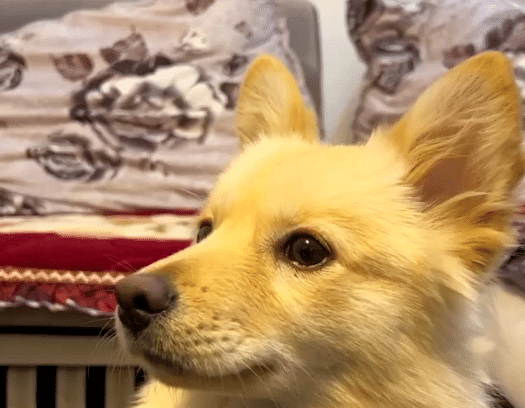
Around 200 days after her rescue, Diana looked remarkably different from the dog first seen wandering among moving vehicles.
Her body had filled out.
Her steps were stronger.
She could walk with far greater confidence.
Most importantly, she no longer appeared trapped in the same constant state of exhaustion and fear.
She could rest.
She could observe the world without immediately retreating.
She had people around her who understood when she needed comfort and when she needed space.
The road where Diana was found remained part of her story.
But it was no longer the only image that defined her.
There was now another Diana to remember.
One standing on stronger legs.
One resting peacefully.
One learning that the world around her could be predictable.
Someone Stopped When It Would Have Been Easier to Keep Driving
Diana’s rescue began with something extraordinarily simple.
Someone noticed.
Traffic continued moving.
Other people continued with their day.
But one person looked at the thin dog on the road and recognized that her behavior was not normal.
They stopped.
Then others helped.
That first decision led to veterinary care, months of recovery, and the chance for Diana to become strong enough to experience life beyond constant survival.
No one can know exactly what Diana was thinking as she walked among those cars.
We do not need to imagine it.
Her body already told enough of the story.
She was exhausted.
She was injured.
She was frightened.
And she needed someone to intervene.
Two hundred days later, the dog who once struggled through traffic could walk with strength again.
Her story is not powerful because she somehow “gave up” and then changed her mind.
It is powerful because even when Diana could no longer protect herself, someone else chose to protect her.
Sometimes rescue begins with medicine.
Sometimes with food.
And sometimes, it begins with a driver deciding not to keep going.


