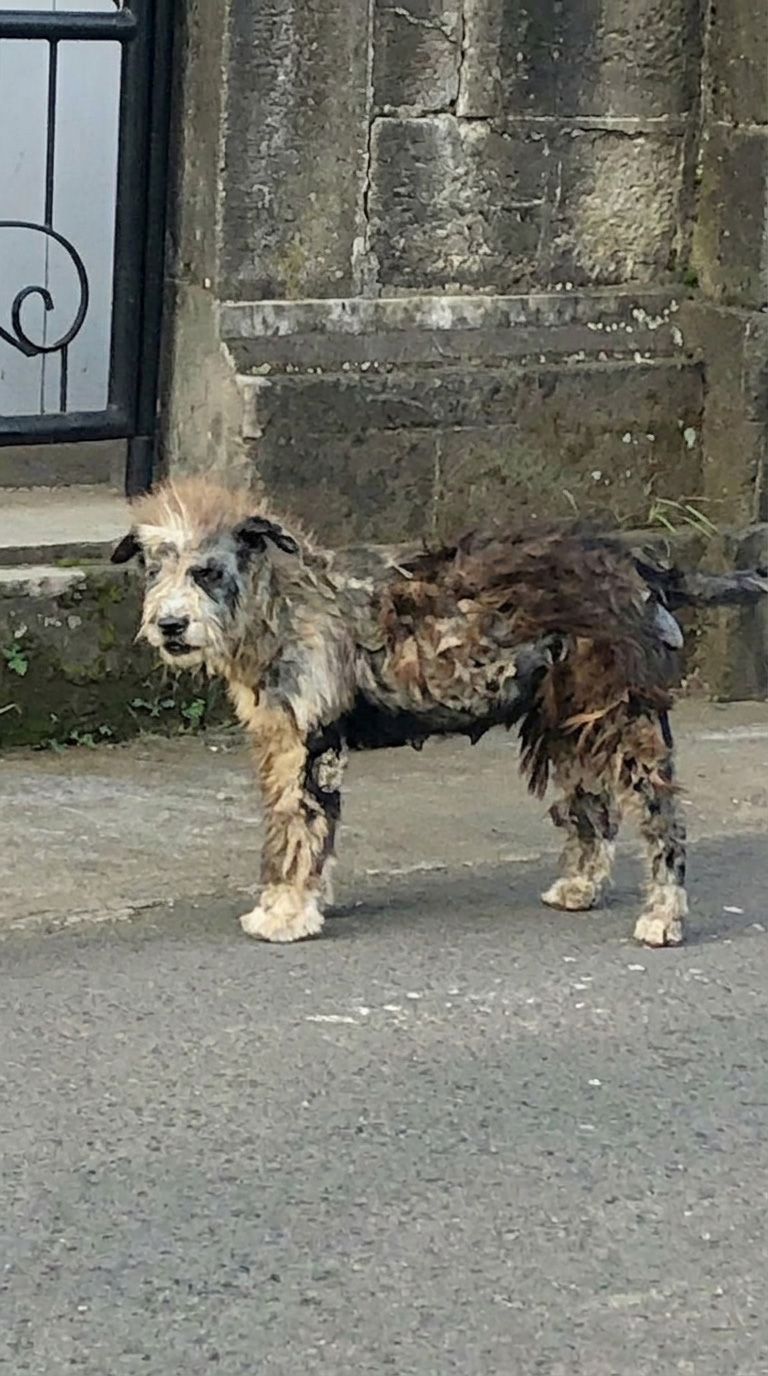
Lexie stood beside a busy road in Bali as though that narrow patch of pavement was the only place she knew.
Her small body was hidden beneath tangled fur, dirt, and debris. Whenever someone approached, she barked nervously and moved away, unwilling to trust the hands reaching toward her.
Rescuers initially believed she was a stray struggling to survive alone.
Then a man arrived on a bicycle and claimed that Lexie belonged to him.
What happened next ended one chapter of her life—and gave her the first real chance to begin another.
The Little Dog Who Guarded the Roadside
Lexie was first noticed by a young man riding his bicycle to a basketball game.
Near the edge of the road, he saw a small dog standing almost completely still. Traffic moved nearby, but she remained close to the same spot.
Her coat had become severely neglected.
Long sections of fur were tangled together with dirt and outdoor debris, hiding the natural outline of her body. Her face was difficult to see clearly, and her small size made her especially vulnerable beside the road.
The cyclist contacted Mission Pawsible, a local animal rescue organization.
When rescuers arrived, Lexie reacted cautiously.
She barked when they moved closer.
If someone extended a hand, she retreated.
Food was placed nearby, but she would not allow the team close enough to secure her safely.
Her behavior suggested that the roadside was familiar territory. She appeared to know where to hide and how much distance to keep between herself and unfamiliar people.
Rather than chasing her, the rescuers waited.
They spoke calmly.
They used food to encourage her closer.
But Lexie remained suspicious of every movement.
The team could not know exactly what she had experienced with people. They could only see that trust would not come easily.
Video: Lexie Refused to Leave the Roadside—Then Rescuers Learned She Had an Owner
A Man Arrived and Said She Belonged to Him
While the rescue team considered how to approach Lexie safely, a man arrived on a bicycle.
According to the rescuers’ account, he said the dog belonged to him.
The news changed their understanding of the situation.
Lexie had not simply appeared beside the road without any connection to the surrounding community. She reportedly had a person who recognized her, yet she had still been spending her days outdoors with a heavily neglected coat and little visible protection from traffic or heat.
The rescuers spoke with the man about the dog.
Then he agreed to surrender her.
He picked Lexie up and placed her inside the rescue crate. Moments later, he left on his bicycle.
The team could not know what Lexie understood about the exchange.
What they could observe was a frightened dog trembling inside an unfamiliar crate while the only person she appeared to recognize moved away.
There was no dramatic farewell.
The transition happened quickly.
Lexie had resisted the rescuers because she did not yet understand their intentions. Now she was being transported away from the roadside and into another unfamiliar environment.
The team knew that removing her from danger was only the first step.
They would also need to show her that this new change would not lead to more neglect.
Grooming Revealed the Dog Beneath the Dirt
Once Lexie reached safety, rescuers began assessing her condition.
Her coat required immediate attention.
The fur had formed thick mats that trapped dirt and made it difficult to examine the skin underneath. Areas around her face, legs, and body needed to be handled carefully so the grooming process would not create additional discomfort.
The team began slowly.
Sections of tangled fur were loosened or trimmed away.
Warm water helped remove the accumulated dirt.
The bath water darkened as months of grime washed from her coat.
Lexie remained cautious throughout the process. New sounds, unfamiliar hands, and the enclosed bathing space could easily have overwhelmed her.
So the rescuers paused when necessary and kept their movements predictable.
As the mats disappeared, her actual appearance began to emerge.
She was a small, delicate dog beneath the neglected coat.
To the team’s relief, her physical condition appeared more stable than they had initially feared. She still needed appropriate care and monitoring, but the most serious burden visible at that moment was the coat she had been carrying.
Once clean and groomed, Lexie could move more comfortably.
Her eyes were easier to see.
Her body no longer disappeared beneath dirty, tangled fur.
But the greatest challenge remained unchanged.
Lexie still did not know whether people could be trusted.
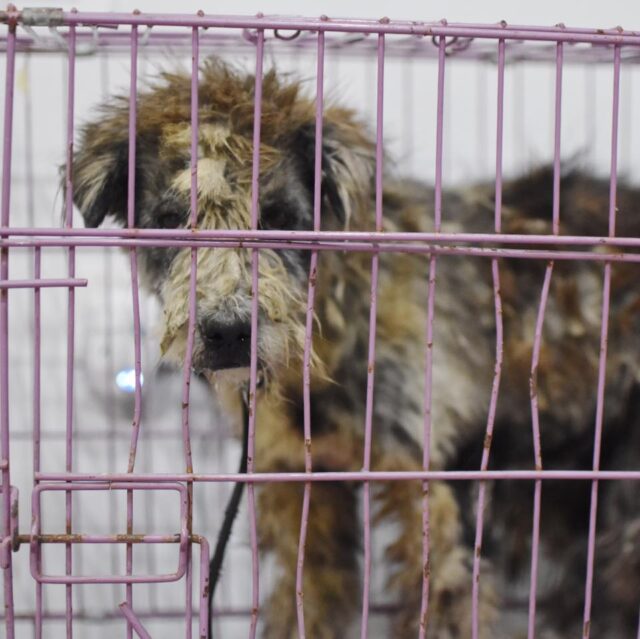
Trust Returned Through Quiet Routines
The rescue team did not expect Lexie to become affectionate immediately.
She had already resisted being approached beside the road, and the sudden surrender had placed her among unfamiliar people in an unfamiliar space.
Instead of forcing contact, caregivers gave her a quiet place to rest.
Food arrived at consistent times.
Fresh water remained available.
A soft bed replaced the roadside.
When someone entered her space, they moved slowly and allowed Lexie to observe before attempting to touch her.
During the early days, she remained guarded.
Unexpected movement could cause her to step away.
New people were watched carefully.
She appeared more comfortable when given enough space to make her own decisions.
The caregivers respected that.
They sat nearby without reaching constantly toward her.
They offered treats and waited.
They allowed Lexie to approach first whenever possible.
Gradually, she began remaining closer.
She rested while people were in the room.
She accepted brief touches without immediately pulling away.
Later, she began walking toward familiar caregivers when they arrived.
Her recovery was not marked by one sudden breakthrough.
It grew through repeated experiences.
A meal that appeared every day.
A hand that stopped when she became uncomfortable.
A person who left the room and returned later.
Each moment showed Lexie that this environment followed different rules from the life she had known before.
She did not have to defend the same patch of road.
She did not have to stay constantly alert.
She could sleep.
The Scruffy Roadside Dog Began Showing Her Personality
As the weeks became months, Lexie’s physical transformation grew more visible.
Her coat became healthier and softer.
The dirt and mats that had hidden her features were gone.
She carried her head differently and moved through her surroundings with increasing curiosity.
But the people caring for her noticed an even greater change in her behavior.
Lexie began seeking companionship.
She stayed close to familiar people rather than keeping herself at a distance. Her tail moved more often, and she showed interest in the activity around her.
She also began revealing a playful, unusual personality.
When excited, Lexie made a distinctive series of sounds—part howl, part growl, and entirely her own.
The vocalization often appeared without warning and made the people around her laugh.
For a dog who had once communicated mainly by barking to keep rescuers away, these sounds represented something different.
Lexie was comfortable enough to express herself.
She was no longer using every bit of energy to monitor possible danger.
She could play.
She could investigate.
She could make noise simply because she was excited.
The small dog who had seemed withdrawn and suspicious beside the road was becoming lively, funny, and deeply interested in companionship.
All she needed now was a permanent home where that confidence could continue growing.
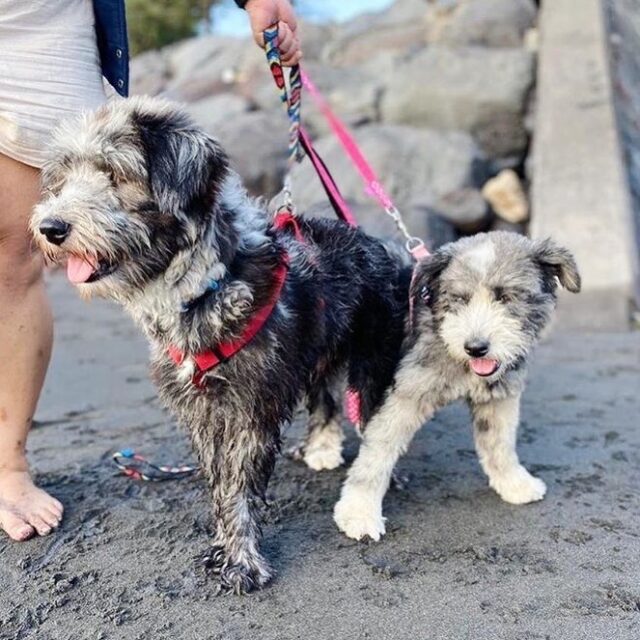
Michellina Gave Her the Family She Needed
A woman named Michellina eventually learned about Lexie and decided to adopt her.
She understood that bringing a cautious rescue dog into a new home could require patience. Lexie would need time to learn new rooms, routines, people, and expectations.
Michellina was also concerned about how Lexie would respond to the other rescue dog already living in the home.
The introduction was handled carefully.
The dogs were given space to observe one another without being forced into immediate interaction.
To Michellina’s relief, the connection developed quickly.
Lexie appeared comfortable around her new canine companion, and before long, the two dogs were spending much of their time together.
They played.
They explored.
They rested nearby.
The presence of another confident dog helped make the new environment easier for Lexie to understand.
She could follow her companion through the home and observe how the household routine worked. The other dog’s relaxed behavior around Michellina offered additional reassurance that this person was safe.
Soon, the pair became close friends.
For Lexie, the bond offered something she had not possessed while standing alone beside the Bali road.
Company that remained.
A companion who returned each day.
A shared home neither dog needed to defend alone.
The Greatest Change Was in the Way She Looked at People
Today, Lexie is almost unrecognizable from the small dog first seen near the roadside.
Her coat is clean and healthy.
Her posture is more relaxed.
She runs, plays, and explores alongside her canine companion.
Her unusual vocal performances continue entertaining the family, especially when excitement takes over and she decides the entire house needs to hear her.
But for Michellina, the most important transformation is not Lexie’s appearance or playful behavior.
It is the way she now looks directly at people.
When rescuers first approached, Lexie barked and retreated.
She watched every movement as though expecting people to disappoint or frighten her.
Now she seeks eye contact.
She greets her family.
She approaches for affection and remains close without needing an escape route.
That change was not created by one bath, one meal, or one adoption day.
It was built through consistency.
Michellina continued returning.
Meals continued arriving.
The soft bed remained in the same safe home.
Her canine friend continued waiting nearby.
Day after day, Lexie received evidence that this family was not temporary.
Once, she stood beside a Bali roadway because it may have been the only place that felt familiar.
Then someone noticed her.
Rescuers refused to chase or frighten her.
Caregivers gave her time.
And a family showed her that belonging did not have to mean being left outside and forgotten.
Today, Lexie no longer guards a lonely patch of road.
She runs toward the people and the dog who have given her something she had been missing all along:
A home where love stays.