It began with an ordinary walk through a quiet neighborhood in Tampa, Florida.
A woman passing one of the houses happened to glance toward a dusty window.
Something was standing behind the glass.
At first, the shape was so thin and still that it barely looked like an animal.
Then it moved.
A dog was staring out from inside the house.
A poodle.
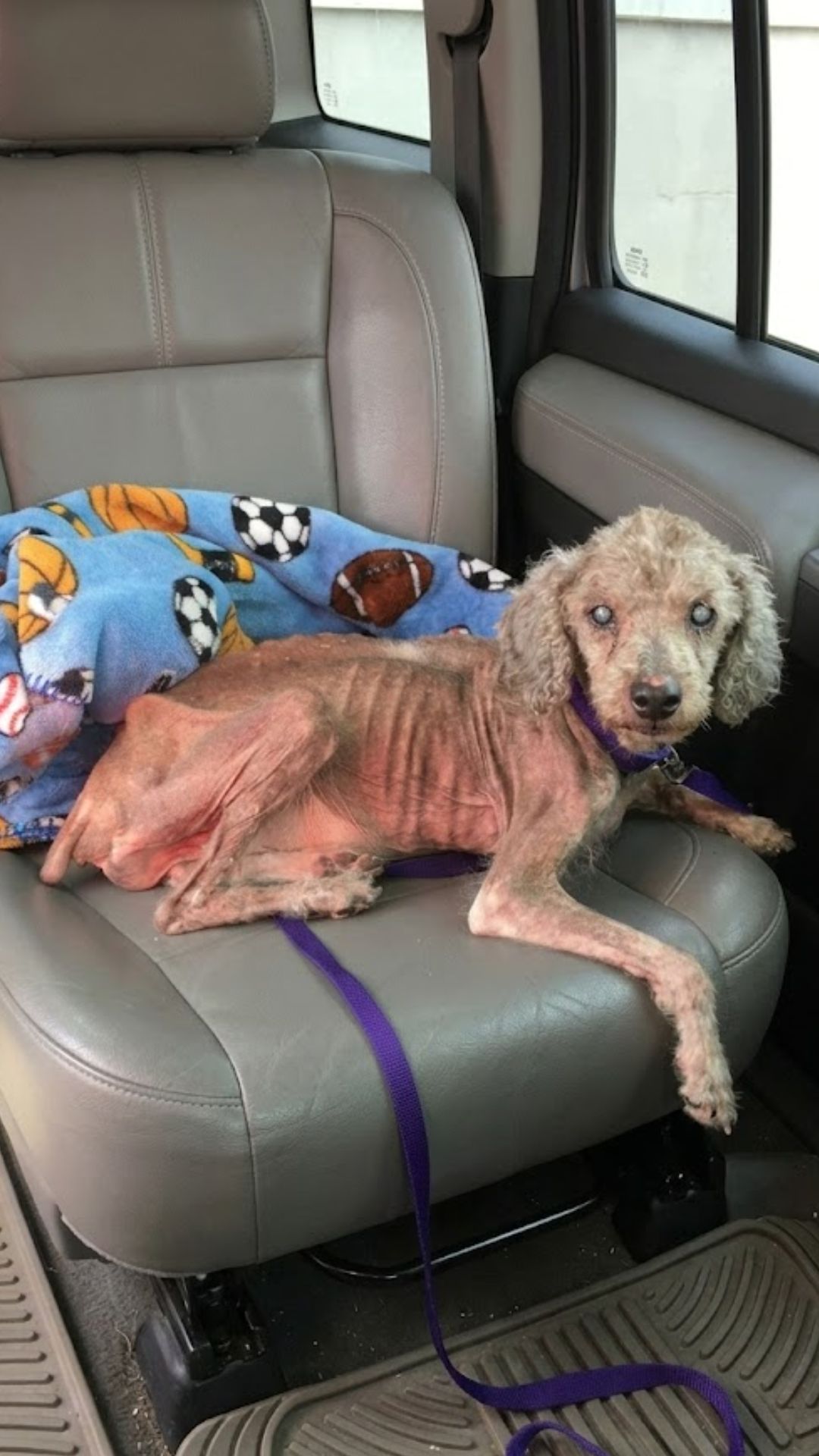
His body was so severely underweight that his bones were visible beneath what remained of his coat.
He did not bark.
He did not scratch at the window.
He simply stood there.
And because one person stopped long enough to look twice, someone finally learned what was happening inside.
The Dog in the Window Was Not the Only One Inside
Authorities were contacted, and officers eventually entered the property.
Inside, they found three dogs.
There was no adequate food.
No reliable water.
And no one providing the care the animals desperately needed.
By the time help arrived, all three were in extremely poor condition.
Two of them did not survive for long after the rescue.
Only the poodle seen through the window remained.
His name was Beni.
He was approximately nine years old.
For many dogs, that age brings quieter days, familiar routines, and a comfortable place to rest.
Beni’s reality was very different.
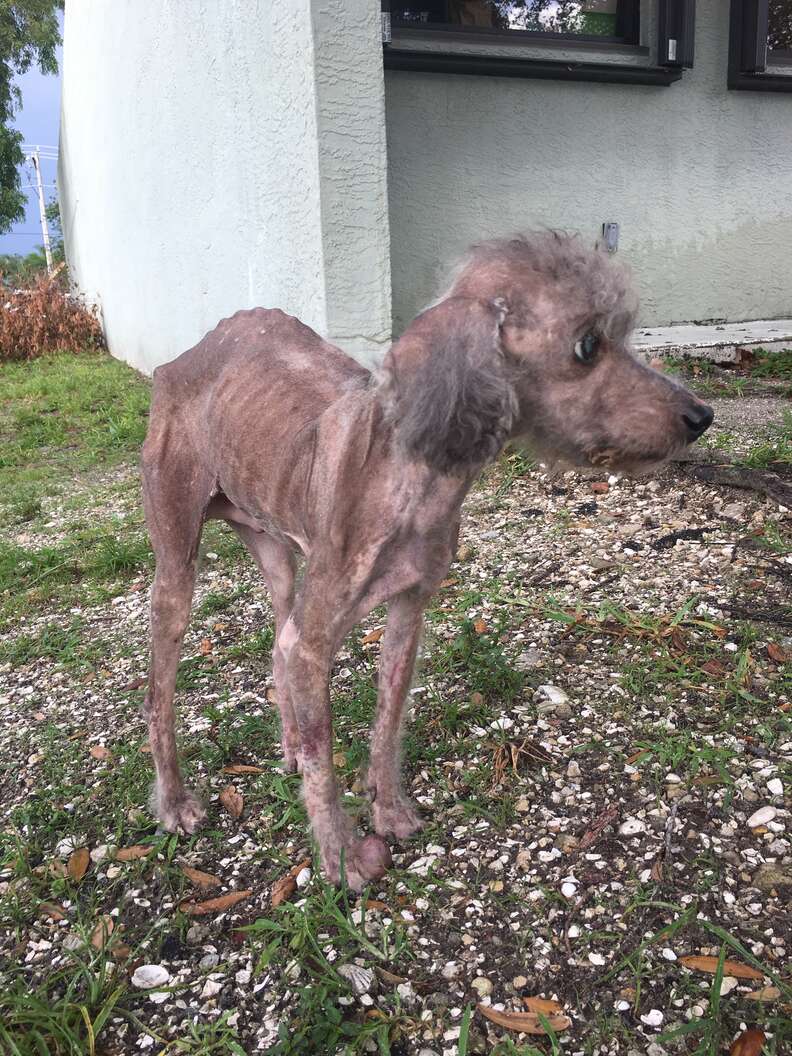
He was severely emaciated.
His skin was inflamed and unhealthy.
Much of his coat had disappeared.
He had diabetes.
And a large mass had developed on one of his feet.
He had survived long enough to be removed from the house.
But his condition was so serious that another difficult decision was already approaching.
Video: A Woman Saw a Starving Poodle Behind the Window — Then Learned He Could Barely Eat
Beni Was Running Out of Time
The shelter caring for Beni faced a difficult situation.
He had several serious medical problems at once, and his body was extremely weak.
His diabetes required management.
His skin needed treatment.
The mass on his foot would eventually need veterinary attention.
And before any of that could improve, Beni needed enough nutrition and hydration to become stable.
Given the severity of his condition and the uncertainty surrounding recovery, euthanasia was scheduled.
Then an email reached Debbie Goldsberry, founder of Senior Paws Sanctuary.
She saw Beni’s photograph.
She read about his condition.
And she decided to intervene.
Volunteers quickly began arranging transportation.
Beni would be taken roughly two hours south to Fort Myers, where Debbie and the sanctuary could give him another opportunity.
He had already survived the house.
Now he had one more chance.
Then Caregivers Discovered He Could Barely Eat
Once Beni arrived, another challenge became obvious.
Food was placed in front of him.
He showed some interest.
But eating did not happen normally.
He might take food into his mouth and then simply hold it there.
Chewing and swallowing appeared difficult or unfamiliar.
Water created similar concerns.
For a diabetic dog, staying hydrated was especially important, yet Beni was not drinking normally either.
Whatever the exact cause, caregivers were dealing with a dog whose prolonged neglect had made even basic nourishment complicated.
Feeding had to be handled carefully.
His digestive system was not prepared for large meals after such severe starvation.
So portions remained small.
His intake was monitored.
The goal was not to replace everything he had lost in a few days.
It was to help his body begin functioning normally again without overwhelming it.
Recovery Started With Tiny Sips and Small Bites
Debbie brought Beni into sanctuary care and gave him a quiet place to recover.
At first, he remained withdrawn.
He rested frequently and showed little interest in the activity happening around the other rescue dogs.
There was no pressure for him to become social immediately.
Caregivers focused on the basics.
Measured meals.
Water.
Medication.
Rest.
Gentle attention.
Then came a small breakthrough.
Beni drank a little.
Later, he managed a small amount of food.
Those moments would have looked insignificant in a healthy dog.
For Beni, they represented progress.
Day after day, the routine continued.
He began consuming food more consistently.
His body slowly gained weight.
His strength improved.
And as his physical condition changed, he started paying more attention to the people around him.
Then His Tail Moved
The improvements became easier to see as the weeks passed.
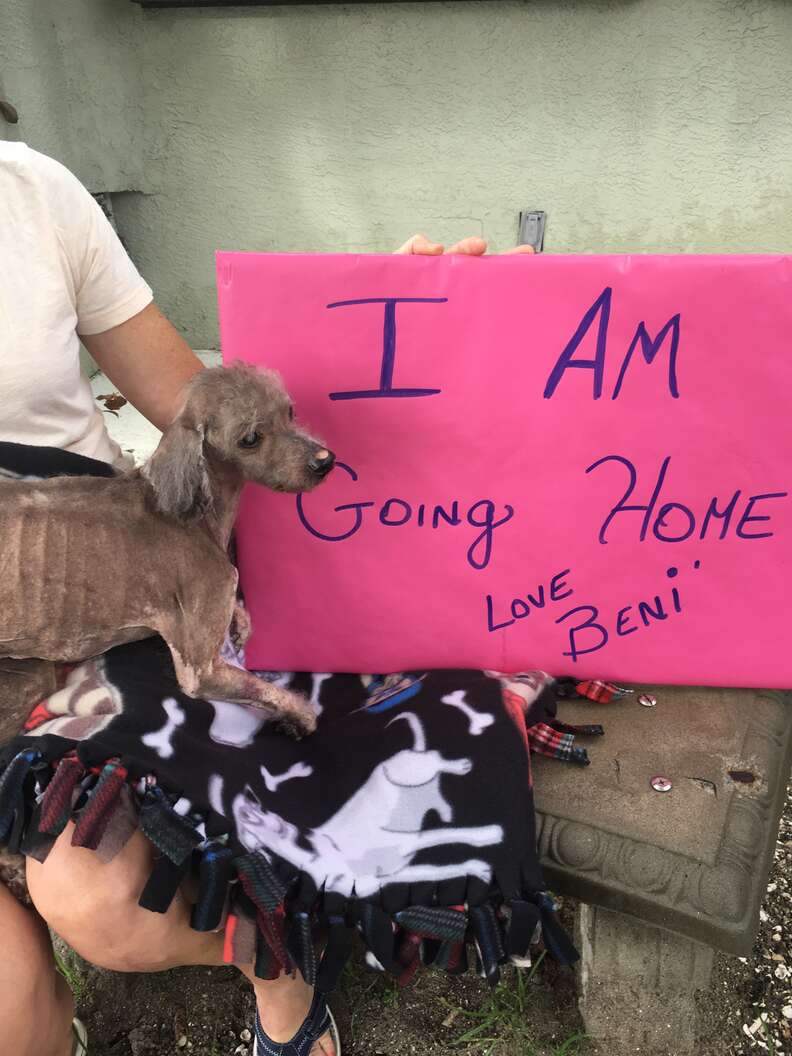
Beni’s coat began growing back.
His body no longer looked as sharply skeletal.
He became more responsive when caregivers approached.
Then one day, his tail moved.
It was not an energetic wag.
At first, it was small and uncertain.
But it was there.
For Debbie and the people who remembered the silent dog behind the window, that movement carried enormous meaning.
Beni was beginning to interact with his surroundings instead of simply enduring them.
Soon, he started seeking more contact.
He accepted affection.
He showed interest in what the other dogs were doing.
Eventually, he even began to play.
The poodle who once seemed barely aware of food or water was becoming recognizable as a companion again.
Surgery Brought Another Difficult Diagnosis
As Beni became stronger, veterinarians were able to address the mass on his foot.
Surgery was planned to remove it.
But the procedure brought news no one had hoped to receive.
Testing revealed cancer.
It was advanced.
After everything Beni had already survived, his medical journey was not going to end with simple recovery from starvation.
His caregivers now understood that his future might be limited.
But the diagnosis did not change what Beni needed in the present.
Food.
Comfort.
Medical management.
Companionship.
And as many good days as possible.
His diabetes became manageable with care, and his improved strength allowed him to enjoy more of the life happening around him.
The goal was no longer to pretend every medical problem could disappear.
It was to make sure his remaining time looked nothing like the life he had known inside that house.
The Dog Behind the Glass Is Finally Being Seen
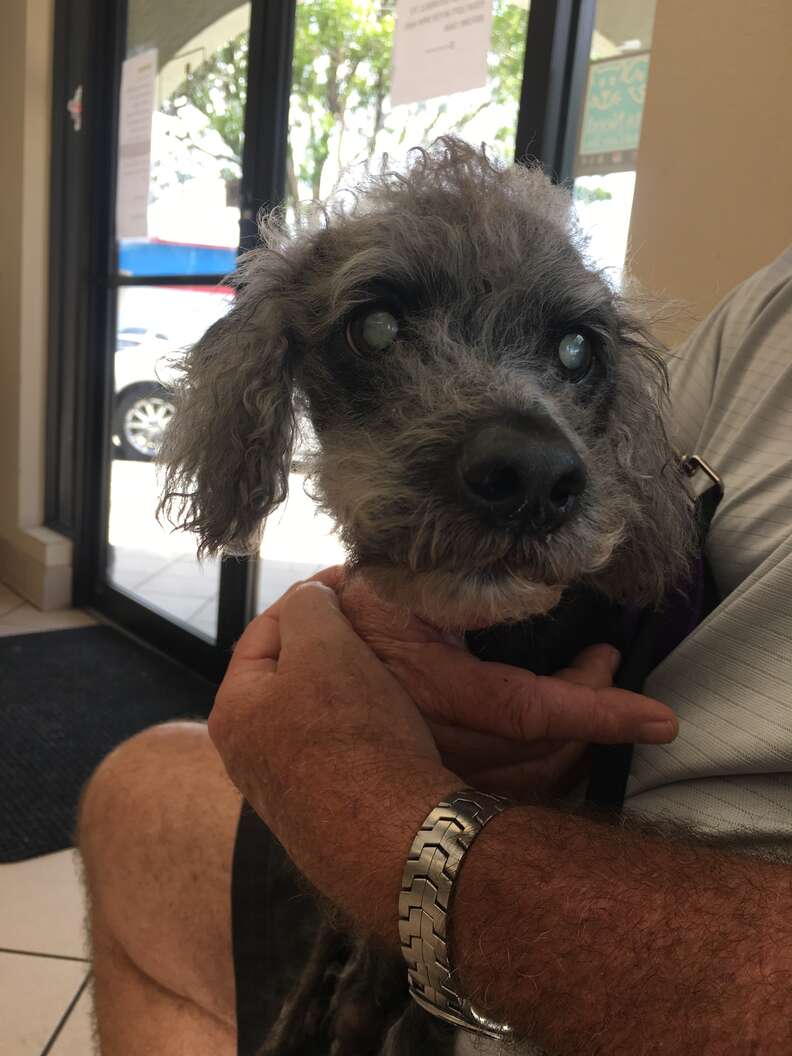
Today, Beni is no longer standing silently behind a dirty window.
He greets people.
He accepts affection.
His tail moves often.
He eats.
He drinks.
He rests somewhere safe.
The cancer remains part of his reality, but it is not the only thing happening in his life.
There are meals waiting for him.
There are people watching his condition.
There are other dogs nearby.
There are hands that reach toward him gently.
Debbie’s goal is simple: make his days comfortable and meaningful for however long he has.
Beni’s story could easily have gone unnoticed.
A woman might have walked past that house without looking toward the glass.
She might have assumed the shape inside was nothing important.
Instead, she stopped.
She looked again.
And because she did, people discovered three dogs who had been left without the care they needed.
Beni was the one who survived long enough to begin again.
His future may not be measured in years.
But now, it is measured in something he once did not have enough of.
Full bowls.
Gentle touch.
Safety.
And days in which somebody knows exactly where he is.


