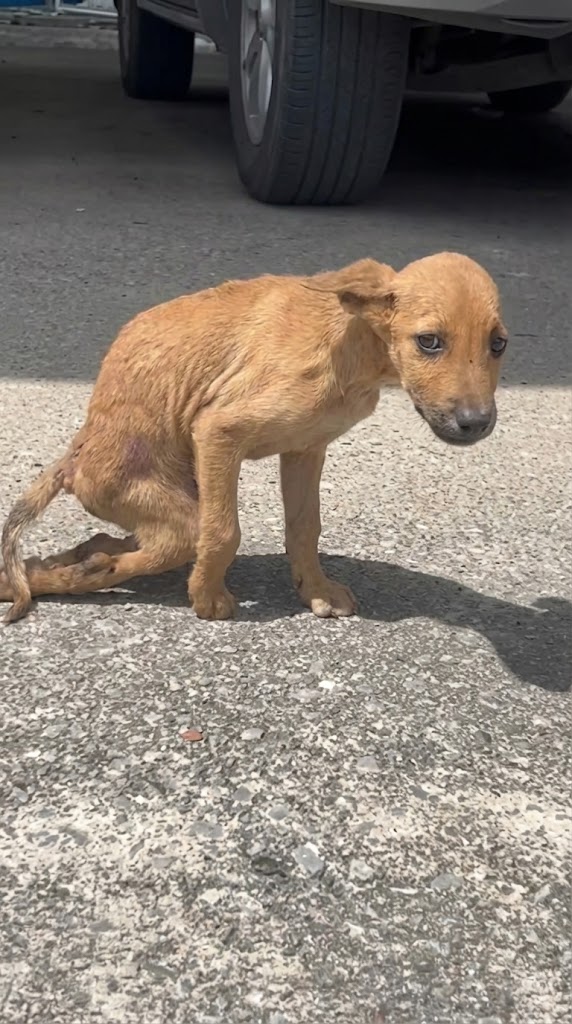
By the time help reached her, the stray dog had already survived something few animals could endure alone.
She had been attacked by a much larger animal and left with serious bite wounds across her small, weakened body. There was no familiar person beside her. No safe place where she could rest. No reliable food or water while her injuries continued to drain what little strength she had left.
Every movement appeared difficult.
Even shifting her body seemed to require an effort she could barely manage.
Yet somehow, she remained alive.
When rescuers finally arrived after receiving an urgent call, they immediately understood that this was not a situation that could wait until morning.
She needed veterinary care.
And she needed it now.
The Moment Help Finally Reached Her
The rescuers approached carefully.
An injured stray may not understand the difference between the hands that caused fear and the hands trying to help. Pain can make even the gentlest animal uncertain, especially after a frightening encounter.
So they moved slowly.
They kept their voices calm.
And when they were finally close enough to see the extent of her injuries, the urgency became impossible to ignore.
Her body carried numerous wounds from the attack. She was exhausted, dehydrated, and far too weak to continue surviving on her own.
There was no question about what needed to happen next.
She was carefully transported away from the place where she had been struggling and taken to Talingchan Veterinary Hospital.
For the first time since the attack, she was no longer facing everything alone.
Video: She Survived a Terrifying Attack—Then Rescuers Discovered How Seriously She Was Hurt
The X-Rays Changed Everything
At the hospital, veterinarians began examining her injuries.
The wounds visible from the outside were concerning enough.
But the X-rays revealed something even more serious.
She had suffered fractures involving her spine and hind legs.
Suddenly, the question was no longer simply whether her wounds would heal.
The veterinary team also had to consider how much mobility she might regain.
Would she be able to walk normally again?
Would the injuries leave permanent limitations?
How much rehabilitation would her body tolerate?
There were no immediate answers.
Spinal and leg injuries can require time before doctors understand exactly how an animal will respond to treatment. What the team did know was that she had survived the initial attack—and that gave them something important to work with.
She was still fighting.
The veterinarians began stabilizing her condition while monitoring her closely for changes.
There would be no dramatic overnight recovery.
Her healing would have to happen slowly.
Recovery Measured in Small Changes
For animals with serious injuries, progress can look very different from the transformations people often imagine.
Sometimes progress is simply eating a little more.
Resting comfortably.
Responding better during an examination.
Showing enough strength to reposition the body without assistance.
For this dog, every small improvement mattered.
Her caregivers watched carefully for signs that her body was beginning to recover from the trauma it had endured.
They kept her environment quiet.
They made sure she could rest without constantly feeling threatened.
Her medical needs were managed while her strength slowly began returning.
There were difficult days.
Her injuries had not disappeared simply because she was safe.
But safety gave her something she had not had before.
Time.
Time to rest.
Time to receive treatment.
Time to allow her body to begin doing what it had been trying to do since the moment of the attack—heal.
A Sanctuary Became Her Place to Recover
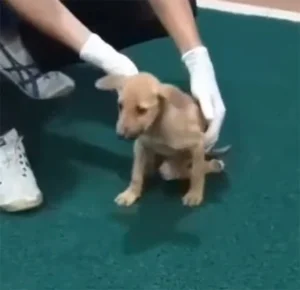
Once her immediate condition had been addressed, she was moved into a sanctuary where her recovery could continue.
The change was significant.
Instead of struggling outside without food or protection, she now had people checking on her throughout the day.
She had shelter.
Regular meals.
A clean place to rest.
And caregivers who could immediately notice if something changed.
For a dog recovering from fractures involving the spine and hind legs, that kind of consistency was essential.
Her sanctuary caregivers understood that pushing her too quickly could do more harm than good.
There was no expectation that she suddenly stand up and behave like an uninjured dog.
Her body would determine the pace.
Their role was to support her through it.
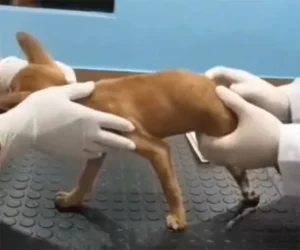
Every two weeks, she returned to the veterinary hospital for follow-up examinations.
Those visits gave doctors an opportunity to evaluate her progress and determine how her injuries were healing.
Each appointment became another marker on a journey whose ending was still uncertain.
But uncertainty was very different from hopelessness.
She had survived.
She was receiving treatment.
And people were now committed to giving her every reasonable opportunity to recover.
Learning That People Could Mean Safety
Physical recovery was only one part of her new life.
Before the rescue, she had been alone during one of the most vulnerable moments an animal could experience.
Now people were constantly around her.
They brought food.
Changed her bedding.
Helped with treatment.
Transported her to medical appointments.
And stayed nearby when she needed to rest.
For an injured stray, this new routine could have been overwhelming.
But gradually, she began becoming more comfortable with the people responsible for her care.
There was no need to demand affection from her.
Trust did not have to be proven through dramatic gestures.
It could grow through something much simpler.
A bowl arriving at the same time every day.
A caregiver approaching slowly instead of suddenly.
A gentle hand that stopped whenever she became uncomfortable.
Another peaceful night without danger.
These repeated experiences allowed her to settle into the sanctuary at her own pace.
The dog who had once been left injured and alone was beginning to experience a very different side of human contact.
The People Behind Her Second Chance
No single person created her recovery.
Her survival became a chain of small actions.
Someone noticed that she needed help.
Someone made the call.
Rescuers responded.
Veterinarians examined her.
The medical team studied her X-rays and developed a plan.
Sanctuary caregivers continued the work after she left the hospital.
And every two weeks, that chain of care continued when she returned for another examination.
Rescue stories are often remembered for one dramatic moment—the instant an animal is lifted from danger.
But that moment is usually only the beginning.
The days that follow matter just as much.
Medication must be given.
Appointments must be kept.
Food must be prepared.
Bedding must be changed.
Animals must be watched for subtle signs of pain, stress, or improvement.
The rescue may happen in minutes.
Recovery can take weeks or months.
For this dog, the people around her understood that distinction.
They were not simply trying to keep her alive for one night.
They were trying to give her a future.
No One Could Promise How Far She Would Come
There was still one difficult truth everyone had to accept.
Nobody could guarantee how completely she would recover.
The fractures in her spine and hind legs were serious.
Even with excellent care, her mobility might remain limited.
Some animals recover far beyond early expectations.
Others adapt to permanent changes.
The veterinary team could only continue evaluating her condition and adjusting her care according to what her body showed them.
But something important had already changed.
Her future was no longer being decided by hunger, untreated injuries, or whether she could survive another night outside.
Now her future was being supported by treatment.
Rehabilitation.
Patience.
And people willing to continue showing up.
That may sound like a small difference.
For an animal who had once been completely alone, it was everything.
A Home May Be Waiting Beyond Recovery
As her condition improves, another possibility remains ahead.
A permanent home.
She is still focused on healing, and any future placement would need to take her physical needs into account.
A dog recovering from serious injuries may require patience, follow-up medical care, and a family prepared to adapt to whatever limitations remain.
But animals do not need perfect bodies to experience good lives.
They need safety.
Comfort.
Appropriate care.
And people willing to understand them as they are.
The dog who survived the attack has already demonstrated an extraordinary ability to keep going through circumstances that offered her very little help.
Now she deserves something different.
A life where survival is no longer the goal.
A life where she can simply rest.
The Story Is No Longer About the Attack
When rescuers first found her, everything seemed to revolve around what had happened.
The wounds.
The pain.
The attack.
The frightening results of the X-rays.
But as the weeks pass, the story is slowly becoming about something else.
The sanctuary where she can sleep without danger.
The veterinary appointments that continue tracking her recovery.
The caregivers who notice each small improvement.
The possibility that damaged legs may become stronger.
And perhaps, eventually, a home where she will never again have to wonder where her next meal or safe place to rest will come from.
Her recovery is not finished.
There may still be difficult days ahead.
There may be setbacks.
There may be questions that only time can answer.
But she has already crossed the most important distance of all.
She went from being badly injured and alone to being surrounded by people who refused to leave her there.
The attack became part of her past.
It does not have to determine the rest of her life.
Today, she is still healing.
Still being monitored.
Still moving forward at whatever pace her body allows.
And for the first time in a long while, she has the one thing every injured animal deserves:
A real chance to see what comes next.


