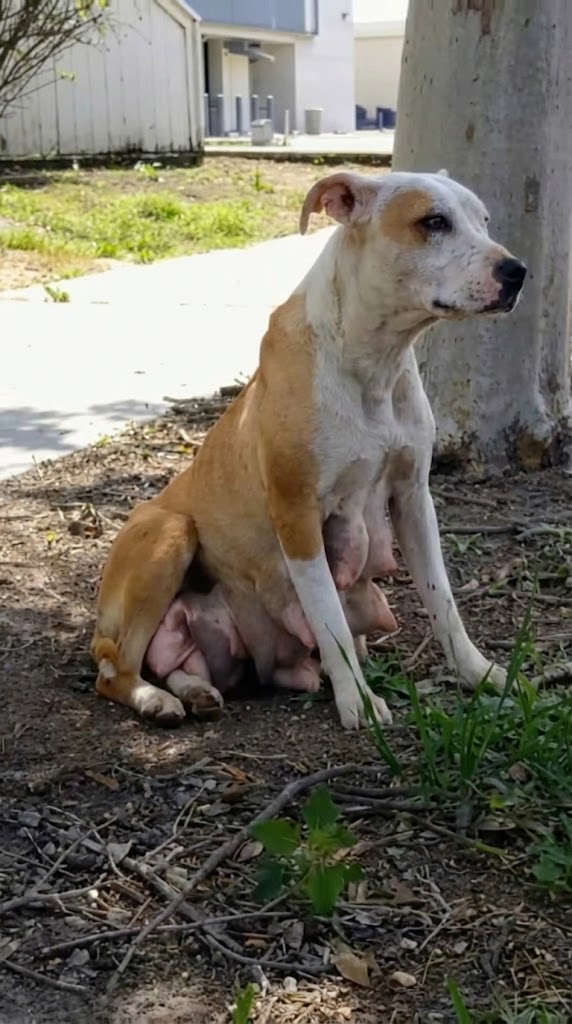
Drivers kept seeing the same dog.
Morning after morning, along the road connecting two small towns, a thin female dog appeared beside the pavement.
Sometimes she walked in one direction.
Later, she would be seen heading back.
Her ribs were visible beneath her coat. Her paws had taken the wear of repeated travel, and her body looked as though regular meals had become a distant memory.
Yet she kept returning to the same stretch of road.
At first, people assumed she was simply a stray wandering between towns.
Then rescuers began watching her more closely.
Her movements did not appear random.
Betty Boop seemed to be going somewhere.
And whatever was pulling her back to that road was important enough that hunger and exhaustion had not stopped her.
She Was Afraid of People, but She Kept Coming Back
People in both towns had noticed Betty.
Several tried to approach her.
She responded by keeping her distance.
Her body would tense when someone moved too close, and she often backed away rather than accepting contact.
There was no need to interpret that caution as aggression.
Betty simply did not seem comfortable enough with people to let anyone near her.
So rescuers changed tactics.
Instead of chasing her, they began observing.
Food was left where she could reach it.
People sat farther away.
They watched the routes she chose and how often she returned.
Gradually, a pattern became clear.
Betty was repeatedly traveling through the same area.
And because she appeared to be a nursing or recently nursing mother, rescuers began considering another possibility.
There might be puppies somewhere nearby.
Saving Betty alone might not solve the entire problem.
Video: A Thin Mother Dog Walked the Same Road Again and Again — Rescuers Soon Realized She Wasn’t Wandering
Patience Finally Brought Betty Into Safety
Getting close enough to help Betty required time.
Each failed attempt to approach too quickly risked making her more cautious.
Eventually, rescuers used a humane trap.
Food encouraged Betty inside, and once she was secured, she could finally be moved away from the road.
For the first time, rescuers were able to examine her closely.
She was thin and exhausted.
Her body needed nutrition, rest, and medical attention.
At the rescue center, Betty was given food and somewhere warm to sleep.
She ate.
She rested deeply.
She allowed caregivers to clean her and begin addressing the physical effects of life outdoors.
Her body responded to the routine quickly.
But rescuers were still thinking about the possibility that she had puppies somewhere beyond the shelter.
Betty’s rescue could not be considered complete until they understood more about where she had been going.
Her Attention Kept Returning to the Outside

As Betty became more comfortable with the people caring for her, her behavior offered another clue.
She frequently watched beyond the enclosure.
Her attention remained focused on the areas outside the rescue grounds.
The original account describes her repeatedly standing near the gate and looking outward.
No one could know exactly what Betty was thinking.
But combined with the route she had traveled before capture and signs that she was a mother, the behavior gave rescuers another reason to search.
Eventually, they allowed Betty to guide the next part of the investigation.
This time, instead of trying to catch her, they followed.
The dog who had once retreated whenever people approached now moved ahead with rescuers behind her.
She crossed open ground.
Moved through tall grass.
Then stopped near a fallen tree.
What was hidden beneath it explained why finding Betty had never been enough.
Video: Betty Was Already Safe — But She Kept Looking Outside Until Rescuers Followed Her Back Into the Fields
Ten Puppies Were Hidden Beneath the Fallen Tree
The rescuers knelt near the sheltered space.
Inside were puppies.
Not one or two.
Ten.
They were tucked together beneath the fallen tree, hidden well enough that someone walking through the area could easily have missed them.
The puppies were alive.
And until that moment, Betty had been their connection to food, warmth, and protection.
Her repeated journeys along the road suddenly had a practical explanation.
She had been moving through the surrounding area while caring for a litter that remained concealed away from traffic and people.
The rescuers began removing the puppies one at a time.
Each was handled carefully and wrapped for transport.
Betty stayed close while the process unfolded.
Once all ten were accounted for, the entire family could finally leave the makeshift den behind.
Betty No Longer Had to Keep Ten Puppies Alive Alone
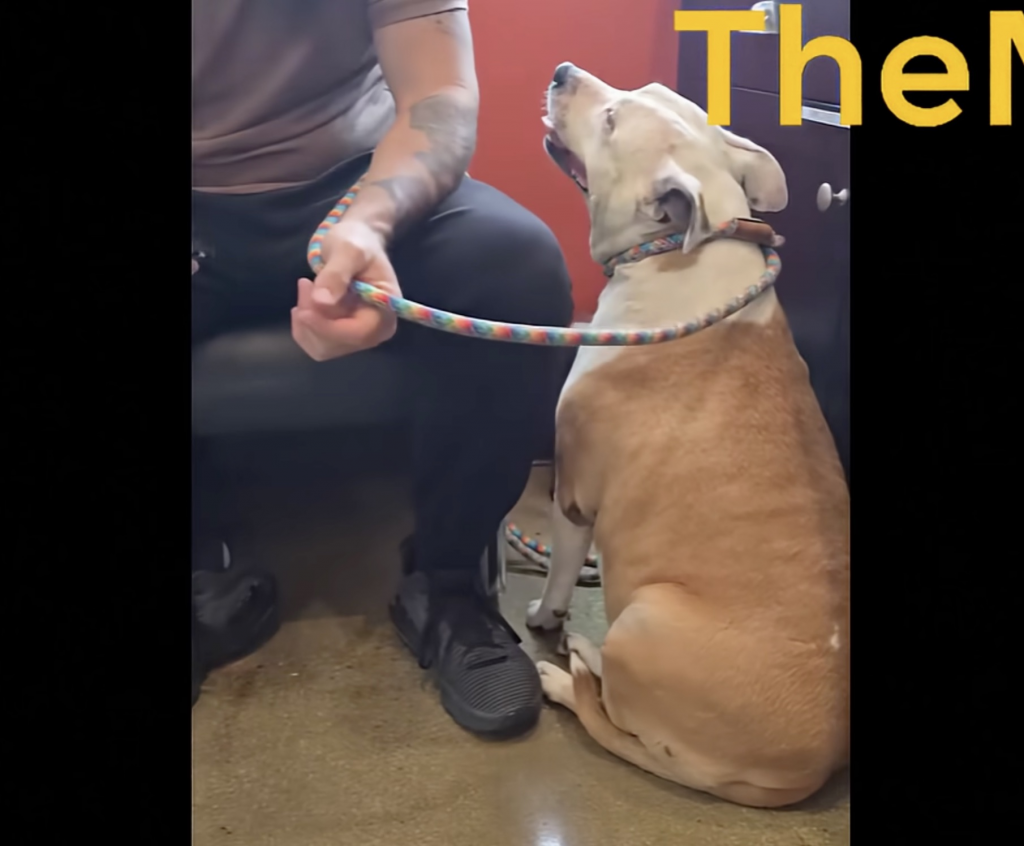
Back in rescue care, the puppies received what their mother could not reliably provide outdoors.
Regular food.
Warmth.
Veterinary checks.
A clean place to sleep.
And people available if one of them began struggling.
Betty continued caring for them, but the responsibility was no longer hers alone.
That distinction mattered.
Before rescue, every day required Betty to remain strong enough to search for food and then return to the puppies.
If she became injured or disappeared, ten young lives could be affected with her.
Now, caregivers could support the entire family.
Betty could eat enough to rebuild her own body.
The puppies could be monitored individually.
And for the first time, the family’s survival was not dependent on one exhausted mother repeatedly walking miles between hiding places and food.
The Puppies Began Growing Into Their Own Lives
Once the immediate danger had passed, the changes came quickly.
The puppies became stronger.
Their movements became steadier.
They began exploring.
Then playing.
Their world expanded far beyond the sheltered space beneath the fallen tree.
Instead of waiting for their mother to return from another journey, they had meals provided regularly.
They could sleep without being exposed to the same uncertainty.
As the weeks went on, each puppy moved closer to the point where a permanent home could become possible.
According to the rescue account, the puppies eventually found homes of their own.
Betty had accomplished the thing that had kept her returning to those roads.
Her babies were safe.
Now the question became what would happen to her.
Betty’s Temporary Home Became Permanent
Betty had spent so long focused on survival that ordinary domestic life was an adjustment of its own.
At first, safety meant very basic things.
A full meal.
A soft bed.
A peaceful walk where she was not searching for food or racing back toward hidden puppies.
Gradually, those routines became familiar.
The people fostering her began seeing more of Betty’s personality.
She was gentle.
She formed connections.
And the fearful distance that had defined her earliest encounters with rescuers became less pronounced as familiarity grew.
Eventually, the foster arrangement no longer felt temporary.
Betty remained.
The family adopted her.
The dog who had once traveled the same lonely road again and again finally had somewhere she did not need to leave in order to survive.
Rescuers Saved Eleven Dogs Because They Paid Attention to One Pattern
Betty’s story could easily have ended after she entered the humane trap.
One thin stray removed from the roadside.
One dog fed and treated.
One successful rescue.
But the team understood that her behavior might be telling them there was more to find.
They watched where she traveled.
Considered the possibility that she was caring for puppies.
And when Betty later moved toward the fields again, they followed.
That decision revealed ten lives hidden beneath a fallen tree.
The rescue therefore became much larger than the dog people had first seen beside the road.
One mother.
Ten puppies.
Eleven animals whose futures changed because rescuers looked beyond the most obvious problem.
She No Longer Walks That Road Because She Has Somewhere to Return To
The first version of Betty’s life that people saw was repetitive.
The same road.
The same thin dog.
The same cautious movements between two towns.
Her body was depleted, but she kept going.
Later, rescuers discovered what had been waiting beyond those repeated journeys.
Ten puppies hidden from view.
Betty had been managing the needs of an entire litter while surviving outdoors herself.
Once help arrived, the burden changed.
People provided food.
Shelter.
Medical attention.
Homes for the puppies.
And eventually, a permanent home for Betty too.
She no longer has to walk miles because ten small lives are waiting somewhere beyond the road.
She can walk simply because she wants to.
And when the walk is finished, there is finally a place where she belongs.


