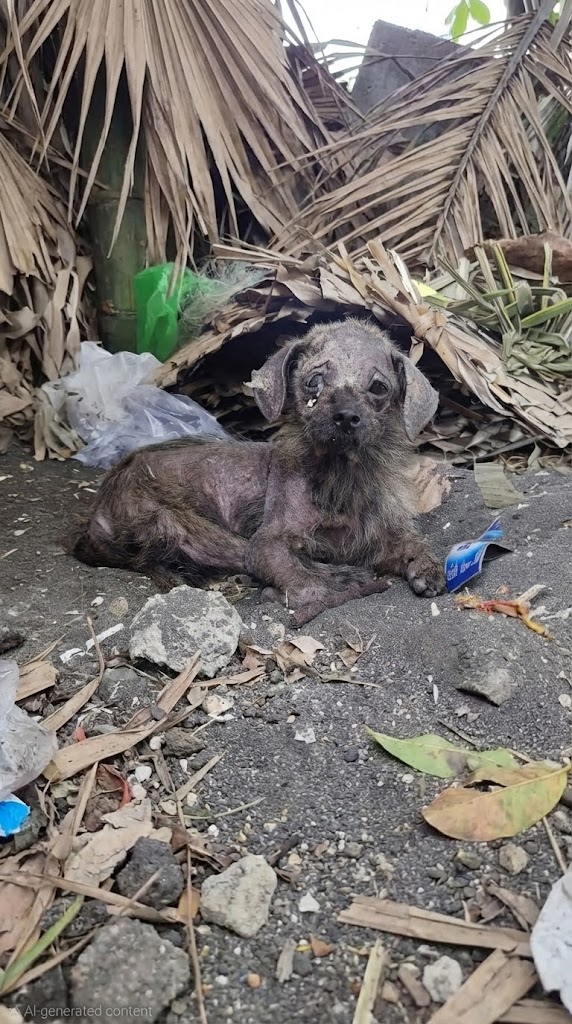
Kristy was barely visible when someone found her.
Inside an old, neglected hut, the tiny puppy had curled herself into a shallow hole in the dirt as though it were the safest place she could find.
Her body was frail.
Her skin was irritated.
Patchy, neglected fur clung to a frame that looked far too weak for a puppy her age.
When the rescuer came closer, Kristy did not run.
She barely moved at all.
That stillness was the first sign that this was more than a frightened stray.
She needed help quickly.
She Had Almost No Strength Left to Get Away
Kristy remained curled against the dirt as the rescuer approached.
There was no barking.
No attempt to hide deeper inside the hut.
No sudden movement toward the doorway.
Her body appeared exhausted.
When she was gently lifted, she stayed quiet in the rescuer’s arms.
Whatever had happened before she was found was not fully explained in the original account.
What could be seen was enough.
Kristy was dehydrated.
Her skin was inflamed and uncomfortable.
Her coat needed cleaning.
And her small body had been weakened by neglect.
She was taken directly to a veterinary clinic.
Video: Kristy Is Found Curled in a Dirt Hole—Then One Small Tail Wag Changes Everything
The First Treatment Was About Stabilizing Her
At the clinic, the team focused on basic needs first.
Kristy needed fluids to address dehydration.
Her dirty and matted coat was cleaned carefully.
The irritated areas of skin were treated.
And throughout the process, the staff handled her gently because her body was already sensitive.
There was no need to ask her to stand or walk before she was ready.
She needed warmth.
Rest.
And enough support for her body to begin responding.
Then, while caregivers were working around her, Kristy’s tail moved.
Only slightly.
It was a small reaction.
But for a puppy who had barely responded when she arrived, everyone noticed.
Her First Meals Were Small and Slow
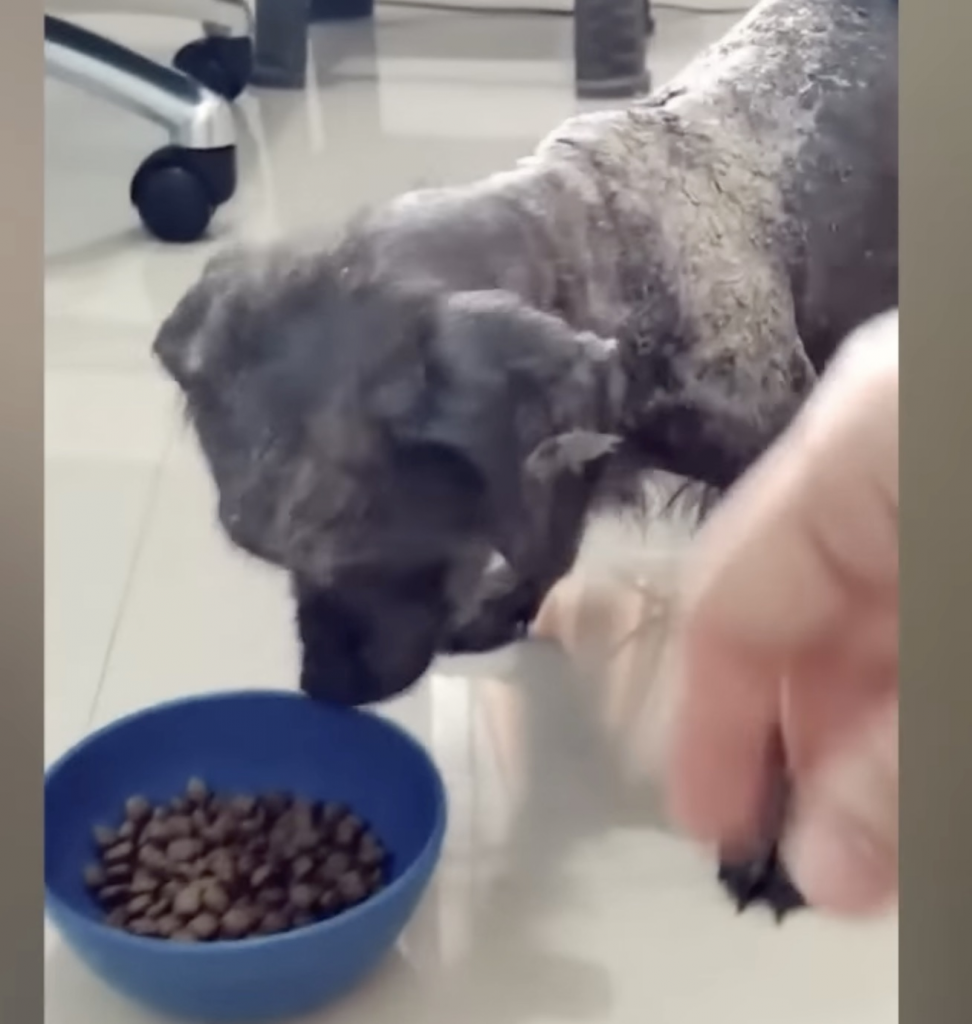
Once Kristy was stable enough, she was offered soft food.
She did not suddenly eat a large meal.
Instead, she took small bites.
Slowly.
Carefully.
Her weakened body needed time to adjust to regular nutrition.
The rescuer continued visiting.
Blankets were brought.
Quiet company became part of the routine.
There was no pressure for Kristy to become affectionate immediately.
She could simply rest while people remained nearby.
Over time, that consistency began changing the way she responded.
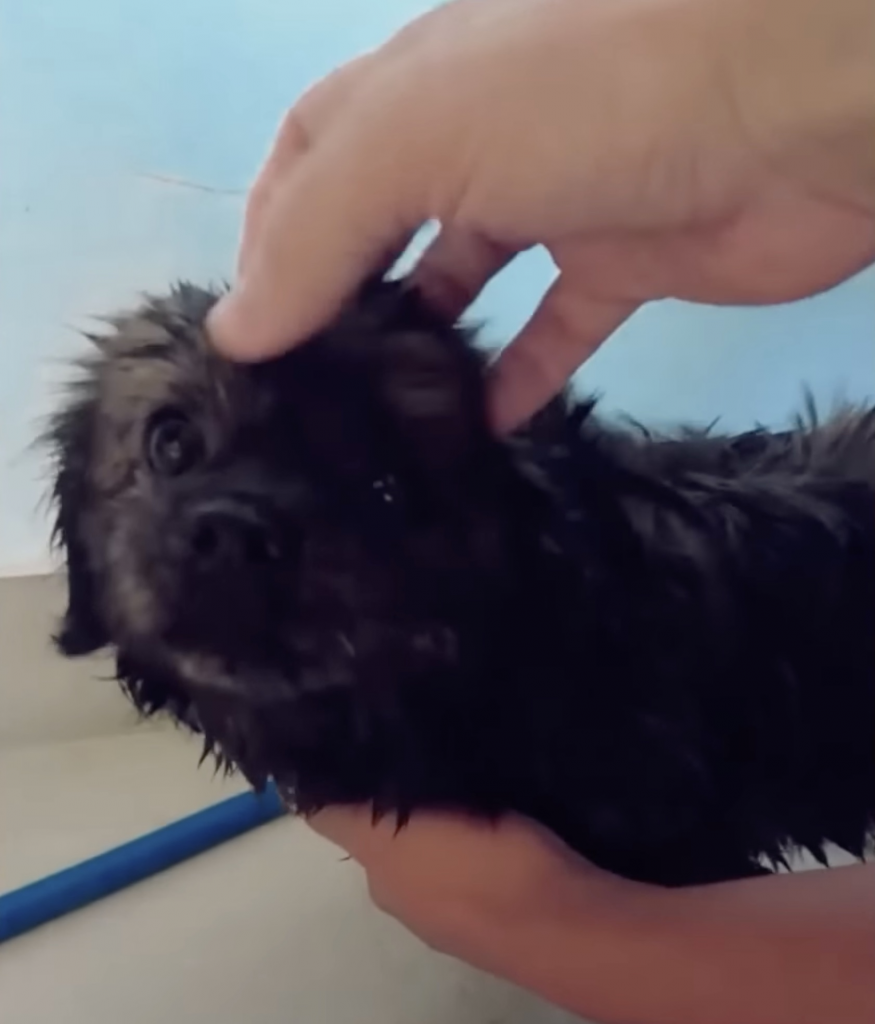
She stayed calmer during touch.
Her eyes became more alert.
And she began leaning toward familiar hands rather than automatically pulling away.
Stronger Legs Changed What She Could Do
As the days passed, Kristy’s appetite improved.
With food came more energy.
Her legs became steadier.
She started moving around the clinic instead of spending most of her time lying down.
Then her behavior became more playful.
She accepted belly rubs.
Enjoyed gentle scratches under her chin.
And greeted familiar caregivers with more visible excitement.
The tiny puppy found inside a dirt hole was no longer conserving every bit of energy simply to remain still.
She could walk.
Explore.
And choose when she wanted to be close to someone.
Then Someone Asked to Meet Her
Kristy’s story eventually reached a woman who wanted to meet her.
By then, the puppy was much stronger than she had been at the beginning.
When the woman arrived at the clinic, Kristy approached.
Her tail moved.
She accepted the woman’s hand and remained close.
There was no need to turn the meeting into an instant fairy tale.
What mattered was that Kristy appeared comfortable around her.
The woman wanted to give her a home.
Soon afterward, the adoption was completed.
Kristy was leaving the clinic for a very different kind of life.
Her Skin and Coat Continued Healing at Home
Recovery did not end when Kristy was adopted.
Her body still needed time.
But now she could continue healing inside a permanent home.
Her skin improved.
Healthy fur gradually returned.
Her energy increased.
The weak puppy who had once remained curled into the ground began running through the yard and playing with toys.
She also became comfortable resting close to her new owner.
Warm blankets and regular meals became ordinary parts of her day.
So did affection.
For Kristy, those simple routines represented a major change.
The Puppy Who Hid in the Dirt No Longer Needed to Disappear
Looking at Kristy later, it was difficult to connect her with the puppy first discovered inside the abandoned hut.
Her coat was healthier.
Her body was stronger.
And she moved through her surroundings with far more confidence.
The transformation had not happened because of one dramatic medical procedure.
It came through basic care repeated consistently.
Fluids.
Food.
Skin treatment.
Rest.
Gentle handling.
Then a home where those things continued.
Each step gave Kristy something she had lacked when she was found.
Predictability.
One Person Had to Look Into the Hut
Kristy’s story began in a place easy to ignore.
An old structure.
A shallow hole in the dirt.
A tiny puppy curled inside it.
Someone could have walked away and assumed she would eventually move on.
Instead, they looked closely enough to see that Kristy was not simply hiding.
She was too weak to manage on her own.
That decision led to veterinary care.
Then food.
Then strength.
Then adoption.
The first sign of change was almost nothing—
a tiny movement of her tail.
Later came stronger legs, playful behavior, and a family of her own.
Kristy did not need anyone to imagine what she was thinking when she was found.
Her condition already said enough.
She needed someone to notice her.
And once someone did, she finally had the chance to become the puppy that had been hidden beneath all that exhaustion.


